I Opened My Marriage, Then Dated a College Student—Here’s How It Almost Destroyed My Life and Career
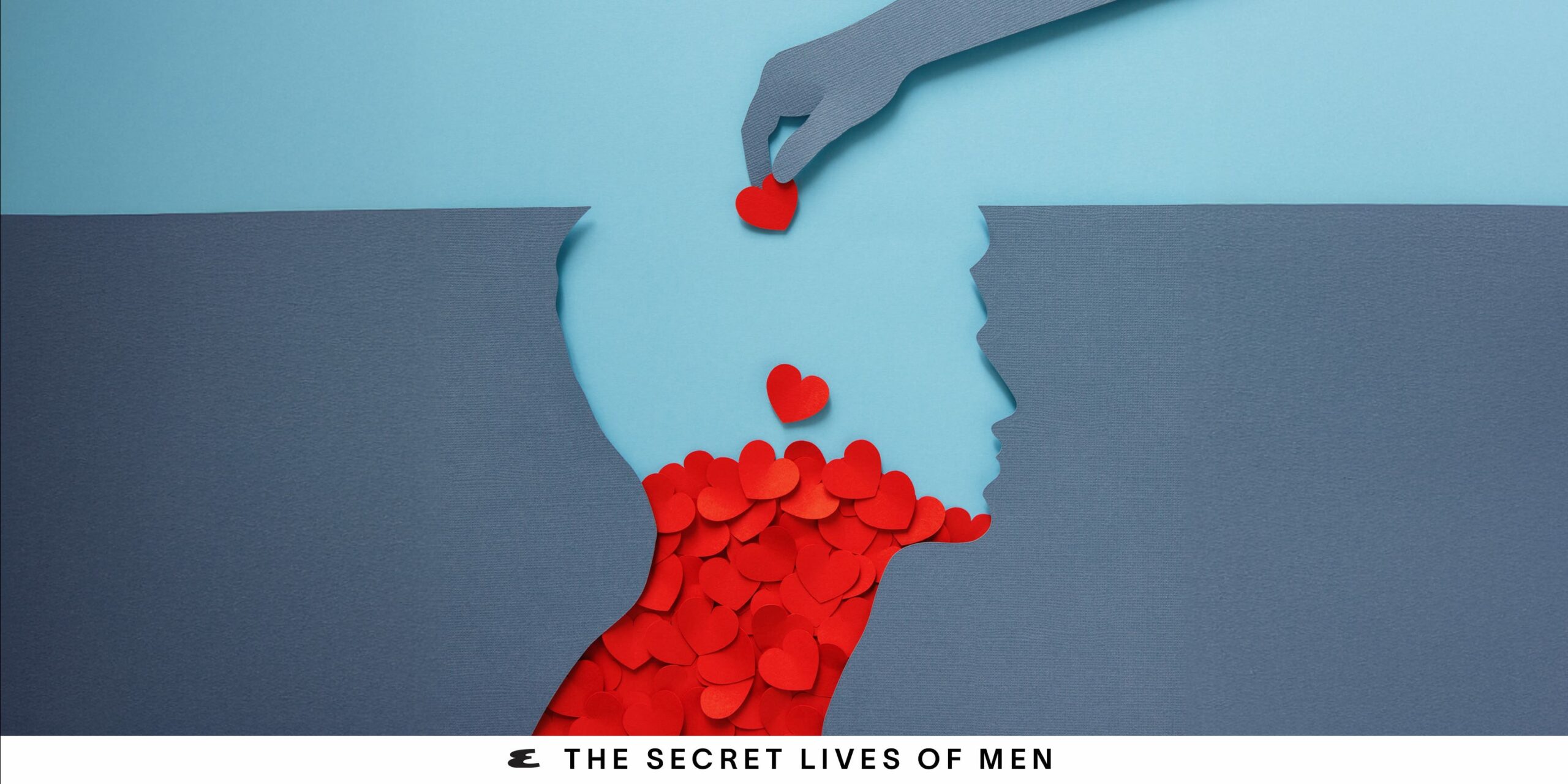
Ever wonder how much of what we call “emotional fluency” is just a carefully choreographed dance—performative, polished, but maybe a bit hollow underneath? Meet Owen, a 45-year-old university professor who’s spent years perfecting the art of seeming progressive, safe, and self-aware. But here’s the kicker—what he believed was genuine self-awareness was, in many ways, a mask. His story is a tangled web of charisma, intellect, and the language of ethical nonmonogamy that ultimately reveals something far murkier—patterns of avoidance, power plays, and entitlement lurking beneath the surface. It’s a candid look at how the boundaries between growth and self-deception can blur when your identity is built as much on performance as on truth. Intrigued? You should be. LEARN MORE

For this installment of the Secret Lives of Men, we spoke with a university professor who built his identity around being emotionally fluent, progressive, and “safe”—only to realize that much of what he called self-awareness was, in fact, performative. His story examines how charisma, intellect, and the language of ethical nonmonogamy can obscure deeper patterns of avoidance, power, and entitlement.
Names and identifying details have been changed. Certain contextual specifics, including professional and institutional details, have been modified to protect anonymity. This account is not an adjudication of policy violations but an exploration of how performative behavior, especially that of emotional fluency, can blur the line between growth and self-deception.
Owen, 45, University Professor
I’ve always been good at becoming what the room needs. It’s a survival skill I developed early on as a theater kid. I could sense an audience’s attention wavering before the applause ever began. I learned timing. How to sustain eye contact just long enough. How to make someone feel seen.
My father, a youth pastor, believed goodness was something measurable, proven through discipline and restraint. He seemed convinced that boys entered the world slightly misaligned and required steady correction.
Being the youth pastor’s son meant I was an example. At church, at school, in the grocery-store aisle after Sunday service, I could feel eyes on me. Women from the congregation would squeeze my shoulder and tell my father I was “such a polite young man.” I learned early that my behavior reflected on him.
I do not remember him telling me he was proud of me. I remember instead his quiet auditing of my behavior, his repeated questioning of whether I was improving. Better meant quieter, straighter, and more contained.
In high school, attention came easily. I was tall and broad shouldered before most of my friends had finished growing. Girls noticed. For a few years, I dated without much friction. I could ask almost anyone out and expect a yes. I liked the feeling of being chosen, but I liked choosing even more.
When my father realized how casually and quickly I moved through relationships, he did not raise his voice. He did not forbid anything outright. He asked questions. What are your intentions? Do you think that’s respectful? Are you leading them somewhere you don’t intend to go? He spoke about purity and responsibility, about the danger of desire without commitment.
He died suddenly when I was 23. I felt sad, of course. But mostly I felt relieved in a way I’ve never fully admitted. The pressure to become “good” did not disappear with him, though. It just changed shape. Instead, I became accomplished. Degree after degree, residency after residency, certifications and fellowships accumulated like evidence in a case I was building for my own legitimacy.
By the time I married, I believed I was choosing love. She was rising in the writing world. Her essays appeared in the local magazine, hailed as bold and visionary. I was an academic with grants and residencies, culturally fluent and just opaque enough to seem interesting. We photographed well. We made sense on paper. At our wedding, more than one person described us as a “power couple,” as though intimacy were a brand collaboration.
She had a complicated relationship with her father, an independence sharpened by the desire to be exceptional, and a hunger for validation. I knew that terrain intimately.
Her income came in waves. A big assignment would land, and then months of uncertainty would follow. Mine was steady, predictable, and tenured. I paid the mortgage and handled the health insurance. I told myself I was supporting her, and often I was. But I was also drawing from her credibility, network, and authority.
Even now, with our marriage strained, I still borrow from her. I echo her language about systems and space and power. I adopt her posture in certain rooms. I tell myself this is what partnership does, that influence is mutual. Yet there is a difference between being shaped by someone and siphoning from them. I have not always been honest about which side of that line I’m on.
Divorce never felt like a real option. It would have meant public, professional, and familial failure. It would have meant selling the brownstone in the good neighborhood, recalculating finances. Instead, about seven years ago, we opened our marriage to polyamory.
At first, we dated other couples together. It was easier that way. My wife had a warmth I could hide behind, and women trusted her. We felt legitimate as a pair. I told myself it was mutual exploration, and for the most part, I got what I wanted.
One couple we grew close to imploded. There were late-night fights and frantic texts, and a year later they were divorced. I remember laughing about how messy it all got.
After that, my wife preferred to date separately. She found a boyfriend who cooks for her without complaint, who researches restaurants that accommodate her vegan diet, who shows up consistently. I discovered that I prefer variety. I move through women with restless curiosity. Sometimes that curiosity lasts months, and sometimes years.
When I talk about polyamory and ethical nonmonogamy, I do it fluently. I cite Polysecure, by Jessica Fern, when I want to sound psychologically grounded; Love Without Emergency, by Clementine Morrigan, when I want to signal I understand attachment; and Mating in Captivity, by Esther Perel, when I want to appear nuanced about long-term desire. If I’m honest, I don’t even like Esther Perel. But I would never say that to a woman I’m trying to sleep with.
I want sex and admiration without obligation. Ethical nonmonogamy does not create that desire but allows me to justify it. As long as I label the arrangement correctly, I convince myself that the emotional aftermath is not mine to manage. If someone agrees to the terms, then their disappointment belongs to them.
A few years ago, I fell head over heels for a woman immersed in the city’s punk scene. I changed myself without hesitation. I got a few $200 black-ink tattoos. I learned the bands, adjusted my clothes, attended shows I did not enjoy. Even after we ended things, I brought new dates to the same venues and occupied the same corners. I wanted her to see that I remained embedded in her world.
At the time, I described it to myself as ordinary post-breakup behavior. Now when I look at those tattoos, I see artifacts from a man who tried to be someone else.
I tell myself that my life is balanced. I work three or four days a week and rarely more than I must. I fill the rest of my time with dating apps, text threads, first drinks that become second ones. Astrology videos and tarot readings offer kinder interpretations of my personality than my father ever did.
I am 45 now. Women my age no longer respond to my performative ways as predictably as they once did. They ask for clarity and consistency. They are less impressed by self-awareness. Faced with that shift, I began dating younger.
In the halls of the university, I’ve heard students jokingly call me a “silver fox.” In certain lighting, I look distinguished rather than aging. This combination—authority, streaks of gray, cultivated emotional fluency—makes me seem like someone with depth.
To younger women, especially those drawn to steadiness or intellect or the illusion of paternal comfort, I feel less like a red flag and more like a refuge. They are less inclined to interrogate me, but I tell myself it’s chemistry.
Years ago, after my wife and I first opened our relationship, I dated a student 12 years younger than I was. It began after she was no longer in my class, in that gray area professors like to pretend is ethically clean. She and I told ourselves we were consenting adults, and we were. What we did not say was that my authority had not evaporated just because the semester had ended.
It was brief, intense, and secret. I buried it carefully and continued to build the rest of my life on top of it.
Recently, she resurfaced in my life, no longer a student but a professional living in the same city. She reached out casually, and I felt something in me spark. Not romance exactly, but a thrill.
My wife did not know that I had already crossed that line years ago. I kept a lot of things to myself in the beginning of our open arrangement. As far as she understood, this was a former student I’d once found interesting, nothing more. I said that if anything were to happen now, it would be different. Transparent, consensual, and ethical.
My wife did not answer immediately. It took a minute to get her there. I stayed calm. Reasonable. I made it sound like growth. Eventually, half-heartedly, carefully, she said it was okay.
One night, months later, I drank too much while out with an on-and-off girlfriend of two years. We were in her bed, warm and careless, and I mentioned the former student. I felt her body go still beside me.
The next morning, she asked me directly: “Was she your student when you were involved?”
I could feel the floor beginning to tilt. I imagined headlines and faculty review boards.
It was a fantasy, I said. A crush I had once entertained. Nothing materialized. I must have exaggerated last night. But she watched me, unconvinced.
What I had not anticipated was that she was close friends with the dean at my university. Not socially intimate, but close enough. Close enough that she felt uneasy holding the information alone.
The dean called me into his office a week later. The conversation was measured, professional. He did not accuse me of anything specific. He spoke about boundaries and optics. About how quickly rumors travel. He said that no formal complaint had been filed and that he would prefer to keep it that way. He suggested I consider how easily situations can be misinterpreted.
I left his office shaken. Not because I had been exonerated, but because I had been spared.
Walking back to my car, I imagined my job evaporating, my wife explaining to colleagues why her husband was under review, my students searching my name online. I imagined my performative ways finally collapsing under the weight of institutional scrutiny.
I did not call the former student. I have not called her since.
What I am beginning to admit is that I do not simply want women. I want what they reflect back at me. Their intelligence, their cultural fluency, their warmth. I wear it for a time and then move on.
Men are raised to believe that the world will conform their importance. When that assurance falters, we attempt to regain control. I did so by making myself into a character. Someone vulnerable in the right places, emotionally literate, careful to appear self-examining. Not only did I deceive others, but I also nearly convinced myself.

Insta360 Ace Pro 2 Dual Battery Bundle - 8K Waterproof Action Camera Co-Engineered with Leica, 1/1.3" Sensor, Dual AI Chip, Leading Low Light, Superior Audio
$329.00 (as of March 30, 2026 02:20 GMT +00:00 - More infoProduct prices and availability are accurate as of the date/time indicated and are subject to change. Any price and availability information displayed on [relevant Amazon Site(s), as applicable] at the time of purchase will apply to the purchase of this product.)
Lavazza Super Crema Whole Bean Coffee, Medium Espresso Roast, Arabica and Robusta Blend, 2.2 lb Bag, Package May Vary (Pack of 1)
$21.41 (as of March 30, 2026 02:16 GMT +00:00 - More infoProduct prices and availability are accurate as of the date/time indicated and are subject to change. Any price and availability information displayed on [relevant Amazon Site(s), as applicable] at the time of purchase will apply to the purchase of this product.)
DaVinci Gourmet Classic Blue Raspberry, 25.4 Fluid Ounces (Pack of 1)
$6.39 (as of March 30, 2026 02:16 GMT +00:00 - More infoProduct prices and availability are accurate as of the date/time indicated and are subject to change. Any price and availability information displayed on [relevant Amazon Site(s), as applicable] at the time of purchase will apply to the purchase of this product.)
Taylor Farms Spinach, 9 oz Bag
(as of March 30, 2026 02:16 GMT +00:00 - More infoProduct prices and availability are accurate as of the date/time indicated and are subject to change. Any price and availability information displayed on [relevant Amazon Site(s), as applicable] at the time of purchase will apply to the purchase of this product.)











Post Comment