Is Your Job Tomorrow’s AI Playground—or the Next Big Opportunity You Didn’t See Coming?

Ever felt that nagging jitters creeping in when you open a job board? Fewer listings, more chatter about AI-driven layoffs — and that unsettling question: Is my job next? Trust me, you’re far from alone in this. The landscape of work is shifting beneath our feet faster than we can catch our breath. But here’s the kicker: while some jobs are undeniably at risk, not everyone is doomed to a fall. New, groundbreaking research peels back the surface panic to reveal something far richer — a nuanced portrait of which roles AI threatens, and which professionals have the grit and gears to bounce back stronger than ever. It’s not just about what’s exposed to the robot; it’s about who’s ready to adapt, pivot, and rebuild. So, if you’ve been wondering how deep the ripple goes and whether you can ride the wave instead of being swallowed — this is where your journey toward clarity begins. LEARN MORE
Which Jobs Are at Risk — and Who Can Actually Bounce Back.
The Entrepreneur’s Source® | April 2026
You have probably felt it. A quiet unease at work. Fewer open positions on job boards. News stories about layoffs tied to artificial intelligence. Maybe you have even wondered: Is my job next?
 If you have asked that question, you are not alone — and you are not wrong to take it seriously. Brand-new research is giving the clearest picture yet of which jobs face real risk from AI, and just as importantly, which workers are best positioned to land on their feet if their role disappears. The findings are more nuanced than the headlines suggest — and for many people, they point toward a very specific kind of action.
A Smarter Way to Measure the Risk.
For years, researchers measured AI job risk by one thing: exposure. How many tasks in a given job could, in theory, be done by artificial intelligence? Computer programmers. Marketing analysts. Financial advisors. Customer service representatives. These roles all score high on AI exposure, meaning AI can already handle a significant portion of what people in those jobs do every day.
But researchers at GovAI — an organization that studies technology policy — and the Brookings Institution recently added a second and equally important lens: adaptive capacity. Not just which jobs AI can affect, but which workers can actually recover if their job disappears.
 Their study, featured prominently in The Washington Post in March 2026, examined more than 350 occupations. Researchers Sam Manning and Tomás Aguirre looked at factors like age, education, transferable skills, savings, and local job market strength to figure out who could realistically land on their feet — and who would struggle to find a path forward.
Why This Matters.
North America leads global AI adoption at approximately 70% as of 2025. (Source: almcorp.com, citing IMF and industry data) That means our workers are on the front edge of this shift — feeling its effects earlier and more intensely than workers in most other parts of the world.
Two points of broad agreement stand out among economists:
- There is no measurable evidence so far that AI is putting us as a whole out of work. And while the victims of past workplace automation were mostly factory and trade workers, it is white-collar jobs that are first in line for AI disruption today. (Source: Washington Post, March 2026)
 The data also suggests that workers in university towns and midsize cities in North America may have the hardest time getting back on their feet if their jobs disappear. (Source: Gizmodo / Brookings, March 2026) Geography matters — and not every displaced worker lives near a labor market with abundant new opportunities.
Adaptability Is Not Just a Skill. It’s a Strategy.
Here is what the research makes clear: the workers who fare best through disruption are not necessarily the ones with the flashiest résumés or the deepest technical knowledge. They are the ones who understand themselves well enough to pivot — and who have thought carefully about what they actually want their career to look like going forward.
The study found that jobs such as web design and secretarial work both score high for AI exposure but diverge sharply on adaptability. Web designers — typically younger with transferable technical skills and higher savings — are well-positioned to find alternative work. (Source: Resultsense / GovAI and Brookings, March 2026)
 But what about the millions of Americans who have not spent their careers building tech-adjacent skills? What about the worker at 45, 50, or 55 who has invested decades into a role that is quietly being automated away? What about the person who has done everything right — stayed loyal, worked hard, kept learning — and still feels the ground shifting beneath them?
For these workers, and for many others who simply want to stop being at the mercy of someone else’s decisions, the answer is not always more retraining or another degree. Sometimes, it requires a fundamentally different approach to work itself.
How Career Ownership Coaching™ Changes the Equation.
This is exactly where The Entrepreneur’s Source® steps in —A Career Ownership Coach® does not hand you a list of job openings in a shrinking market. They help you step back and ask a more important question: What do I actually want — and what is the smartest way to build it?
 Career Ownership Coaching™ is a guided, discovery-based process built specifically for people in the middle of major career transitions. It is designed for the person who knows something needs to change but is not sure what. For the professional who has spent years building real, valuable skills — but feels trapped in a role that no longer offers security or satisfaction.
Through Career Ownership Coaching™, clients explore income goals, lifestyle priorities, risk tolerance, and transferable strengths — and discover options they may never have considered on their own. For many, that path leads to Career Ownership: building a business with a proven model, generating real equity, and creating income that does not depend on someone else’s headcount decisions or AI efficiency targets.
The difference in the Brookings research was not luck. It was the presence of transferable skills, financial resilience, and the ability to recognize and act on options. A Career Ownership Coach® helps clients build on all three — not by telling them what to do, but by helping them see clearly what is possible and what is right for them specifically.
You Do Not Have to Wait and See.
 The AI transition is real. The uncertainty is real. But so is the opportunity for those willing to take an honest look at where they stand — and make a deliberate move before the decision is made for them.
History does not repeat exactly, but it does offer one reliable lesson: the people who thrive through disruption are the ones who act before the disruption acts on them.
If your career has felt uncertain lately, that feeling is worth paying attention to. It is not weakness — it is wisdom. The Entrepreneur’s Source® is here to help you turn that uncertainty into a clear, personalized plan, and to explore whether Career Ownership might be the next best chapter of your professional story.
Your future does not have to be defined by what AI is doing to your industry. It can be defined by what you choose to build.
Connect with a Career Ownership Coach® at The Entrepreneur’s Source® and start your discovery today.
 About Your Career Revolution
Our mission is to help individuals explore self-sufficiency as an alternative career.
We help them define their Income, Lifestyle, Wealth, and Equity goals and provide education on the best ways to achieve them. We don’t sell franchises – we help people achieve their dreams of self-sufficiency through business ownership. The approach is different, the experience is different. And it works.
Order on AMAZON
Learn More About Career Ownership Coaching™

UP URARA PUP Autumn Plaid Dog Collar and Bow Tie Set – Orange Yellow Checkered Adjustable Fall Collar with Maple Leaf Charm for Small Medium Large Dogs, Soft Cotton Pet Collars with Buckle and D-Ring
$16.99 (as of March 23, 2026 02:16 GMT +00:00 - More infoProduct prices and availability are accurate as of the date/time indicated and are subject to change. Any price and availability information displayed on [relevant Amazon Site(s), as applicable] at the time of purchase will apply to the purchase of this product.)
CuteBone Happy Easter Eggs Dog Dress Velvet for Small Dogs Girl Pink Puppy Dresses Dog Clothes CVA18S-D
$13.59 (as of March 23, 2026 02:16 GMT +00:00 - More infoProduct prices and availability are accurate as of the date/time indicated and are subject to change. Any price and availability information displayed on [relevant Amazon Site(s), as applicable] at the time of purchase will apply to the purchase of this product.)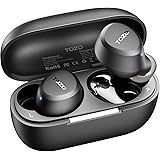
TOZO A1 Wireless Earbuds Bluetooth 5.3 Light Weight in Ear IPX5 Waterproof Headphones 2 Mic for AI Calls, Immersive Premium Sound Bass Headset with Charging Case, 32 Presets EQ Customization via App
$12.31 (as of March 23, 2026 02:11 GMT +00:00 - More infoProduct prices and availability are accurate as of the date/time indicated and are subject to change. Any price and availability information displayed on [relevant Amazon Site(s), as applicable] at the time of purchase will apply to the purchase of this product.)
2026 Solar Cascade Hanging Bird Bath Fountain - 3 Layers Outdoor Water Feature for Hummingbirds, Easy-Clean 9.3" Glass Basin with Solar Powered Pump, Attract Wild Birds to Garden, Patio (Blue)
$23.97 (as of March 23, 2026 02:11 GMT +00:00 - More infoProduct prices and availability are accurate as of the date/time indicated and are subject to change. Any price and availability information displayed on [relevant Amazon Site(s), as applicable] at the time of purchase will apply to the purchase of this product.)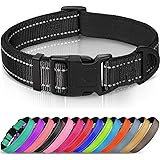












Post Comment