Why Only a Select Few Unlock the True 15% p.a. Fund—and How You Could Be Next

So, here’s the thing: a colleague dropped by, all wide-eyed, asking if I’d heard about this fund that claims to churn out a juicy 15% per annum. Instantly, my radar went up — not because 15% sounds dreamy (who wouldn’t want that?), but because numbers like that tend to come wrapped in layers of ‘what’s really going on here?’ It got me thinking: how often do we pause to dissect where a fund actually fits in our mental puzzle of investments — the mix of stocks, bonds, REITs, and all those jazzy-sounding instruments? More importantly, why do the 15% whispers feel so… tempting yet suspicious?
See, it’s easy to get starry-eyed over bold claims. But does anyone ever ask: What makes this fund so special — so different from the bazillion other options out there? And how sustainable is that magic? While watching a podcast titled “Private Credit is the Fuse, Insurance Companies Are the Bomb, redemptions are a Lit Match,” I found myself questioning the backbone of these offers. If top players are flooding private credit markets — can their quality checks keep pace? If everyone leans on the same reinsurers, how safe is the safety net?
Investing isn’t fairy dust. It’s messy, sometimes uncomfortable — and yes, riddled with risks we must learn to dance with. After all, banking on a never-fail stock is as real as expecting your morning Strawberry Matcha to never run out (though wouldn’t that be lovely?). Let’s peel back the glamour and see if that 15% dream stands a fighting chance over time — or if it’s just yet another mirage in the vast financial desert.
One my colleague came to me if I heard of this fund.
I took some time to point out whenever you look at a fund like this, firstly to be able to comprehend what it is doing. This is so that you can be able to see how this fits into your briefcase of mental investment model (be it listed individual equities, strategies, REITs, investment grade fixed income, high yield fixed income, convertible bonds, real estate buy to let, accumulators, equity linked notes). In a way, for each of these mental models, you would probably need a way to explain to people you meet and what you want to say.
Some where along the way he said that the representative is sharing with the prospects that this earns 15% p.a.
I was watching this podcast interview about Private Credit is the Fuse, Insurance Companies Are the Bomb, redemptions are a Lit Match.
I wonder if those who were pitched 15% p.a. ever wonder how difficult it is to earn 15% p.a. over a long time. I say a long time because this is what many, who wish to build wealth passively are thinking of to compound their money.
To be fair, one of the reasons they are approaching someone for guidance is because they don’t know if 15% is possible. A 75% in one year in a diversified portfolio is also possible if it fell 50%.
If we are talking about putting your hard earn money away to earn 15% p.a. without lifting a finger yourself, by other people managing for you, you got to ask the question:
What makes you so special that there is a product out there, that can be offered relatively easy to you, that can earn that much. What makes you so special compare to others?
From time to time, we overwrite our rationality because we got so enamored with something (and it is sometimes not about finance can be that Strawberry Matcha as well!)
Many of us don’t really wonder about what is the base rates and in that video there are some thought provoking questions.
If a firm like Cliffwater is issuing so much money in private credit, at such a pace, how likely is it that their underwriting can keep up with that pace and maintain high quality?
If most of the life insurance companies are citing the same reinsurers, how likely is that reinsurer is able to provide stop gap for the whole industry?
It is the same as if you have this idea to buy and hold one company or maybe 5 companies for 20-30 years, you think about it. Nowadays how likely do you stay in a company for so long? Do you expect that the key management of the firm all do different things then you by dedicating themselves to a company for 20-30 years?
If “good management” is where you think the competitive advantage is, is there something wrong with that conjecture?
What is sensible is that for each of these points, the answers are somewhere in the middle. There might be a firm where it is really good, so that it can compound your money, but it is not going to be all of them.
If it is, why aren’t you buying that darling Keppel, or Starhub, Mapletree Industrial Trusts which were the darlings of yester years?
Most of us are not that special.
And that should mean that there are some positive or negative risks, but there are risks to be harvest. But there also means there are uncertainty and volatility that typically comes with these investments.
If you have a problem dealing with them, then its time to learn to deal with them. Also learn what are the risks that you shouldn’t be taking.
The more you think that there are the investments that forever do well like Microsoft or Netflix that won’t die, the more likely you will feel disappointed.
If you want to trade these stocks I mentioned, you can open an account with Interactive Brokers. Interactive Brokers is the leading low-cost and efficient broker I use and trust to invest & trade my holdings in Singapore, the United States, London Stock Exchange and Hong Kong Stock Exchange. They allow you to trade stocks, ETFs, options, futures, forex, bonds and funds worldwide from a single integrated account.
You can read more about my thoughts about Interactive Brokers in this Interactive Brokers Deep Dive Series, starting with how to create & fund your Interactive Brokers account easily.

Kyith is the Owner and Sole Writer behind Investment Moats. Readers tune in to Investment Moats to learn and build stronger, firmer wealth foundations, how to have a Passive investment strategy, know more about investing in REITs and the nuts and bolts of Active Investing.
Readers also follow Kyith to learn how to plan well for Financial Security and Financial Independence.
Kyith worked as an IT operations engineer from 2004 to 2019. Currently, he works as a Senior Solutions Specialist in Fee-only Wealth Advisory Firm Providend. All opinions on Investment Moats are his own and does not represent the views of Providend.
You can view Kyith’s current portfolio here, which uses his Free Google Stock Portfolio Tracker.
His investment broker of choice is Interactive Brokers, which allows him to invest in securities from different exchanges all over the world, at very low commission rates, without custodian fees, near spot currency rates.
You can read more about Kyith here.
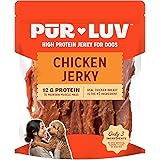
Pur Luv Chicken Jerky Dog Treats, Made with 100% Real Chicken Breast, 16 Ounces, Healthy, Easily Digestible, Long-Lasting, High Protein, Satisfies Dog's Urge to Chew
$13.99 (as of April 7, 2026 02:21 GMT +00:00 - More infoProduct prices and availability are accurate as of the date/time indicated and are subject to change. Any price and availability information displayed on [relevant Amazon Site(s), as applicable] at the time of purchase will apply to the purchase of this product.)
Amazon Basics Leak-Proof Dog and Puppy Potty Training Pee Pads with Quick-Dry 5-Layer Super Absorbent Design, Regular Size 22 x 22 inch, Blue & White, 100 Count
$17.45 (as of April 7, 2026 02:21 GMT +00:00 - More infoProduct prices and availability are accurate as of the date/time indicated and are subject to change. Any price and availability information displayed on [relevant Amazon Site(s), as applicable] at the time of purchase will apply to the purchase of this product.)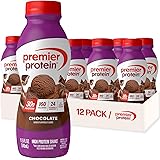
Premier Protein Shake, Chocolate, 30g Protein, No Added Sugar, 24 Vitamins & Minerals to Support Immune Health, 11.5 fl oz, 12 Pack (Packaging May Vary)
$31.98 (as of April 7, 2026 02:21 GMT +00:00 - More infoProduct prices and availability are accurate as of the date/time indicated and are subject to change. Any price and availability information displayed on [relevant Amazon Site(s), as applicable] at the time of purchase will apply to the purchase of this product.)
Roku Streaming Stick HD — HD Streaming Device for TV with Roku Voice Remote, Free & Live TV
$25.71 (as of April 7, 2026 02:21 GMT +00:00 - More infoProduct prices and availability are accurate as of the date/time indicated and are subject to change. Any price and availability information displayed on [relevant Amazon Site(s), as applicable] at the time of purchase will apply to the purchase of this product.)











Post Comment