Why Tech Stocks Crashed and Crypto Collapsed—But Gold and Silver Just Made a Secret Move You Can’t Ignore

Technology stocks took a serious hit this past Friday — and not the kind you shrug off with a cup of coffee. With geopolitical tensions heating up between the U.S. and Iran, Treasury yields pushing higher, and growing jitters over who’s spending what (and how wisely) on AI, the markets are clearly feeling a bit unsettled. You might wonder: is the tech sector finally hitting a rough patch, or are we witnessing a bigger shakeup fueled by external pressures? The so-called Magnificent Seven — giants like Microsoft, Meta, and Nvidia — didn’t just stumble; they led the fall, dragging down sentiment across the board. Meanwhile, Apple’s playing it cool, proving there might be a smarter way to embrace AI without burning through cash like wildfire. And just when you thought crypto might be the safe harbor, Bitcoin and Ethereum slipped into the downturn too, signaling a broader risk-off mood among investors. So, what’s the takeaway from this perfect storm of politics, economics, and tech ambition? Let’s unpack the layers — because understanding this rollercoaster could be the difference between panic selling and strategic buying. LEARN MORE
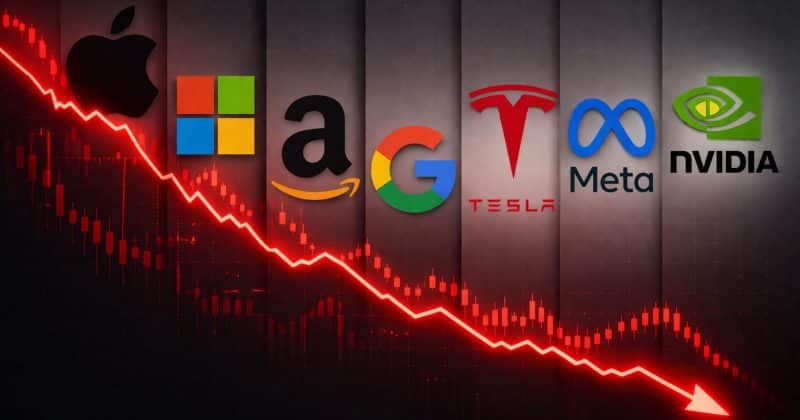
Technology stocks fell Friday as a broader market selloff intensified, with geopolitical tensions between the US and Iran, rising Treasury yields, and mounting concerns over AI spending all weighing on sentiment.
The Magnificent Seven led the decline. Microsoft has been the weakest performer in recent weeks, down about 24% year to date and roughly 2% on Friday. Meta dropped around 4.3% on the day and is down about 18% this year, while Nvidia slipped 1.9% Friday and is off roughly 11% year to date.
Alphabet fell about 2.4% on the day and is down near 12% this year, Tesla dropped roughly 3% and is down around 17% year to date, and Amazon declined about 3.2% Friday with losses near 11% this year. Apple has been the most resilient, down about 7% year to date and only slightly lower on the day.
The broader market also weakened. The S&P 500 fell about 1.3% on Friday and is down roughly 6.5% year to date, while the Nasdaq Composite dropped 1.8% on the day and nearly 15% this year. Treasury yields hovering near 4.5% are tightening financial conditions and raising the hurdle for risk assets.
Crypto, which had held up relatively well through early March, joined the selloff. Bitcoin fell below $66,000, Ethereum dropped under $2,000, and broader altcoins moved lower, reflecting a shift toward a more risk off environment across asset classes.
At the same time, traditional safe haven assets moved higher. Gold rose about 2.5% to near $4,500, while silver gained roughly 2% to around $70. Despite the rally, both metals remain in a broader downtrend, suggesting the move is more a short term reaction to geopolitical risk than a structural shift.
Geopolitics remain a key driver. Iran has threatened to disrupt traffic through the Strait of Hormuz, a critical route for global oil supply, while conflicting signals between US and Iranian officials on potential negotiations have added uncertainty. The risk of escalation has pushed energy prices higher and reinforced inflation concerns.
Investors are also increasingly questioning whether aggressive AI spending will translate into returns. Companies including Meta, Microsoft, and Amazon are expected to ramp capital expenditures into 2026, raising concerns that the return on investment may take longer to materialize.
Cost pressures are already showing up in workforce decisions. Meta this week cut around 700 employees as part of ongoing restructuring tied to its AI push, while Amazon has previously announced plans to reduce its workforce by about 16,000 roles.
One relative outlier has been Apple. Analysts point to its strategy of leaning on partnerships with OpenAI and Google for AI capabilities rather than building fully in house, helping limit near term spending pressure and supporting its relative performance.

Universal Replacement Remote Control for Roku Express, for Roku Premiere, for Roku Box, for Roku Player, for Roku 1 2 3 4 -【NOT for Stick or TV】
$7.19 (as of March 30, 2026 02:20 GMT +00:00 - More infoProduct prices and availability are accurate as of the date/time indicated and are subject to change. Any price and availability information displayed on [relevant Amazon Site(s), as applicable] at the time of purchase will apply to the purchase of this product.)
Core Power Elite High Protein Shake, Chocolate, 42g Bottle, 14oz, 12 Pack
$50.98 (as of March 30, 2026 02:16 GMT +00:00 - More infoProduct prices and availability are accurate as of the date/time indicated and are subject to change. Any price and availability information displayed on [relevant Amazon Site(s), as applicable] at the time of purchase will apply to the purchase of this product.)
bmani Ear Buds Wireless Earbuds Bluetooth Headphones with 80H Playtime LED Display Case, Over-Ear Hook with Mic, Stereo Sound, Easy Button Controls, Sports Earphones for Running Workout Gym Black
$28.99 (as of March 30, 2026 02:20 GMT +00:00 - More infoProduct prices and availability are accurate as of the date/time indicated and are subject to change. Any price and availability information displayed on [relevant Amazon Site(s), as applicable] at the time of purchase will apply to the purchase of this product.)
Brownie Batter Protein Iced Coffee - Premium Whey Protein & Instant Iced Coffees - 100% Natural Cold Brew - Zero Artificial Flavors & Sweeteners, 80 mg Caffeine, No Added Sugar, 20 Servings
$33.96 (as of March 30, 2026 02:16 GMT +00:00 - More infoProduct prices and availability are accurate as of the date/time indicated and are subject to change. Any price and availability information displayed on [relevant Amazon Site(s), as applicable] at the time of purchase will apply to the purchase of this product.)











Post Comment