Why the ECB’s Move on Public Money Could Upend Your Wallet—and What Investors Must Watch Now
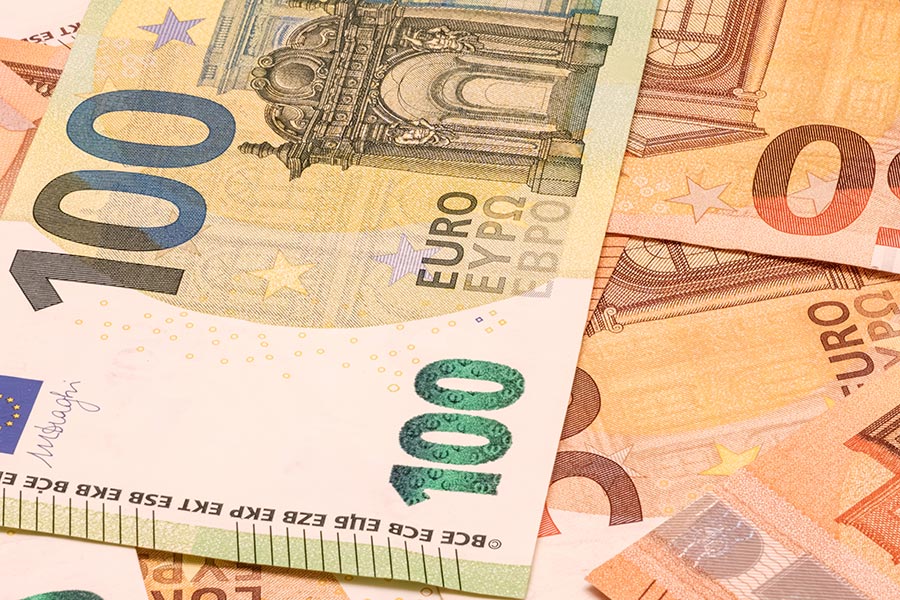
Ever stopped to wonder why, in a world where you can tap your phone to pay for your morning coffee, that crumpled €50 bill still holds a peculiar kind of magic? It’s funny how, despite the relentless march of digital payments—where a staggering €7 is spent digitally for every €1 in cash according to the Central Bank of Ireland—cash remains the unsung hero of our economy. Sure, cash can’t boast ‘instant notifications’ or flashy app integrations, but it’s the only form of money that’s rock-solid, immune to digital blackouts and internet glitches. Here’s the kicker: while most folks don’t sweat the nitty-gritty between public money and private money, the European Central Bank is gearing up to safeguard cash’s benefits by rolling out a digital euro. Imagine cash that’s safe, instant, works offline, and isn’t controlled by the usual tech giants. Intriguing, right? Let’s dive into how this bold move could reshape financial trust and democracy in our increasingly pixelated world. LEARN MORE
As innovations in payment systems accelerate, the European Central Bank is taking transformative steps to protect the benefits of cash in an increasingly digital economy, writes Grant Thornton’s Mark Perry
Broadly, there are two types of money used within our economy: public money, made up of the physical currency (cash) issued by the Central Bank; and private money, comprising the account balances issued by commercial banks.
Whilst the value of public money is derived from the fact that it is issued and backed by trusted public institutions, the value of private money is grounded on a trust that it can be converted into cash on demand.
Most people (understandably) don’t know or care about the characteristics of these different monetary types. But economists see this as a positive outcome, since it reflects a trust in the ‘sameness’ of public and private money.
However, the convertibility of private money fully into cash on demand is not always guaranteed.
The potential for the ‘imperfect substitutability’ of private money will always exist to some extent since banks make money by using their deposit base to issue long-term loans, which in turn exposes depositors to the wellbeing and solvency of the bank.
Whilst regulatory frameworks and government protection schemes substantially reduce the risk of depositor losses within the banking system, they can never offer 100 per cent protection.
Thus, cash is the only form of money that will always maintain its full value; a €50 note will always be worth €50 since no external event can impact its value.
This ‘information insensitivity’ is a unique attribute of cash that promotes the resilience of the financial system by providing a stable, legal tender denominated store of value.
Cash is also critical to maintaining the resilience and inclusivity of access to the payments system. Digital technologies can be unreliable, while not everyone has access to a smartphone, the internet or a bank account.
Cash, therefore, remains the only universally accessible, offline form of money.
It is against this backdrop that regulators are growing increasingly concerned about the rapid growth of digital finance and the sharp decline in cash usage.
Central Bank of Ireland data shows that for every €1 cash spent in 2024, €7 was spent via digital methods: an increase from€1 v €3 in 2019.
Allied to these concerns is the emergence of crypto currencies such as Bitcoin, which are privately issued tokens that operate on a stand-alone digital infrastructure.
Whilst no such currencies have gained real operational traction to date, the Bank for International Settlements has warned that their issuance poses a risk of a return to the shambolic free banking era of the 19th century, when a rise in private currencies led to widespread fraud, price instability and multiple bank failures.
The ECB chief economist Philip Lane recently summarised the regulatory outlook on these trends in a speech at UCC, citing “the potential for technological innovation to disrupt monetary transmission, sovereignty,the singleness of money, and the fairness of society”.
Reflecting this agenda, a transformational policy initiative is now underway within the ECB to prepare for the potential issuance of a digital euro, which would preserve the role of public money in a digital world by providing an electronic form of cash that is safe, instant and widely usable.
The supporting infrastructure could also deliver significant benefits for consumers and retailers, including lower transaction costs (absent of commercial interests), enhanced data privacy, offline capability and guaranteed access.

It would also represent a strategic restoration of EU autonomy in a payments market currently dominated by private US operators such as Visa and Mastercard.
If EU lawmakers adopt the relevant regulation in 2026, the plan is that the digital euro could be in circulation by 2029.
This would mark an important milestone in the transition to a digital economy, by providing a modern form of cash to preserve trust, access, resilience and democratic control within the monetary system.
Photo: Mark Perry is director, risk advisory, Grant Thornton

Amazon Grocery, Cage-Free Large White Eggs, Grade AA, 18 Ct
(as of March 30, 2026 02:16 GMT +00:00 - More infoProduct prices and availability are accurate as of the date/time indicated and are subject to change. Any price and availability information displayed on [relevant Amazon Site(s), as applicable] at the time of purchase will apply to the purchase of this product.)
Amazon Kindle Scribe Colorsoft 64GB (newest model) — 11” paper-like color display with front light — Thin, light, powerful — Write in notebooks, documents, and books. Includes Premium Pen - Graphite
$679.99 (as of March 30, 2026 02:16 GMT +00:00 - More infoProduct prices and availability are accurate as of the date/time indicated and are subject to change. Any price and availability information displayed on [relevant Amazon Site(s), as applicable] at the time of purchase will apply to the purchase of this product.)
Amazon Echo Show 11 (newest model), Vibrant Full-HD 11" display with more viewing area and spatial audio, Designed for Alexa+, Graphite
$169.99 (as of March 30, 2026 02:16 GMT +00:00 - More infoProduct prices and availability are accurate as of the date/time indicated and are subject to change. Any price and availability information displayed on [relevant Amazon Site(s), as applicable] at the time of purchase will apply to the purchase of this product.)
JLab Go Air Pop+ True Wireless Earbuds, in Ear Headphones, Bluetooth Earphones, 35H Playtime Ear Buds, Bluetooth Earbuds with Microphone, USB-C Charging Case, Dual Connect, EQ3 Sound, Black
$17.49 (as of March 30, 2026 02:16 GMT +00:00 - More infoProduct prices and availability are accurate as of the date/time indicated and are subject to change. Any price and availability information displayed on [relevant Amazon Site(s), as applicable] at the time of purchase will apply to the purchase of this product.)













Post Comment