Uncover the 7 Unexpected Safe Haven Assets That Could Shield Your Wealth When Geopolitical Storms Hit Hard
Ever notice how when the world feels like it’s spinning out of control—whether it’s a war breaking out, trade squabbles flaring, or political storms brewing—investors suddenly become the ultimate treasure hunters, scrambling for safe havens? It’s almost like financial markets have their own version of a panic room, where capital seeks shelter from the chaos outside. But here’s the kicker: not every so-called “safe haven” truly keeps your money out of the storm. So, what assets really stand the test of geopolitical jitters and market tremors? And more intriguingly, how can savvy business owners and investors shield their portfolios when uncertainty becomes the new norm? Stick with me as we unravel the top safe-haven assets that hold their ground when the world throws curveballs—because understanding these can mean the difference between surviving a crisis and thriving despite it. LEARN MORE

Key Takeaways
- Safe-haven assets help protect capital by maintaining relative stability during periods of geopolitical and market uncertainty.
- Gold remains the most widely trusted safe-haven asset due to its long history as a store of value and hedge against inflation and currency volatility.
- Government bonds and strong reserve currencies such as the U.S. dollar, Swiss franc, and Japanese yen often attract investors during global crises.
- Diversifying across several safe-haven assets can reduce overall portfolio risk and improve financial resilience during turbulent times.
- Emerging assets like Bitcoin may provide diversification benefits, but their volatility means they should be used cautiously in defensive portfolios.
Geopolitical tensions – whether wars, trade conflicts, or diplomatic crises – often trigger volatility across global financial markets. When uncertainty rises, investors tend to move their capital away from riskier assets like equities and toward instruments perceived as stable. This phenomenon is known as a “flight to safety”, where investors prioritize capital preservation over growth.
For business owners and individuals managing liquidity, understanding safe-haven assets can help protect purchasing power and stabilize portfolios during turbulent periods. While no investment is completely risk-free, certain assets historically perform better when global uncertainty increases.
Below are seven of the most widely recognized safe-haven assets during geopolitical uncertainty.
1. Gold
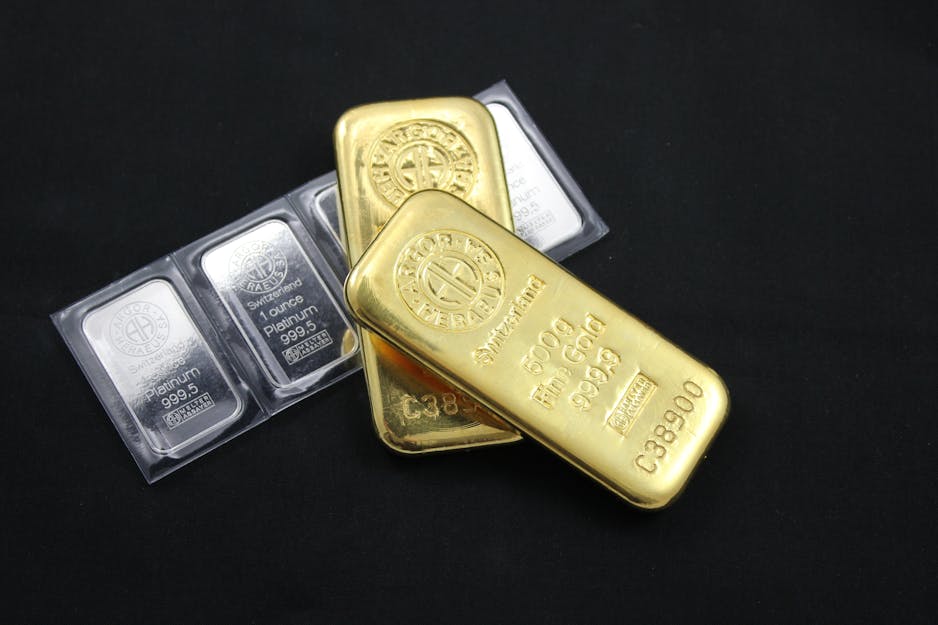
Gold is widely regarded as the classic safe-haven asset. For centuries, investors have turned to gold during economic crises, political instability, and currency depreciation.
Unlike fiat currencies, gold cannot be printed by central banks, making it resistant to monetary expansion and inflation. Its historical role as a store of value also contributes to its reliability during crises.
Research shows that gold often demonstrates low correlation with equities, which helps stabilize diversified portfolios during market downturns.
For example, during periods of geopolitical tension – such as military conflicts or sanctions – investors frequently buy gold to hedge against currency volatility and inflation. Central banks themselves have also increased gold reserves as a strategic hedge against financial instability.
How to access gold:
- Physical gold (bars or coins)
- Gold exchange-traded funds (ETFs)
- Gold mining stocks
- Gold futures contracts
For most retail investors and business owners, gold ETFs or bullion-backed funds provide the easiest exposure without storage costs.
2. The U.S. Dollar
The U.S. dollar (USD) remains the world’s dominant reserve currency and frequently acts as a financial safe haven during global crises.
When geopolitical tensions rise, investors often shift funds into dollars because of the size, liquidity, and stability of the U.S. financial system. Recent market analysis shows that during periods of escalating conflict, the dollar has strengthened as investors seek liquidity and security.
Because international trade and commodities such as oil are priced in dollars, the currency benefits from global demand during periods of stress.
For investors and businesses, exposure to the dollar can come through:
- Holding USD cash reserves
- USD-denominated money market funds
- U.S. government securities
- Dollar-based ETFs
Maintaining part of a company’s liquidity in a strong global reserve currency can help mitigate risks from local currency depreciation.
3. U.S. Treasury Bonds
U.S. Treasury securities have long been considered one of the safest investments in the world because they are backed by the U.S. government through the United States Department of the Treasury. Their deep liquidity and historically low default risk have made them a traditional safe haven during global crises.
However, their safe-haven status has become more debated in 2026. Rising interest rates and growing concerns about government debt have pushed Treasury yields higher, which caused bond prices to fall and led to weaker performance for many investors holding longer-term Treasuries.
As a result, Treasuries did not always rally as strongly during recent geopolitical tensions as they did in previous decades.
Despite these challenges, short-term Treasury bills are still widely used for liquidity management and capital preservation. Many investors now treat Treasuries as one component of a broader defensive strategy, rather than relying on them as a single safe-haven asset.
4. Swiss Franc
The Swiss franc (CHF) has long been considered one of the most reliable safe-haven currencies.
Switzerland’s strong banking system, political neutrality, and stable economy make the franc attractive during global instability. Historically, the currency tends to appreciate when geopolitical risk rises, as investors seek financial systems perceived as secure and independent.
Because Switzerland maintains low inflation and conservative fiscal policies, the franc is often seen as a defensive currency.
Investors can gain exposure through:
- Swiss franc deposits
- Currency ETFs
- Foreign exchange trading
For businesses operating internationally, holding a portion of reserves in strong foreign currencies like the Swiss franc can act as a diversification strategy.

5. Bitcoin
Bitcoin is increasingly discussed as a “digital safe haven,” though its role remains debated.
The cryptocurrency has characteristics that resemble traditional hedges:
- Limited supply
- Decentralized structure
- Independence from central banks
However, research indicates that Bitcoin does not consistently behave like a traditional safe-haven asset. In some crises it moves with risk assets such as equities rather than against them.
Because of its volatility, many analysts consider Bitcoin more of a diversifier than a true safe haven, especially for conservative investors.
Still, some investors allocate a small portion of portfolios to Bitcoin as a hedge against monetary instability and financial system risk.
6. Silver and Non-Gold Precious Metals
While gold dominates the safe-haven narrative, silver and other precious metals can also benefit during geopolitical turmoil.
Silver often moves in tandem with gold but tends to exhibit higher volatility. This characteristic can create opportunities for investors seeking both defensive positioning and upside potential.
Precious metals serve as safe-haven assets because they:
- Maintain intrinsic value
- Are globally recognized stores of wealth
- Offer protection against inflation and currency debasement
However, silver’s industrial demand means its price can also be influenced by economic cycles, making it somewhat less stable than gold.
7. Japanese Yen
The Japanese yen (JPY) is another currency frequently viewed as a safe haven during global financial stress.
Several factors contribute to this status:
- Japan’s large net foreign asset position
- Deep and liquid government bond market
- Strong domestic savings base
During periods of global risk aversion, investors often unwind carry trades – borrowing in yen to invest in higher-yield assets – leading to yen appreciation during crises.
As a result, currency traders and institutional investors frequently turn to the yen as a defensive hedge.
To Conclude…
During geopolitical uncertainty, protecting liquidity becomes more important than chasing high returns. Safe-haven assets play a crucial role in preserving capital and reducing portfolio volatility.
Practical strategies include:
- Diversifying across multiple safe-haven assets rather than relying on one.
- Holding liquid instruments that can be accessed quickly if needed.
- Maintaining exposure to stable currencies and government bonds.
- Allocating a small portion to alternative hedges such as precious metals.
No asset guarantees protection during every crisis. Even traditional safe havens like gold can experience short-term fluctuations depending on interest rates, currency strength, and investor sentiment.
However, a well-balanced mix of defensive assets can significantly improve resilience during geopolitical shocks.

FAQs
1. What is a safe-haven asset?
A safe-haven asset is an investment that is expected to retain or increase its value during periods of market turbulence, economic downturns, or geopolitical uncertainty. Investors typically move capital into these assets when risk levels rise.
2. Why does gold perform well during geopolitical crises?
Gold tends to perform well because it has intrinsic value, limited supply, and a long history as a global store of wealth. During crises, investors often buy gold to hedge against inflation, currency volatility, and financial system risks.
3. Are government bonds always safe investments?
Government bonds from stable economies, such as U.S. Treasuries, are widely considered low-risk. However, they are still subject to interest rate changes and inflation, which can affect their real returns.
4. Can cryptocurrencies be considered safe-haven assets?
Cryptocurrencies like Bitcoin are sometimes viewed as alternative safe havens due to their decentralized nature and limited supply. However, their high volatility means they behave more like speculative assets in many market conditions.
5. How much of a portfolio should be allocated to safe-haven assets?
The appropriate allocation depends on individual risk tolerance, financial goals, and market conditions. Many financial advisors suggest maintaining a diversified portfolio where defensive assets serve as a stabilizing component rather than the majority of investments.
Final Thoughts
Geopolitical uncertainty is an unavoidable feature of the global economy. Conflicts, sanctions, and political instability will continue to influence markets and investor behavior.
For business owners and individuals managing liquidity, understanding safe-haven assets provides a valuable framework for financial resilience. By strategically allocating capital into historically defensive assets – such as gold, government bonds, and stable currencies – investors can better navigate periods of uncertainty while protecting long-term wealth.
In times of crisis, the goal is not necessarily to outperform the market, but to preserve capital and maintain financial flexibility until stability returns.
Surge Protector Power Strip - CHCORE 5Ft Braided Extension Cord with 8 Outlets with 4 USB (2 USB C) Charging Ports, Flat Plug Multi Plug Outlet Extender Charging Station for Home Office, ETL, White
$9.99 (as of September 6, 2026 03:08 GMT +00:00 - More infoProduct prices and availability are accurate as of the date/time indicated and are subject to change. Any price and availability information displayed on [relevant Amazon Site(s), as applicable] at the time of purchase will apply to the purchase of this product.)
Pedigree Dentastix Large Breed Dental Dog Treats, Variety, 51 Count | Original, Beef & Fresh Flavors, triple action dental care, reduces tartar, cleans teeth, freshens breath, for dogs 40+ lbs
$23.98 (as of September 6, 2026 03:01 GMT +00:00 - More infoProduct prices and availability are accurate as of the date/time indicated and are subject to change. Any price and availability information displayed on [relevant Amazon Site(s), as applicable] at the time of purchase will apply to the purchase of this product.)
Soundcore Liberty 5 Pro by Anker Noise Cancelling Wireless Earbuds | Anker Thus™ AI Chip delivers Guinness World Records-certified call quality for crystal-clear calls in noisy environments
$169.99 (as of September 6, 2026 03:12 GMT +00:00 - More infoProduct prices and availability are accurate as of the date/time indicated and are subject to change. Any price and availability information displayed on [relevant Amazon Site(s), as applicable] at the time of purchase will apply to the purchase of this product.)
Purina Fancy Feast Gravy Lovers Wet Cat Food, 3 oz Cans, 30-Pack | Variety Pack with poultry and beef grilled gourmet recipes, made with no artificial colors or preservatives
$28.06 (as of September 6, 2026 03:01 GMT +00:00 - More infoProduct prices and availability are accurate as of the date/time indicated and are subject to change. Any price and availability information displayed on [relevant Amazon Site(s), as applicable] at the time of purchase will apply to the purchase of this product.)













Post Comment