
This Little-Known Irish Startup Just Broke Into the World’s Most Valuable List—And Here’s Why Investors Are Losing Their Minds Over It!
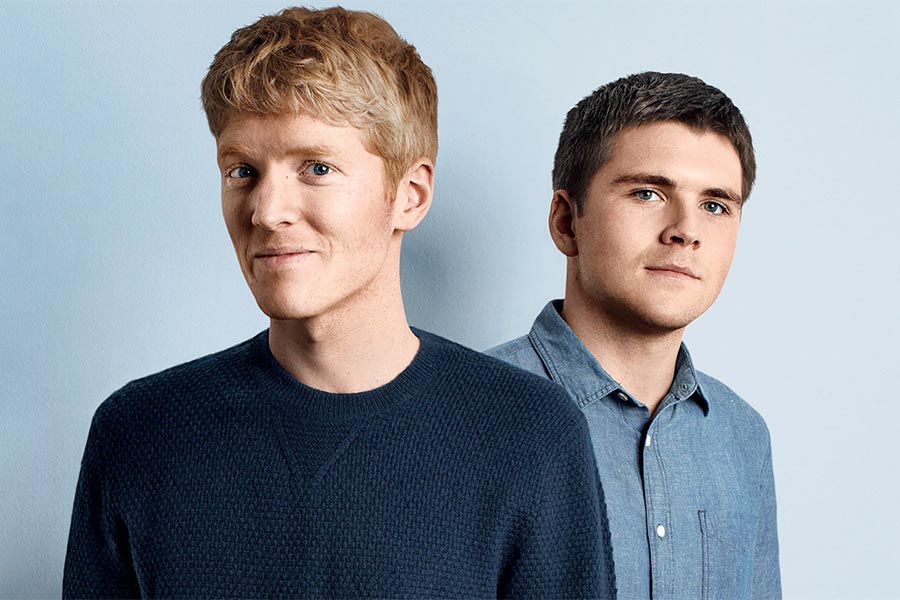
Ever wonder what it takes for a start-up to not just join the unicorn club, but to gallop straight into the top five most valuable private companies on the planet? Here’s a hint: it involves a mix of savvy ambition, relentless innovation, and maybe a touch of Irish luck. Meet Stripe — the brainchild of the Collison brothers from Tipperary, whose payments powerhouse now ranks fifth worldwide, boasting a valuation that quite literally stretches into the hundreds of billions. With payment volumes soaring 34% to nearly $2 trillion last year and profitability firmly in the rearview mirror, Stripe is redefining what fintech success looks like in 2026. But they’re not alone in this high-stakes race; juggernauts like SpaceX, OpenAI, and ByteDance are rewriting the rules on what it means to be a unicorn today. So, what can we learn from these titans shaping the future of tech, AI, and beyond? Buckle up — the next wave of billion-dollar startups might just surprise you. LEARN MORE
Stripe, the payments company founded by Irish brothers John and Patrick Collison, is one of the top five most valuable unicorns in the world, according to new analysis by BestBrokers.com.
The San Francisco and Dublin-headquartered fintech appears fifth on the list of most valuable unicorns, privately owned start-ups with a valuation of at least $1bn.
Stripe was valued at $159bn after increasing payment volumes 34% to $1.9tn last year and confirming that it is “robustly profitable” in its annual letter.
BestBrokers analysed the Crunchbase Unicorn Board and used data aggregated from Pitchbook and other sources on the largest private funding rounds and company valuations since 2025 to assemble the list.
Elon Musk’s SpaceX has emerged as the world’s most valuable start-up with a valuation of $1.25tn following its merger with the world’s richest man’s artificial intelligence venture, xAI.
SpaceX overtook ChatGPT maker OpenAI, which is now valued at $840bn after securing $110bn from Nvidia, SoftBank and Amazon. TikTok owner ByteDance ($480bn) and Claude developer Anthropic ($380bn) are the only other start-ups valued more highly that Stripe.
The top 10 is completed by Chinese fintech Ant Group ($150bn), US AI company Databricks ($134bn), Google’s autonomous car start-up Waymo ($126bn), Indian e-commerce firm Reliance Retail ($101bn) and Revolut ($75bn).
Online fashion retail giant Shein ($66bn), Indian telecoms firm Reliance Jio ($58bn), Canva ($42bn), Ripple ($40bn) and Checkout.com ($40bn) also made the list.
There are 39 companies that have crossed the $1bn valuation threshold and became unicorns in 2026, the vast majority of them operating in the AI space, led by Ricursive Intelligence at $4bn just weeks after the AI lab founded by former Google DeepMind researcher launched.
Bahrainian cryptocurrency and blockchain company Rain ($1.9bn), robotics firm Bedrock ($1.8bn), defence and securitytech start-up Roark, healthtech Pomelo Care ($1.7bn) and Arena Intelligence ($1.7bn) also gained unicorn status.
As did aerospace start-up Varda Space Industries ($1.6bn), cybersecurity firm Upwind Security, and Flapping Airplanes ($1.5bn), all from the US, which hosts more than half (881) of the world’s unicorns (1,705) compared to 287 from China and 85 in India.
Varda is the most heavily funded of the new unicorns, having raised $578.3m to date. Other heavily funded start-ups that reached unicorn status this year include aviation software & hardware maker Skyryse ($542.9m), China-based AI company Spirit AI with ($472.8m), digital mental healthcare provider Talkiatry ($429m), and cloud security firm Upwind Security with ($427.4m).
AI is the fastest-growing sector for new unicorns in 2026, with nine AI businesses out of 39 startups (23.1%) reaching the $1bn milestone since January. HealthTech follows with five new unicorns, while semiconductors, cybersecurity, cloud & infrastructure, and aerospace & spacetech each produced three.
“The trend of venture capital pooling into a few high-profile companies continues in full swing in 2026, with artificial intelligence attracting a disproportionate share of funding as companies race to build the infrastructure, software, and specialised tools powering the next generation of digital services,” said Paul Hoffman of BestBrokers.com.

“At the same time, rising startup valuations in sectors such as space technology, cloud infrastructure, and advanced robotics suggest investors are increasingly backing technologies that could power entire future industries.
“If capital markets remain supportive, the remainder of 2026 may see further growth in these deep-tech areas, with AI-driven platforms and infrastructure companies likely to produce the next wave of billion-dollar start-ups.”
(Pic: Getty Images)
Blue Buffalo Bits Beef Training Treats, 19 oz | Real Beef First, DHA for Cognitive Development, No Chicken By-Product Meals, Free from Red Dye 40
$14.98 (as of October 9, 2026 03:11 GMT +00:00 - More infoProduct prices and availability are accurate as of the date/time indicated and are subject to change. Any price and availability information displayed on [relevant Amazon Site(s), as applicable] at the time of purchase will apply to the purchase of this product.)
JBL Tune Buds - Noise Cancelling Earbuds - Black | JBL Pure Bass Sound, Bluetooth 53 with LE audio support, Active Noise Cancelling with Smart Ambient
$79.95 (as of October 9, 2026 03:20 GMT +00:00 - More infoProduct prices and availability are accurate as of the date/time indicated and are subject to change. Any price and availability information displayed on [relevant Amazon Site(s), as applicable] at the time of purchase will apply to the purchase of this product.)
Apple EarPods Headphones with USB-C Plug, Wired Ear Buds with Built-in Remote to Control Music, Phone Calls, and Volume
$19.00 (as of October 9, 2026 03:20 GMT +00:00 - More infoProduct prices and availability are accurate as of the date/time indicated and are subject to change. Any price and availability information displayed on [relevant Amazon Site(s), as applicable] at the time of purchase will apply to the purchase of this product.)
Apple AirPods Pro 3 Wireless Earbuds with Active Noise Cancellation | Live Translation, Heart Rate Sensing, Hearing Aid Feature, Bluetooth Headphones, Spatial Audio, USB-C Charging
$199.00 (as of October 9, 2026 03:20 GMT +00:00 - More infoProduct prices and availability are accurate as of the date/time indicated and are subject to change. Any price and availability information displayed on [relevant Amazon Site(s), as applicable] at the time of purchase will apply to the purchase of this product.)












Post Comment