
Unlock Explosive Global Growth: The Surprisingly Affordable Software Giants Don’t Want You to Know About
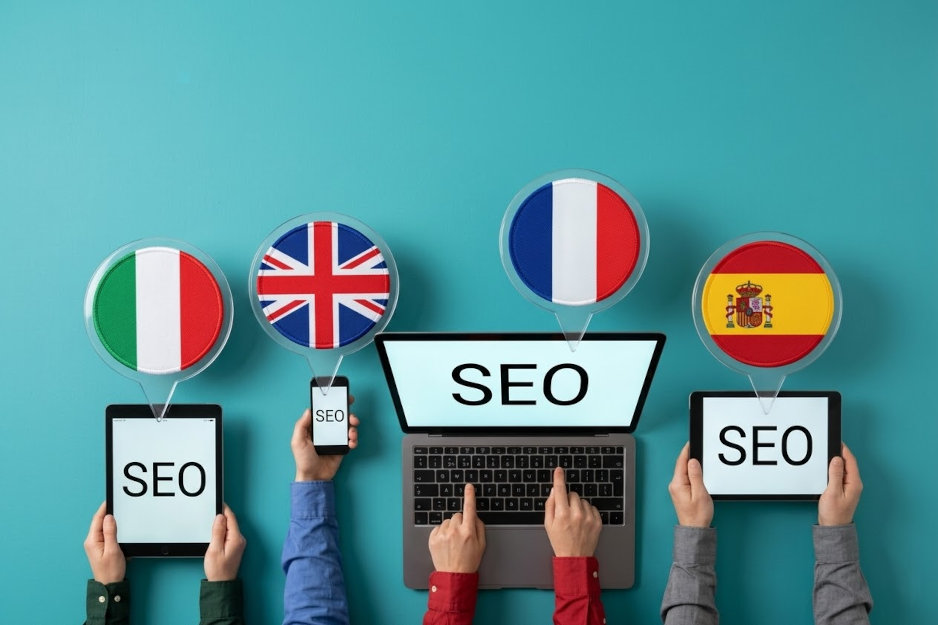
Ever wonder how a small artisan shop in Austin can suddenly find itself serving customers as far-flung as Kyoto without breaking the bank or hiring a battalion of staff? It’s not magic — it’s the age of the “micro-multinational.” Gone are the days when only giants with deep pockets and sprawling logistics could go global. Today’s game is all about smart tech stacks that mirror big corp power while keeping overhead low. But here’s the kicker: ambition isn’t the issue for most small businesses — it’s squeezing every bit of ROI from limited capital and manpower. How do you punch above your weight and turn your local shop into an international contender? The secret sauce lies in harnessing savvy software tools that bridge language, payment, and legal gaps effortlessly. Ready to unlock the blueprint for global domination without the typical headaches? Dive in and discover how to scale smart, not big. LEARN MORE

Going global was once the exclusive playground of multinational corporations with deep pockets and sprawling logistics networks. Today, the digital landscape has shifted dramatically, giving rise to the “micro-multinational.” A small artisan shop in Austin can now serve customers in Kyoto just as easily as those in Houston. However, the desire to expand is often checked by the reality of resources. For small business owners, the challenge is not a lack of ambition, but a constraint on capital and manpower. The goal is to build a tech stack that mimics the capabilities of a large corporation without the associated overhead costs. By leveraging the right digital tools, small businesses can bridge linguistic, financial, and logistical gaps to access international markets effectively.
The Essentials
- Website Localization: Automated tools like Weglot offer a cost-effective alternative to manual translation, managing multilingual SEO and content detection instantly compared to developer-heavy solutions like Transifex or Lokalise.
- Global Payments: Fintech solutions such as Wise Business and Stripe reduce currency conversion fees and simplify cross-border transactions.
- Compliance and Hiring: Employer of Record (EOR) platforms like Deel allows you to hire local talent without establishing legal entities in every new country.
How can technology bridge the language gap on a budget?
The most visible barrier to entry in a new market is language. Trust is the currency of the internet, and customers rarely buy from websites they cannot read or understand perfectly. Historically, translating a website required hiring native agencies and managing complex code files – a prohibitively expensive process for a small business. Today, automated translation layers allow companies to localize their digital presence instantly.
For website localization, tools like Weglot allow businesses to enter new markets by automating the translation process. This shifts the workflow from a manual, code-heavy burden to a streamlined, automated task. While tools like Crowdin and Transifex are powerful, they often cater to complex software development cycles. For a small business website built on WordPress, Shopify, or Webflow, the priority is ease of use and speed to market. A tool that integrates directly with the CMS and provides a first layer of AI translation (via engines like DeepL, Google, and Microsoft) allows a team to launch a localized version of their site in minutes, rather than months.
Certified review (published on Trustpilot on 16 February 2026):
“I’ve been using Weglot for nearly a year to translate my website easily and at a lower cost. The support team is incredibly responsive and always finds appropriate solutions to technical bugs and other issues.”
Key Takeaways:
- Language localization increases conversion rates by building trust with local audiences.
- Automation reduces the cost of translation by up to 90% compared to traditional agency models.
- Integration with existing CMS platforms is crucial for teams without a dedicated IT department.

Why is Multilingual SEO critical for international visibility?
Translating the words on a page is only half the battle; the other half is ensuring that search engines like Google or Bing serve the correct language version to the correct user. If a user in Spain searches for your product, they must land on the Spanish version of your site, not the English one. This requires complex technical configurations, specifically the implementation of Hreflang tags and metadata translation.
This is where the distinction between different tools becomes apparent. Weglot automatically adds Hreflang tags to each version of your site and serves pages under language-specific subdirectories or subdomains. This architecture is preferred by Google for indexing multilingual content. In contrast, some client-side translation plugins simply swap the text dynamically without altering the source code that search bots read, meaning the translated content remains invisible to search engines. For a small business with a limited marketing budget, getting discovered in local search results organically is far more sustainable than paying for ads in every new market.
Certified review (published on Trustpilot on 7 october 2024):
“Weglot is truly a game-changer for multilingual websites, especially for small international businesses like ours. The quality of translation exceeded our expectations – we’ve used it for our e-learning platform for healthcare professionals, translating to Spanish, Swedish, and Finnish. With a glossary for specific terminology, we found that Spanish and Swedish turned out quite well right away, while Finnish needed more adjustments. Honestly, having previously tried human translators, I can’t say the results with them were significantly better, but it was definitely 1000 times longer and more expensive.”
Key Takeaways:
- Visibility in local search engines (SERPs) depends on server-side translation and proper tagging.
- Hreflang tags tell Google which language version to show to which user.
- Organic traffic from international SEO offers a better long-term ROI than paid international advertising.
Which financial and administrative tools facilitate seamless expansion?
Beyond language, the “plumbing” of a business – payments and legal structure – must be adapted. Setting up a bank account in a foreign country can be a bureaucratic nightmare. Fintech solutions have effectively successfully solved this for improved fluidity.
Wise Business (formerly TransferWise) allows small businesses to hold money in over 50 currencies and get local account details for the UK, Eurozone, Australia, and the US without having a physical address there. This significantly cuts down on the exchange rate fees that traditional banks charge.
For hiring, you might need a local expert to handle customer service or sales. Establishing a legal subsidiary to hire one person is not financially viable. Deel or Remote act as an Employer of Record (EOR). They legally employ the staff on your behalf, handling local taxes, payroll, and compliance, while you manage their day-to-day work. As noted in a recent article on Noobpreneur regarding virtual services, utilizing virtual assistants and remote infrastructure is a key strategy for keeping overhead low while establishing a local presence.
Key Takeaways:
- Use multi-currency accounts to avoid high banking fees and simplify receiving payments.
- EOR services allow for compliant hiring without the legal cost of establishing foreign subsidiaries.
- Virtual inputs replace physical infrastructure to maintain a lean operational model.
Case Study: A Lean Approach to European Expansion
Consider a US-based D2C brand on Shopify wanting to target the French and German markets. A decade ago, this would require a budget of $50,000+. Today, the “lean stack” looks different.
The brand uses Stripe to accept local payment methods (like Cartes Bancaires in France or Giropay in Germany). They use Weglot to translate the store. They customize their AI Language Model to generate translations that instantly sound like their brand. The marketing manager then invites a freelance native French speaker (hired via Upwork) to review the top 20 best-selling product descriptions directly in the Weglot dashboard, ensuring the tone is consistent.
Crucially, because Weglot translates metadata and checkout flows, the customer experience feels entirely local. The brand avoids the common pitfall mentioned in Noobpreneur’s advice on mistakes to avoid, specifically the lack of cultural adaptation and planning. They don’t just translate; they localize the entire buying journey.
Certified review (published on Trustpilot on 12 February 2026):
“The support team responded quickly and resolved our issue efficiently. They were friendly, professional, and easy to communicate with throughout the whole process. Excellent support experience.”
Key Takeaways:
- Hybrid translation (AI + Human review) balances cost with quality.
- Localizing the checkout flow and payment methods is as important as translating product descriptions.
- Reviewing top-performing content first prioritizes budget where revenue potential is highest.

Comparative Table: Website Translation Tools for Small Businesses
Choosing the right tool depends on your team’s technical capacity and budget. Below is a comparison of popular solutions, highlighting why valid options exist for different needs.
| Feature | Weglot | Transifex | Lokalise | Crowdin |
|---|---|---|---|---|
| Primary Audience | SMBs, Marketers, No-Code Teams | Developers, Enterprise | Mobile Apps, Tech Teams | Software & Games |
| Setup Time | Minutes (No-Code) | High (Requires Dev) | Medium (Dev focused) | High (File management) |
| SEO Capabilities | Server-side, Auto Hreflang tags | Manual configuration needed | Configurable via API | Varies by integration |
| Maintenance | Auto-detects new content | Manual file upload/push | Continuous delivery (CI/CD) | File-based sync |
| Pricing Model | Tiered (free plan / paid plans start at 15€/mo) | Custom/Enterprise focused | Per active user/key | Tiered per project |
| Best For | Instant visibility & SEO | Deep software localization | Apps & Product UI | Crowdsourced translation |
According to data from Common Sense Advisory, 76% of online shoppers prefer to buy products with information in their native language. Therefore, the choice of tool must ensure that the translation is not just available, but accurate and discoverable.
While Transifex and Crowdin are excellent for software engineers building apps, Weglot’s AI Language Model powered by best-in-class engines like OpenAI and Gemini offers the most streamlined path for website expansion. It removes the technical friction, allowing business owners to focus on strategy rather than code. The AI Language Model (powered by OpenAI and Gemini) and the first layer of AI translation (powered by DeepL, Microsoft, Google) that Weglot generates when first detecting content are different. The user must apply the AI Language Model to override this first layer of AI translation.
FAQ: Tools for International Expansion
Does using automated translation tools hurt my SEO?
It depends on the technology used. JavaScript-based widgets that only translate text on the browser side are not indexed by Google. However, solutions like Weglot use server-side translation, meaning they deliver a fully translated HTML page to Google bots. This, combined with automatic Hreflang tags, actually improves your SEO by allowing you to rank for keywords in other languages.
How much budget should I allocate for initial international expansion?
With the modern tech stack (Weglot, Wise, Deel), a small business can technically “open” in a new market for under $500 per month in software costs. The variable cost will then be marketing and logistics. This is a fraction of the cost compared to traditional expansion methods which often run into the tens of thousands.
Can I use Google Translate for my business website?
While free Google Translate widgets exist, they are not recommended for professional businesses. They do not offer SEO benefits (your translated pages won’t appear in search results), they lack context customization, and they often look unprofessional. Using a dedicated localization tool ensures consistency, allows for human editing, and provides the professional polish required to convert visitors into customers.
What is the difference between translation and localization?
Translation is simply changing words from one language to another. Localization involves adapting the entire experience – currencies, cultural references, images, and payment methods – to feel native to the user. Tools like Weglot facilitate localization by allowing you to replace images and handle dynamic content, while payment processors handle the financial localization.

Expanding internationally is no longer about checking a box on a corporate roadmap; it is a vital growth strategy available to businesses of all sizes. The barrier to entry has never been lower, provided you choose the right tools. By automating the heavy lifting of translation with Weglot, minimizing financial friction with Wise, and hiring compliantly with Deel, you can position your small business as a global player. The key is to start lean, test markets quickly using these agile tools, and scale resources where you see genuine traction. The world is waiting for your business – you just need to speak its language.

Dog Dental Wipes for Teeth Cleaning, Finger Toothbrush Wipes for Dogs Cats,Dog Teeth Cleaning Wipes Reduce Bad Breath & Plaque Tartar, No-Rinse Daily Oral Care,Dog Toothbrush & Toothpaste Alternatives
$15.96 (as of October 15, 2026 03:21 GMT +00:00 - More infoProduct prices and availability are accurate as of the date/time indicated and are subject to change. Any price and availability information displayed on [relevant Amazon Site(s), as applicable] at the time of purchase will apply to the purchase of this product.)
Diet Coke Soda Soft Drink Cans, 12 fl oz, 12 Pack | No sugar, no calories, 46 mg caffeine per can
$7.68 (as of October 15, 2026 03:09 GMT +00:00 - More infoProduct prices and availability are accurate as of the date/time indicated and are subject to change. Any price and availability information displayed on [relevant Amazon Site(s), as applicable] at the time of purchase will apply to the purchase of this product.)
Amazon Fire TV Stick 4K (newest model), simple 4K streaming, new Fire TV Remote, all your apps in one place, free & live TV, find shows faster with Alexa+
$59.99 (as of October 15, 2026 03:32 GMT +00:00 - More infoProduct prices and availability are accurate as of the date/time indicated and are subject to change. Any price and availability information displayed on [relevant Amazon Site(s), as applicable] at the time of purchase will apply to the purchase of this product.)
Petcarex Dog Dental Powder, Dog Teeth Cleaning Breath Freshener | Pet Tartar and Plaque Remover for Teeth, Tooth Cleaning Powder with Probiotics for Dogs of All Breeds, Duck Flavor
$22.99 (as of October 15, 2026 03:21 GMT +00:00 - More infoProduct prices and availability are accurate as of the date/time indicated and are subject to change. Any price and availability information displayed on [relevant Amazon Site(s), as applicable] at the time of purchase will apply to the purchase of this product.)













Post Comment