How Ubotica Technologies’ Secret NASA JPL Partnership Could Rewrite the Future of Space Innovation—and Your Next Big Investment

Ever wonder what it takes to turn a fleet of satellites into a savvy squadron of spaceborne problem-solvers? Well, Irish tech whizzes at Ubotica Technologies just landed a high-stakes partnership with NASA’s Jet Propulsion Laboratory and Open Cosmos that’s set to revolutionize how we see and act on Earth’s data—without waiting days for answers. The name of the game? FAME, or Flight Demonstration of Federated Autonomous Measurement, which aims to create the biggest-ever orchestra of over 50 interconnected, AI-powered satellites dancing together in real time. Imagine satellites not just collecting data but making split-second decisions—spotting untracked ships, wildfires, or volcanic rumbles and instantly telling their fleet to zero in on the action, no humans needed. This isn’t sci-fi—it’s a game-changer, pushing from single-satellite smarts to a full-blown space network buzzing with intelligence. With Ubotica’s SPACE:AI platform steering the ship onboard these AI-enabled satellites, including Open Cosmos’ Hammer and Accenture-1, the future of Earth observation is about to get a whole lot sharper—and faster. Ready to dive deeper and catch the full scoop? LEARN MORE
Irish space technology firm Ubotica Technologies has secured a major collaboration with NASA Jet Propulsion Laboratory (JPL) and satellite manufacturer Open Cosmos to take part in a landmark Earth observation project aimed at transforming how data is gathered and acted upon in orbit.
The initiative, known as FAME (Flight Demonstration of Federated Autonomous Measurement), is part of NASA’s Advanced Information Systems Technology programme and is expected to become the largest autonomous satellite operations test ever attempted.
The project will ultimately link more than 50 spacecraft from multiple operators into a coordinated, intelligent network.
At the centre of Ireland’s involvement is Ubotica’s SPACE:AI platform, which will operate onboard satellites to process data in real time.
Two spacecraft developed by Open Cosmos, Hammer and Accenture-1, have already been selected as AI-enabled assets within the programme.
Traditionally, Earth observation satellites collect large volumes of optical, radar and infrared data, which is then transmitted back to Earth for analysis, often resulting in delays of hours or even days.
FAME aims to remove that lag by enabling satellites to interpret and act on data directly in orbit.
Using onboard artificial intelligence, satellites equipped with SPACE:AI can detect events such as untracked ships, wildfires or volcanic activity within seconds.
Once identified, the system can automatically trigger follow-on actions, including re-tasking other satellites in the network to capture additional imagery, without requiring human intervention.
The concept builds on earlier in-orbit demonstrations, including “Dynamic Targeting”, a technology developed by JPL and successfully tested in July 2025 in collaboration with Ubotica and Open Cosmos.
That system enables a satellite to reposition itself and capture high-resolution imagery in just over a minute, entirely autonomously.
FAME represents the next phase of development, scaling these capabilities from a single satellite to a fully federated constellation capable of coordinated responses across multiple spacecraft.
The multi-year demonstration is scheduled to begin in summer 2026 with an initial deployment of six satellites.
This will expand over time to a network of more than 50, capable of processing thousands of automated alerts and executing hundreds of autonomous observation tasks.
Ubotica CEO Fintan Buckley said the project marks a shift from isolated satellite intelligence to networked decision-making in space.
“Dynamic Targeting showed what a single satellite with onboard AI can achieve. FAME shows what happens when that capability is coordinated across a network,” Buckley said.
“Our contribution is the intelligence inside the Ubotica nodes: detecting what matters, processing it in orbit, and passing the signal to whatever asset can act on it fastest. That is how you close the loop at a speed that is actually useful.”
Meanwhile, Open Cosmos CEO Rafel Jordá Siquier highlighted the potential for real-time contextual data to unlock faster and more effective responses to global events.

“When Open Cosmos builds and designs satellites, we always have two key goals in mind: to understand and connect the world,” Jordá Siquier added. Understanding the world requires a layer of context that is accessible in real-time, so that data can be acted upon without delay. By adding the scale of a full network to this capability, FAME opens a new realm of possibility for what Earth observation technology can achieve.”
The SPACE:AI platform is already in commercial use through Ubotica’s maritime intelligence services, monitoring activity across European waters — a capability now set to scale significantly through the FAME programme
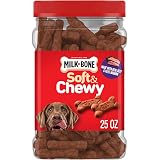
Milk-Bone Soft & Chewy Dog Treats, 25 Oz. Canister | Made with real beef & filet mignon, tender dog treats, easy to chew, for dogs of all ages and sizes
$14.48 (as of September 20, 2026 03:04 GMT +00:00 - More infoProduct prices and availability are accurate as of the date/time indicated and are subject to change. Any price and availability information displayed on [relevant Amazon Site(s), as applicable] at the time of purchase will apply to the purchase of this product.)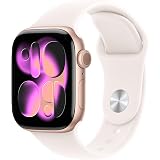
Apple Watch Series 11 [GPS 42mm] Smartwatch with Rose Gold Aluminum Case with Light Blush Sport Band - S/M. Sleep Score, Fitness Tracker, Health Monitoring, Always-On Display, Water Resistant
$375.06 (as of September 20, 2026 03:29 GMT +00:00 - More infoProduct prices and availability are accurate as of the date/time indicated and are subject to change. Any price and availability information displayed on [relevant Amazon Site(s), as applicable] at the time of purchase will apply to the purchase of this product.)
CELSIUS Assorted Flavors Official Variety Pack, Functional Essential Energy Drinks, 12 Fl Oz (Pack of 12)
$22.49 (as of September 20, 2026 03:04 GMT +00:00 - More infoProduct prices and availability are accurate as of the date/time indicated and are subject to change. Any price and availability information displayed on [relevant Amazon Site(s), as applicable] at the time of purchase will apply to the purchase of this product.)
Propel, Kiwi Strawberry, Zero Calorie Sports Drinking Water with Electrolytes and Vitamins C&E, 16.9 Fl Oz (12 Count)
$9.97 (as of September 20, 2026 03:04 GMT +00:00 - More infoProduct prices and availability are accurate as of the date/time indicated and are subject to change. Any price and availability information displayed on [relevant Amazon Site(s), as applicable] at the time of purchase will apply to the purchase of this product.)













Post Comment