This Comedy Special Blew My Mind—Here’s Why It’s the Ultimate Feel-Good Reset You Didn’t See Coming
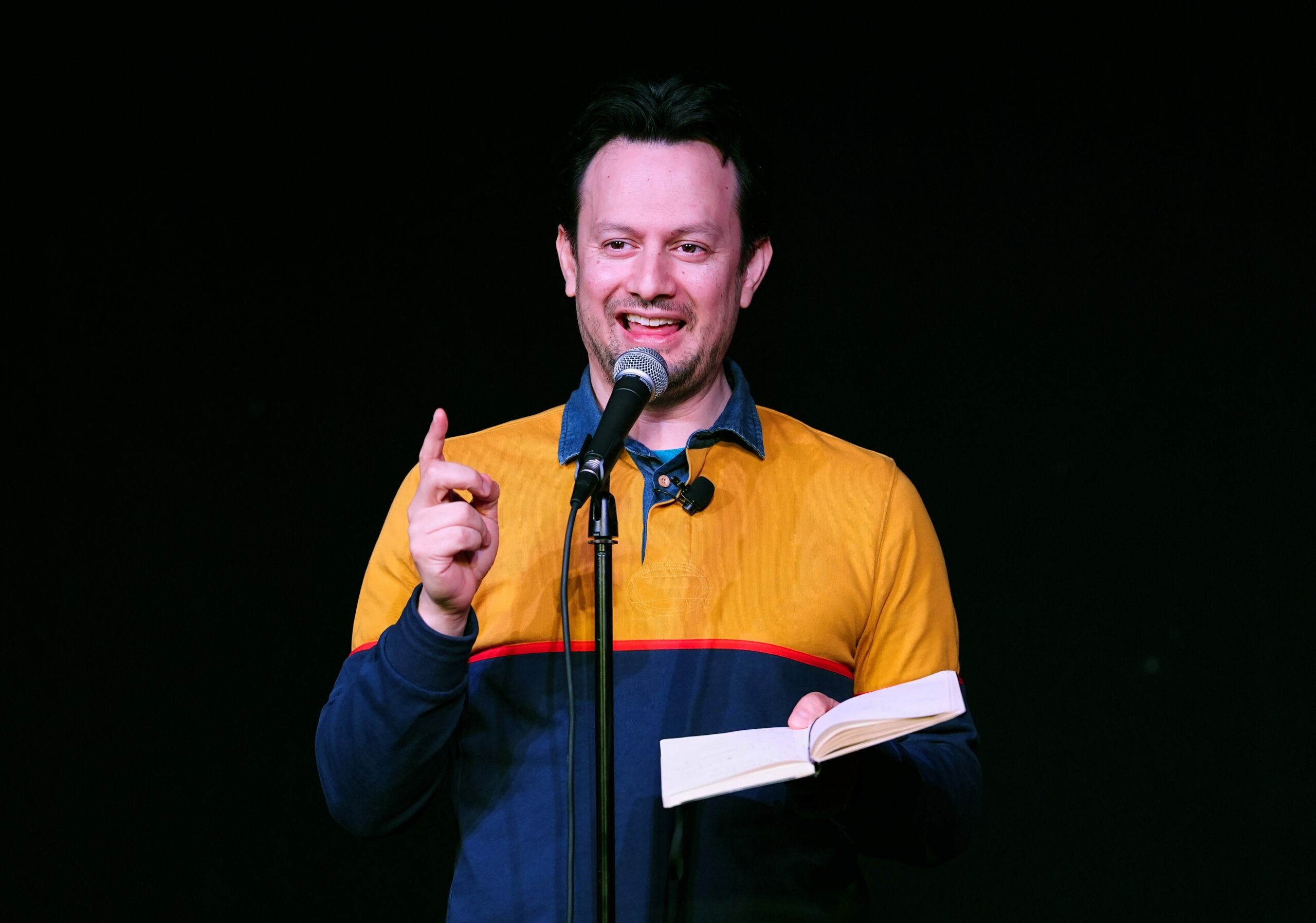
What if grief didn’t have to feel like walking through molasses—slow, suffocating, and utterly bleak? Imagine instead a grief that manages to crack a grin, even if it’s a wry, bittersweet one. That’s the remarkable journey Michael Cruz Kayne invites us on. After losing his son Fisher to sepsis just 34 days after birth, Kayne’s world was shattered. Fast forward ten years, and this sharp-witted stand-up comic transformed his raw, unfiltered sorrow into a Twitter stream of candid reflections that weren’t your typical Hallmark sympathy card—no pastel lilies, no scripted condolences. Those improbable tweets sparked a one-man show, Sorry for Your Loss, which not only hit the cozy Minetta Lane Theater in NYC but also found life as an audio and film special on Dropout. What makes Kayne’s work so uniquely powerful is its capacity to shred you with truth, but then stitch you back together with laughter and hope—because yes, grief can be funny, unvarnished, and profoundly human. Ready to rethink what it means to “sorry for your loss”?
LEARN MORE
 5 min read
Michael Cruz Kayne’s son Fisher died from sepsis in 2009, just 34 days after he was born. Fisher’s twin brother lived, and Kayne and his wife, Carrie, also have a daughter. The family’s world was destroyed. It needed to be rebuilt.
Exactly ten years later, Kayne, a stand-up comic, started writing on Twitter about his grief over Fisher, and about grief itself, and what he wrote was frank and beautiful and sometimes very funny. The comments started blipping in by the thousands upon thousands, people starving for a voice that talked about grief in a way that didn’t sound like a Hallmark card with watercolor lilies on the front.
The tweets turned into a one-man show that Kayne titled Sorry for Your Loss, which is the kind of phrase that shows up on those cards. It ran in 2023 at the Minetta Lane Theater, a cozy theater on a tiny street in Greenwich Village in New York, and, because of demand, its run was extended before it even began. (By this time, Kayne was a writer on The Late Show with Stephen Colbert, where he has won a Peabody Award.) Audible, which owns the theater, recorded the show first as an audio experience and now as a film special, streaming on the comedy platform Dropout.
If it’s possible for a piece of art to shock you with joy, that’s what Kayne’s work does. It shreds you and then somehow leaves you feeling whole, and feeling good, and feeling like everything’s going to be okay.

“It was a way out of like the obliterating sadness, to try and make something out of it,” Michael Cruz Kayne says of how he turned his grief into the beautiful Sorry for Your Loss.
ESQUIRE: For the uninitiated, in your words, what is Sorry for Your Loss? Because I’ve told some people excitedly about this great special that’s based on a one-man show by a man whose son died very young and that it’s really funny. I get some odd looks.
MICHAEL CRUZ KAYNE: Yeah. So the show is about grief—specifically about how I felt starting from the moment my son died, which was in 2009, until now, because the grief continues. It’s just an honest reflection on those feelings, and a lot of that is comedy because I’m a funny person.
And yet people don’t expect funny grief.
Yeah, and there are the things that are funny. Even in the worst possible situation, there are still things that, if you’re a human, will make you laugh. I didn’t want to hide from those things or pretend not to see them. I just wanted to feel free and be myself, as opposed to trying to be a, quote, unquote, “grieving person.” People have an expectation of what someone who is grieving will be like—they expect solemnity and whispering and calligraphy or whatever. But all that stuff made me feel alienated from people. What made me feel good was talking to people who talked to me like I was a person. I know you. You’re my friend. Can we just talk how we normally talk, except it’s about this fucked-up thing? As opposed to people who are like, “He’s in a better place” and all the stuff people do to try and be nice but that feels like they’re reading from a script.
Comedy is your form of artistic expression, and artistic expression has helped people grieve throughout human history. Did you see Hamnet?
[Nods vigorously.] Ohhh, yeah, I saw Hamnet. The movie was eradicating. It was so good.
There’s the question, for the artist, of Why am I doing this? Why am I, in your case, performing a show for people about the most painful and deeply personal thing in my life—and reliving it every night?
Yeah. When I started to work on it, there definitely was a totally sensible response from people whom I respect that was like, This is going to be sad. Do you want to do something sad all the time? And the way that I felt while doing it was probably that it’s the least sad thing I’ve ever done, if that makes sense. There are parts of it that are really, actually, very sad. But what I mean is the feeling that I have when I perform it is so good. Because I’m talking about something that matters to me. And maybe it’s just because I wasn’t that good at stand-up before—all I was talking about was what was funny to me. And so the feeling of having a sense of purpose is so good. I highly recommend it. Maybe I wasn’t creative enough to have that sense before something really fucked-up happened to me. But once something bad happened, it became very clear that I could find purpose in it. It was a way out of like the obliterating sadness, to try and make something out of it.
Your boss knows a lot about grief and is gifted at talking about it. You had already started working on your show before you got the job at Colbert, but it came to fruition and has evolved while you’ve been there. Did working for someone who also has experienced and considered grief so deeply and exquisitely lead to conversations between you two about that?
For a little while I had a podcast called “A Good Cry,” and Stephen was the first guest, which was very generous of him to do. And it’s amazing, because he’s obviously so thoughtful and so intentional with everything that he ever communicates. He also, at one point in that episode, recites a poem pretty much from memory that we found out, like, one of his college classmates wrote or something. After he recited the poem, I was like, That’s the best poem I’ve ever heard in my entire life. I went to look it up, and it was no place. And I was like, Did you just make this up? What is this? But yes, I have had the opportunity to speak with him about grief, and he’s a beautiful, deep thinker, as everybody knows. Even just extemporaneously, he’ll say some shit and you’re like, Oh my God, I’m gonna think about that for a year.
You performed the show every night off-Broadway, and maybe several thousand people saw it during the run. Now it has the potential to reach a lot more. You’re putting yourself out there.
Once you release it into the world, you lose a lot of control over how people receive it. It’s funny, The New York Times did a piece about, like, grief and comedy a few years ago now, which I was in, and I read all the comments. A large percentage of them were like, What kind of sicko experiences some kind of tragedy and then tries to turn it into jokes? I guess they hadn’t seen it, so that’s what they think it is. But what it comes down to is that for more people to know that Fisher is a person feels good to me. He mattered, and he matters.

Leveret Kids & Toddler Pajamas Matching Doll & Girls Pajamas 100% Cotton Pjs Set Variety of Style (Size 2-14 Years)
$40.00 (as of September 20, 2026 03:10 GMT +00:00 - More infoProduct prices and availability are accurate as of the date/time indicated and are subject to change. Any price and availability information displayed on [relevant Amazon Site(s), as applicable] at the time of purchase will apply to the purchase of this product.)
Bedsure Orthopedic Dog Beds Large Sized Dog Washable Original Design | 35" Dog Couch Sofa Waterproof, Comfy Bolster Sides, Removable Cover, Nonslip Bottom, Pet Bed for Cats, Senior Dogs, Grey
$46.99 (as of September 20, 2026 03:10 GMT +00:00 - More infoProduct prices and availability are accurate as of the date/time indicated and are subject to change. Any price and availability information displayed on [relevant Amazon Site(s), as applicable] at the time of purchase will apply to the purchase of this product.)
Core Power Fairlife 26g Protein Milk Shakes, Liquid Ready To Drink for Workout Recovery, Chocolate, 14 Fl Oz Bottle (Pack of 12)
$41.88 (as of September 20, 2026 03:04 GMT +00:00 - More infoProduct prices and availability are accurate as of the date/time indicated and are subject to change. Any price and availability information displayed on [relevant Amazon Site(s), as applicable] at the time of purchase will apply to the purchase of this product.)
Amazon Fire TV Stick 4K Select (newest model), start streaming in 4K, AI-powered search, and free & live TV, find shows faster with Alexa+
$19.99 (as of September 20, 2026 03:12 GMT +00:00 - More infoProduct prices and availability are accurate as of the date/time indicated and are subject to change. Any price and availability information displayed on [relevant Amazon Site(s), as applicable] at the time of purchase will apply to the purchase of this product.)










Post Comment