Unlocking Jack Huston’s Secret Strength: The Surprising Trait That Powers Every Role He Plays
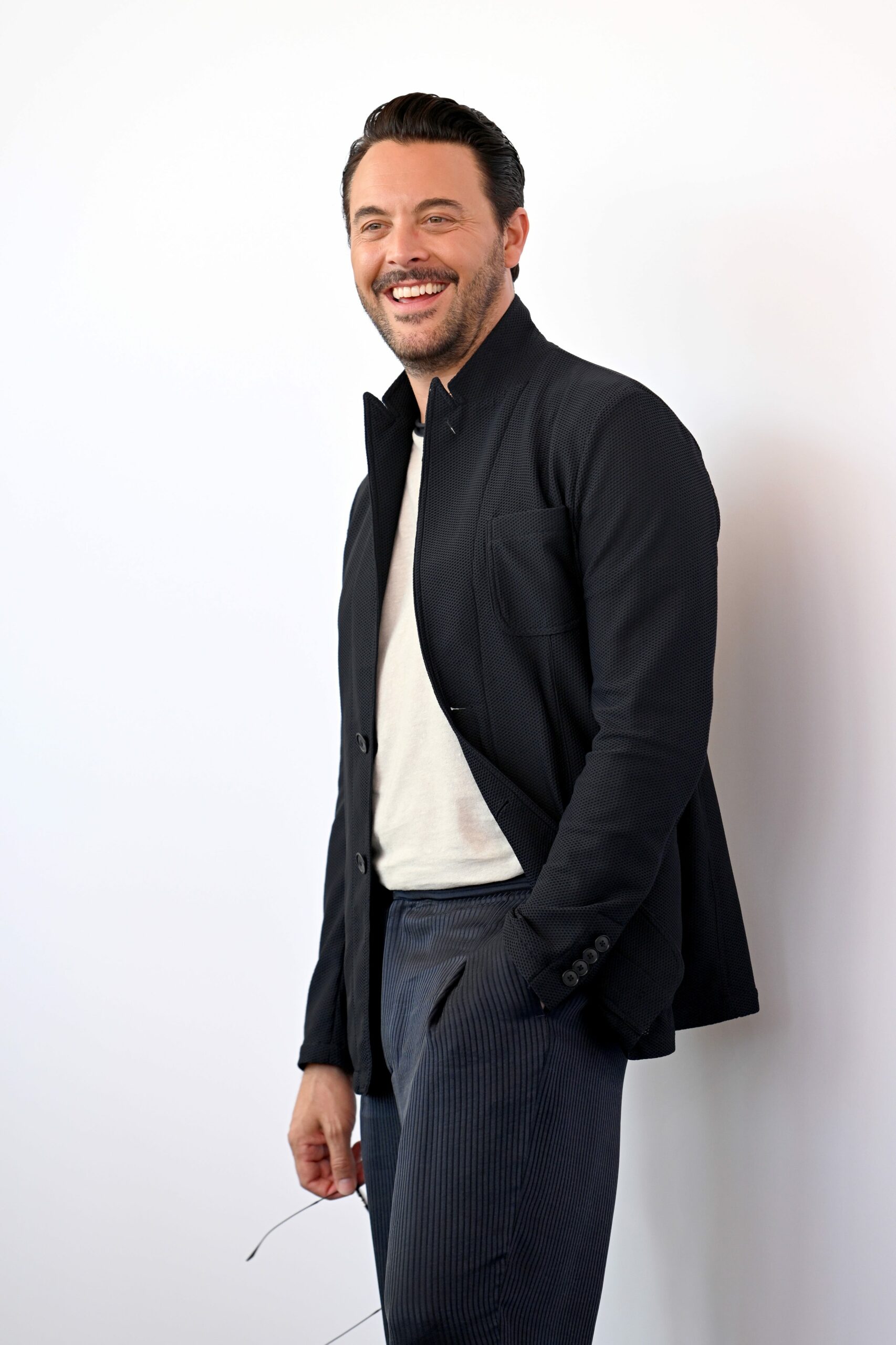
Ever wonder how real strength is often hidden behind a rough exterior? Jack Huston gets it — he’s been there, embodying characters who look like monsters on the outside but harbor profoundly sensitive souls within. From his haunting role as the scarred WWI sharpshooter Richard Harrow in Boardwalk Empire to his latest turn as Flint Marko in Spider-Noir, Huston explores the gritty, often overlooked struggles of veterans grappling with their pasts. It’s not just about scars or masks; it’s about the battles beneath the surface that rarely get told. With a surname heavy with Hollywood legend, Jack isn’t just resting on family laurels — he’s carving his own path, shining a light on society’s misunderstood outcasts. And if that wasn’t enough, he’s taking the helm on a deeply personal project: a fresh take on Joseph Merrick, the Elephant Man, promising a story told with rare kindness and authenticity. Intrigued? You should be. LEARN MORE
 10 min read
Jack Huston is thinking about the wounded. Not the scarred or deformed but the people with rough exteriors who tend to have sensitive souls. “We’re surrounded by angels, and we don’t notice them,” the 43-year-old actor tells me over breakfast. “I don’t want to tell stories about bad people. I find it more fascinating when people think somebody’s bad and they end up being wonderful. To not judge a book by its cover is great. It’s what I tell my kids a lot.”
Huston’s work as an actor taught him that. Nearly 16 years ago, he broke out in his acclaimed performance as Richard Harrow, a disfigured Army sharpshooter in the HBO drama Boardwalk Empire. Characterized by his sandpaper voice and an uncanny tin mask to cover injuries from his service, Richard was a walking tragedy, a lonesome golem with a gun, a silent-movie monster under the employ of gangsters. Inside, Richard yearned to be whole. He often dreamed of a beach with a woman to love and his feet in the sand.
Now Huston is back in the headspace of veterans struggling to find peace back home. It’s a late morning at the Plaza Hotel in Manhattan when I meet Huston for an interview pegged to his role as Flint Marko, aka the Sandman, in the new Marvel series Spider-Noir. The Prime Video series is based on the comics by David Hine and Fabrice Sapolsky, taking place in an alternate 1930s where heroes and villains prowl Depression-era New York City. Nicolas Cage stars as private eye Ben Reilly who moonlights as the masked vigilante “the Spider.” In a city smeared by the inky shades of film noir, Cage trades fists with Huston’s Flint, an Army grunt turned bodyguard for the club siren Cat Hardy (Li Jun Li). I’ll refrain from spoiling too much, but just know that Flint’s ability to harden and shape-shift his body is anything but a superpower.
It isn’t simply cute to say Huston’s talents are in his blood. It’s literal. Jack Huston descends from the famed Huston family: John is his grandfather, and Anjelica is his aunt. His masculine eloquence and screen-friendly charms manifest like inherited traits. But while Huston knows that his surname is woven throughout Hollywood, he’s determined to make his own mark. His artistry is slowly becoming one with the outcasts and the ones people fear staring at too much in public. In other words, the monsters.
He’s in development of his next directorial feature, Joseph Merrick, a biopic about the 19th-century architect whose severe abnormalities led him to become the carnival attraction known as the Elephant Man. “It’s all led to this,” Huston says about the endeavor. “I got into the head of Joseph. I found somebody who was looked at as a monster and led [his life] with kindness and grace and never any blame. His soul was pure.” Shooting will begin in September.
For now, Huston has Spider-Noir, and he’s made the New York premiere his own family affair. After a hectic schedule kept him away from home in the UK for half of last year, the father of two sought to spoil his kids with a whirlwind weekend in the Big Apple. His son chose to stay home—he’s dedicated to routines and soccer games—but his daughter was game. “Yesterday I bought her her first pair of fancy shoes for the premiere, and she’s beaming,” Huston says, his fatherly joy infectious. “I was like, ‘Don’t tell your mother. She’ll read about it.’ “
In an interview with Esquire, Jack Huston unspools the webbing that connect his memorable Boardwalk Empire role to Spider-Noir, the ways he considers his family’s legacy, and how his Joseph Merrick movie will stand out from David Lynch’s classic The Elephant Man.

Jack Huston stars in Spider-Noir as the hulking Flint Marko, a major Spider-Man villain reimagined as a club enforcer in 1930s Manhattan.
ESQUIRE: What was it like growing up in King’s Lynn in England?
JACK HUSTON: As normal as you can expect and some of the happiest years of my life. My father wasn’t around. My mum was fantastic and supported whatever we fancied. I got bit by the acting bug early. We went to visit my aunt on the set of The Witches, which was shooting in Cornwall. When I arrived, she was dressed as the Grand High Witch. I remember prodding the prosthetics, the big nose and all that stuff. She was fantastic. But then I saw her perform, doing the voice and all the witches with their bald heads and purple eyes screaming. [I thought] Oh, shit. You can do this? It was a revelatory moment for a child.
This is your first comic-book-oriented project. Did you have a favorite character you really loved as a child? Did you read comics?
I wasn’t huge about comic books. I was a deep Thundercats enthusiast. Lion-O, I fucking loved him. Transformers was big when I was young. There were times in the playground we’d choose superheroes. There’s these exercises I do when I’m doing character study. I try to go back and remember things. I bet if I did that, I’d be hit by moments of running around as Spider-Man. Actually, I do have one.
Do tell.
I was with my best friend Will. We must have been five or six. My face was painted as Spider-Man in the London Zoo with my mother. We were running around, doing the hand gestures. I haven’t thought about that for a long time. It’s part of the ether, isn’t it? It’s hard to imagine a time before these [characters] existed. These characters guide us, and it’s amazing to imagine people willing to do what’s right selflessly.
Was there an artist you wanted to emulate throughout your professional career?
The actor that changed me was Marlon Brando. I was ten. My father came from America. He took me out of school and said, “We’re gonna rent your grandfather’s favorite movies.” We rented On the Waterfront and Gallipoli. We watched Gallipoli first. I was like, that’s good. Then we watched Waterfront, and I remember being mesmerized. Brando did that for me. I don’t think many boys at ten years old are shown that film by their dads. As little of a relationship as I had with my father, he did show me films. I’ll give him that. That was good.
Talk to me about becoming Flint Marko in Spider-Noir. What about him appealed to you?
He was beautifully tragic. I liked him from the moment I read him. It was between me and a girl, Faye. We’re talking about running away together. He was talking about what he wants: to get away, to escape, and then he stops and says, “But I can’t have that.” He’s one of those people who says, I’m destined to be a bum. He had a great heart. He just didn’t trust himself.
How did you find his speaking voice?
The voice came to me in the audition. I always start with the voice. I was like: big, bulky, brutish. Everyone looks at him like he’s dumb. Like a bag of sand. So I made it gravelly. What would it sound like if you had sand in your voice? This voice came out of me again, which is fun, because once you hear a voice and you start speaking a certain cadence with a certain rhythm, it makes all the difference. Then I start seeing the character. I was on board in seconds.
It’s interesting to hear Flint compared to Richard from Boardwalk Empire, who also had a distinct voice.
Richard’s voice was established through a wound. His vocal chords were damaged. I wanted it to sound like it was difficult for him to speak. That’s why he spoke so little. When he did, it had to be specific. It’s not easy for him to talk, which I thought was beautifully tragic. Everything must have meaning. It made him honest. He wouldn’t waste his time. It would be too hard.
How else might Flint remind you of Richard?
It’s so funny. I didn’t really think about it when I first read it. Now I can put it in perspective. Richard was shy and thoughtful. Observing and astute. Flint is broodish. A heavy brawler. Doesn’t want to show anybody he’s interested in literature and probably reads behind closed doors. They think of him as a half-wit. Your size is what carries you, and he commits himself to that. There are similarities, but I wouldn’t put them together on the offset.

Like Huston’s character in HBO’s Boardwalk Empire, Flint Marko (left) is a World War I veteran who returns home working for gangsters. He keeps a tight bond with his fellow soldiers, who are also afflicted with powers.
After playing two World War I veterans, what have you learned about soldiers and their struggles adjusting to life back home?
It was brutal on another level. The horrors they saw, they could only share with those who also saw it. It’s not for story time. My grandfather [served in] the Second World War. He never talked about the war, but he’d see his troop he was the commander of. Every year they’d have a reunion. He was never happier. It was something he closed off from the rest of us. I find that endlessly fascinating. These guys carry so much on their shoulders but they don’t talk about it. They have an incredible sense of loyalty.
Your grandfather must have some stories.
I remember later in his life, he was at a table with people and someone made an offhand comment about what they thought courage was. My grandfather started crying. He said, “You know what courage is? A commanding officer with his hand blown off saluting every one of his men as they pass, with a bloody stump, because he knows they’re walking to their death. That’s fucking courage.” I was like, Oh, shit. You’ve seen something we’ll never know.
The horrors of World War I meant so many soldiers returned wounded—missing limbs, wrapped in bandages. Film scholars suggest they set the template for cinema’s first monsters. What do you make of Richard and Flint being “monsters” in their stories?
People who sacrifice so much for their country are sort of looked at as monsters. It’s one of the reasons why they’re allowed to be angry. They went, sacrificed everything, they came home, and there’s nothing for them. It’s like the country forgot what they did.
Good people can do bad things. It doesn’t make them a bad person. You can be sent by your country and realize the mission is wrong. That stuff would plague you for life. Then they get back into that position because it’s all they know. Flint is with Silvermane carrying out orders. Richard Harrow, same thing. That type of living is for gangsters.

After playing afflicted soldiers like Flint in Spider-Noir, Huston will soon helm his next film, Joseph Merrick, about the real-life “Elephant Man.”
Do you have a favorite memory from the set of Spider-Noir?
A lot of the movies my granddad made were shot on the back lots of Sony, which used to be the old MGM and Universal lots. We got to shoot all this 1930s noir-esque stuff on the stages of those studios. One night, I’m not doing great. I wanted to go home and go to bed. We were doing a large action scene. I thought, This must have been where my great-grandfather, my grandfather, my aunt, my uncle, all would have walked. To go to sets making movies that influenced what I’m doing now, in the same place. I felt the movie gods all around us. To go from I wish I’d go home to How fucking lucky I am.
How do you consider the legacy of your family’s name? How much are you trying to stand apart from the other Hustons?
My uncle said to me early on: “Never deny your family. Be proud.” Don’t do the bullshit, I don’t want to talk about them, I’m trying to do my own thing. You’re gonna do your thing no matter what. No one’s giving you a job. You’ve got to work just the same, sometimes harder because people want to disprove you are capable. It was a good lesson. I’m lucky to show my kids their films. Not many people can watch their great-great-grandfather of a hundred years ago. I own every film my family has done. The kids love it. We’re able to show them their grandfathers.
You’re working on a movie about Joseph Merrick. How did that happen?
One of the producers watched my film Day of the Fight and were kind enough to let me see the script. The script didn’t hit, but I loved the story. I took it upon myself to throw the old script out and start new. It’s all the areas of Joseph’s life that have not been told. So it doesn’t step on the toes of The Elephant Man. It sits side by side and should, hopefully, bring a whole new audience back to that movie.
My script is about his childhood and the last three months of his life. It sits on either side of Lynch’s film. I want people to watch this film and realize there’s another film there too. They should live in harmony.
So it’s not a remake of David Lynch’s movie?
I would not, for one second, dare remake that film. The first time I saw an actor change my life was On the Waterfront. The first time a film changed my life was The Elephant Man. I never knew so much compassion. I believe every one of my characters since then, every film [I’ve done] has something to do with The Elephant Man. I was close to John Hurt. I got to live with him and his wonderful wife Anwen in Los Angeles. I was displaced and he said, “You’re living with us now.” He was the best.
How are you casting?
We’re doing something I’m proud of. I am going to the marginalized disabled community of actors and nonactors. We’re doing a wide search. Hopefully we will find Joseph. We have a duty because there are so few parts which are perfect for somebody who has lived that life. Somebody who could speak to it better, who might have history there. It’s important that we start there. I need to find him. You know quickly when the person will walk into the room. You go, “That’s Joseph.” I’m waiting for that moment.
How have your roles playing afflicted people and your work on Joseph Merrick shaped your sense of empathy?
My sense of empathy has grown exponentially. I ingrain this to my kids. I say, “Lead with kindness.” If somebody needs your help, step in. I don’t like injustice. Empathy is what I lead with all the time. If you start there, you start from a good place.
Exclusive Digital Issues of Esquire

Winter 2026
Featuring:
- Why Can’t These Grown Men Stop Playing with Toy Cars? by Rosael Torres-Davis
- The Man Who Treats Sick Children with Cannabis, No Matter the Cost by Jana Meisenholder
- Uncomfortably Numb: My Life with a Desensitized Penis by Kyle MacNeill
- What We Did on Our Family Vacation to … Antarctica by Jordi Lippe-McGraw
- The 5 Types of Rain Coats Every Guy Should Know by Jonathan Evans

Fall 2025
Featuring:
- Three Days Inside an ICE Detention Center by Rowan Moore Gerety
- The Real Life Haunting of Annabelle, a Doll Possessed by Kyle MacNeill
- He Lost His Mind Running a 268-Mile Race by Chris Hatler
- Could I Handle 10 Days of Total Silence? by Joe Kanzangu
- George Bell Served 24 Years for a Crime He Didn’t Commit. Now He’s Learning to Live Again. by Ryan D’Agostino

Summer 2025
Featuring:
- How a Brutal Beer War Led to the Downfall of a Famous Milwaukee Brewery by David Bourgeois and Michael Lander
- The Houston Superlawyer Who’s Taking on Diddy by Timothy Bella
- What I Didn’t Understand About My Autistic Son by Robert Huber
- The Rise of Dystopian Luxury by Charlie Teasdale

Spring 2025
Featuring:
- What Have They Done to My Boy? by Scott Raab
- Inside the World of Armored Medieval Combat by Kyle MacNeill
- Carnivores: A Love Story by Zackary Peck
- The Wild West Treasure Hunt That Has Obsessed the World for Over a Decade by Porochista Khakpour
- Make America Hammered Again by Jonah Flicker

Winter 2025
Featuring:
- Anthony Mackie Comes Home by Brady Langmann
- Does Fasting Work? by David Coggins
- Why One of England’s Richest Men Spent $2 Billion to Make His Dream Car by Jaclyn Trop
- Sex, Drugs, and Murder in Techland by Michael Lev-Ram
- What’s Inside Your Rolling Papers? by Bill Shapiro

Beats Studio Pro Premium Wireless Over-Ear Headphones- Up to 40-Hour Battery Life, Active Noise Cancelling, Great for Travel & Commuting, USB-C Lossless Audio, Apple & Android Compatible -Black
$209.95 (as of September 13, 2026 03:24 GMT +00:00 - More infoProduct prices and availability are accurate as of the date/time indicated and are subject to change. Any price and availability information displayed on [relevant Amazon Site(s), as applicable] at the time of purchase will apply to the purchase of this product.)
Alex Tech 10ft - 1/2 inch Cord Protector Wire Loom Tubing Cable Sleeve Split Sleeving For USB Cable Power Cord Audio Video Cable – Protect Cat From Chewing - Black
$8.99 (as of September 13, 2026 03:10 GMT +00:00 - More infoProduct prices and availability are accurate as of the date/time indicated and are subject to change. Any price and availability information displayed on [relevant Amazon Site(s), as applicable] at the time of purchase will apply to the purchase of this product.)
Greenies Pill Pockets Large Size Dog Treats, Peanut Butter, 7.9 oz | Vet-recommended, masks pill smell & taste, moldable texture, capsule size, natural ingredients, no fillers, 7.9 oz. pouch
$8.54 (as of September 13, 2026 03:03 GMT +00:00 - More infoProduct prices and availability are accurate as of the date/time indicated and are subject to change. Any price and availability information displayed on [relevant Amazon Site(s), as applicable] at the time of purchase will apply to the purchase of this product.)
PUMJAG Dog Bark Collar, Automatic Bark Collar with 8 Sensitivity Levels, Waterproof Anti Barking Collars with Beep Vibration Modes, Rechargeable Smart No Bark Collar for Large Medium Dogs-K05
$36.99 (as of September 13, 2026 03:08 GMT +00:00 - More infoProduct prices and availability are accurate as of the date/time indicated and are subject to change. Any price and availability information displayed on [relevant Amazon Site(s), as applicable] at the time of purchase will apply to the purchase of this product.)










Post Comment