
The Untold Power Play: How a National Game Plan Could Ignite Indigenous Business Empires Overnight

Ever wonder why Ireland, despite being a buzzing hub for startups, somehow struggles to turn these bright sparks into global giants? It’s like watching a prodigy perform brilliantly on a small stage, only to see them walk away before stepping onto the world’s arena. That’s exactly the dilemma highlighted by PwC’s latest deep dive—a call to arms for Ireland to craft a unified, powerhouse strategy to nurture homegrown businesses from local champions into international trailblazers. The catch? It’s all about overcoming the “three Cs”: capital, capability, and culture. Without tackling these head-on, the Emerald Isle risks watching its next generation of multinational heroes set up shop somewhere else. It’s not just a business challenge—it’s a race to preserve Ireland’s economic soul and resilience . Are we ready to answer the call, or will our homegrown successes become someone else’s headlines? Dive into the full analysis and see the blueprint that could rewrite Ireland’s business future. LEARN MORE
Ireland needs a coordinated national strategy to help indigenous businesses scale into global companies or risk seeing the next generation of Irish multinationals emerge elsewhere, according to new analysis from PwC.
The professional services firm has identified what it describes as a significant weakness in Ireland’s economic model: while the country performs strongly in supporting start-ups, it continues to struggle to grow domestic firms into large-scale international businesses.
PwC’s report argues that despite Ireland’s strong entrepreneurial culture, university ecosystem and State-backed supports, many indigenous companies encounter barriers that prevent them from achieving global scale.
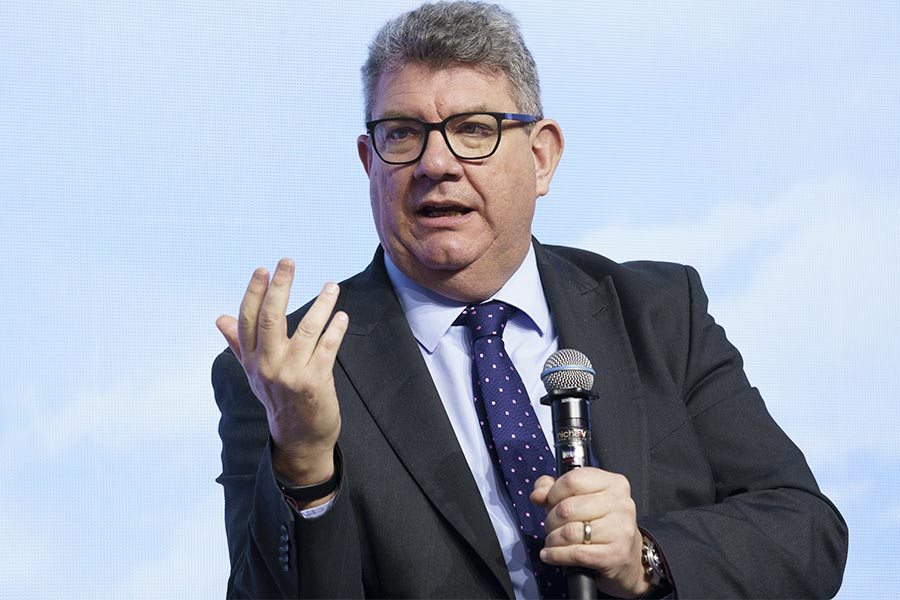
David McGee, Partner at Strategy& with PwC Ireland, said Ireland’s long-term economic resilience depends on strengthening the indigenous business sector alongside its successful foreign direct investment model.
“While Ireland excels at fostering startups, the central challenge lies in scaling these companies into global players,” he said. “A coordinated national approach is needed.”
The report groups the main challenges facing scaling businesses under what it calls the “three Cs” – capital, capability and culture.
PwC says access to growth capital continues to be one of the biggest barriers for ambitious Irish firms, particularly those seeking later-stage funding.
The report notes that Ireland’s venture capital market remains relatively small, leaving many businesses dependent on internal funding and reluctant to pursue external debt or equity financing. As a result, firms can become undercapitalised at critical stages of growth.
PwC points to international examples such as Singapore’s sovereign-backed Temasek fund as models that have helped accelerate the development of indigenous companies.
It suggests Ireland could further leverage resources through the Ireland Strategic Investment Fund, increased collaboration with the European Investment Bank and greater mobilisation of private and family-owned capital.
The availability of skilled workers is also constraining growth ambitions.
According to PwC’s 2026 Irish CEO Survey, 60% of Irish business leaders report difficulties accessing key skills. Shortages are particularly evident at senior leadership and specialist levels, making it difficult for companies to build the management expertise required to scale internationally.
The report highlights measures such as expanded technology education, apprenticeships and improvements to employee share ownership schemes as potential ways to strengthen the talent pipeline.
PwC also argues that cultural attitudes towards growth and risk are restricting the expansion of many Irish businesses.
Just 14% of Irish CEOs report having a high tolerance for risk in innovation projects, according to the firm. The report suggests a broader tendency towards caution around investment and expansion is limiting the potential of many SMEs.
PwC said scaling should be viewed as a national strategic priority rather than simply an issue for individual businesses.
The firm is calling for greater recognition of indigenous business success stories and stronger peer networks to encourage more companies to pursue ambitious growth plans.
To address the challenges, PwC has proposed a 10-point multi-year plan that includes tax reforms, new sources of growth capital, talent initiatives and measures designed to encourage companies to retain headquarters and intellectual property in Ireland.
Among the recommendations are the creation of a sovereign scale-up capital fund, reforms to capital gains tax and entrepreneur reliefs, enhanced employee ownership schemes, targeted visa programmes and leadership development initiatives.
Colm O’Callaghan, Tax Partner at PwC Private, said urgent action is needed as international competition intensifies.

“As Ireland seeks to remain competitive globally, tackling these structural challenges across capital, capability and culture will be essential to unlocking the next phase of business growth,” he said.
“Ireland is in a global race to scale its indigenous enterprises. The opportunity is clear – but so too is the threat if we do nothing. Therefore, this needs urgent and decisive action, without which the next generation of Irish multinationals risk being built elsewhere.”

Essentia Ionized Alkaline Water, 9.5+ pH, 99.9% Pure, 12 x 1L | 99.9% pure ionized alkaline water with a 9.5+ pH until opened, and trace electrolytes for a clean smooth taste. 12 x 1L
$19.99 (as of October 2, 2026 03:06 GMT +00:00 - More infoProduct prices and availability are accurate as of the date/time indicated and are subject to change. Any price and availability information displayed on [relevant Amazon Site(s), as applicable] at the time of purchase will apply to the purchase of this product.)
30 PCS Cable Organizer for Desktop, Data Cable Management Ties, Wire & Network Routing Fixer
$2.70 (as of October 2, 2026 03:26 GMT +00:00 - More infoProduct prices and availability are accurate as of the date/time indicated and are subject to change. Any price and availability information displayed on [relevant Amazon Site(s), as applicable] at the time of purchase will apply to the purchase of this product.)
DaVinci Gourmet Classic Blue Raspberry, 25.4 Fluid Ounces (Pack of 1)
$7.99 (as of October 2, 2026 03:06 GMT +00:00 - More infoProduct prices and availability are accurate as of the date/time indicated and are subject to change. Any price and availability information displayed on [relevant Amazon Site(s), as applicable] at the time of purchase will apply to the purchase of this product.)
Wonderful Halos Mandarins, Sweet, Seedless, Easy Peel Mandarin Oranges - Healthy Food, Fresh Fruit, 3lb Bag
(as of October 2, 2026 03:06 GMT +00:00 - More infoProduct prices and availability are accurate as of the date/time indicated and are subject to change. Any price and availability information displayed on [relevant Amazon Site(s), as applicable] at the time of purchase will apply to the purchase of this product.)












Post Comment