
How UC Berkeley, Nvidia, and Stanford’s T-Rex Framework Could Revolutionize Robot Interaction—and What It Means for Investors Ready to Strike Gold in AI Robotics

Ever wonder what it takes to teach a robot not just to see or talk—but to actually feel? I mean, we all get how tricky it is to get a machine to recognize images or understand words, but tossing in real-time tactile reactions? That’s a whole new ballgame. A powerhouse team from UC Berkeley, Nvidia, and Stanford has just thrown down the gauntlet with their groundbreaking T-Rex framework—short for Tactile-Reactive Dexterous Manipulation. This innovation doesn’t just push the envelope; it reinvents what robots can do when navigating the messy, unpredictable reality of physical contact.
Imagine a robot gripping an egg — now imagine it sensing the slightest slip and adjusting its grasp perfectly without crushing it. That’s T-Rex’s genius: mixing high-frequency touch data with slower visual planning, all orchestrated through a clever Mixture-of-Transformers architecture. With success rates soaring over 30% beyond current benchmarks in tasks like page flipping and lock picking, T-Rex is signaling a seismic shift in robotics. Sure, it’s still a lab marvel with a solid yet modest dataset, but this leap hints at what’s around the corner for contact-rich automation.
Buckle up; the future where robots don’t just see and hear, but truly feel and adapt, is closer than you think. LEARN MORE

Teaching a robot to see is hard. Teaching it to talk is harder. Teaching it to feel things, and then react to what it feels in real time, while also seeing and understanding language? That’s the problem a team from UC Berkeley, Nvidia, Stanford, and collaborating institutions just took a serious swing at.
The framework is called T-Rex, short for Tactile-Reactive Dexterous Manipulation. It was submitted to arXiv on June 15 under paper ID 2606.17055, and it represents a meaningful leap in how robots handle physical contact during complex tasks.
What T-Rex actually does
Most modern robot brains, known as Vision-Language-Action (VLA) models, are good at processing what they see and understanding instructions. But the moment something unexpected happens during physical contact, like an object slipping or deforming, these systems tend to fall apart.
T-Rex solves this by adding a third sensory channel: high-frequency tactile data. The robot can feel what’s happening at its fingertips and adjust its grip or motion many times per second, not just react to what it sees.
The key architectural innovation is a variable-rate Mixture-of-Transformers, or MoT. This separates the robot’s brain into two processing speeds. Low-frequency visuomotor planning handles the big picture, things like where to reach and what sequence of actions to follow. High-frequency tactile reactivity handles the moment-to-moment adjustments, like how hard to squeeze an egg without cracking it.
Across 12 challenging real-world tasks, including page flipping, egg transfer, lock opening, and bulb screwing, T-Rex achieved an average success rate that exceeded existing benchmarks by over 30 percentage points.
The dataset behind the magic
The team collected roughly 100 hours of tactile-rich demonstrations using teleoperated setups. Human operators wore MANUS gloves, which capture precise finger motion and multi-modal sensing data, while controlling Sharpa Wave robotic hands. The demonstrations covered interactions with over 200 different objects across 22 distinct motor primitives.
Why Nvidia’s involvement matters
The variable-rate MoT architecture is computationally demanding. Running high-frequency tactile inference alongside lower-frequency vision and language processing requires hardware that can handle parallel workloads efficiently.
What this means for the robotics industry
T-Rex makes a compelling case that tactile sensing isn’t just additive to robot performance. The 30-plus percentage point improvement over existing systems suggests it’s transformative for contact-rich manipulation tasks.
The risk, as always with academic research, is the gap between lab performance and real-world deployment. Twelve tasks with carefully selected objects in a controlled setting is impressive but not the same as a robot working an eight-hour shift in a warehouse. The 100-hour dataset, while large by current standards, is still tiny compared to what production systems will eventually need.
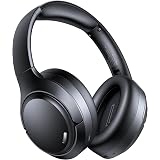
Hybrid Active Noise Cancelling Headphones 120H Playtime 6 ENC Clear Call Mic, Over Ear Headphones Wireless with Hi-Res Audio Comfort Earcup Low Latency ANC Bluetooth 6.0 Headphones for Travel Workout
$99.96 (as of October 23, 2026 03:33 GMT +00:00 - More infoProduct prices and availability are accurate as of the date/time indicated and are subject to change. Any price and availability information displayed on [relevant Amazon Site(s), as applicable] at the time of purchase will apply to the purchase of this product.)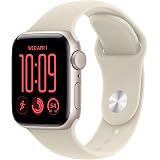
Apple Watch SE 3 GPS 40mm Smartwatch | Starlight Aluminum Case, Sand Sport Band - S/M. Fitness + Sleep + Cycle Tracking, Heart Rate, Vitals, Safety
$239.99 (as of October 23, 2026 03:33 GMT +00:00 - More infoProduct prices and availability are accurate as of the date/time indicated and are subject to change. Any price and availability information displayed on [relevant Amazon Site(s), as applicable] at the time of purchase will apply to the purchase of this product.)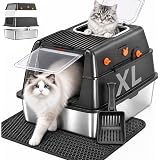
Stainless Steel Litter Box with Lid, Extra Large Enclosed Cat Litter Box for Big Cats, High-Sided Metal Cat Litter Pan, Front Entry & Top Exit, Powerful Vertical Beverage System
$49.99 (as of October 23, 2026 03:23 GMT +00:00 - More infoProduct prices and availability are accurate as of the date/time indicated and are subject to change. Any price and availability information displayed on [relevant Amazon Site(s), as applicable] at the time of purchase will apply to the purchase of this product.)
Milk-Bone Original Biscuits Large Dog Treats, 10 Lb.
$14.98 (as of October 23, 2026 03:13 GMT +00:00 - More infoProduct prices and availability are accurate as of the date/time indicated and are subject to change. Any price and availability information displayed on [relevant Amazon Site(s), as applicable] at the time of purchase will apply to the purchase of this product.)












Post Comment