
Why Powerlifting Isn’t Just for the Elite: Discover the Fitness Community That Embraces Every Body Type and Defies Expectations!
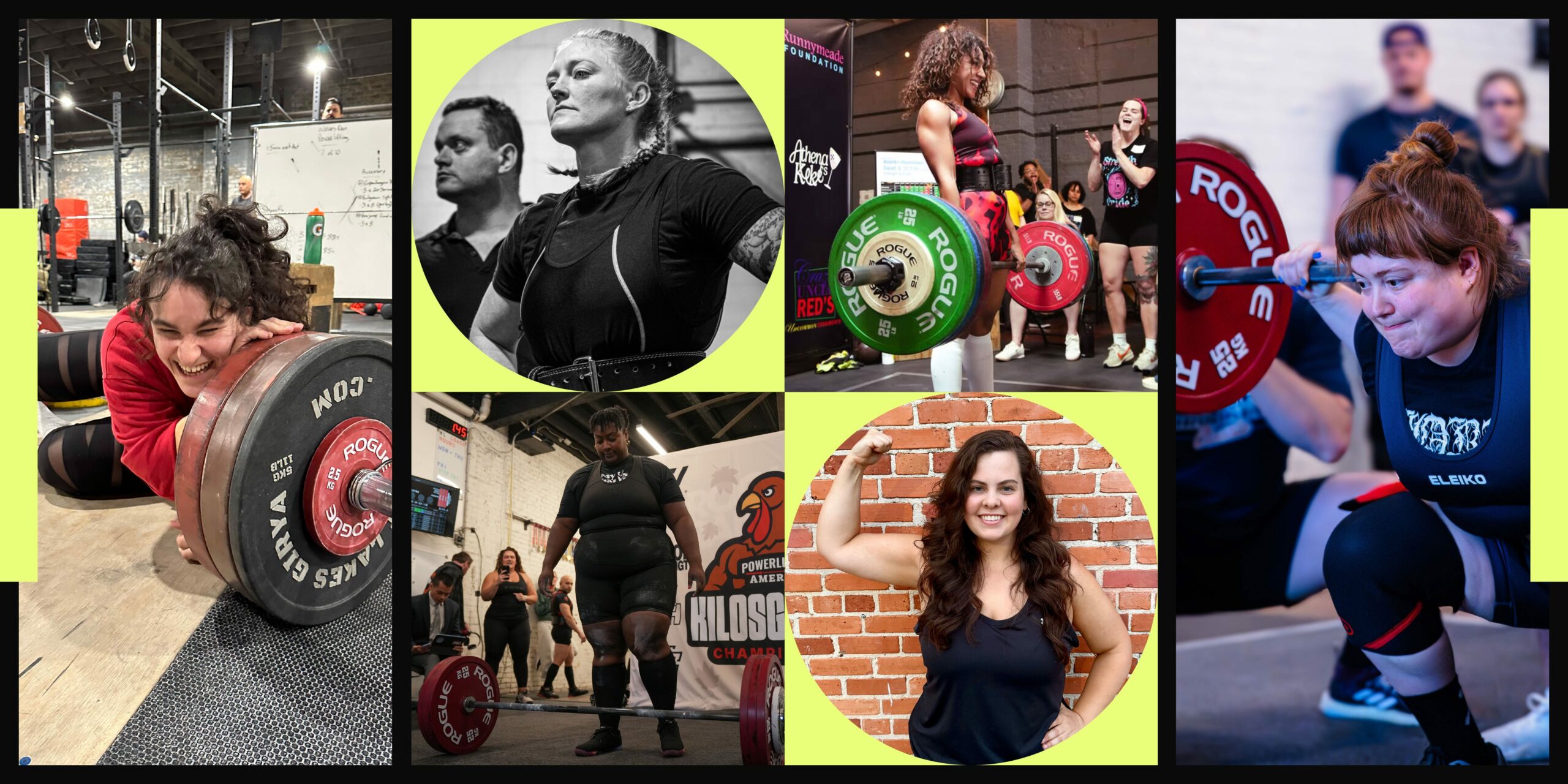
Picture this: You’re imagining a powerlifter right now. Got them in your mind? Big? Small? Tall? Short? Whatever you’re picturing, you’re probably right. Because here’s the thing — powerlifting is about strength, not stereotypes. In a world obsessed with the ‘perfect’ fitness look, powerlifting shouts, “Hold up, what you look like doesn’t define your power!” Whether you’re lifting heavy or just starting out, powerlifting welcomes all shapes, sizes, genders, and identities. No cookie-cutter athlete here — just real people pushing real limits. Curious why this sport is breaking the mold and flipping fitness culture on its head? Stick around; it’s far more than just squats, bench presses, and deadlifts — it’s a movement toward owning your strength, your body, and your story. LEARN MORE
 13 min read
Real quick: Envision a powerlifter. Congrats! No matter the size, gender, or shape of the athlete you conjured, you could be correct.
Fueled by fatphobia and amplified by social media, mainstream fitness culture often champions a very narrow image of what an athlete should look like. Powerlifting, however, leaves room for far more variation: “There is no single way that a powerlifter looks,” says personal trainer and powerlifting coach Mia Nikolajev, CSCS, who also competes in powerlifting. “There is no single physical attribute that defines the modality.” Powerlifters can be large or small, short or tall, lean or fat, trans or cis, or feminine or masculine—to name just a few of the many physical differences represented amongst the barbell slingers.
For the unfamiliar, powerlifting is a modality centered around three barbell movements: the squat, bench press, and deadlift, explains Nikolajev. Some compete in the sport of powerlifting, where they receive three attempts at each movement, and their heaviest successful squat, bench press, and deadlift are combined into a final total, she explains. Others never step onto the competition platform but still opt to organize their training around the lifts, using them to measure progress over time, she says.
Certainly, the sport’s straightforward and customizable nature is part of its appeal. Most people already perform some version of a squat and hinge in their daily lives, for instance, while sitting on a toilet or picking a laundry basket off the floor, Nikolajev explains. Further, each lift can be scaled to an athlete’s specific accessibility and mobility needs. “Truly, wherever you are, you can walk in the door of a powerlifting gym and say, ‘Here’s where I’m at.’ And a coach will be able to help you find the best and safest variations for you,” she says.
But the sport’s draw runs deeper than its relatively low barrier to entry. While mainstream fitness culture (looking at you, FitTok) remains preoccupied with how a body looks, powerlifting redirects attention toward what a body can do. “The focus is on how much weight you can lift or the form with which you can lift it and pushing yourself and seeing what you’re capable of,” Olivia Cadence Luxe, the owner of Ground Up Barbell Club in Philadelphia, PA, tells Women’s Health. Indeed, progress and performance are measured by how much weight is on the bar, not how closely an athlete adheres to a particular aesthetic.
Naturally, that departure from appearances can feel particularly freeing for people who have felt scrutinized, underestimated, or outright excluded in traditional fitness spaces—including bigger-bodied, trans, nonbinary, intersex, and queer athletes, says Luxe. Rather than treating your body as a problem to be changed, powerlifting invites you to learn what it can accomplish.
And as you do? At the best powerlifting gyms, the community will be there to celebrate with you. “Immediately, everyone is engaged in saying things like, ‘Holy crap, that’s a heavy-ass bar,’ ‘Goddamn, that looked amazing,’ or ‘Wow, you really had to fight for that,’” says Nikolajev.
Of course, powerlifting’s inclusive potential doesn’t mean that every space is safe and welcoming. “Are there some individual powerlifting gyms with black marks and negative energy? Absolutely. But that’s true with almost everything,” says Nikolajev. Further, some competitive federations also maintain policies that restrict or complicate participation for trans, intersex, and nonbinary athletes, as well as older athletes who use hormone therapy, she says.
But within several pockets of the sport, athletes, coaches, and organizers are actively fighting to have those policies rewritten. And some gyms host unsanctioned local meets, where organizers have greater freedom to create inclusive divisions and participation policies so that people can come as they are and compete.
For the nine lifters of various sizes, genders, and athletic backgrounds ahead, powerlifting is so much more than a training modality. Rather, it’s a body- and life-affirming practice that offers them a way to take up space, be recognized as athletes, and find community in the process.

Keri Harvey
Keri Harvey (she/her)
gym co-founder and personal trainer, 31; Brooklyn, NY
You’d be forgiven for assuming that Keri Harvey’s credentials as a NASM-certified trainer and owner of FORM Fitness BK mean she always feels fully and completely connected to her body. In reality, she says she spends plenty of time in her head, which is part of why powerlifting is so valuable to her.
Harvey was first introduced to barbell training four years ago. “Once I realized how much I love picking up heavy things and slamming them down, I was hooked,” she tells Women’s Health. The daily challenge—and, with that, the consistent reminders that she’s stronger physically and mentally than she initially thought—quickly became irresistible. “Powerlifting has helped me to turn off my brain in moments where I needed to trust that my body can do the work,” she says.
The sport has also helped Harvey detach her sense of self from the number on the scale. “The sport of powerlifting is not about aesthetics but instead about power, and the athletic ability of a powerlifter,” she says. Training alongside bodies that look completely different from her own, and seeing each one celebrated for its strength, has offered a powerful counterpoint to the image-focused messaging of toxic fitness culture.
TIP: Give yourself permission to be bad at something. Whether it’s your first week of powerlifting, or you’re in a decades-long affair with the sport, there will be times where all the lifts feel really smooth, and others where you question whether you know what you’re doing at all. “It’s so important to keep consistent, especially in the moments where you feel less confident,” says Harvey. “The repetition and consistency will help you to get back to a strong spot, but the entire journey is important.”

Brittany Billings
Brittany Billings (she/her)
athlete, 39; Fort Wayne, IN
Soccer, ultramarathons, Tough Mudders, triathlons, bodybuilding,—you name it and odds are, before finding powerlifting, Brittany Billings had tried it. Yet, none of these athletic endeavors held her interest. While bodybuilding sparked her love of lifting weights, she soon realized she wanted to focus on becoming stronger rather than leaner. So, when she discovered powerlifting, something finally clicked.
Powerlifting hasn’t just changed what she trains or how she trains; it has also transformed how she understands her body. “I grew up in a society that parallels femininity with smallness,” she tells Women’s Health. “In the four years I’ve been powerlifting, decades of negative self-talk and looking for ways to fit into a societal mold have nearly vanished.”
That permission to take up space has reached far beyond the platform. “Powerlifting has given me the gift of growing into the body and mindset I’ve always needed,” Billings says. “It’s allowed me the space to be strong, assertive, and confident.” Although she has historically been shy and soft-spoken, the sport has helped her embody another part of herself: “Powerlifting has given me the space to be a confident badass lesbian woman.”
TIP: Trust the process. Throughout your powerlifting journey, there will be moments of incredible success and others of frustration. “Celebrate the wins and move past your failures,” Billings says. “If you stick with it and move through your plateaus, you’ll reach goals you never believed you could.”

Geno Chavez
Annika Hansteen-Izora (she/they/he)
31; Brooklyn, NY
Annika Hansteen-Izora discovered powerlifting through a queer and trans pride lifting competition recommended by their CrossFit gym. Although they had signed up nervously, their uncertainty disappeared when they stepped onto the platform. “Something lit up in me,” Hansteen-Izora tells Women’s Health.
As a Black, queer, femme nonbinary person, Hansteen-Izora had absorbed countless messages instructing them to “contain” their body, gender, voice, and presence. But the competition celebrated the exact opposite: “Getting bigger, getting louder, taking up space with your whole chest, yelling and sweating and cheering alongside other queer and trans athletes,” they say. After experiencing that kind of queer sports space for the first time, Hansteen-Izora was hooked. They’ve now trained and competed seriously for more than a year.
For Hansteen-Izora, building muscle is also deeply gender-affirming. “Lifting 300 pounds with my long bejeweled nails curled around the bar is how I get free in my body,” they say. “Sweat dripping down my lashes, breath ragged, whole body fighting for the lift. It’s strength without apology, and a queer expression of joy I’ll choose again and again.”
TIP: Start where you are. The term powerlifting—not to mention the heavy-ass weights and intense-looking equipment—can make people wonder whether they possess enough power or strength or guts to begin. Hansteen-Izora’s answer is simple: “You do. You can start where you’re at. You can start nervously. You can start before you’ve hit some internal measure of ‘strong enough.’”

Olivia Cadence Luxe
Olivia Cadence Luxe (she/her)
gym owner and coach, 42; Philadelphia, PA
Olivia Cadence Luxe founded Ground-Up Barbell Club back in 2014 to create a space where trans people could lift and forge community. In the 12 years since, the club has grown into a small-group training space in Philadelphia that welcomes and prioritizes anyone who has historically been excluded from strength-based spaces, such as people with disabilities, fat folks, people of color, and more.
Although Ground Up Barbell Club has members who compete in powerlifting through sanctioned events, Luxe also runs unsanctioned in-house events (Recitals) where athletes can lift without being categorized by weight or gender. “It’s a space to celebrate strength with 100 people cheering you, whether you’re lifting 60 pounds or 500 pounds,” she says. “It’s not a competition, but instead a chance for people to show off what they have been working on.” For people who haven’t historically been able to compete due to restrictive (read: transphobic) eligibility policies, these Recitals offer a meaningful opportunity to have their strength celebrated and witnessed.
Throughout her time as both a gym owner and fellow lifter, Luxe has experienced how training the Big Three lifts (squat, bench press, and deadlift) can support body acceptance. “I definitely have found confidence in my body and gender throughout lifting. The muscles I have built are gender-affirming for me. I’ve felt more like a woman than I ever have,” she tells Women’s Health. “In many ways, lifting for me is a way for me to biohack my body; I’m literally growing my own tits, butt, and hips,” she says.
TIP: There’s no doubt that barbells can feel intimidating when you’re first incorporating them. “Often, part of the intimidation lies in the false-belief that barbells are only for men in the weight room,” says Luxe. But it can help to remember that barbells have remained a strength-training staple precisely because they’re one of the simplest tools you can use to get stronger. “They actually make a great entry into the larger world of strength sports.” Reminding yourself that barbells are, in fact, beginner-friendly—and that you have every right to use them—may help you clear that initial hurdle.

Sydney Crowe
Sydney Crowe (she/they)
athlete, 30; Toronto, Canada
If there’s one thing that has remained throughout Sydney Crowe’s life, it’s that she’s an athlete. Throughout elementary and high school, they competed at a high level in hockey and soccer, before playing soccer all four years of college. “After my university soccer career ended, I needed something to keep my body moving and ended up at a CrossFit gym,” she tells Women’s Health. They quickly realized their favorite part of CrossFit was lifting a heavy barbell, so they decided to give powerlifting a whirl. It’s been six years since they added “Powerlifter” to their athlete resume, and they show no signs of putting the barbell down.
Part of Crowe’s love for powerlifting lies in how the sport helped them navigate life after competitive soccer. “When I stopped playing at a high level for the first time in my life, I had to grapple with what life looked like outside of team sports. There were years of body dysmorphia and struggles with figuring out how to eat properly as my body changed after I stopped training two to three times/day for soccer,” says Crowe. “Powerlifting changed how I view my body, shifting away from how it looks (strong as hell) to what it’s capable of.”
The sport also gave them a new team of sorts. Through powerlifting, Crowe has met friends—now, chosen family—who respect people of all genders, and are similarly focused on what their own bodies can do (not how they look). “We always introduce ourselves with our name and then our pronouns, and it’s normal and respected,” they say.
TIP: Don’t be scared of the bigger or stronger lifters around you, says Crowe. They were once in your shoes and remember what it’s like first to discover the sport. “They’ll be the first people to call you big dawg and cheer you on while you learn just how capable you are of being a strong badass,” they say.

Peter Martel
Erika Owen (she/her)
athlete, 35; Brooklyn, NY
For most of Erika Owen’s life, she says she was “force-fed” a narrow vision of femininity—one that never felt entirely right when she tried to embrace it. Powerlifting offered her a different way to connect with her body. “When I started seriously training for meets, I experienced such a beautiful euphoria as muscles started becoming more visible—it felt like my body and I were finally communicating for the first time in my life,” she tells Women’s Health.
That mind-body connection has also helped Owen navigate body dysmorphia. Rather than attaching an emotional judgment to every physical change, she has learned to treat those changes as information about her training. “Seeing body changes as data instead of emotional reactions has been a massively positive pivot,” she says.
TIP: Find a coach who teaches in a way that aligns with your learning style and who sees you as a whole person. Owen met her coach while recovering from a bicycle injury in 2018. She initially wanted someone who practiced body-neutral coaching, but eventually discovered how valuable it was to have a safe environment in which she could also grow into her queerness. “It’s the big picture attitude I wasn’t expecting to get from a coach that really makes the difference,” Owen says.

Aubrey Caprio
Aubrey Caprio (she/her)
athlete, 30; Florida
The pool may have been where Aubrey Caprio challenged her body growing up, but since discovering powerlifting on social media in 2022, it’s been the platform. “What keeps me coming back to the sport is that it encourages me to focus on what my body can do, and not how it looks,” she says. “It allows me to get out of my head to focus on how far I can push myself physically to be stronger and better than I was the day before.”
TIP: Just do it! There is no requisite level of fitness or barbell experience. “Powerlifting is one of the sports that you can truly come as you are,” says Caprio. With the help of a coach, you’ll gradually learn the three lifts. And, if you eventually choose to compete, neither your experience level, weight class, nor gender will determine how much support you receive from spectators and fellow lifters. “It doesn’t matter if you are competing in different weight classes or lifting drastically different amounts,” she says. “The other athletes will cheer you on and hype you up even though some of them might be lifting double (or more) what you are.”

Lizzie (they/them)
athlete, 30; Seattle, WA
“I had bounced between a lot of other types of fitness activities throughout my life where even well-meaning instructors didn’t know how to accommodate or instruct people with larger bodies, used language that didn’t align with my gender, or assumed that I was there intending to lose weight,” Lizzie tells Women’s Health. “In the worst cases, I even had people make disgusting comments about my body to my face.”
Then, 18 months ago, Lizzie walked past their local powerlifting gym—home to a queer- and trans-inclusive powerlifting union—and “thought everyone doing it looked really fucking powerful,” they say. So, they decided to give it a go. There, Lizzie has found an environment where they don’t have to contend with the fatphobia or transphobia that had previously marked their experience in fitness spaces.
In that relatively short time, the sport has already given Lizzie so much: “It has helped me separate strength from aesthetics, feel confident in myself, and explore the capabilities of my body without the intrusion of diet culture,” they say. Equally important, the community allows them to show up fully as themselves. “I have never felt like my gender and sexuality are something I have to stifle to be included,” they add.
TIP: Joining a gym built to foster inclusivity has made all the difference for Lizzie. “Lifting at an explicitly queer and trans inclusive powerlifting union means I can compete in a nonbinary category and see other athletes who might not feel accepted in other fitness spaces find a home where they feel celebrated and empowered,” they say. That’s why Lizzie recommends finding a gym—or at the very least, a coach—who explicitly welcomes people similar to you. A scroll through a gym’s webpage and social media can reveal a great deal about its clientele and values. But dropping in for a one-off workout will offer even more insight into the language the coach uses, how they scale for different bodies, and whether the community generally feels welcoming.

Katie Orlic
Katie Orlic (she/her)
athlete and coach, 31
STORY: Katie Orlic found powerlifting while searching for a sense of safety and empowerment after experiencing a life-changing trauma at age 18. In 2015, she joined a gym and sampled every free class it offered, hoping to find a form of movement she genuinely enjoyed. Eventually, she wandered into a barbell class—and the rest is history.
At her first meet in 2016, she hit a 265-lb squat, 120-lb bench, and 300-lb deadlift. Thirteen meets later, Orlic squatted a state record 385 lbs, benched 187 lbs, and deadlifted 413 lbs. There is no question that Orlic’s body can do a heck of a lot. And it’s that focus on what her body can do—rather than simply how it looks—that has been especially meaningful for her, as someone who grew up experiencing anorexia and bulimia. “Finding a space where everyone around you is cheering for your capability instead of your appearance was so healing to me,” she tells Women’s Health.
Orlic has also coached powerlifters for nearly a decade, striving to offer others the same sense of empowerment she found through the sport. “I found this sport at such a dark time in my life, and it has been my constant lighthouse in finding my way back to myself,” Orlic says. “I truly thank powerlifting for making me who I am today and hope to offer that to others.”
Don’t wait to feel ready. “Ready isn’t a feeling, it’s a decision,” says Orlic. Whether it’s your first-ever class or first-ever meet, most aspiring powerlifters and competitors never feel completely prepared on day one—they have to decide to try. “The atmosphere at a powerlifting meet is unmatched,” she says, “and you deserve to experience it whether you feel ready or not.”

Gabrielle Kassel (she/her) is a sex and wellness journalist who writes at the intersection of queerness, sexual health, and pleasure. In addition to Women’s Health, her work has appeared in publications such as Shape, Cosmopolitan, Well+Good, Health, Self, Men’s Health, Greatist, and more! In her free time, Gabrielle can be found coaching CrossFit, reviewing pleasure products, hiking with her border collie, or recording episodes of the podcast she co-hosts called

Amazon Fire TV Stick 4K Plus with AI-powered Fire TV Search, Wi-Fi 6, stream hundreds of thousands of movies and shows, free & live TV, find shows faster with Alexa+
$37.99 (as of October 2, 2026 03:17 GMT +00:00 - More infoProduct prices and availability are accurate as of the date/time indicated and are subject to change. Any price and availability information displayed on [relevant Amazon Site(s), as applicable] at the time of purchase will apply to the purchase of this product.)
Essentia Ionized Alkaline Water, 9.5+ pH, 99.9% Pure, 12 x 1L | 99.9% pure ionized alkaline water with a 9.5+ pH until opened, and trace electrolytes for a clean smooth taste. 12 x 1L
$19.99 (as of October 2, 2026 03:06 GMT +00:00 - More infoProduct prices and availability are accurate as of the date/time indicated and are subject to change. Any price and availability information displayed on [relevant Amazon Site(s), as applicable] at the time of purchase will apply to the purchase of this product.)
Dog Allergy Relief Chews - Anti-Itch Skin & Coat Supplement with Omega 3 | Itchy Skin Relief Treatment with Fish Oil - Itching & Paw Licking Support - Dry Skin & Hot Spots Treats - Made in USA, 180Ct
$23.99 (as of October 2, 2026 03:13 GMT +00:00 - More infoProduct prices and availability are accurate as of the date/time indicated and are subject to change. Any price and availability information displayed on [relevant Amazon Site(s), as applicable] at the time of purchase will apply to the purchase of this product.)
Earth Rated Dog Poop Bags on Refill Rolls, 270 Bags, Lavender | Guaranteed Leak Proof and Extra Thick Waste Bag Refill Rolls
$14.99 (as of October 2, 2026 03:08 GMT +00:00 - More infoProduct prices and availability are accurate as of the date/time indicated and are subject to change. Any price and availability information displayed on [relevant Amazon Site(s), as applicable] at the time of purchase will apply to the purchase of this product.)










Post Comment