
Why Rising Oil Prices Are Silently Driving US Treasury Yields Higher Despite Retail Sales Miss—Here’s What Investors Must Know Now
Isn’t it ironic how US Treasury yields decided to take a little rollercoaster ride last Friday, flipping direction just after the latest Retail Sales report dropped—only to reveal that consumers might be tightening their belts a bit more than expected? You’d think a dip like that would rattle markets, but instead, yields edged up, buoyed by climbing oil prices amid a quiet Middle East scenario teetering on the edge of deja vu tensions. It’s a curious dance: while retail sales stumbled due to an online shift—hello, early Amazon Prime Day—and a fall in gasoline prices, oil keeps waltzing upward, keeping traders on their toes. Meanwhile, the US Dollar took a modest tumble, reflecting the underlying fizz of uncertain consumer sentiment and interest rate jitters. So, what’s a savvy investor to make of this tug-of-war between weak sales and firm oil? The coming days, packed with housing data and employment numbers, promise answers… or at least a few more plot twists. LEARN MORE
US Treasury yields advanced on Friday during the North American session after reversing their course following the release of US Retail Sales data, which disappointed investors. Meanwhile, the lack of news from the Middle East kept Oill prices higher, amid fears of a resumption of hostilities.
US yields climb as Oil stays bid, while weak sales pressure Dollar
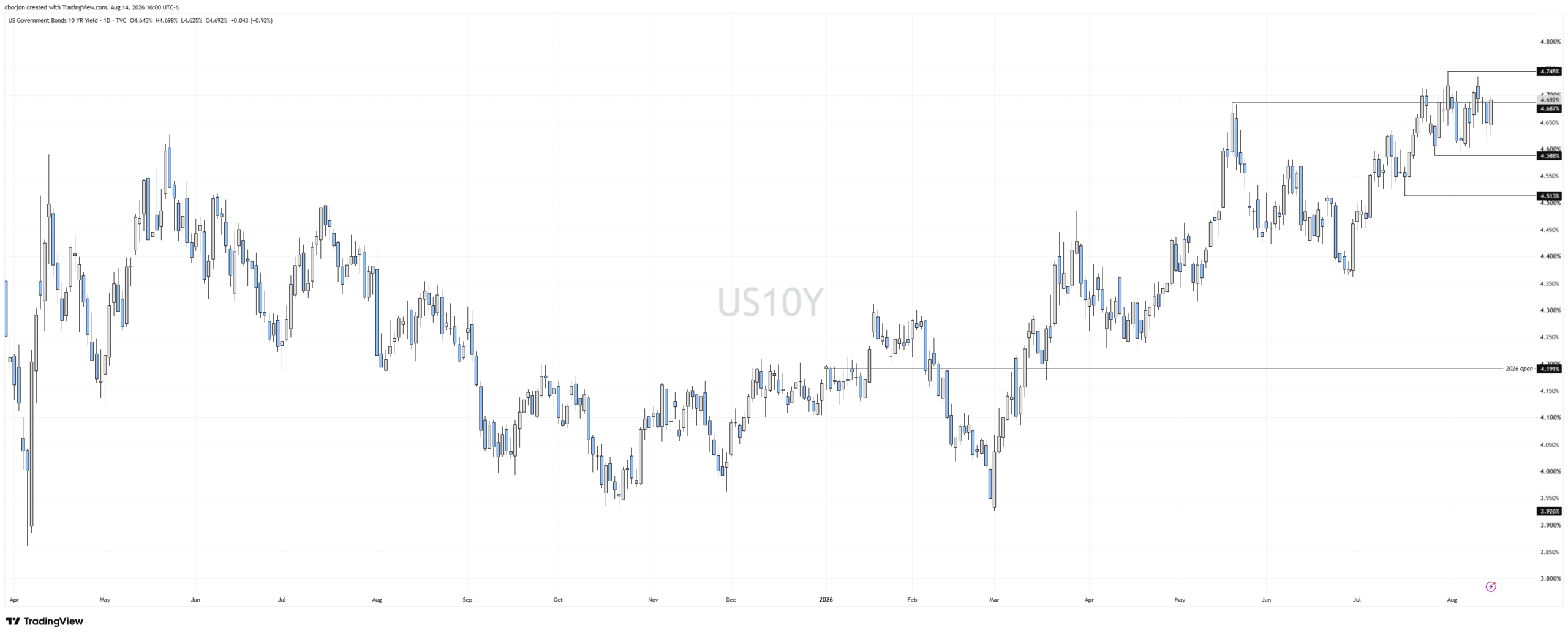
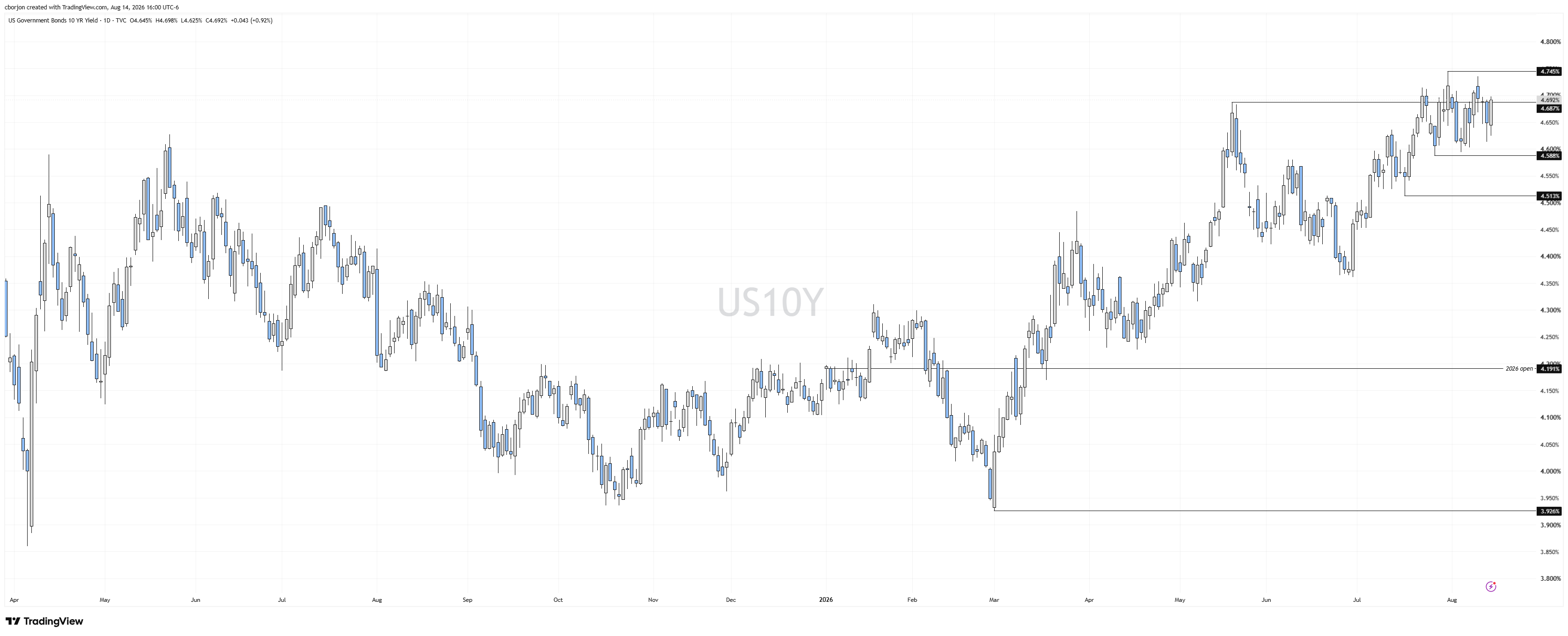
The US 10-year Treasury yield edged up by over 4 basis points to 4.692% amid a rise in Oil prices. West Texas Intermediate (WTI), the US crude benchmark, is up 1.50% at $82.39.
US Retail Sales disappointed investors, contracting -0.6% MoM, below forecasts of 0.1% growth and June’s 0.2%. The decline was spurred by a contraction in online sales, as Amazon moved its Prime Day from July to June. Also, gasoline prices fell.
Later, the University of Michigan Consumer Sentiment index fell from 55.2 to 51.0 in August, showing waning consumer sentiment, while inflation expectations stayed stable.
The US 2-year T-note yield, the most sensitive to interest rate expectations, fell. Before recovering some ground, rising two basis points at 4.17%. So far, money markets have priced in a 63% chance of a rate hike by the Fed at the December 2026 meeting.
The US Dollar Index (DXY), which tracks the performance of the buck’s value against six currencies, tumbled over 0.31% at 99.63, and for the week is poised to end almost flat.
The US docket will include housing data, the ADP Employment Change 4-week average, jobless claims, and Flash PMIs.
US 10-year Treasury yield chart
Interest rates FAQs

Tomkas Small Dog Cat Sling Carrier Puppy Purse Travel Wrap Soft Crossbody Pet Bag (Black1, M - Classic Pocket & Classic Strap)
$13.99 (as of October 23, 2026 03:23 GMT +00:00 - More infoProduct prices and availability are accurate as of the date/time indicated and are subject to change. Any price and availability information displayed on [relevant Amazon Site(s), as applicable] at the time of purchase will apply to the purchase of this product.)
Good 'n' Fun Kabobs Long-Lasting Dog Treat Made With Real Protein, 24 oz | Premium Chicken, Pork and Beef Hide Chew, Supports Dental Health and Mental Stimulation, For Adult Dogs
$17.97 (as of October 23, 2026 03:13 GMT +00:00 - More infoProduct prices and availability are accurate as of the date/time indicated and are subject to change. Any price and availability information displayed on [relevant Amazon Site(s), as applicable] at the time of purchase will apply to the purchase of this product.)
HANYCONY Surge Protector Power Strip, 1080J, 5 Ft Braided Extension Cord | 8 Outlets 4 USB Ports(2 USB C), Outlet Extender, Flat Plug, Wall Mount, Desk Charging Station, Home Office, Dorm Room ETL
$9.98 (as of October 23, 2026 03:23 GMT +00:00 - More infoProduct prices and availability are accurate as of the date/time indicated and are subject to change. Any price and availability information displayed on [relevant Amazon Site(s), as applicable] at the time of purchase will apply to the purchase of this product.)
PUR Gum, Spearmint, Xylitol Gum, No Artificial Flavor, 55 Count | No Artificial Sweeteners, Vegan, Sugar Free, Gluten Free, Soy Free, Nut & Peanut Free, Swiss Made, Keto Friendly chewing gum
$3.98 (as of October 23, 2026 03:13 GMT +00:00 - More infoProduct prices and availability are accurate as of the date/time indicated and are subject to change. Any price and availability information displayed on [relevant Amazon Site(s), as applicable] at the time of purchase will apply to the purchase of this product.)












Post Comment