
The AI Design Firms Quietly Revolutionizing Enterprise Products in 2026 — Are You Ready to Cash In?

Ever wonder why designing AI products for enterprise businesses feels more like orchestrating a symphony than just slapping together a sleek interface? It’s because, unlike startups frolicking in agile playgrounds, enterprises come with a full cast of characters—operators, managers, executives, procurement teams, IT security, and compliance watchdogs—all demanding their unique piece of the AI puzzle. Tackling this isn’t just about pixel-perfect layouts or flashy features; it’s about weaving design into the complex fabric of organizational workflows, regulatory mazes, and change management. If you thought AI product design was just coding sparkle dust on innovation, think again. The real magic happens when firms get how to dodge the pitfalls of implementation gaps and nail multi-role user needs simultaneously. Ready to dive into the world where AI product design meets enterprise-level realness and strategic savvy? Buckle up—this is your go-to list of the best AI product design firms that get it right. LEARN MORE

Key Takeaways
- Enterprise AI product design requires multi-stakeholder thinking because operators, managers, administrators, executives, procurement teams, and IT groups have different needs.
- The best enterprise AI design firms understand organizational complexity alongside interface design, compliance, adoption, and change management.
- Implementation continuity matters because enterprise engineering environments and approval processes can create a gap between design intent and the final product.
- Vertical and regulatory experience should influence agency selection, particularly for AI products in industries such as healthcare, financial services, and other regulated sectors.
- Ongoing design partnerships can be more valuable than periodic redesigns because enterprise AI products continuously evolve as capabilities, user behavior, and organizational adoption change.
Enterprise AI product design is a different discipline from startup AI product design. Not harder, necessarily – just different in the ways that matter practically.
The user base already exists and has opinions. Workflows are established and resistant to disruption. Procurement teams evaluate the product before users ever see it. IT security reviews the architecture before deployment. Compliance teams flag design decisions that touch regulated data. Multiple stakeholder groups – daily operators, managers, administrators, executive sponsors – interact with the same product in completely different ways and need completely different things from the interface.
Designing AI products for that environment requires firms that understand organizational complexity as a design constraint, not just a sales challenge. The AI product design firms that work well in enterprise contexts have spent years developing instincts around multi-role interface design, regulatory constraint navigation, and the organizational change management dimension of AI adoption that pure product design agencies don’t address.

1. Linkup ST
- Website: linkupst.com/design
- Location: New York, NY / Europe
- Focus: UI/UX Design for AI Enterprise Products, Conversion & UX Optimization
- Best for: Enterprise AI businesses needing design that serves multiple stakeholder audiences simultaneously
Enterprise AI products have to serve more audiences than most design briefs acknowledge. End users who need behavioral clarity. Managers who need visibility into AI outputs across their team. Administrators who need configuration control. Executives who need reporting and ROI visibility. Procurement teams who evaluate the product before users ever touch it. Each of these audiences has different needs, different levels of AI literacy, and different relationships to the interface.
Linkup ST’s Emotional-Functional Framework addresses this multi-audience challenge structurally. The functional track ties design decisions to specific metrics for each user type – activation rate for daily users, adoption visibility for managers, configuration efficiency for administrators. The emotional track considers how each audience experiences the AI product across visceral, behavioral, and reflective levels – which matters differently for an executive evaluating ROI than for a daily operator building proficiency.
Their Performance model – ongoing monthly engagement with embedded designer and strategist – is directly relevant for enterprise AI products that evolve continuously as capabilities expand and organizational adoption deepens. Not a periodic redesign but a continuous design function embedded in the product development cycle.
11+ years. 40+ global recognitions including Red Dot, Webby, and Apple. Work reaching 70M+ users worldwide. Concepts that attracted acquisition interest up to $1M.
Key differentiator: Multi-audience Emotional-Functional Framework – enterprise AI design that serves operators, managers, administrators, and executive sponsors simultaneously.
2. DXC Technology
- Website: dxc.com
- Location: United States (global)
- Focus: Enterprise digital transformation, AI product design
- Best for: Very large enterprises in aerospace, defense, energy, and financial services
Among enterprise AI design agency options operating at true enterprise scale, DXC brings delivery infrastructure that most design firms can’t match. Their practice spans aerospace, defense, energy, and financial services – industries where AI product design has to navigate extreme complexity, stringent security requirements, and zero tolerance for production disruption. AI-backed methodology targets operational simplification and workflow modernization with the compliance posture those sectors require.
Key differentiator: True enterprise delivery scale across the highest-stakes regulated industries.
3. Accenture Song
- Website: accenture.com/song
- Location: Global
- Focus: Experience design, AI product design for enterprise
- Best for: Large enterprises needing design alongside organizational change management
Accenture Song brings management consulting infrastructure to enterprise AI product design – which matters when the design challenge is as much organizational as it is interface-level. Portfolio rationalization, design governance, stakeholder alignment, and organizational change management alongside product design execution. For enterprises where AI adoption requires changing how departments collaborate and how decisions get made, their advisory depth addresses the upstream organizational problem that pure design agencies don’t reach.
Key differentiator: Enterprise AI design with organizational change management – for businesses where adoption is as much an organizational challenge as a product challenge.
4. Huge
- Website: hugeinc.com
- Location: New York, NY (multiple offices)
- Focus: Digital experience design for enterprise
- Best for: Large enterprises deploying AI design across complex multi-product environments
Huge has the organizational infrastructure for enterprise AI product design programs that boutique firms can’t match – large teams, complex multi-product program management, enterprise-grade governance frameworks. For large organizations rolling out AI capabilities across multiple products and business units simultaneously, their scale handles scope that smaller NYC design firms can’t accommodate. Deep vertical experience in financial services, media, and retail.
Key differentiator: Enterprise-scale AI product design infrastructure for multi-product organizational programs.
5. Work & Co
- Website: work.co
- Location: Brooklyn, NY
- Focus: Digital product design and development
- Best for: Enterprises needing AI product design and implementation under one engagement
Work & Co’s commitment to staying involved through implementation matters particularly in enterprise contexts – where the gap between designed intent and shipped product is widest, because the most complex engineering environments and the most layers of organizational approval stand between design decision and deployed feature. Their implementation continuity changes what enterprise AI products actually become.
Key differentiator: Enterprise AI product design through implementation – design intent survives the organizational and engineering complexity between Figma and production.

6. Cieden
- Website: cieden.com
- Location: Europe / North America (remote)
- Focus: B2B SaaS, AI UX, Enterprise Product Design
- Best for: Enterprises integrating AI into complex existing B2B products
Cieden’s specific strength in enterprise AI product design is the adoption problem – introducing AI capabilities into products that enterprise users have established workflows around, without those workflows becoming the obstacle to adoption. Their 200+ completed projects across healthcare, fintech, and edtech enterprise contexts reflect accumulated pattern recognition in exactly the environments where AI adoption is most organizationally complex.
Key differentiator: Enterprise AI adoption design – AI feature integration that works within established organizational workflows rather than against them.
7. Designit
- Website: designit.com
- Location: Multiple global offices
- Focus: Strategic design for enterprise transformation
- Best for: Large enterprises using AI design as a driver of organizational transformation
Designit operates at the enterprise transformation layer – design capability building, governance frameworks, and organizational change management alongside product design. Among ux design companies, they’re distinctive for addressing the organizational dimension of enterprise AI adoption that pure product design firms don’t reach. For enterprises where AI is being embedded across departments rather than deployed as a single product, their transformation practice covers the full scope.
Key differentiator: Enterprise AI design transformation including governance frameworks and organizational capability building.
8. IBM iX
- Website: ibm.com/services/ibmix
- Location: Multiple global offices
- Focus: Experience design, AI, and digital strategy for enterprise
- Best for: Large enterprises with deep IBM ecosystem dependencies and AI integration requirements
IBM iX combines experience design with deep AI implementation expertise – which matters for enterprises whose AI product design decisions have direct technical implications for IBM infrastructure. Their AI and data capabilities are particularly relevant for organizations building complex AI products where design decisions and technology decisions are deeply interdependent. Native IBM platform knowledge changes what’s achievable and how quickly.
Key differentiator: AI product design with IBM platform expertise – design and technology decisions made by teams that understand both sides.
9. Fjord (Accenture Song)
- Website: accenture.com/fjord
- Location: Multiple global offices
- Focus: Service design, AI experience strategy
- Best for: Enterprises building AI products that need to integrate with complex service ecosystems
Fjord’s integration with Accenture’s AI practice gives them a distinctive position for enterprise AI product design – they can work on the experience design layer while drawing on deep AI implementation expertise from the broader organization. For enterprises building AI products that need to integrate with existing service ecosystems, compliance frameworks, and organizational processes, that combined capability reduces the friction between design and technical implementation.
Key differentiator: AI experience design integrated with enterprise AI implementation expertise – design and technical implementation informed by the same organizational knowledge.
10. Sparq
- Website: teamsparq.com
- Location: United States, Uruguay
- Focus: Strategy, design, engineering, and transformation for enterprise
- Best for: Enterprises modernizing AI products with data engineering and AI deployment readiness
Sparq’s unified approach – strategy, design, engineering, and transformation under one engagement – avoids the fragmentation that derails enterprise AI product design programs when strategy and delivery are managed by separate teams with different incentives. Their focus on data engineering readiness and AI deployment capability means enterprise AI product design gets done with the technical context that determines what’s actually buildable.
Key differentiator: Unified strategy-to-execution approach for enterprise AI products – design and engineering informed by the same understanding of what the organization can actually build and deploy.

How to Choose AI Product Design Firms for Enterprise
Evaluate organizational complexity capability explicitly
Enterprise AI product design is as much an organizational design challenge as a product design challenge. The firms that work well in enterprise contexts understand how to navigate multi-stakeholder environments, how to design for multiple user roles with conflicting needs, and how to address the organizational change management dimension of AI adoption. Ask specifically how firms have handled organizational complexity in past enterprise AI engagements – the answer reveals whether they’ve worked in genuinely complex environments or are learning on your project.
Look for multi-role design experience
Enterprise AI products serve daily operators, managers, administrators, and executive sponsors with fundamentally different needs and different relationships to AI outputs. Firms that design only for the primary end user miss the stakeholder landscape that determines whether enterprise AI products get adopted at organizational scale. Ask how firms approach multi-role design for enterprise AI and what their process looks like for identifying and reconciling conflicting user needs.
Check their compliance and regulatory design experience
Enterprise AI products in financial services, healthcare, and other regulated industries face design constraints that don’t exist in consumer contexts – accessibility requirements, data handling constraints, audit trail requirements, regulatory reporting needs. Firms that have worked in these environments have built those constraints into how they design. Those that haven’t will discover them on your timeline and at your expense.
Evaluate implementation continuity
The gap between designed intent and shipped product is widest in enterprise environments – complex engineering organizations, multiple approval layers, integration requirements that emerge during development. Firms that stay involved through implementation reduce the fidelity loss that happens between design decision and deployed feature. For enterprise AI products where the interaction details that determine user trust need to survive a complex technical implementation, that continuity matters.
Consider ongoing engagement model alongside initial delivery quality
Enterprise AI products evolve continuously as capabilities expand, user behavior data accumulates, and organizational adoption deepens. The right design firm for enterprise AI is structured for ongoing engagement alongside the product development cycle – not periodic redesigns that happen after features have shipped without design input. Ask specifically about ongoing enterprise AI design partnerships and what the embedded model looks like in practice.
Look at their track record in your vertical specifically
Enterprise AI product design experience in financial services is not the same as enterprise AI product design experience in healthcare, which is not the same as enterprise software. The regulatory constraints, professional user dynamics, and organizational adoption challenges are specific enough that vertical experience matters. Use vertical expertise as a primary filter before evaluating portfolio quality or agency size.
FAQs
What makes enterprise AI product design different from startup AI product design?
Enterprise AI products operate within established workflows and involve multiple stakeholder groups with different requirements. They also need to account for procurement, IT security, compliance, governance, and organizational change.
What should businesses look for in an enterprise AI product design firm?
Businesses should evaluate a firm’s experience with organizational complexity, multi-role interfaces, compliance requirements, implementation continuity, and ongoing engagement. Experience within the company’s specific industry can also be an important selection criterion.
Why is multi-role design important for enterprise AI products?
Enterprise AI products often serve daily operators, managers, administrators, and executive sponsors who interact with the same system differently. Designing only for the primary user can overlook the broader stakeholder landscape that influences adoption.
Why does implementation continuity matter in enterprise AI design?
The complexity of enterprise engineering organizations and approval processes can cause a significant gap between a design and the product that eventually reaches users. Firms that remain involved through implementation can help preserve important interaction and user-experience decisions through deployment.
Should companies choose an AI design firm with experience in their industry?
Yes, particularly when the product operates in a regulated or highly specialized sector. Financial services, healthcare, and enterprise software can involve different regulatory constraints, professional user dynamics, and organizational adoption challenges, making relevant vertical experience valuable.

Banana Bunch (4-5 Count)
(as of October 8, 2026 03:07 GMT +00:00 - More infoProduct prices and availability are accurate as of the date/time indicated and are subject to change. Any price and availability information displayed on [relevant Amazon Site(s), as applicable] at the time of purchase will apply to the purchase of this product.)
CELSIUS Sparkling Wild Berry, Sugar Free Energy Drink, 12 Fl Oz (Pack of 12)
$12.59 (as of October 8, 2026 03:07 GMT +00:00 - More infoProduct prices and availability are accurate as of the date/time indicated and are subject to change. Any price and availability information displayed on [relevant Amazon Site(s), as applicable] at the time of purchase will apply to the purchase of this product.)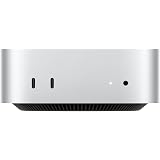
Apple 2026 Mac mini Desktop Computer M6 chip | 12‑core CPU and 12‑core GPU, 16GB Unified Memory, 256GB SSD Storage
$779.99 (as of October 8, 2026 03:28 GMT +00:00 - More infoProduct prices and availability are accurate as of the date/time indicated and are subject to change. Any price and availability information displayed on [relevant Amazon Site(s), as applicable] at the time of purchase will apply to the purchase of this product.)
Amazon Basics Leak-Proof Dog and Puppy Potty Training Pee Pads with Quick-Dry 5-Layer Super Absorbent Design, Regular Size 22 x 22 inch, Blue & White, 100 Count
$19.20 (as of October 8, 2026 03:10 GMT +00:00 - More infoProduct prices and availability are accurate as of the date/time indicated and are subject to change. Any price and availability information displayed on [relevant Amazon Site(s), as applicable] at the time of purchase will apply to the purchase of this product.)













Post Comment