
Unlock the Secret: Why Dragon Boat Racing Could Be the Ultimate Game-Changer for Your Fitness Journey!
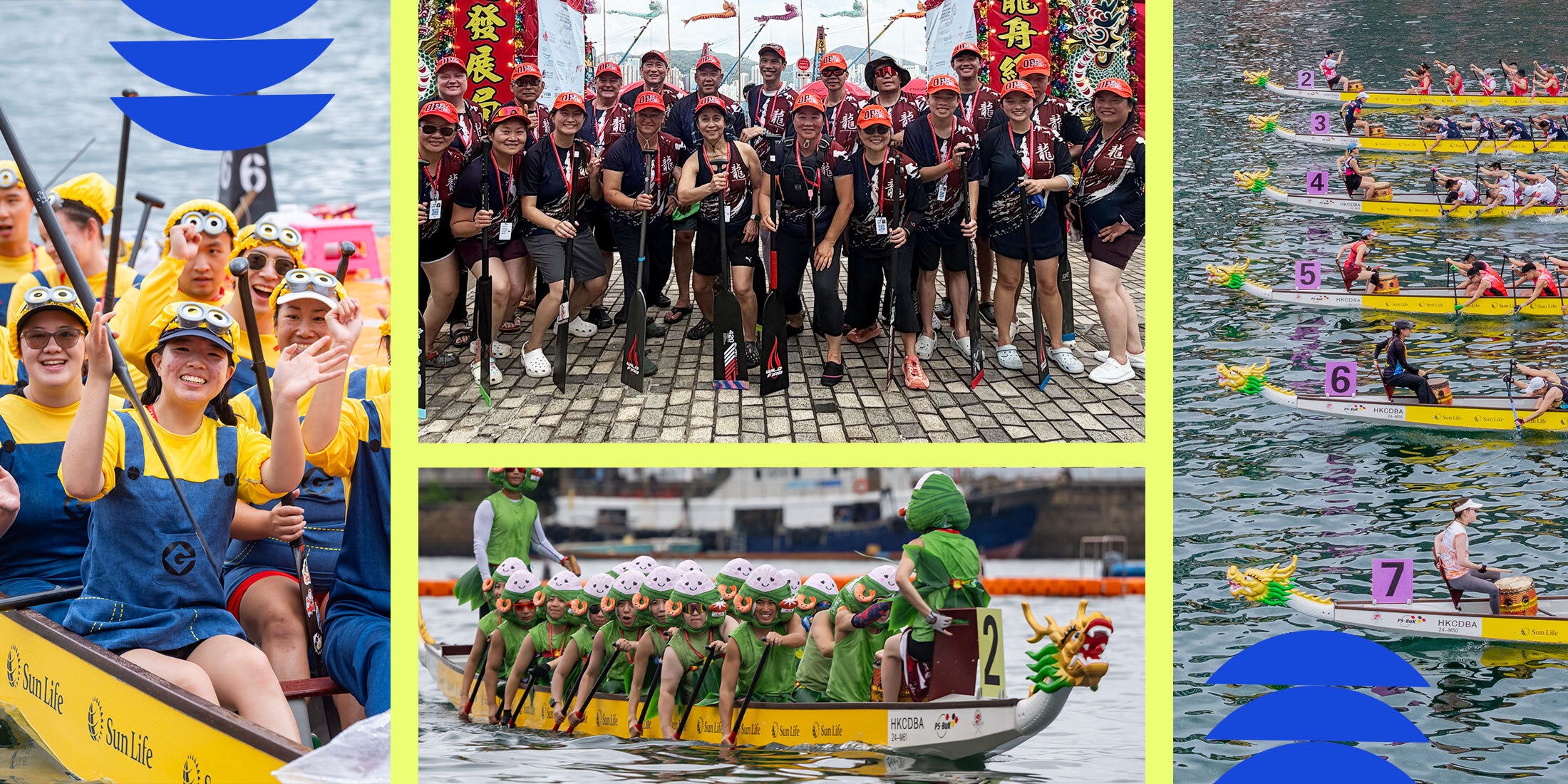
Ever wondered what it feels like to wake up halfway across the world, in a city where skyscrapers peek through misty mountains and temples whisper ancient tales? Well, that was me on a cloudy June morning in Hong Kong — a place that dazzles with its unique blend of breathtaking beauty and bustling city life. But here’s the kicker: amidst iconic beaches and towering peaks, there’s an electrifying sporting event that pulls people from every corner of the globe — the Hong Kong International Dragon Boat Festival. Imagine boats with fierce dragon heads slicing through murky waters under an 82-degree, sticky humid sky, while the sounds of ABBA’s “Dancing Queen” echo and cheers ripple among paddlers of all ages and backgrounds. What struck me most isn’t just the sport’s intensity but its incredible inclusivity — a crystal-clear reminder that when the beat of the drums kicks in, this is a playground where everyone belongs, from spirited 10-year-olds to determined octogenarians. Curious how this ancient tradition evolved into a global team sport that breaks barriers and builds an unshakable community? Stick around — this story goes way deeper than dragon heads and paddles. LEARN MORE
 10 min read
When I wake up on a cloudy morning in late June, I’m halfway around the world. It’s my first time in China—Hong Kong specifically—and even though I’ve only been here for a few days, I already know it’s one of the most beautifully unique places in the world. It’s home to skyscrapers embedded in mountains, breathtaking temples, stunning beaches, and a bustling city. But it’s also where the Hong Kong International Dragon Boat Festival takes place, and I’m lucky enough to be spending the day there.
The minute I arrive at the Tsim Sha Tsui Promenade on Victoria Harbour, I realize this sporting event isn’t like anything I’ve seen before. The weather is less than ideal—it’s 9 a.m and already 82 degrees Fahrenheit with 88-percent humidity and a chance of thunderstorms. And yet, colorful, artistic canoes accented with red and gold with dragon heads swiftly move down the water of Victoria Harbour, standing out among the gray, murky waters and skies. People of all ages, ethnicities, and body types wearing colorful jerseys and board shorts holding paddles pass me, cheering on members of other teams as they walk by.
Even after the horns blow as each boat crosses the finish line, teams are shouting to support each other. (The Australian team is particularly loud.) ABBA’s “Dancing Queen” plays over the speaker while an announcer narrates the races in Chinese. Tons of locals and families are out and about, and I feel like I fit right in—even though I know next-to-nothing about dragon boat racing. It truly seems like everyone is just happy to be here.
As I take in my surroundings, I have one overwhelming realization about this sport: It’s for everyone. People of all ages and backgrounds flew from all across the globe to be part of the more than 220 teams competing this weekend. The proof is in the roster of the Oyster Point Dragons, a team based in San Francisco. Their youngest member is 10 years old and their oldest is 81, co-captain Shirley Lau, 56, tells me.
Dragon boat racing requires people from all walks of life to work together. “It is the ultimate team sport,” says Lisa Minerd, 67, president of the San Diego Dragon Boat Team. “You can be an Olympian or you can be the 60-year-old who paddled for two or three years and that’s it. And you get into that boat together, you are working together as a team. You have to, or that boat isn’t going to move very well, and you can forget about winning anything.”

Everyone Belongs Here
The origin of dragon boat racing can be tied back to dark historical folklore. Over 2,000 years ago in ancient China, the government in the Kingdom of Chu was corrupt. But renowned poet and aristocrat Qu Yuan wrote a poem “expressing himself that he did not agree with the emperor at the time and the politics behind it,” Minerd says. Banished from the country, a heartbroken Qu Yuan drowned himself in the river. Because he was so beloved, villagers piled in boats and paddled out to him, banging on drums to scare away fish so they wouldn’t go after his body.
Since then, dragon boat racing evolved into the international sport that it is today. In 1976, the first Hong Kong International Races began, so this year’s race is considered the 50th anniversary of modern dragon boat racing. Each boat is made up of 22 people sitting on benches working together, including a drummer sitting in the front on a stool to keep the pace, 10 paddlers per side of the boat holding paddles, and a steersperson who steers using a sweep oar. The paddlers toward the front set the timing, the ones in the middle are the physically bigger “power paddlers” that hold the pace, and the last three benches are the “rockets,” who propel the boat across the finish line with their remaining stamina, Minerd says.

Minerd smiles for the camera in between heats.
In that regard, dragon boat racing is a literal sprint—not a marathon. A typical distance is 500 meters (about a third of a mile), but some international races also include races that go for 1 or 2 kilometers (.62 or 1.2 miles, respectively). “You tend to get pretty tired out by the 350-, 400-meter mark, and all teams train for that to make sure that they don’t gas out,” Minerd says. The good news: The races are quick—under two minutes is considered an excellent time for the 500-meter race.
Dragon boat racing is a mixed gender sport, and the paddlers I spoke with had different experiences with the gender split. For Zoe Chiang, 28, women’s head coach of the San Diego Dragon Boat Team, there were slightly less women on her dragon boat racing team at the University of California, San Diego, where she started the sport. However, Minerd says when you’re at races, you’ll see more female paddlers than males, so the gender divide varies.
None of that matters in dragon boat racing, though. “I look at myself as an athlete first, not a female athlete,” Minerd adds. “I don’t look at it as, ‘Who do I have to compete against?’ within my female friends to earn a spot in that boat. I want to beat my male friends as well.” For Minerd, it’s all about being the best paddler that she can be.

Why They Paddle
Minerd was born in Hong Kong and grew up watching the International Dragon Boat Festival there. She loved that “it was all about honoring the legacy of a poet” and had always wanted to be a part of it. But she didn’t get a chance to try it until her late 50s when she was living in America. “A friend of mine joined the San Diego Dragon Boat Team and I pretty much strong-armed her and made her introduce me,” Minerd says with a laugh. “Two practices later, I was hooked, and [I’ve] been at it ever since.” For the last nine years, she’s been on the team’s board, and has competed in four or five races a year, in addition to international races.
For Lau, trying dragon boat racing was destiny. “I was 6 years old when I came to this exact race,” she recalls. She sat on her dad’s shoulders, in awe of the beautifully decorated boats as a kid living in Hong Kong. Her family later moved to the United States. But “I never thought about dragon boating again until I became a mom” at 33, Lau says. She wanted to rebuild her health, so she ran a half-marathon, and at the finish line, saw a booth recruiting athletes for dragon boating. The image of herself on her dad’s shoulders came back to her, and she immediately joined Oyster Point.

Lau had a blast at the races in June.
It took Lau a while to pick up the skills, but her teammates were extremely supportive and patient. “Now, I’m paying [it] forward and trying to train people the same way—be patient, a lot of love, a lot of encouragement,” she says. “But this group that I have right here is really like a family.”
In fact, some Oyster Point members are literally family: About two and a half years ago, Jane Chao Pun, 54, was looking for an extracurricular activity for her son, and one of her former coworkers had been telling her about dragon boat racing. Chao Pun tried out for the team with her son and loved it—and they’ve been competing together since.
Dragon boat racing attracts a younger crowd, too: Andrea Yu, 20, started with the Oyster Point Dragons in middle school. She didn’t like other sports, but loved being on the water and the friendly vibes. “The competitive culture is a lot more friendly. On the water, all the teams, we congratulate each other, we hang out, we have a lot of fun,” Yu says.
Similarly, Chiang wanted to do some kind of water sport once she got to college. “I had never heard of dragon boat before, [but] I thought it looked really cool, so I wanted to give it a try,” she says.
Today, Chiang stays involved with the sport, through both racing and coaching the women’s team group, because she loves traveling for different races, being immersed in the community, and having a hobby that she’s passionate about. She and her husband paddle at 6 a.m. twice a week with a huge group from the San Diego Dragon Boat Team, and “it’s something that I look forward to waking up for,” she says. “Having the people and some way to stay active is really helpful for my mental health, too.”
Chao Pun has continued dragon boat racing because of what the Oyster Point Dragons believe in. “I want to just be on this team as long as I can,” she says. The team tends to attract those who prioritize their physical and mental wellness. Many of Oyster Point’s members are medical professionals—Chao Pun herself is a nurse practitioner. Another member who just recently earned her master’s degree in nursing plans to create a team of cancer survivors within their larger dragon boating team.
These women paddle because they love it, not to go pro, as it’s primarily an amateur sport. There are opportunities for top-winning teams to win prize money at major festivals or earn sponsorships, but it’s usually not a full-time career for most.
How to Train Your Dragon Boat Athlete
Dragon boating is physically demanding and works the full body, Minerd says. When people watch a race, they may think the boat’s power is coming from the paddlers’ arms and shoulders—but it’s not. “It’s coming from your lats, your core, your hip, your big muscles are recruited to provide that power to propel the boat,” she says. “The way we train for it is like any sport—you break it down and you take one component at a time.”
Every team trains differently, but in the off-season (late October through January), the San Diego Dragon Boat Team starts off with technique work on the water so everyone can master the same stroke. Then, as the season approaches, they work on building “the foundation for endurance” by paddling 800 meters so that the 500-meter race distance feels easier, Minerd says. Eventually, about four to six weeks before race day, they do 500-meter mock races back to back in practice.

They also focus on a lot of zone 2 and 3 cardio (which feels moderately difficult, like you’re a bit out of breath but can still carry on a conversation) to build their endurance. One standard drill Minerd does is a six by eight, which involves eight minutes of active paddling and two minutes of rest, repeated six times. Additionally, they do sprint training in 400-meter spurts. This may sound intense, but the San Diego Dragon Boat Team only practices once a week up until they’re two weeks out from a race—and even then, they’re in the water no more than three times per week.
“We also encourage our members to go to the gym,” Minerd says. She’s been lifting weights for 35 years, but for the last 10, her trainer has had her do a lot of lower back, core, quad, and shoulder work for paddling. Some of her main exercises include deadlifts, TRX rows, and the erg machine to simulate rowing motions. “Building some muscle really helps with the dragon boat, especially for sprinting,” Chiang adds.
The Oyster Point Dragons are also encouraged to run and strength train on their own, especially rotational moves to help their flexibility and functional movement on the water, Lau says. “At 54, this is the best shape I’ve ever been in my whole life,” adds Chao Pun. “Doing this activity will even maybe add years to my life that I didn’t think I would gain before.”
Training teams with such a variety of ages and abilities can be tricky—the 17-year-olds move a little differently than the folks in their 80s—but Chiang aims to keep the environment welcoming and inclusive. “What’s nice about our team is we have a lot of opportunities for people to come to practice,” she says. “If they just want to get out once a week for the exercise and being outdoors, there’s a place for them.” But members can also come to practice more often if they want to get more involved. Their team offers tons of practices throughout the week that are well-attended—and Chiang herself paddles six times per week.
The training isn’t just physical. “It’s a mental game,” Minerd says. It’s all about “whether you have that mental toughness to overcome the fatigue and push that boat through.” When she represented Team USA at the World Dragon Boat Racing Championships in Thailand in 2023 and came in second in the 1,000-meter race, she had to depend on that mentality. “The final 50 meters, what went on in my head was, ‘Don’t die. Don’t die. You got to finish this,’” Minerd remembers. “I had a saying that I keep in my head all the time, which is, ‘When you think you are completely spent, you have 40 percent more.’ And that plays on a loop in my head.”
The Future of Dragon Boating Is Female
“The sport is growing,” Minerd says. Specifically, there are “more and more youth paddlers, which is wonderful for the sport, because that’s how we can ensure longevity.” People start out curious about it, sign up for a couple of practices, and then get hooked. “It is such a great workout, even if you are not into the racing side of it. But you pretty quickly get turned around and decide that, ‘Oh, I’m going to race.’ That’s where the fun is,” she says. “You catch that bug and you have it for life.”

In this inclusive sport, there’s absolutely no gatekeeping. “Anybody that wants to learn the sport, we will definitely train them,” Lau says. There’s space for everyone. “Dragon boating always needs more women as well,” Yu adds.
You can start dragon boat racing no matter your age or exercise experience. “If you like being on the water, you like a team sport, there’s nothing better,” Minerd says. Just get ready for a decently massive learning curve. “Like joining any new sport, you’ve got to give it a fair chance.” She encourages aspiring dragon boat athletes to attend at least three practices before deciding if it’s for them or not. Even then, “it takes time to build your foundation. It takes time to understand the movement and how to be efficient, how to work with other people,” she says.
Want to get involved? Search for a dragon boat team in your city on Google or Instagram.
Let me emphasize that last part: In dragon boating, “everyone’s equal,” Minerd says. “You get in that boat, you work together or succeed or fail, you are together.”
Addison Aloian is the associate health & fitness editor at Women’s Health, where she writes and edits across the health, weight loss, and fitness verticals. She’s also a certified personal trainer through the National Academy of Sports Medicine (NASM). In her free time, you can find her lifting weights at the gym, running on the West Side Highway in New York City—she recently completed her first marathon, the 2025 New York City Marathon—and watching (and critiquing!) the latest movies that have garnered Oscars buzz. In addition to Women’s Health, she’s made an appearance on the Oprah Podcast and her work has also appeared in Allure, StyleCaster, L’Officiel USA, V Magazine, VMAN, and more.

Apple AirTag (2nd Generation): Tracker for Keychain, Wallet, and More; Locator with Sound; Simple One-Tap Setup with iPhone or iPad; Key Finder with up to 1.5X Precision Finding Range
$24.00 (as of October 8, 2026 03:20 GMT +00:00 - More infoProduct prices and availability are accurate as of the date/time indicated and are subject to change. Any price and availability information displayed on [relevant Amazon Site(s), as applicable] at the time of purchase will apply to the purchase of this product.)
KJKZO Dog Bark Collar for Large Medium Small Dogs, Effective No-Bark Collar, Smart Barking Collar, Rechargeable Bark Collar with 7 Sensitivity, 3 Modes, Waterproof, Frosted Black
$24.69 (as of October 8, 2026 03:20 GMT +00:00 - More infoProduct prices and availability are accurate as of the date/time indicated and are subject to change. Any price and availability information displayed on [relevant Amazon Site(s), as applicable] at the time of purchase will apply to the purchase of this product.)
Fhumsh Wireless Earbuds, Bluetooth 5.3 Headphones HiFi Stereo 50H Playback LED Digital Display Ear Buds with ENC Noise Canceling Headset, IPX7 Waterproof Earphones for Gym/Running/Work(White)
$19.99 (as of October 8, 2026 03:28 GMT +00:00 - More infoProduct prices and availability are accurate as of the date/time indicated and are subject to change. Any price and availability information displayed on [relevant Amazon Site(s), as applicable] at the time of purchase will apply to the purchase of this product.)
ARM & HAMMER Slide Platinum Easy Clean-Up Clumping Cat Litter, 18 lbs | 24/7 Odor Control, Triple-Action Freshness, Non-Stick, Low Tracking, 99.9% Dust Free, Multi-Cat Formula, Scented
$14.39 (as of October 8, 2026 03:10 GMT +00:00 - More infoProduct prices and availability are accurate as of the date/time indicated and are subject to change. Any price and availability information displayed on [relevant Amazon Site(s), as applicable] at the time of purchase will apply to the purchase of this product.)












Post Comment