
How Provincetown’s Last Lesbian Bars Vanished—and the Fierce Women Who Refused to Let Their Community Fade Away
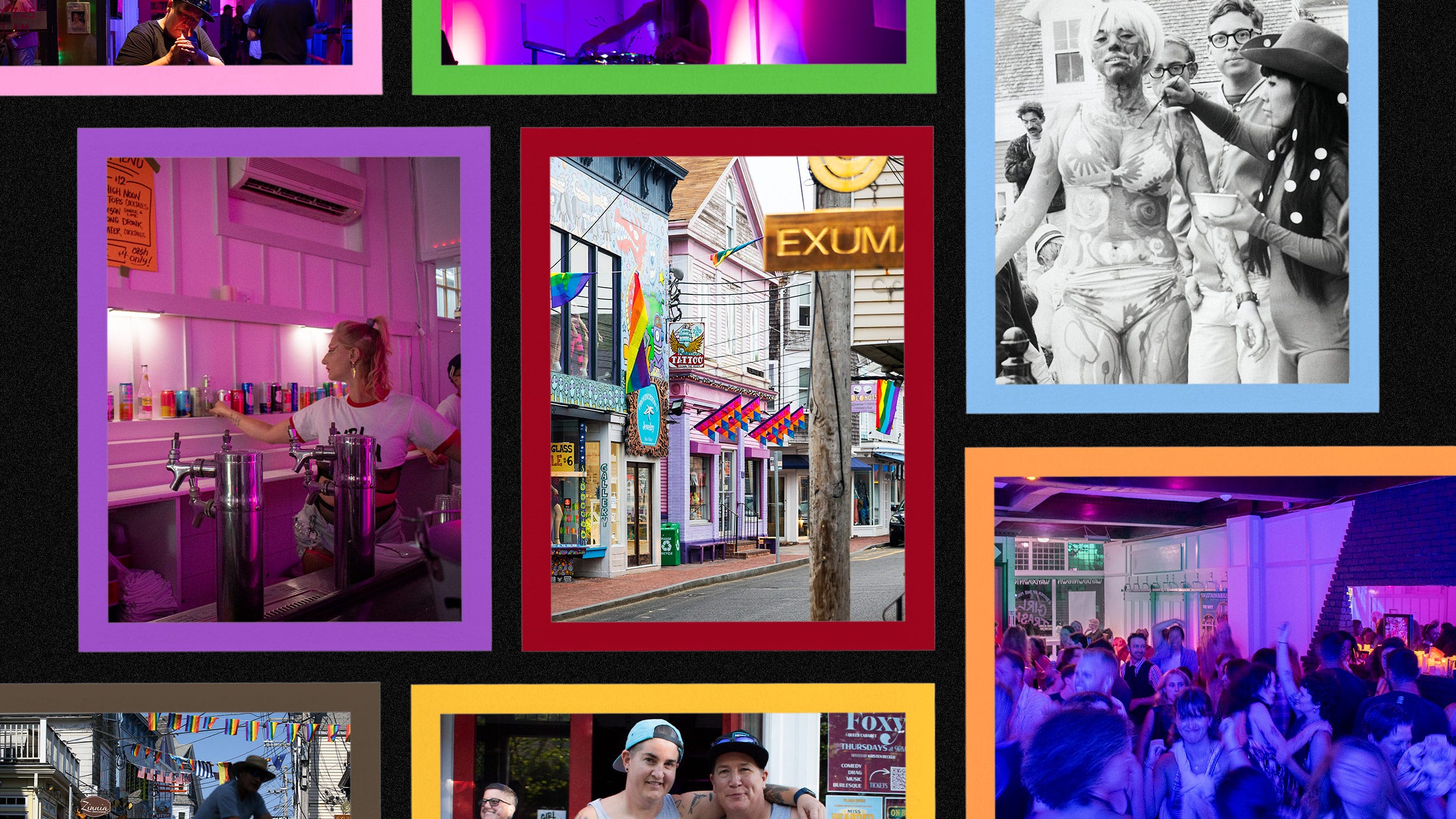
Ever wondered what happens when a vibrant queer haven starts looking more like a boys’ club? Provincetown, Massachusetts—long hailed as a gay sanctuary at the tip of Cape Cod—has been quietly shifting gears, morphing from a diverse, affordable refuge into what locals now grumble is “Man-tucket.” But wait, before you chalk it up to another story of gentrification and cultural takeover, here’s some fresh tea: For the first time in nearly ten years, the women of P-town are staking their claim again with Josephine’s, a new lesbian bar that popped up in July 2026, igniting hope and a line out the door. What does it take for a community to reclaim its roots in the face of skyrocketing property values and a male-dominated nightlife? And more importantly—what’s next for this iconic enclave once crowned an artists’ and queer sanctuary? Stick with me as we dive deep into the battles, the victories, and the bold new wave taking over P-town’s streets. LEARN MORE
 9 min read
All you need is halfway decent eyesight and a stroll down Commercial Street to recognize the most prominent demographic in Provincetown, Massachusetts. Either that, or an ear to the ground when the local women start gossiping.
“We’ve just been overrun by male culture here,” says one longtime resident.
“Man-tucket is what they call it now,” grumbles another.
Provincetown, the enclave of queer culture at the tip of Cape Cod, is clearly a boys’ town. Cape Cod’s gay getaway didn’t start out like this, as gay getaways rarely do. For decades, Provincetown was a relatively affordable vacation spot for queer people of all gender identities. But in 2018, in a sign emblematic of the demographic shift, the Pied, originally known as the lesbian bar the Pied Piper before it was sold and rebranded, closed for good.
Now, for the first time in nearly a decade, the local lesbians have a bar to call their own. Josephine’s sprang onto the scene in July 2026 for the annual “Girl Splash” weekend, with a line out the door and a hopeful sentiment in the air: The women are taking back P-town.

Commercial Street in Provincetown, 1966
Provincetown was first an artists’ colony, dating back to the opening of the Cape Cod School of Art in 1899. In 1915, the Provincetown Players brought the theater to town, and so naturally, the queer community put down some roots.
“ People came here to paint. People came here to be artists,” says Diane Johnson, a resident of 36 years and unofficial local historian. “And where you have artists, you’re gonna have gay people.”
In the ’60s, ’70s, and ’80s, Provincetown served as an arts incubator for people like John Waters and his friend and frequent collaborator Cookie Mueller. Queer artists from cities like New York and Boston saw Provincetown as an affordable refuge from life in the city, when the challenges of being a non-mainstream artist grew overwhelming. Queer kids from around the world often chose to work summer jobs in P-town—earning money in a rare space that allowed for authentic queer existence without fear of arrest or harassment.

Martha Melnyk, of Philadelphia, lets New York artist Yayoi Kusama paint her at a Body Festival in Provincetown, Massachusetts, 1967.
The ’90s were another major turning point in town, and for the LGBTQ community at large. “Word went out that if you’re a gay person and you have AIDS […] you could come to Provincetown, and we would take you in,” says Johnson, who moved to town in 1989 and saw this firsthand. While so many men were sick with the virus, the lesbians assumed leadership roles in caring for them, and also in keeping Provincetown afloat.
“The town was really run by women during the ’90s in lots of ways,” Johnson says. They dominated local government, founded assisted living homes, and opened women’s guest houses: lesbian-owned bed and breakfasts that only rented to women. Wealth was rarely the goal. “ I mean, we’re talking about $25 a night,” Johnson estimates.
So, what changed? Between touristification, Airbnbs, gender wage gaps, and remote workers, there are innumerable reasons a town like this becomes so wealthy and male-dominated. What we can say, and what many local women do say, is that the early 2000s marked another shift—when Provincetown first began to feel like an expensive place to live.
“ People started selling their family homes and turning them into condos, which really changed the town,” says Johnson.

Provincetown in 2025.
Between July 2019 and July 2023, property values in P-town increased by 55 percent, while the population in town increased by almost 24 percent in 2020 alone. But this phenomenon is by no means isolated to P-town. “Migration patterns that started during COVID-19 have continued to push movers into states they may not have previously considered, and this has impacted local home prices,” writes Jessica Lautz, deputy chief economist for the National Association of Realtors, in a statement to Harper’s Bazaar.
Now, in 2026, there’s no mistaking P-town’s high-end galleries and jewelry stores for an artists’ colony. “The billionaires are pushing out the millionaires,” says Ginny Binder, a longtime resident and preservationist. “So the woman-owned establishments became rarer and rarer.”
Over time, the number of women’s guest houses dwindled from 14, at their height, down to the two remaining today. Because of consistent gender inequality around building and maintaining wealth, fewer women possess the vast amount of capital now needed to buy and control property in Provincetown. Throughout the 20th century, a consistent string of lesbian bars operated in town—including Sisters, the Vixen, and the Pied. That was the last known women’s watering hole, until now.
In lieu of a local lesbian bar, Provincetown hosts a handful of designated women’s gatherings every year. There’s Girl Splash Weekend in the summer, Women’s Week in October, and Lesbian Visibility Week in April, among a few other lesbian-centered traditions and pop-up parties. But even then, programming relies on the discretion of the gay-male bars and their wealthy owners.

Girl Trash party, 2026.
Enter Kristen Becker, a loudmouthed stand-up comic with the heart of an old-school dyke and a new-school fade. Ginny Binder calls her a “bull in a China shop” but also “a godsend,” brave in just the way this community needs.
“I don’t think that Provincetown can call itself an LGBTQ destination if [there isn’t] space for anyone that’s not a G,” says Becker, a co-owner of Josephine’s, the new lesbian bar, alongside her partner KT Fitzgerald and the chef Kelly Fields.
“The entertainment directors, the stage people, it’s always a man,” says Becker, who lives and works in P-town year-round. This ongoing dynamic is especially frustrating during Women’s Week, an annual stretch in the off-season dedicated to women’s programming. “ I’m a woman in this community who’s been doing Women’s Weeks for 15 years. Why do I have to justify to you, a man, why I think it’ll work during Women’s Week?” she found herself asking.
“I got fired for being a woman,” adds KT Fitzgerald, remembering an incident from 2024. “ I’d been hired to DJ […] and then the guy who does the booking decided he didn’t want to be stepping on the toes of another women’s event. It’s sort of this situation [where] women are only allowed to have one event at a time.”
“What if we had a stage where we could do whatever we wanted?” Becker wondered when the same issues came up the next year, during Women’s Week in 2025.
“ It was about the frustration of trying to curate entertainment for women in male-run spaces,” Fitzgerald explains.
Fortunately, Kristen Becker is no stranger to making space for her community. In 2017, she founded Summer of Sass, a nonprofit that brings queer young adults (ages 18–20) out to live and work in P-town for the summer. This is a vital resource in a town where the cheap housing that used to support a young, queer seasonal workforce has disappeared.
“ Something happens to a person when they get to spend time in a space that tells them not only are they enough, but they’re […] perfectly capable of living their best lives by the beach,” Becker says about her summer program. “Provincetown is different than just a queer vacation space. It is a place where the LGBTQ community gets to be a majority and live their lives that way.”
For the first few years, Becker was able to secure seasonal worker housing for each participant, or “Sasser,” as she calls them. But by the time summer rolled around in 2020, everything changed.
“The pandemic made it really, really difficult to find housing,” Becker explains. The demand increased, so prices went up, accelerating the preexisting gentrification problem astronomically. The pandemic may have ended, but Kristen Becker notes “the prices have not gone down.”
Even when Summer of Sass managed to fundraise enough to cover rising rent, “landlords would rent to [a corporate remote worker] before they wanted to rent to a 19-year-old,” says Becker. “So in 2022, after five years, I was kind of ready to set it down. That’s when we had the big fundraiser…”
At the end of that summer, Provincetown’s philanthropists gathered for what they thought would be a celebratory fifth-anniversary party. “I gave a speech that was not as happy as I think people expected it to be,” Becker recounts. “ I cannot keep this up. I will not keep this up and be surrounded by this much wealth,” she told funders, in what she sometimes refers to as her “crash-out.”
The crash-out proved highly effective. Ultimately, Becker secured $3.7 million to purchase a permanent property, “The Sass House,” a Victorian mansion less than a mile from the center of town. Becker no longer scrambles to secure rentals every year, but she hasn’t stopped dreaming up new ways to innovate the program and diversify P-town.

Provincetown’s Carnival in 2025.
In the aftermath of last year’s Women’s Week, Becker and Fitzgerald ruminated on the idea to open their own event space. So, in early 2026, they returned to the tactic that had already proved fruitful: inspiring an anonymous, wealthy donor.
For over two decades, the WayDownTown was a bar, restaurant, and community hub. The building sits in the dead center of town, with huge front windows framing the Town Hall directly across the street. From the back, one step off the multitiered deck lands you right in the sands of the Cape Cod shore. “You can’t walk the street without walking past it, really,” Becker says. “It lends to a lot of foot traffic,” and thus, a lot of potential donors. Once considered a P-town institution, the building sat empty since its sale in 2023, marking a gaping hole in the local nightlife scene.
“We could put a cool queer space that has brunch in the morning and entertainment at night,” Becker pitched to one of Summer of Sass’s donors, “then there’s all the apartments, and we could expand our capacity in the back.” Within moments, and for the second time in four years, she had millions of dollars at her fingertips.
Summer of Sass bought the former WayDownTown building in June 2026 with the money from this latest donation. The apartments upstairs will become additional housing for a new extension of Sass, which Becker is calling Second Summer, will cater to slightly older queer young adults ages 21–24. As a separate entity, Becker, Fitzgerald, and their third business partner Kelly Fields will form an LLC for Josephine’s and rent the downstairs bar space directly from the nonprofit.
Josephine’s will have a Sass poster in the window, signs inside, and bartenders (along with three owners) eager to chat customers up about their larger mission. “When people hear the story of Sass, they’re generally moved by the mission and want to donate, and that’s what we’re hoping for,” says Becker.
When the WayDownTown originally opened in 2002, it was under the leadership of another community pillar, Jeri Boccio. Though Jeri never labeled her venue an exclusive women’s space, it was teeming with the progressive values that often come with lesbian ownership.
Some townies encouraged Becker to name the new bar after Jeri, who passed away in June, but she chose instead to pay homage to a different, unmistakably worthy, local legend. Josephine Del Deo, an artist and activist, was credited with preserving the land in Cape Cod as we know it.
“[Josephine] knocked on every door in Provincetown to get the public support necessary to turn as much land as possible into the Cape Cod National Seashore,” explains KT Fitzgerald, who suggested the name. “Of the strong and powerful women in Provincetown history, Josephine is one of the most remarkable.”
Tributes to both Jeri and Josephine were prominent at the premiere “Girl Splash” party (dubbed “Girl Trash”). A flyer on the front window commemorated Jeri, and a makeshift altar inside presented a picture of Josephine within a sea of battery-operated candles. At the center of the altar, a cardboard box and slips of paper encouraged partygoers to “cast a spell for queer joy.”
By night’s end, some notes read:
“Lesbians rule the whole world”
“Jeri’s spirit lives on!”
“This town deserves this beautiful space you are creating”
“To lesbians in community in P-town”
An exciting atmospheric buzz mixed with the very real sense that the women in Provincetown had started to reclaim space for themselves. Alongside Josephine’s, the woman-owned Ali Gray Gallery opened this year, as well as a woman-owned cocktail lounge called Baedega. None of them, including the new lesbian bar, are exclusively for women. But that’s not really the point.
“ When women set the tone, and queer community sets the tone, you create a space that is welcoming for a lot of people, but women are centered,” explains Becker. “ That is what the project is—making sure that Provincetown doesn’t just become old and white and die, you know? You have to be creating spaces for the next generation of people.”

Blue Buffalo Health Bars Pumpkin & Cinnamon Dog Biscuits, 16 oz | Oven-Baked, Crunchy Texture, No Chicken By-Product, Corn, Wheat, or Soy
$4.98 (as of October 22, 2026 03:13 GMT +00:00 - More infoProduct prices and availability are accurate as of the date/time indicated and are subject to change. Any price and availability information displayed on [relevant Amazon Site(s), as applicable] at the time of purchase will apply to the purchase of this product.)
Core Power Fairlife Elite 42g High Protein Milk Shakes For kosher diet, Ready to Drink for Workout Recovery, Chocolate, 14 Fl Oz (Pack of 12), Liquid, Bottle
$47.98 (as of October 22, 2026 03:12 GMT +00:00 - More infoProduct prices and availability are accurate as of the date/time indicated and are subject to change. Any price and availability information displayed on [relevant Amazon Site(s), as applicable] at the time of purchase will apply to the purchase of this product.)
FUJIFILM Instax Mini Instant Film Twin Pack (White), 20 Photos | The instax film ensures sharp
$18.17 (as of October 22, 2026 03:23 GMT +00:00 - More infoProduct prices and availability are accurate as of the date/time indicated and are subject to change. Any price and availability information displayed on [relevant Amazon Site(s), as applicable] at the time of purchase will apply to the purchase of this product.)
Pedigree Dentastix Large Breed Dental Dog Treats, Variety, 51 Count | Original Chicken, Beef, and Fresh flavors, reduces plaque and tartar buildup, cleans teeth, freshens breath, for dogs 40+ lbs
$23.98 (as of October 22, 2026 03:13 GMT +00:00 - More infoProduct prices and availability are accurate as of the date/time indicated and are subject to change. Any price and availability information displayed on [relevant Amazon Site(s), as applicable] at the time of purchase will apply to the purchase of this product.)











Post Comment