
US Dollar Index Teeters on the Edge of a Major Move—What Traders Must Watch Before Friday’s Jobs Report
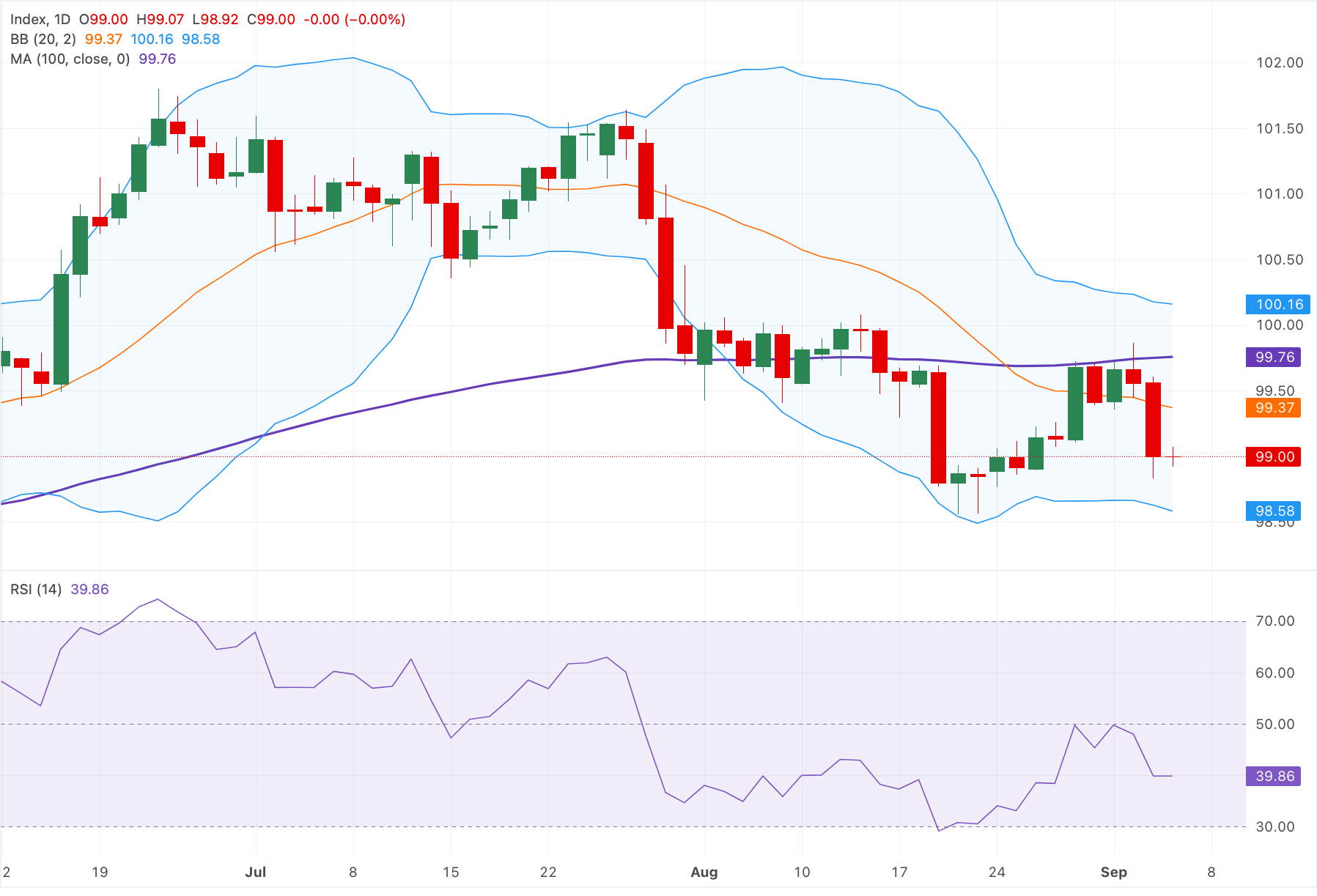
Ever wondered why the US Dollar Index (DXY) seems to be playing a game of patience with the markets? Trading just shy of that 99.00 mark early on a Friday in Europe, it’s like the dollar’s holding its breath—waiting to see if the upcoming August employment report will tip the scales. It’s fascinating how the chatter from Federal Reserve Governor Christopher Waller has nudged traders to rethink their bets, dialing down expectations for a September rate hike after his hints at steady rates if inflation keeps easing. The dance between data and policy is real, and how those Nonfarm Payrolls numbers land could very well send ripples through the DXY soon enough. But here’s the kicker—is the market just nervously waiting for a sign, or is the dollar signaling a deeper shift under the surface? Dive in to get the complete scoop on where the greenback might be heading next. LEARN MORE
The US Dollar Index (DXY), an index of the value of the US Dollar (USD) measured against a basket of six world currencies, currently trades near 99.00 in the early European trading hours on Friday. The DXY holds steady as traders prefer to wait on the sidelines ahead of the key US August employment report later on Friday.
Federal Reserve (Fed) Governor Christopher Waller’s remarks weighed on the US Dollar in the previous session. Waller stated on Thursday he was leaning toward keeping interest rates steady at this month’s policy meeting if the next batch of inflation data showed price pressures continuing to moderate.
Traders pared bets on a US September rate hike after the relatively dovish comments from Waller, with the implied probabilities of a move this month back to 50.2%, down from 63.2% on Wednesday, according to the CME FedWatch tool.
The US Nonfarm Payrolls (NFP) are forecast to increase by 56,000 in August after decreasing by 23,000 in July. The Unemployment Rate is expected to hold steady at 4.1% during the same period. In case of stronger-than-expected outcomes, this could boost the DXY in the near term.
Fed comments leave longer-dated US yields treading water
Analysts at Danske Bank observe that the initial market reaction in the US Treasury market to Fed Governor Waller’s remarks was a move lower in yields, noting that “in the US there was also an initial decline on the back of Fed Wallers comments, but then yields began to rise in the afternoon and 10Y Treasuries ended unchanged.” This left longer-dated US rates effectively flat by the close, despite the intraday volatility around the policy commentary.
Waller keeps September hike option alive as data-dependent stance tempers Dollar bulls
Fed’s Waller delivered a mildly less hawkish tone, with the FXS Speechtracker score at 6.1/10, slightly below the 6.3/10 historical average, as the message balanced emerging disinflation with still-elevated inflation above the 2% target. The key remark that policy would likely be held steady in September if August inflation shows continued progress, but that a “hot” print could still trigger a hike, underscores a finely calibrated reaction function that keeps a tightening bias alive while acknowledging better three‑month core inflation dynamics and solid growth. Overall, the speech signals a data‑dependent pause with a low but non‑negligible probability of further tightening, a mix that is modestly supportive for the Dollar but less aggressively so than in prior communications.
The FXS Fed Sentiment Index fell by 2.06 points to 125.38, indicating a pullback in perceived hawkishness even as the level remains firmly above the neutral 100 mark. This configuration suggests that, while the Fed stance is still hawkish in aggregate according to the FXS Fed Sentiment Index and FXS Speechtracker, markets are paring back expectations for imminent rate hikes and may temper the upside for the Dollar unless incoming inflation data re‑ignite tightening bets.
Technical Analysis: US Dollar Index remains capped below the 100-day SMA
In the daily chart, the Dollar Index Spot maintains a bearish near-term tone as price holds beneath the 20-day Bollinger simple moving average (SMA) and the 100-day SMA. The index is sliding within the lower half of its Bollinger envelope, with the lower band offering nearby dynamic support, while the Relative Strength Index (RSI) around 40 hints at lingering downside pressure rather than a decisive oversold condition.
On the topside, initial resistance is aligned at the Bollinger middle band near 99.35. The next hurdle is located at the 100-day SMA at 99.75, en route to the 100.00 psychological level. The upper Bollinger band around 100.15 forming a broader supply zone that would need to be reclaimed to ease the prevailing bearish bias.
On the downside, the next notable support emerges at the lower Bollinger band around 98.60. A break would open the door to further weakness toward the May 8 low of 97.83.
(The technical analysis of this story was written with the help of an AI tool. Know more.)
US Dollar FAQs
The US Dollar (USD) is the official currency of the United States of America, and the ‘de facto’ currency of a significant number of other countries where it is found in circulation alongside local notes. It is the most heavily traded currency in the world, accounting for over 88% of all global foreign exchange turnover, or an average of $6.6 trillion in transactions per day, according to data from 2022.
Following the second world war, the USD took over from the British Pound as the world’s reserve currency. For most of its history, the US Dollar was backed by Gold, until the Bretton Woods Agreement in 1971 when the Gold Standard went away.
The most important single factor impacting on the value of the US Dollar is monetary policy, which is shaped by the Federal Reserve (Fed). The Fed has two mandates: to achieve price stability (control inflation) and foster full employment. Its primary tool to achieve these two goals is by adjusting interest rates.
When prices are rising too quickly and inflation is above the Fed’s 2% target, the Fed will raise rates, which helps the USD value. When inflation falls below 2% or the Unemployment Rate is too high, the Fed may lower interest rates, which weighs on the Greenback.
In extreme situations, the Federal Reserve can also print more Dollars and enact quantitative easing (QE). QE is the process by which the Fed substantially increases the flow of credit in a stuck financial system.
It is a non-standard policy measure used when credit has dried up because banks will not lend to each other (out of the fear of counterparty default). It is a last resort when simply lowering interest rates is unlikely to achieve the necessary result. It was the Fed’s weapon of choice to combat the credit crunch that occurred during the Great Financial Crisis in 2008. It involves the Fed printing more Dollars and using them to buy US government bonds predominantly from financial institutions. QE usually leads to a weaker US Dollar.
Quantitative tightening (QT) is the reverse process whereby the Federal Reserve stops buying bonds from financial institutions and does not reinvest the principal from the bonds it holds maturing in new purchases. It is usually positive for the US Dollar.

Roku TV Remote Control (Official Manufacturer Product) | Simple Setup & Pre-Set App Shortcuts - Replacement Remote Compatible with RokuTV Models ONLY (Not Roku Players)
$9.99 (as of October 24, 2026 03:23 GMT +00:00 - More infoProduct prices and availability are accurate as of the date/time indicated and are subject to change. Any price and availability information displayed on [relevant Amazon Site(s), as applicable] at the time of purchase will apply to the purchase of this product.)
Wonderful Halos Mandarins, Sweet, Seedless, Easy Peel Mandarin Oranges - Healthy Food, Fresh Fruit, 3lb Bag
(as of October 24, 2026 03:13 GMT +00:00 - More infoProduct prices and availability are accurate as of the date/time indicated and are subject to change. Any price and availability information displayed on [relevant Amazon Site(s), as applicable] at the time of purchase will apply to the purchase of this product.)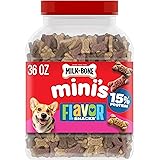
Milk-Bone Flavor Snacks Mini’s Dog Treats, 36 Oz. | 5 calories per treat, 15% protein, 3 flavors per canister (beef, chicken & bacon, naturally & artificially flavored)
$11.48 (as of October 24, 2026 03:13 GMT +00:00 - More infoProduct prices and availability are accurate as of the date/time indicated and are subject to change. Any price and availability information displayed on [relevant Amazon Site(s), as applicable] at the time of purchase will apply to the purchase of this product.)
Hybrid Active Noise Cancelling Headphones 120H Playtime 6 ENC Clear Call Mic, Over Ear Headphones Wireless with Hi-Res Audio Comfort Earcup Low Latency ANC Bluetooth 6.0 Headphones for Travel Workout
$99.96 (as of October 24, 2026 03:34 GMT +00:00 - More infoProduct prices and availability are accurate as of the date/time indicated and are subject to change. Any price and availability information displayed on [relevant Amazon Site(s), as applicable] at the time of purchase will apply to the purchase of this product.)














Post Comment