
South Korea Just Silenced 27 Crypto Giants – What This Means for Your Next Big Investment Move!
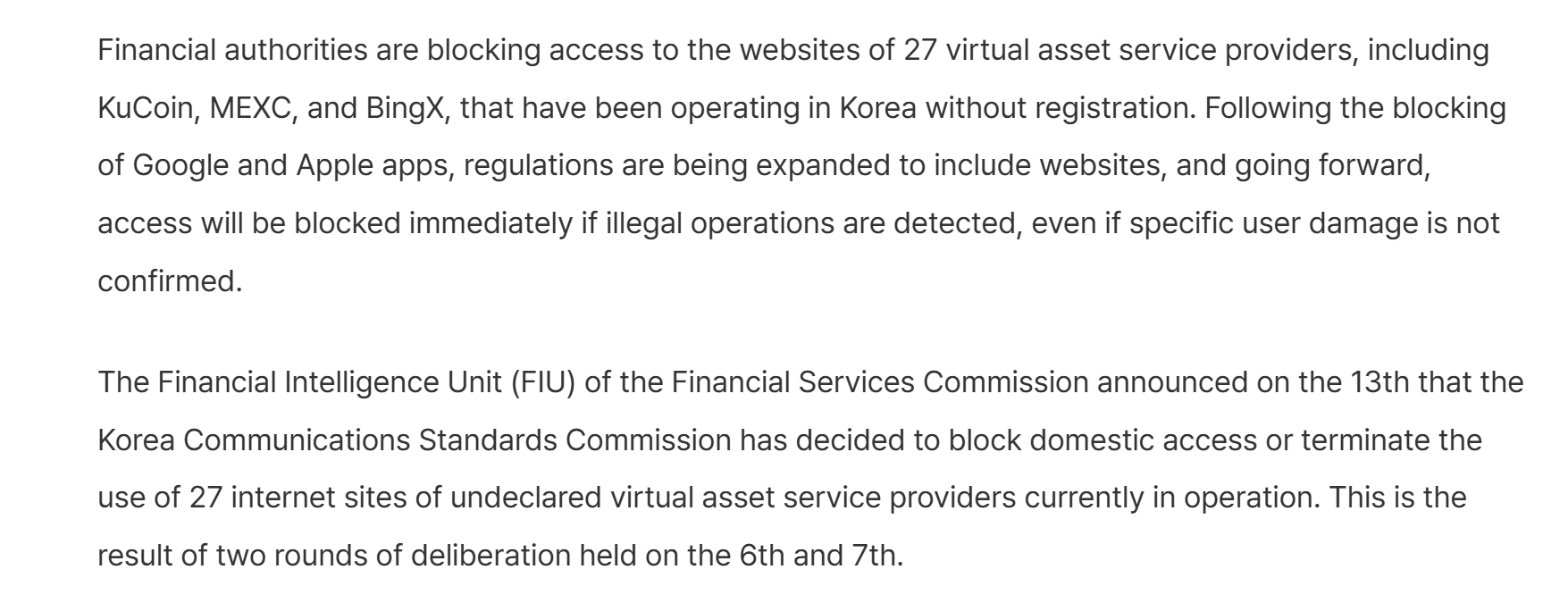
South Korea is turning up the heat—and not with kimchi—on unlicensed cryptocurrency exchange sites, blocking 27 major players like KuCoin, MEXC, and BingX from operating within its digital borders. If you thought cracking down on mobile apps was intense, wait till you see them going after websites directly, cutting off access from every conceivable angle. Now here’s the kicker: it doesn’t matter if a user lost a single won on these rogue sites, the government’s message is clear—if your assets aren’t on one of the 28 licensed exchanges, you better move them pronto. This isn’t just a regulatory shuffle; it’s a defining moment that could reshape accessibility and competition in the South Korean crypto market. Curious how this crackdown might change the game for traders and what it means for the future of crypto trading there? Buckle up. LEARN MORE
South Korea is tightening its grip against unlicensed cryptocurrency exchange sites. This was by blocking 27 websites, including KuCoin, MEXC, and BingX. Following earlier restrictions on mobile apps, authorities are extending enforcement to websites, limiting access through multiple channels.
Additionally, there is no distinction as to whether a user has experienced financial loss due to their use of an unregistered site.
This means that all users who have assets at an unregistered platform must consider transferring those assets to one of the 28 licensed exchange platforms available within the country.
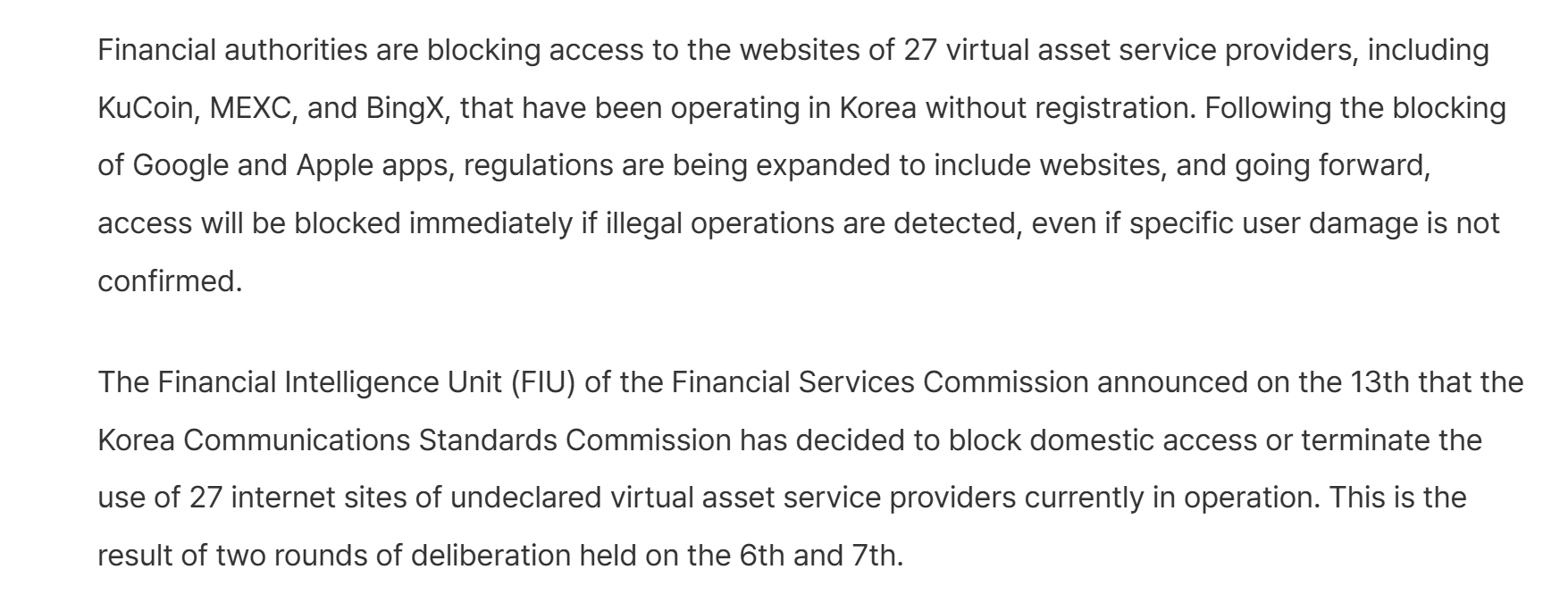
The Financial Intelligence Unit (FIU) has also referred 44 other unregistered operators to law enforcement agencies. This indicates that regulatory action against unregistered operators may continue.
Furthermore, the government will also take steps to enforce regulations against any potential substitute domain names that may attempt to circumvent such restrictions.
Eventually, these actions could reshape both accessibility and competition in South Korea’s cryptocurrency markets.
Alternative domains emerge as the next target
South Korea’s regulatory crackdown is about to enter its second phase. The next phase will test whether a regulator can prevent blocked exchanges from returning under a new domain that is still accessible in South Korea.
This is because the operators may attempt to restore access by changing website addresses. In turn, this will force authorities to identify replacement sites and request further restrictions.
Such a process could ultimately become more resource intensive for regulators, along with creating uncertainty for investors looking to access these exchanges reliably.
The FIU also plans to work with the Digital Asset Exchange Association to guide users through withdrawal procedures when restrictions cause difficulties. This support will be important for customers who still hold funds on affected platforms.
Ultimately, the effectiveness of enforcement will depend on closing access gaps while helping users recover their assets safely.
Can Korean exchanges absorb local trading?
South Korea’s crypto crackdown could shift trading activity toward domestic exchanges, where Upbit already dominates the market. The weekly trading volumes at the top five won-based exchange platforms hover between approximately 17.4 trillion KRW and 20.5 trillion KRW.
In that market, Upbit accounts for 64% of this total, while Bithumb is second with nearly 27%. Together, these two have a large percentage of domestic trading volume.
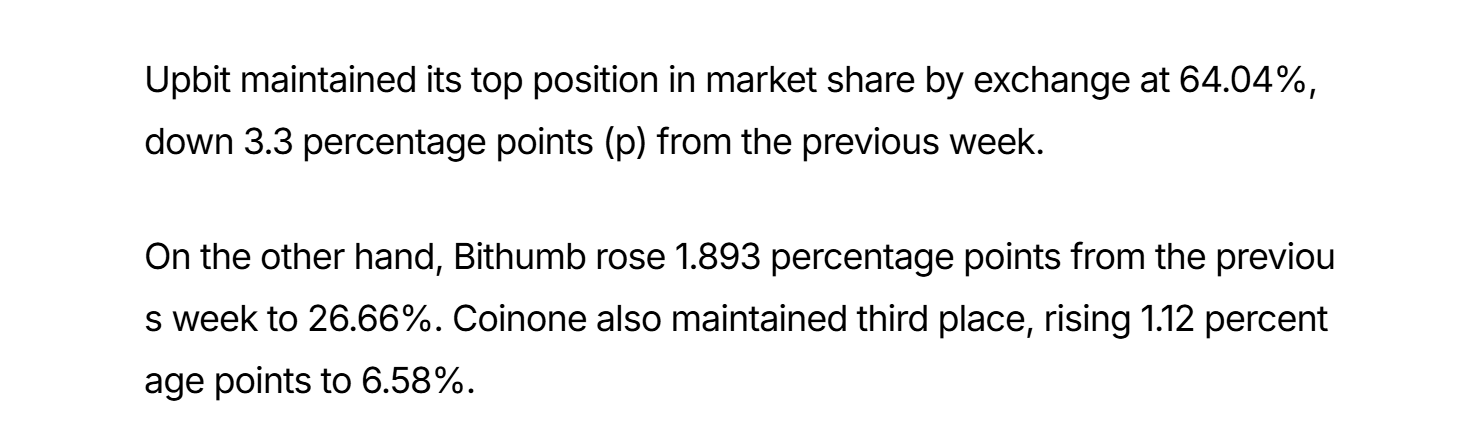
Still, it appears that Upbit accounts for nearly 75% of the user base with assets greater than 1 billion KRW.
Following overseas access restrictions, rising domestic volumes could signal traders consolidating activity locally. However, flat volumes alongside elevated cross-border transfers would suggest continued offshore trading.
All in all, sustained volume and liquidity shifts will reveal whether restrictions reshape Korea’s market.
Final Summary
-
South Korea blocks 27 unregistered crypto exchange websites and investigates 44 providers.
-
South Korea’s crypto restrictions could shift trading toward registered exchanges, including Upbit and Bithumb.

Banana Bunch (4-5 Count)
(as of October 13, 2026 03:09 GMT +00:00 - More infoProduct prices and availability are accurate as of the date/time indicated and are subject to change. Any price and availability information displayed on [relevant Amazon Site(s), as applicable] at the time of purchase will apply to the purchase of this product.)
Dr. Elsey's Ultra UnScented Clumping Clay Cat Litter 40 lb. Bag
$22.99 (as of October 13, 2026 03:11 GMT +00:00 - More infoProduct prices and availability are accurate as of the date/time indicated and are subject to change. Any price and availability information displayed on [relevant Amazon Site(s), as applicable] at the time of purchase will apply to the purchase of this product.)
PETLIBRO Cat Water Fountain, Cordless Pet Water Fountain Battery Operated, 2.5L/84oz Dockstream Water Fountains for Cats Indoor, Cat Fountain with Stainless Steel Tray, Easy to Clean BPA-Free
$61.99 (as of October 13, 2026 03:21 GMT +00:00 - More infoProduct prices and availability are accurate as of the date/time indicated and are subject to change. Any price and availability information displayed on [relevant Amazon Site(s), as applicable] at the time of purchase will apply to the purchase of this product.)
Ridge Tracker Card Compatible with Apple Find My, Compatible with Android Slim Tracking Card - Wallet Finder, Item Locator for Luggage Tags, Passports, Phone - MFi Certified, IP68 Water Resistance
$39.00 (as of October 13, 2026 03:32 GMT +00:00 - More infoProduct prices and availability are accurate as of the date/time indicated and are subject to change. Any price and availability information displayed on [relevant Amazon Site(s), as applicable] at the time of purchase will apply to the purchase of this product.)













Post Comment