
Is Your Cat Hiding a Deadly Tick-Borne Threat? What Every Pet Owner Needs to Know Now!
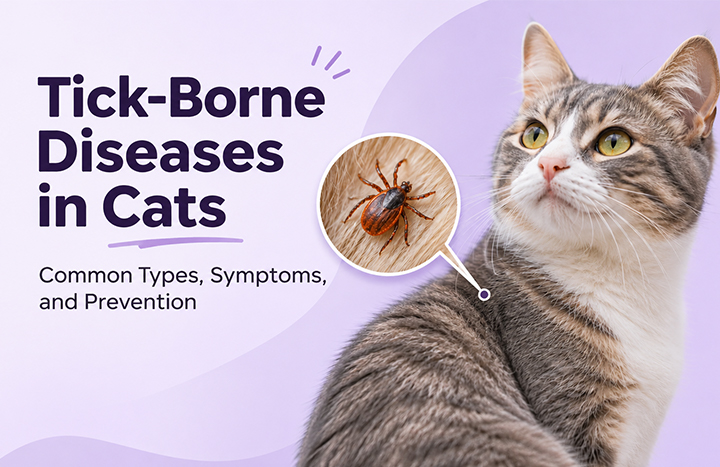
Ever catch yourself thinking, “Ticks? Nah, that’s a dog thing”—only to realize your cat’s maybe a little more of an undercover tick target than you thought? Yeah, me too. It’s tempting to chalk it up to their indoor lifestyles and obsessive self-cleaning habits, but here’s the kicker: even one sneaky tick hitching a ride can unleash some seriously nasty illnesses on our feline friends. I get it—it’s easy to overlook, but those tiny critters pack a punch, and ignoring them could land your cat in hot water health-wise. So buckle up, because we’re diving into the world of tick-borne diseases in cats — how they catch ’em, the symptoms you definitely don’t want to miss, and why nipping this problem in the bud with proper prevention is non-negotiable. Ready to become your cat’s tick-busting hero? Let’s roll! LEARN MORE
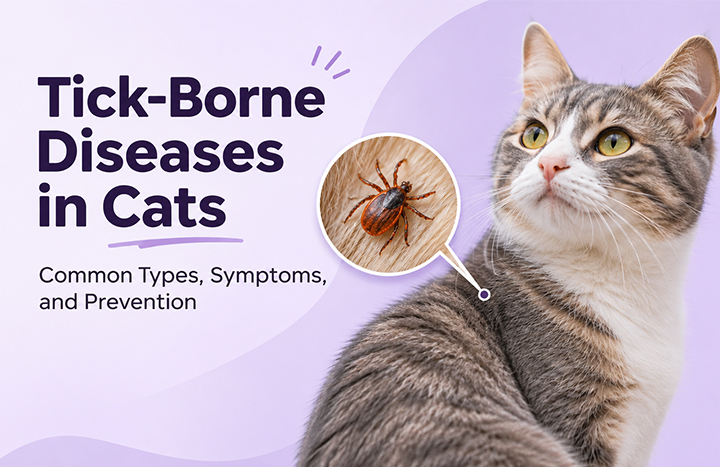
Some Cat parents have a misconception that ticks are a dog problem. Because cats groom themselves often and spend more time indoors, the risk can seem low. However, cats are not immune to ticks or the diseases they can transmit. Even a single attached tick can cause serious tick-borne illnesses in cats. In this blog, we will discuss common tick-borne diseases in cats, help you recognize when an illness may require urgent attention, and explain why tick prevention in cats is important.
Keep reading!
How Do Cats Get Tick-Borne Diseases?
Tick-borne diseases occur when an infected tick feeds on a cat and passes a bacterium or parasite into the bite wound. Most tick-borne infections spread through blood feeding. That is why the amount of time a tick spends attached matters. Studies show that the parasite behind cytauxzoonosis, a severe tick-transmitted disease, needs roughly 36 to 48 hours of tick attachment to be transmitted.
Although cats generally carry fewer ticks than dogs, the risk is not zero. Surveys found that about 3.4% to 4.2% of ticks submitted from companion animals came from cats that lived strictly indoors, while almost 18.7% of free-roaming cats in the central U.S.A. were found to be infested with ticks. The tick species most often found on cats are the black-legged tick, the lone star tick, and the American dog tick. Other species may also infest cats, depending on the region and seasonality of the species.
What Are the Main Tick-Borne Diseases in Cats and Their Signs?
Not every tick-borne disease known in dogs or people behaves the same way in cats. Some feline tick infections are well documented, such as:
Cytauxzoonosis
Cytauxzoonosis is caused by Cytauxzoon felis, a parasite that infects blood cells. The lone star tick is its primary vector. The American dog tick can also transmit it. Illness tends to appear approximately 5 to 14 days after infection, although the timing can vary. Affected cats may develop:
- High fever
- Loss of appetite
- Lethargy
- Dehydration
- Depression
- Generalized pain
Anaplasmosis
Anaplasmosis is caused by the bacterium Anaplasma phagocytophilum, which is carried by Ixodes species of ticks, the same ticks that carry the Lyme disease bacterium. Cats infected with Anaplasmosis may develop:
- Lethargy
- Fever
- Abdominal discomfort
- Anorexia
Lyme Disease
Lyme disease is caused by the bacterium Borrelia burgdorferi and is transmitted by Ixodes scapularis or black-legged ticks. Studies show that it is the most common tick-transmitted infection in humans and dogs in the U.S.A. Signs of Lyme disease in cats are similar to that in dogs.
In cats, reported symptoms may include:
- Fever
- Anorexia
- Joint swelling
- Stiffness
- Lameness
As these signs are not exclusive to Lyme disease, a veterinarian would interpret test results and possible tick exposure alongside the cat’s symptoms.
How Can You Prevent Tick-Borne Diseases in Cats?
Prevention is the best approach for tick-borne diseases, which can progress quickly and have serious outcomes. It combines regular tick checks and a veterinarian-recommended tick preventive that is specifically labeled for cats.
Tick products that repel ticks or kill them quickly can block transmission before an infection starts. In experimental studies, a collar containing imidacloprid and flumethrin and a topical combining selamectin with sarolaner each prevented transmission of C. felis. There are different products available to treat and control infestations from various tick species that can transmit different diseases.
Veterinarians recommend consistent, year-round use of tick preventives formulated for cats. Here are some popular tick treatments for cats:
Bravecto Topical Solution
- Form: Topical
- Dosage frequency: Every 12 weeks (for Black-legged ticks, Asian longhorned ticks, and Gulf Coast ticks) and every 8 weeks (for American dog ticks)
- Tick species covered: Black-legged ticks, Asian longhorned ticks, Gulf Coast ticks, American dog ticks
Bravecto Topical Solution is a long-lasting parasite treatment for cats. It is supplied in a Twist’n’Use applicator for convenient topical administration. One dose of Bravecto treats and prevents flea infestations, and treats and controls tick infestations with black-legged ticks, Asian longhorned ticks, and Gulf Coast ticks, for 12 weeks. It is also treats and controls American dog ticks for 8 weeks.
Bravecto Topical Solution contains fluralaner and is indicated for cats and kittens 6 months of age and older weighing at least 2.6 pounds.
Revolution Plus
- Form: Topical
- Dosage frequency: Monthly
- Tick species covered: Lone Star ticks, Gulf Coast ticks, American dog ticks, black-legged ticks
Revolution Plus is a monthly topical solution that protects against most common feline parasites. It combines two active ingredients, selamectin and sarolaner, which work together to prevent heartworm disease, treat and prevent fleas, and treat and control ear mites, roundworms, hookworms, lone star ticks, Gulf Coast ticks, American dog ticks, and black-legged ticks. The topical solution is non-greasy, quick-drying, and small-volume, making monthly administration easy.
Revolution Plus is only approved for use in cats and kittens 8 weeks of age and older weighing at least 2.8 pounds.
Credelio Cat
- Form: Oral chewable tablet
- Dosage frequency: Once monthly
- Tick species covered: Black-legged ticks
Credelio Cat contains lotilaner and is an oral flea and tick treatment for cats. The chewable tablets are made with vanilla and yeast flavor for hassle-free administration.
It treats and controls black-legged tick infestations for one month in cats and kittens 6 months of age and older, weighing at least 2.0 pounds. It also kills adult fleas and treats and prevents flea infestations for one month in cats and kittens 8 weeks of age and older, weighing at least 2.0 pounds.
Seresto Collar
- Form: Wearable collar
- Dosage frequency: 8 months
- Tick species covered: Deer ticks (Black-legged ticks), American dog ticks, brown dog ticks, and Lone Star ticks
The Seresto collar provides up to 8 continuous months of tick and flea protection for cats. The collar is designed to be odorless and non-greasy, making it a convenient option for cat parents. It is formulated with flumethrin and imidacloprid, which repel and kill ticks and fleas through contact, meaning the parasite does not need to bite the cat to be exposed to the active ingredients.
It repels and kills deer ticks that may transmit Lyme disease and anaplasmosis; American dog ticks that may transmit Rocky Mountain spotted fever, cytauxzoonosis, and ehrlichiosis; Brown dog ticks that may transmit ehrlichiosis, anaplasmosis, babesiosis, and Rocky Mountain spotted fever; and Lone Star ticks that may transmit cytauxzoonosis and ehrlichiosis.
The Seresto collar is approved for cats and kittens 10 weeks of age and older.
Keep in mind that product indications, minimum ages, weight requirements, and approved tick species differ, so always check with your veterinarian before using one for your cat.
Other ways to reduce tick exposure:
- Keep cats indoors where possible, particularly during peak tick season in endemic areas.
- Check your cat for ticks after any time outdoors. Pay close attention to the head, ears, neck, and other areas where ticks may attach.
- Remove an attached tick by pulling straight out with fine-tipped tweezers, without squeezing the body, and wash your hands afterwards.
- Ask your veterinarian for help if you find multiple ticks or cannot safely remove an attached tick.
- Keep grass short and discourage wildlife from lingering in your yard.
- Follow a consistent tick-prevention schedule. Missing doses can leave gaps in protection, so set reminders if needed.
Final Thoughts
Tick-borne diseases in cats are less common than in dogs, but some can be severe and fast-progressing, and even indoor cats can be exposed. Symptoms often overlap, so a veterinarian’s help is needed to find the actual cause. Prevention using cat-specific products year-round is the most reliable step you can take to protect your cat from ticks. And do not ever use dog products on cats, as the ingredients may be toxic for cats. You can explore cat-specific flea and tick treatments at DiscountPetMart. When in doubt, do not hesitate to call your veterinarian.

Good 'n' Fun Kabobs Long-Lasting Dog Treat Made With Real Protein, 24 oz | Premium Chicken, Pork and Beef Hide Chew, Supports Dental Health and Mental Stimulation, For Adult Dogs
$17.97 (as of November 12, 2026 03:23 GMT +00:00 - More infoProduct prices and availability are accurate as of the date/time indicated and are subject to change. Any price and availability information displayed on [relevant Amazon Site(s), as applicable] at the time of purchase will apply to the purchase of this product.)
Cat Litter Deodorizer & Pet Odor Eliminator, 3 Pack Air Purifiers for Home | Plug-In Odor Absorber with Negative Ion for Litter Boxes & Pet Areas, Quiet Non-Filter Air Fresheners for Home, Bedroom, Pets
$34.99 (as of November 12, 2026 03:26 GMT +00:00 - More infoProduct prices and availability are accurate as of the date/time indicated and are subject to change. Any price and availability information displayed on [relevant Amazon Site(s), as applicable] at the time of purchase will apply to the purchase of this product.)
Minties Mint Dental Chews for Dogs, Medium 25-50 lbs, 50 count | Vet-recommended mint chew for medium dogs 25-50 lbs; scrubs teeth; helps reduce plaque, tartar & bad breath; 50 count
$25.41 (as of November 12, 2026 03:26 GMT +00:00 - More infoProduct prices and availability are accurate as of the date/time indicated and are subject to change. Any price and availability information displayed on [relevant Amazon Site(s), as applicable] at the time of purchase will apply to the purchase of this product.)
Automatic Litter Box, Self Cleaning, Low Entry Step, Open Top | Self Cleaning Cat Litter Box with 7 Pairs of Infrared Sensors, an 8L Waste Bin and Three-Button Control, for Cats 3–17 lb
$99.98 (as of November 12, 2026 03:26 GMT +00:00 - More infoProduct prices and availability are accurate as of the date/time indicated and are subject to change. Any price and availability information displayed on [relevant Amazon Site(s), as applicable] at the time of purchase will apply to the purchase of this product.)














Post Comment