
After the Layoff: The Untold Playbook That Turns Career Crisis Into Million-Dollar Opportunity
Ever been caught off guard by a calendar invite so cryptic it might as well say, “Brace yourself, your world’s about to flip”? Yeah, we’ve all heard the horror stories—screen flickers, awkward silence, and then those four dreaded words: “We need to talk.” What happens next can feel like the rug’s been yanked out from right under you, especially if you’re holding down a cushy six-figure gig at one of the tech giants—Google, Meta, Microsoft, Intel—the supposed unshakables of the corporate world. But here’s the kicker: these weren’t just unlucky outliers or slackers; they were the cream of the crop, and still, the layoffs hit hard and fast. Are we just digital age ghosts, haunted by algorithms and AI, or is it time we rethink what “security” really means in this fast-shifting landscape? It’s not about the job title or the paycheck lining your account—it’s about control, resilience, and having a plan B that doesn’t depend on someone else’s budget spreadsheet. Let’s dig into why the Big Tech layoff wave of 2026 is ringing alarm bells and what savvy, future-proof moves you can make before the next email lands in your inbox. LEARN MORE
After the Layoff (Big Tech Edition)
It usually begins the same way. You get a calendar invite with no details. Your manager avoids eye contact on the video call. Then you hear the words that suddenly make your career part of your past.
A recent Business Insider video featured four former employees from Google, Meta, Microsoft, and Intel sharing what happened after their layoffs. They talked about the shock of losing jobs at companies they thought were the safest, the unexpectedly tough job search, and the financial and emotional struggles that lasted long after their severance ended.
These people were not underperformers. They had six-figure jobs at some of the world’s top companies. If it happened to them, it could happen to anyone who relies on just one employer.
The numbers behind the stories
Their stories aren’t just rare cases. This is what the 2026 job market looks like.
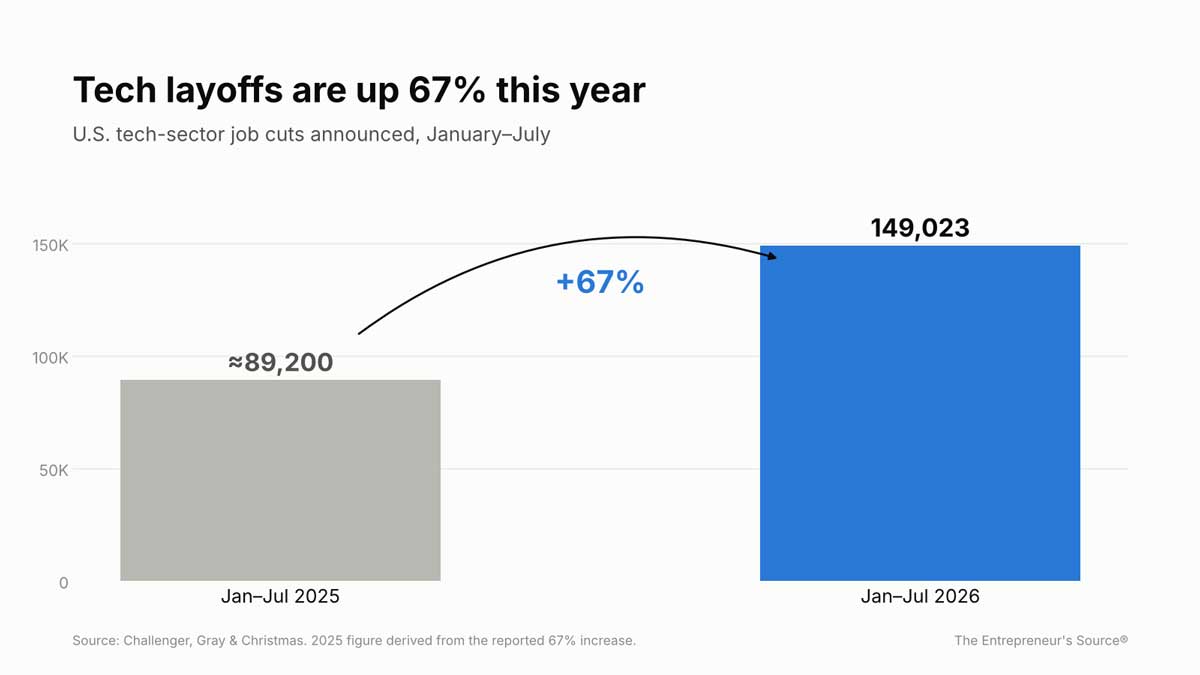
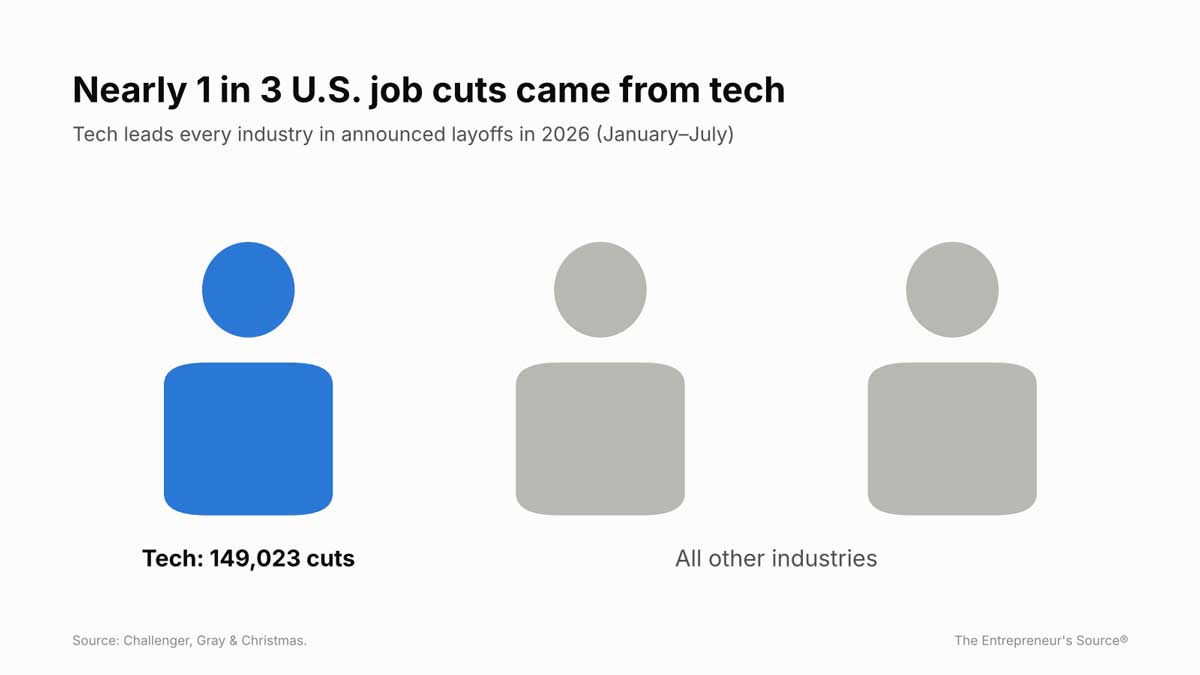
- Tech leads all industries in layoffs. From January to July 2026, tech companies announced 149,023 job cuts, which is 67% more than the same time last year, according to Challenger, Gray & Christmas. That’s almost one out of every three job cuts in the U.S. this year.
- Companies often blame AI for these cuts. Challenger says artificial intelligence was the top reason for job losses for the fifth month in a row in July, with 10,970 positions affected.
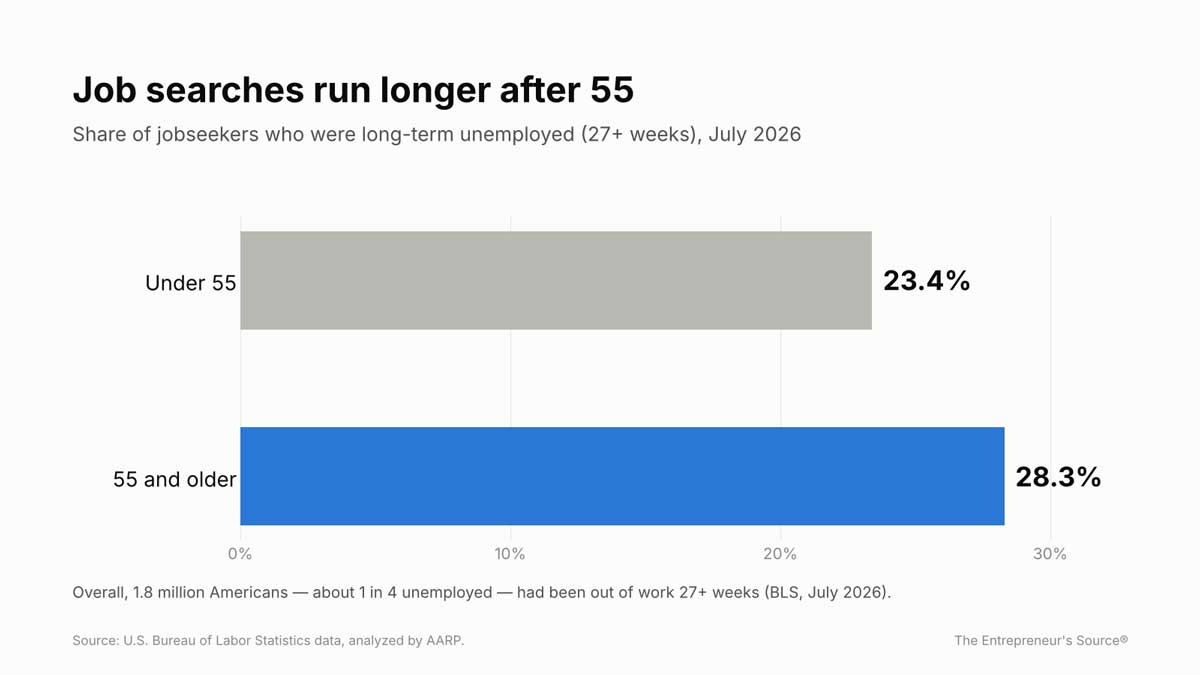
- Finding a new job takes time. The U.S. Bureau of Labor Statistics says that in July, 1.8 million people had been unemployed for 27 weeks or more, which is about one in four unemployed Americans. That month, payrolls even dropped by 23,000.
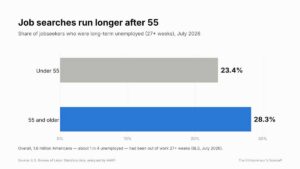
- It’s even harder if you’re over 55. AARP’s look at the same BLS data found that 28.3% of jobseekers aged 55 and up were long-term unemployed in July, compared to 23.4% of those under 55.
All of this adds up to what those four former tech workers described: a quick exit, a long job search, and the feeling that things have changed for good.
If you listen to layoff stories, you’ll hear the same idea over and over: people think good performance keeps them safe. Work hard, meet your goals, stay loyal, and the company will keep you. All of these employees did that, but it didn’t make a difference.
Here’s the hard truth. In a regular job, someone else decides your pay, your hours, and your future, often without you in the room. Your “security” is just a number in someone else’s budget. That’s always been the case. AI has only made this reality clear much sooner than anyone thought.
If you don’t control your security, it isn’t really security. It’s like renting with no warning before you have to leave.
 What they’re learning, and what you can learn now
The best part about hearing from people who have gone through this is that you can learn the lessons before a layoff happens, not after. Three lessons stand out.
- The job title was never the real asset. People who bounce back the fastest know their true value is in their skills, judgment, relationships, and leadership. A company name on your résumé can help, but you can’t take it with you. What you know and who you are will always go with you.
- Relying on one income is risky. Most of these workers had just one employer, one paycheck, and one plan. When that disappeared, so did all their options. Owning your career by owning a business isn’t about avoiding work. It’s about making sure no one else can decide when your income ends.
- The emotional impact is real, and it’s why people sometimes get stuck. Some described losing their sense of identity, not just their income. That’s why many talented people struggle after a layoff, they’re trying to fix a life problem by just looking for another job. The best way to handle a big shock like this is to think carefully about what you really want from your career.
Many already see the alternative
This isn’t a fringe idea. According to the TES Generational Career Confidence Survey, 61% of Americans say business ownership is the best protection against AI making a career obsolete, and 66% say it offers more job security than a traditional job. Eight in ten employees say ownership gives more career control. Notably, 32% of current business owners cite a toxic work environment as a reason to leave.
None of this means you should walk out of your job tomorrow and buy a business. It means that if the four people in that Business Insider video had explored their options while they still had a paycheck, they would have negotiated from strength instead of scrambling in shock.
Explore before you’re forced to
 A Career Ownership Coach® at The Entrepreneur’s Source® works with people at exactly this point, before the layoff or right after it, to look honestly at what’s possible. There is no pressure and no sales pitch, just a structured process for discovering whether business ownership fits the life you want to build.
Former Google, Meta, Microsoft, and Intel employees learned this lesson the hard way. You don’t have to.
Ready to explore your options? Schedule a no-cost conversation with a Career Ownership Coach® today.
Find out if Career Coaching is right for you!

About Your Career Revolution
Our mission is to help individuals explore self-sufficiency as an alternative career.
We help them define their Income, Lifestyle, Wealth, and Equity goals and provide education on the best ways to achieve them. We don’t sell franchises – we help people achieve their dreams of self-sufficiency through business ownership. The approach is different, the experience is different. And it works.
Order on AMAZON
Learn More About Career Ownership Coaching™

Tomkas Small Dog Cat Sling Carrier Puppy Purse Travel Wrap Soft Crossbody Pet Bag (Black1, M - Classic Pocket & Classic Strap)
$13.29 (as of October 27, 2026 03:23 GMT +00:00 - More infoProduct prices and availability are accurate as of the date/time indicated and are subject to change. Any price and availability information displayed on [relevant Amazon Site(s), as applicable] at the time of purchase will apply to the purchase of this product.)
PETLIBRO Cat Water Fountain, Cordless Pet Water Fountain Battery Operated, 2.5L/84oz Dockstream Water Fountains for Cats Indoor, Cat Fountain with Stainless Steel Tray, Easy to Clean BPA-Free
$58.58 (as of October 27, 2026 03:23 GMT +00:00 - More infoProduct prices and availability are accurate as of the date/time indicated and are subject to change. Any price and availability information displayed on [relevant Amazon Site(s), as applicable] at the time of purchase will apply to the purchase of this product.)
PUR Gum, Spearmint, Xylitol Gum, No Artificial Flavor, 55 Count | No Artificial Sweeteners, Vegan, Sugar Free, Gluten Free, Soy Free, Nut & Peanut Free, Swiss Made, Keto Friendly chewing gum
$3.98 (as of October 27, 2026 03:13 GMT +00:00 - More infoProduct prices and availability are accurate as of the date/time indicated and are subject to change. Any price and availability information displayed on [relevant Amazon Site(s), as applicable] at the time of purchase will apply to the purchase of this product.)
FUJIFILM instax mini 13 Instant Film Camera - Dreamy Purple
$89.00 (as of October 27, 2026 03:34 GMT +00:00 - More infoProduct prices and availability are accurate as of the date/time indicated and are subject to change. Any price and availability information displayed on [relevant Amazon Site(s), as applicable] at the time of purchase will apply to the purchase of this product.)













Post Comment