
Air Canada’s Game-Changing Business-Class Upgrade: What Every Jetsetter Needs to Know Before Booking
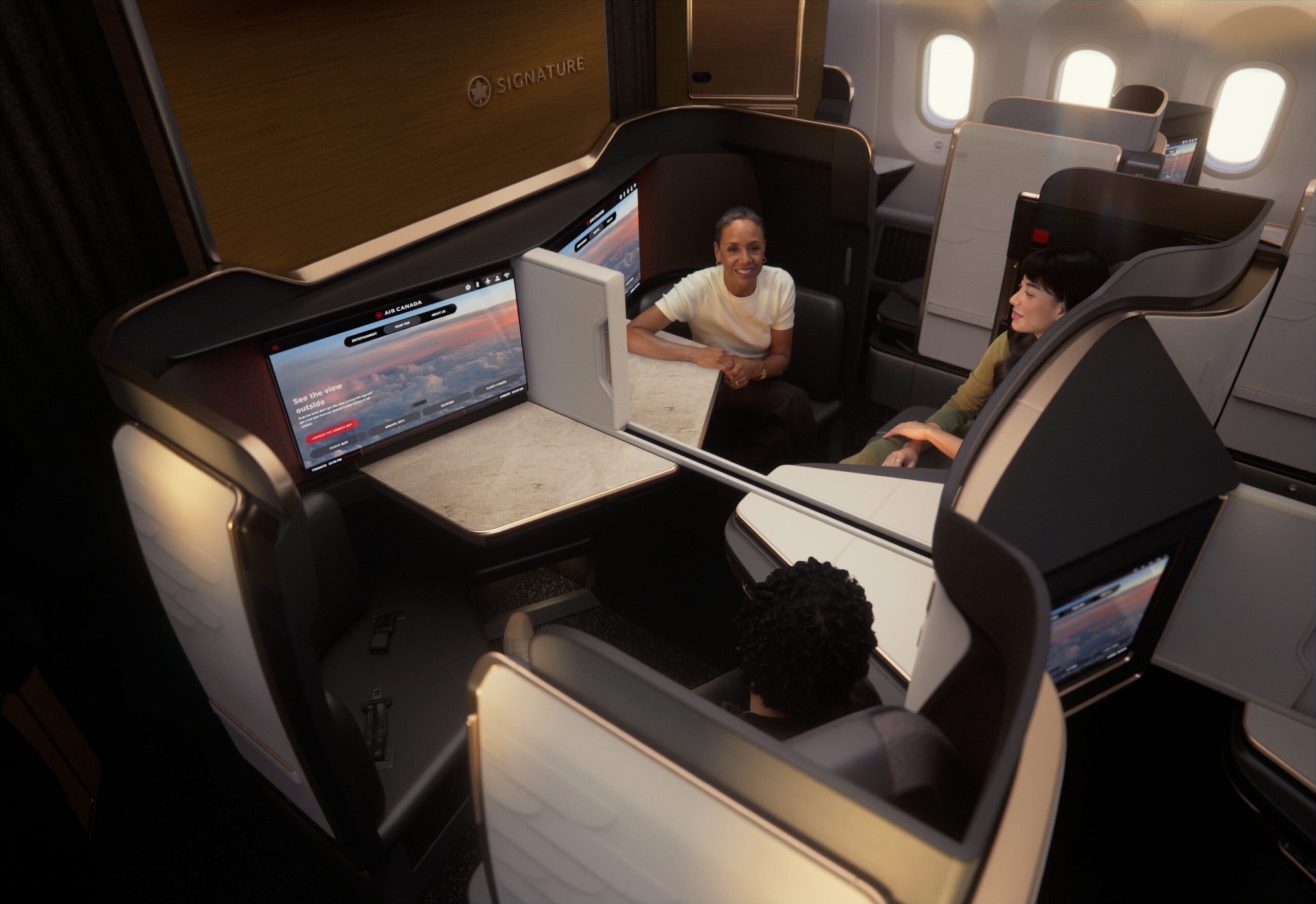
Ever wondered what it feels like to stretch out completely flat on a plane that traditionally only had cramped seats? Well, Air Canada is turning that daydream into reality this summer with the launch of its “Air Canada Signature Class” on the Airbus A321XLR—a true game changer that introduces lie-flat seats to a single-aisle jet for the very first time. This isn’t just another facelift; it’s the airline’s bold leap into their “Glowing Hearted” design philosophy, where comfort meets a distinctly Canadian soul. From roomy overhead bins to sleek 4K OLED screens and discreet privacy panels, every detail whispers of a journey redesigned for relaxation and ease. And with the Boeing 787-10 soon to follow, travelers can expect an even more spacious slate of options, including fancy new suites and cleverly thought-out premium economy tweaks. So, is this the fresh start Air Canada fans have been waiting for? Buckle up—it’s going to be a fascinating ride. LEARN MORE
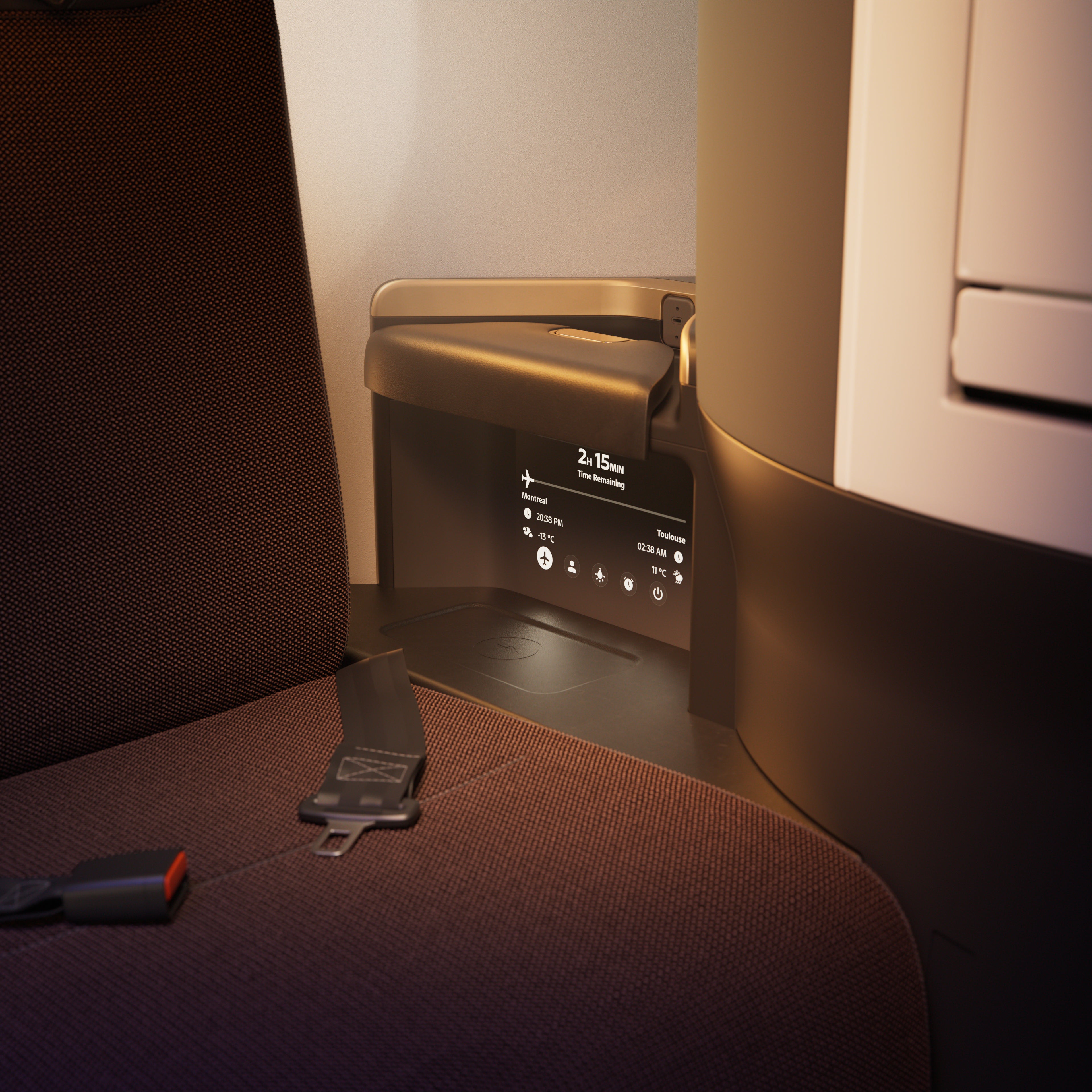
Air Canada on Tuesday unveiled the new interiors and business-class seats coming to two of its jets. This is a major upgrade that the airline described as “the first major expression” of its “Glowing Hearted” design standard and customer service approach.
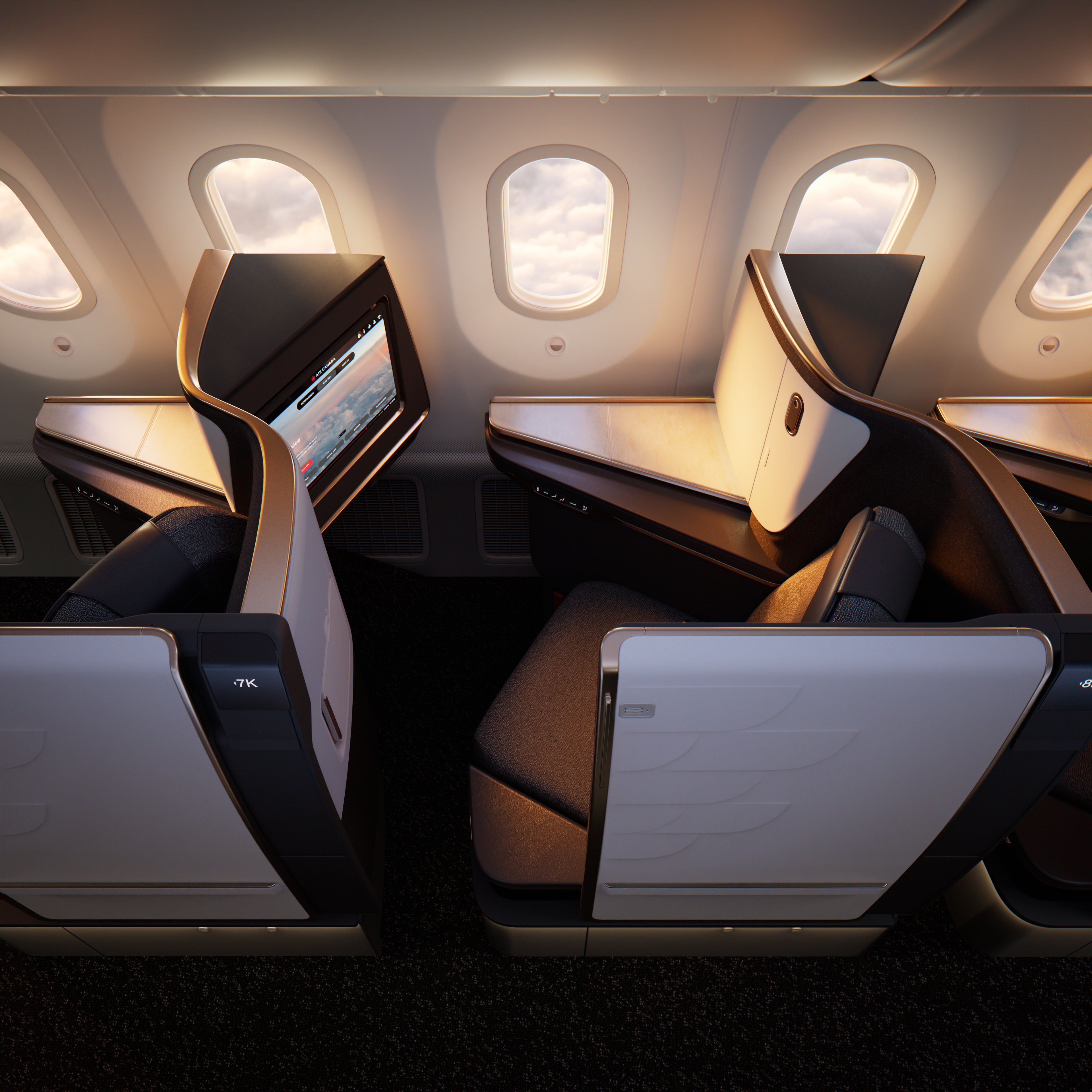
The new business-class cabin, which the airline is calling “Air Canada Signature Class,” will debut on its Airbus A321XLR this summer — marking the first time Air Canada will offer lie-flat seats on a single-aisle jet. It will later appear on the airline’s new fleet of Boeing 787-10 jets.
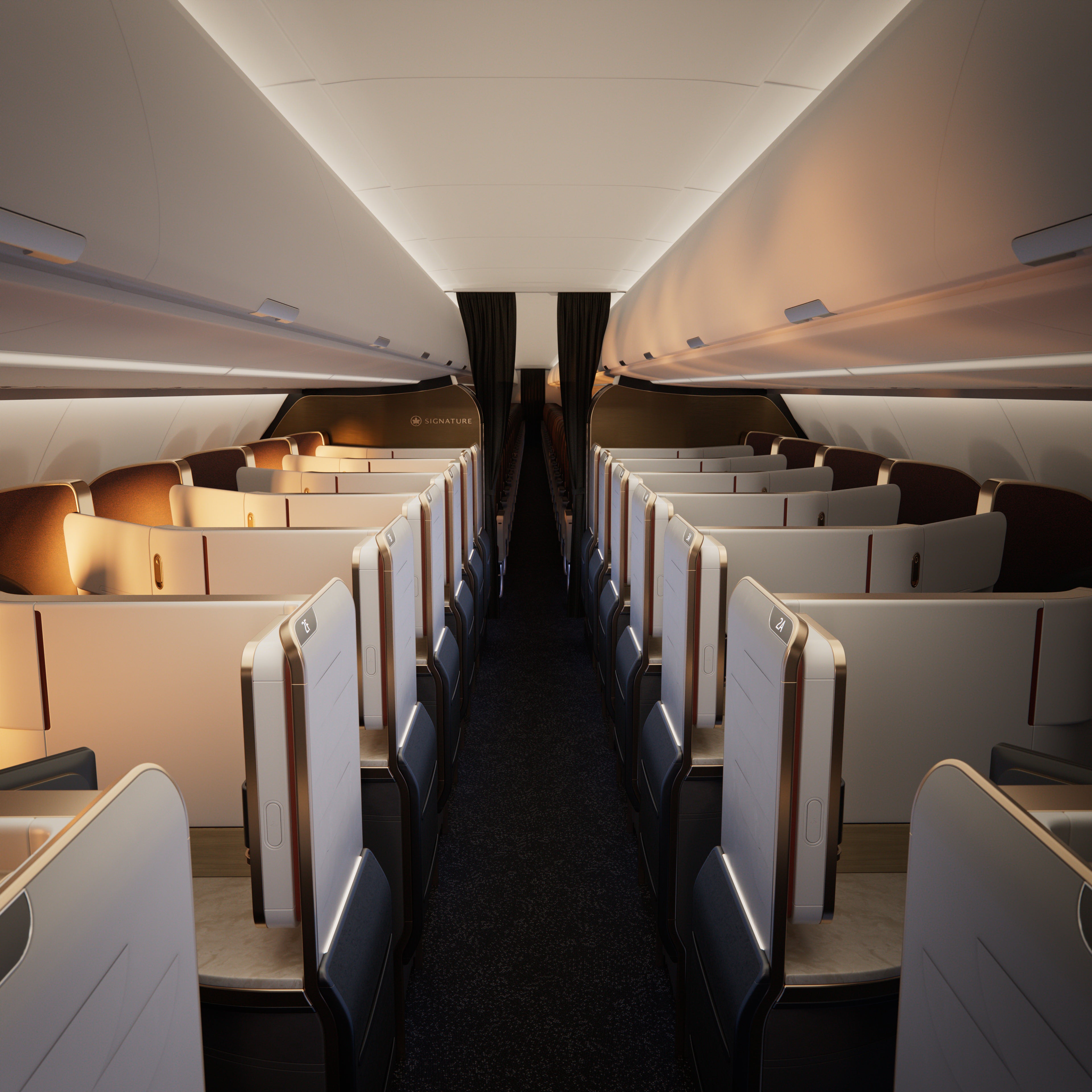
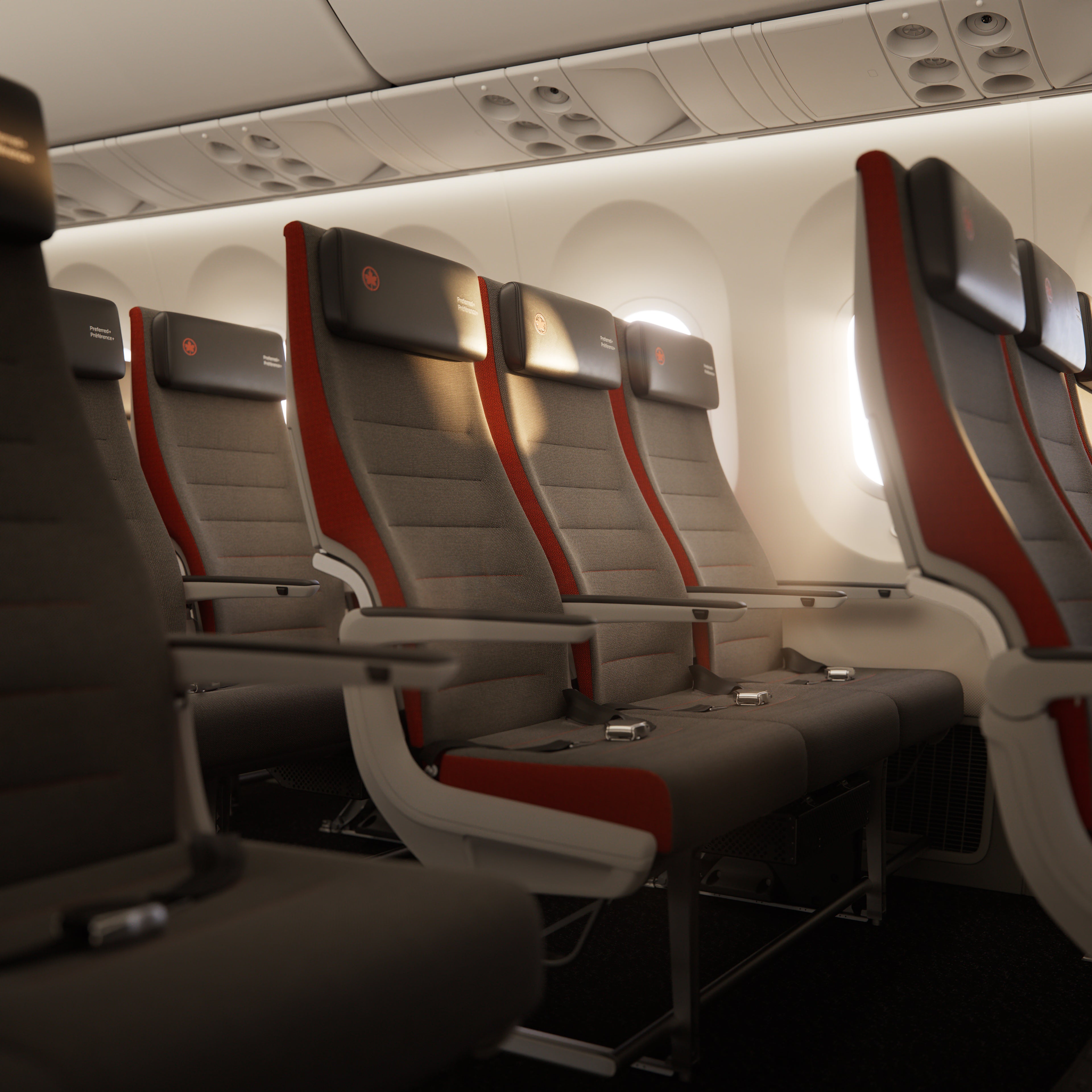
On both jets across all classes, passengers can expect to find larger overhead compartments; ergonomic seats with phone or tablet holders; new, larger OLED 4K inflight entertainment screens with Bluetooth audio; and USB-C and AC power outlets at each seat.
The A321XLR will feature 14 business-class seats in a 1-1 herringbone configuration, along with 168 economy seats (36 of which offer extra legroom). Travelers will find these cabins on certain transatlantic and transcontinental routes.
While the business-class seats will not have fully closing doors, Air Canada said they will feature “a sliding privacy panel” that passengers can close to block out more of the cabin.
Air Canada has 30 of the jets on order from Airbus.
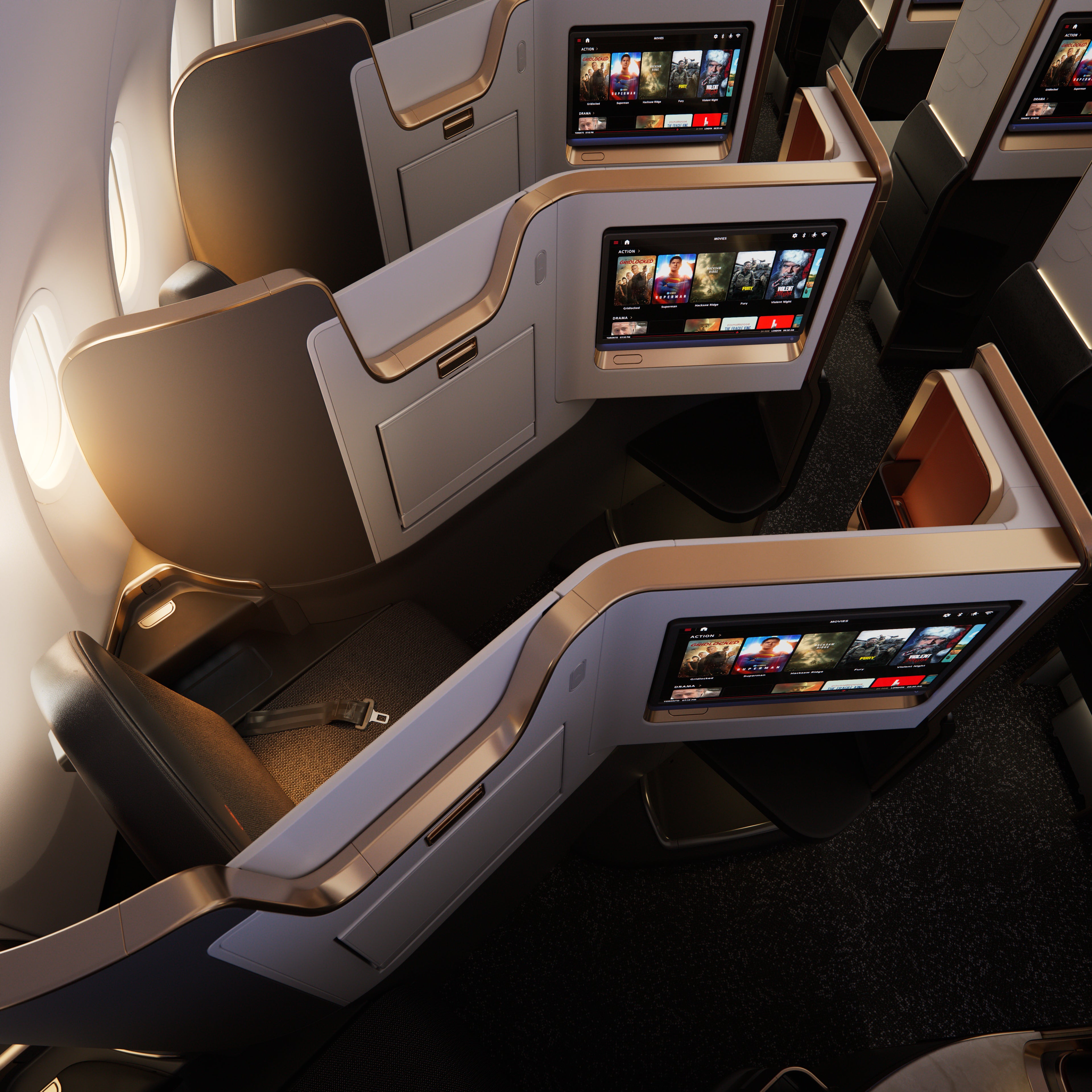
Meanwhile, the 787-10 will have 42 Signature Class seats in a 1-2-1, reverse-herringbone layout. It will also feature 28 premium economy seats and 262 economy seats, including some with extra legroom. (Air Canada did not specify the number of extra-legroom seats.)
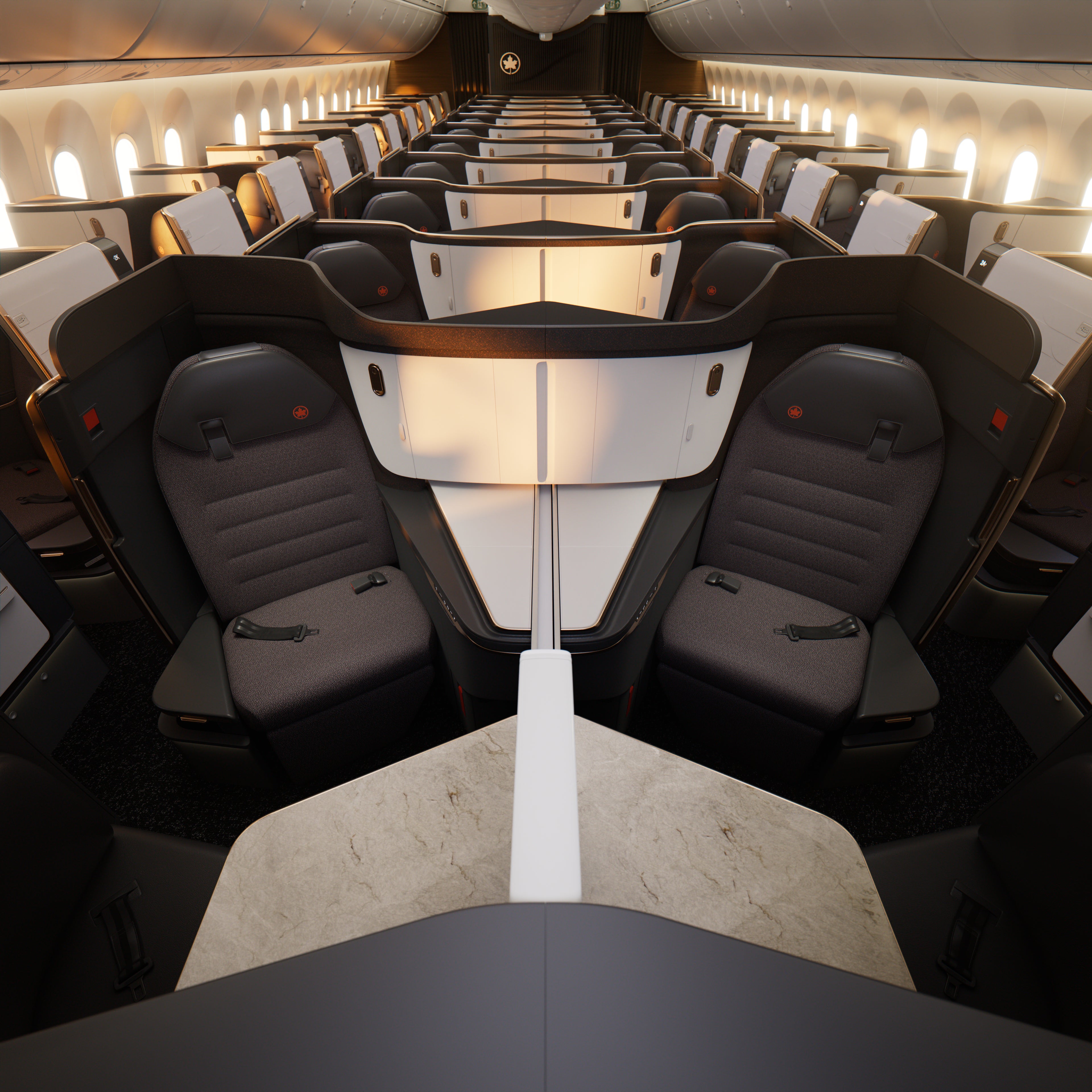
The first row of business-class seats, dubbed “Signature Class Plus,” will offer more spacious suites.
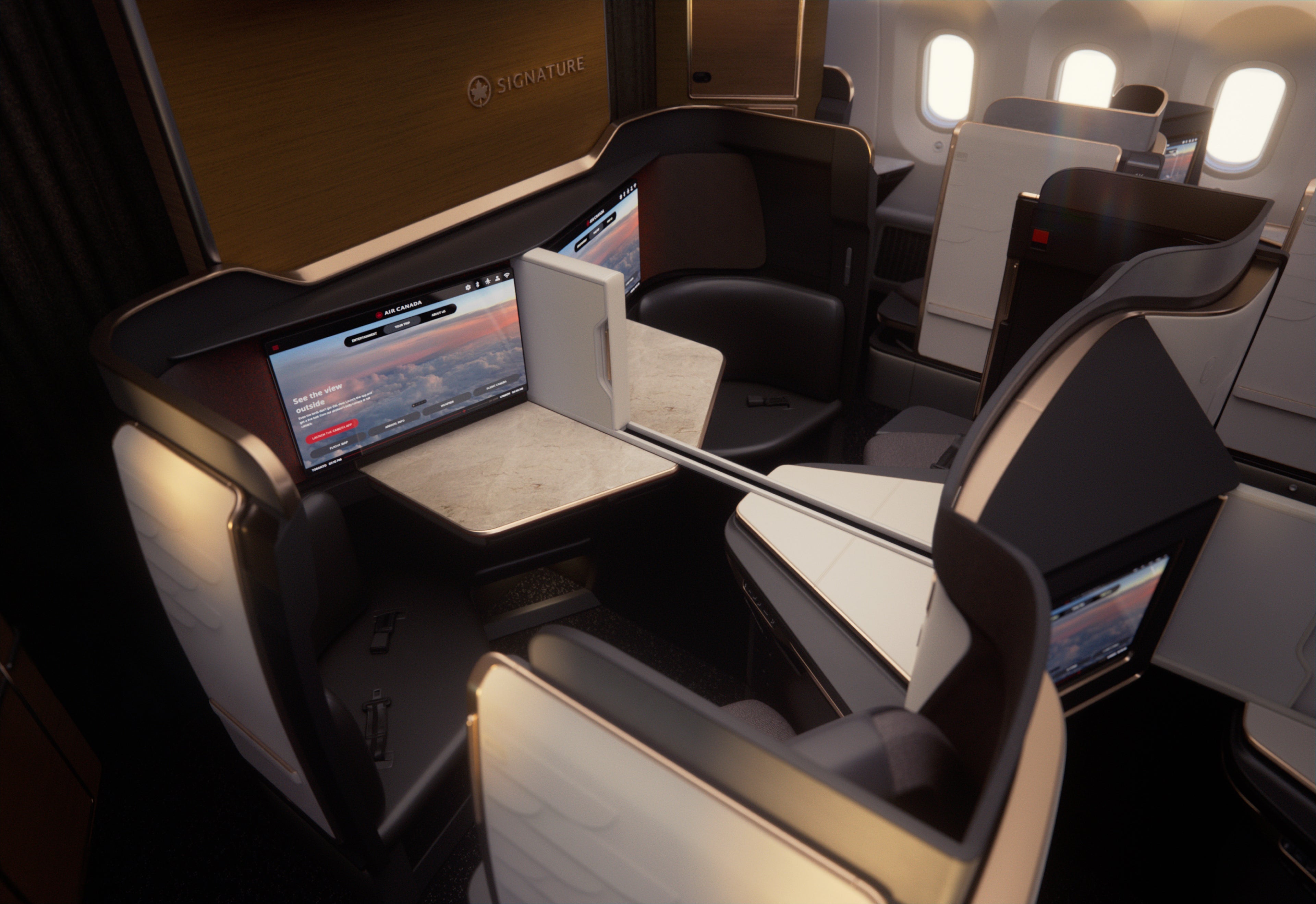
This includes a center divider between the middle seats that passengers can fully lower to create more open space when traveling with a companion.

Daily Newsletter
Reward your inbox with the TPG Daily newsletter
Join over 700,000 readers for breaking news, in-depth guides and exclusive deals from TPG’s experts
By signing up, you will receive newsletters and promotional content and agree to our Terms of Use and acknowledge the data practices in our Privacy Policy. You may unsubscribe at any time.
Premium economy will also see a slight redesign with “privacy wings” that appear similar to those on newer domestic first-class seats offered by Delta Air Lines and United Airlines.
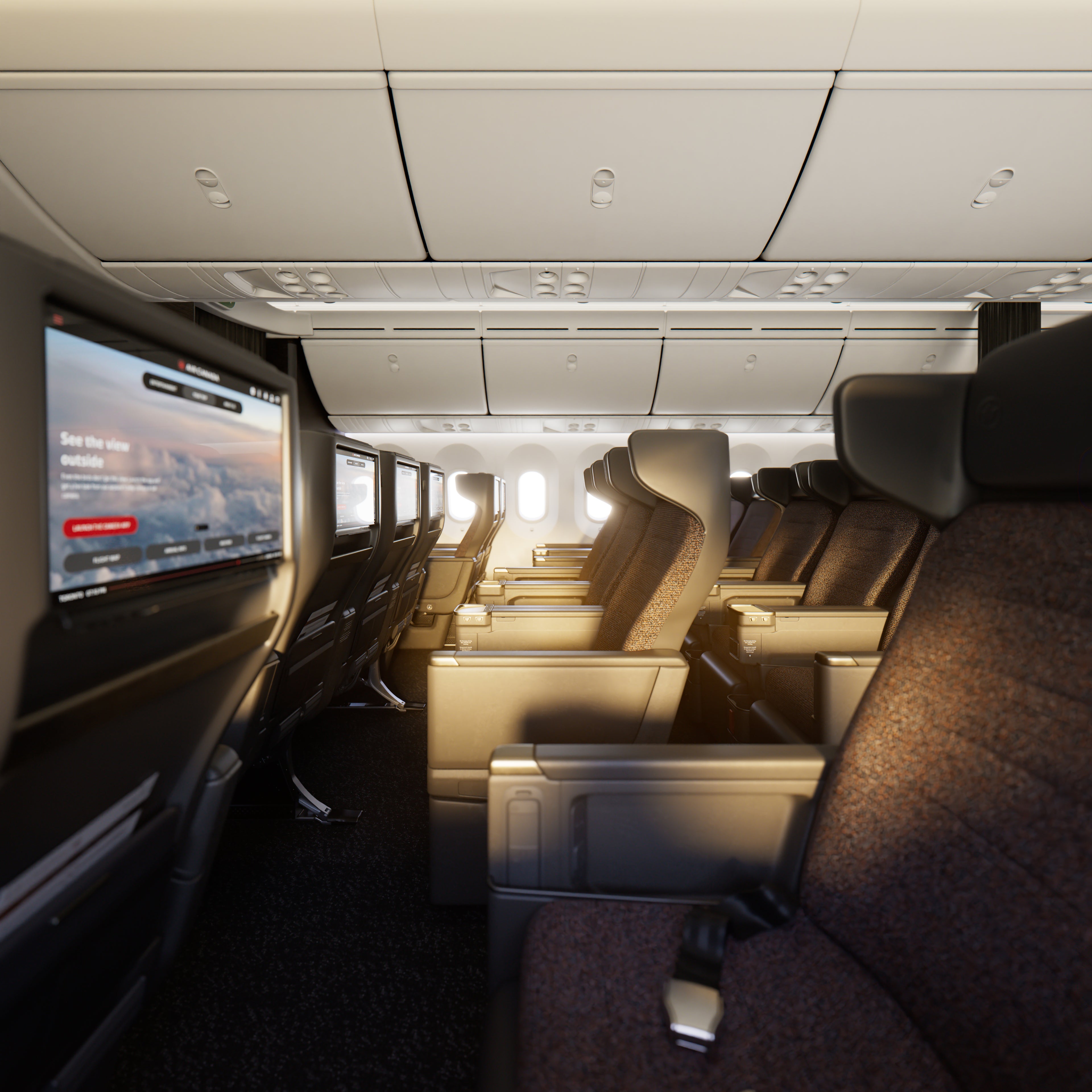
Air Canada is scheduled to take delivery of 14 of the largest variant of the 787, which it plans to position as its new flagship.
The design of both cabins speaks to a peaceful and relaxing vibe, with gray tones accented by Air Canada’s signature red, along with natural wood grain and bronze metal details.
Air Canada also said it plans to overhaul its soft product, including upgraded service, food and drink, and amenities. The end result will be a “distinctly Canadian” hospitality experience. The airline said it will unveil details on the upgraded service later this year.
“This investment is about fundamentally redefining the experience of flying with Air Canada,” the airline’s executive vice president and chief operations officer Mark Nasr said in a statement about the redesign.
“Details matter: we listened closely to feedback and challenged ourselves to create an experience defined by a strong Canadian sense of place, alongside a commitment to craftsmanship, functionality, and long-term durability,” he added.
Related reading:
Apple Watch SE 3 GPS 40mm Smartwatch | Starlight Aluminum Case, Sand Sport Band - S/M. Fitness + Sleep + Cycle Tracking, Heart Rate, Vitals, Safety
$239.99 (as of October 23, 2026 03:33 GMT +00:00 - More infoProduct prices and availability are accurate as of the date/time indicated and are subject to change. Any price and availability information displayed on [relevant Amazon Site(s), as applicable] at the time of purchase will apply to the purchase of this product.)
Core Power Fairlife Elite 42g High Protein Milk Shakes For kosher diet, Ready to Drink for Workout Recovery, Chocolate, 14 Fl Oz (Pack of 12), Liquid, Bottle
$47.98 (as of October 23, 2026 03:13 GMT +00:00 - More infoProduct prices and availability are accurate as of the date/time indicated and are subject to change. Any price and availability information displayed on [relevant Amazon Site(s), as applicable] at the time of purchase will apply to the purchase of this product.)
Inesore 4 Pairs Replacement Ear Tips for AirPods Pro 2nd/1st (White) | (2019/2022/2023) with Noise Reduction Hole & Built-in dust Guard Screen,Silicone, with Cleaner Pen,4 Size (XS/S/M/L)
$6.98 (as of October 23, 2026 03:23 GMT +00:00 - More infoProduct prices and availability are accurate as of the date/time indicated and are subject to change. Any price and availability information displayed on [relevant Amazon Site(s), as applicable] at the time of purchase will apply to the purchase of this product.)
200 Pcs Stickers for Kids, Cute Kids Water Bottle Stickers, Party Favors | Waterproof Vinyl Sticker Pack, Goodie Bags Stuffers for Kids, Classroom Prizes for Elementary Students, Stickers Bulk
$5.99 (as of October 23, 2026 03:33 GMT +00:00 - More infoProduct prices and availability are accurate as of the date/time indicated and are subject to change. Any price and availability information displayed on [relevant Amazon Site(s), as applicable] at the time of purchase will apply to the purchase of this product.)












Post Comment