
Betye Saar’s Legacy Unveiled: The Surprising Impact Behind the Artist’s Passing You Never Knew

Ever wonder how something as simple as a forgotten washboard or an old clock can carry the weight of history, memory, and defiance? Betye Saar did more than wonder—she transformed the discarded and overlooked into powerful art that spoke volumes for over seventy years. At 99, Saar’s life was a testament to creativity’s relentless spirit and its uncanny ability to turn the ordinary into the extraordinary. From her early days in Watts to becoming a pioneering force in assemblage art, Saar not only reshaped objects but also narratives—turning pain into power, and debris into deeply symbolic monuments. It’s a story that challenges us to look twice and listen closely, asking: what stories do our own forgotten things hold? Let’s dive into the remarkable legacy of a woman who wasn’t just an artist, but a revolutionary with scissors and glue. LEARN MORE
 3 min read
Betye Saar, the pioneering artist who spent more than seven decades transforming the discarded objects of American life into charged vessels of memory, history, mysticism, and resistance, died Sunday at her home in Los Angeles, her gallery, Roberts Projects, announced. She was 99.
A washboard. A clock. A doll. A feather. A piece of jewelry. Saar gathered the overlooked and the unwanted—objects that carried the residue of other lives—and rearranged them until they seemed to speak again.
Born Betye Irene Brown on July 30, 1926, in Watts and raised in Pasadena, Saar studied design at UCLA, and early on, worked as a printmaker. Her husband, Dick Saar, was a ceramist and owned his own business.
Saar was already a mother of three when she turned to making art in earnest. In 1967, an exhibition of Joseph Cornell’s shadow boxes helped lead her toward assemblage, a form that brought together her eye for composition, her habit of collecting, and her interest in symbols, rituals, and the emotional force of everyday things. As a child, she’d watched Simon Rodia construct Watts Towers, a group of interconnected sculptures crafted from steel, cement, broken pottery, shells, and other salvaged materials, using what was thought of as debris to create a richly symbolic monument—another formative influence.

Saar with daughters Tracye Saar-Cavanaugh, Alison Saar, and Lezley Saar, photographed by Texas Isaiah for Harper’s Bazaar in 2021.
One of Saar’s best-known works, The Liberation of Aunt Jemima (1972), transformed the racist caricature into an armed revolutionary. Saar placed a rifle and grenade in the figure’s hands, recoding an image designed to demean into one of defiance and strength. Made in the years following the assassination of Martin Luther King Jr., the piece became a touchstone of the Black Arts Movement and feminist art.
African and Caribbean spiritual traditions, nature, personal ephemera, and the routines and constructs of domestic life were all part of the fabric of Saar’s work. In Black Girl’s Window (1969), a boxed assemblage built around a painted silhouette surrounded by astrological signs, moons, stars, a skeletal figure, and family photographs, is at once a self-portrait and a portal onto the interior life of a young Black woman.
Saar also gave rise to something of a creative dynasty. She raised her three daughters—artists Lezley Saar and Alison Saar and writer Tracye Saar-Cavanaugh—in a Laurel Canyon home where art was embedded in daily life.

Saar in the 1980s.
“Art was always just part of our natural environment,” Saar told Harper’s Bazaar in a 2021 conversation with her daughters. “It was never about making a commitment and saying, ‘I want to be an artist.’ It just seemed to be a kind of organic unfolding, of being involved with making things.”
Lezley Saar recalled growing up with the understanding that beauty did not require money.
“But you do need imagination,” her mother replied.
That exchange offers an apt description of Saar’s entire practice: she found beauty in what had been cast off; she manifested power from images intended to wound; she used art to not simply to escape the past, but as a way of taking possession of it.
The art world was slow to grant Saar the full measure of recognition she deserved, but the later years of her life saw an extraordinary (and long overdue) celebration of her achievements.
Exhibitions at the Museum of Modern Art and the Los Angeles County Museum of Art in 2019 helped articulate what had long been apparent: Saar was not a figure at the margins of American art, but one of the people who had fundamentally altered its language.

Saar at the LACMA Art+Film Gala at the Los Angeles County Museum of Art, 2025.
A pair of shows on view right now—organized around what would have been her centennial—explore different dimensions of her work.
At Roberts Projects in L.A., “Let’s Get It On: The Wearable Art of Betye Saar,” brings together more than 200 costume designs, garments, drawings, photographs, and pieces of jewelry from the 1950s through the 1970s, revealing how fashion, craft, and theatrical design informed her later assemblages.
“Betye Saar’s Black Dolls,” at the New York Historical through October 4, presents dolls from her personal collection, which she began building in the late 1960s—in part because she had never owned one herself as a child.
Just last month, MoMA honored Saar at the museum’s annual Party in the Garden, while Black Girl’s Window remained on view in the museum’s collection galleries.
Saar continued to work into her nineties. Near the end of her conversation with Bazaar, she described herself with typical directness. “I may be crazy, but it’s creative craziness. I like to make things,” she said. Then she added: “I’m happy.”
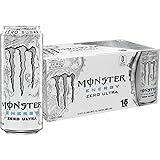
Monster Energy Zero Ultra, Sugar Free Energy Drink, 16 Ounce | Pack of 15
$26.98 (as of October 23, 2026 03:13 GMT +00:00 - More infoProduct prices and availability are accurate as of the date/time indicated and are subject to change. Any price and availability information displayed on [relevant Amazon Site(s), as applicable] at the time of purchase will apply to the purchase of this product.)
ARM & HAMMER Clump & Seal Platinum Cat Litter, Multi-Cat, 34 lbs | Clumping Litter, Rock-Hard Clumps, Baking Soda Odor Eliminators, 14-Day Odor Control, Online Only
$34.99 (as of October 23, 2026 03:23 GMT +00:00 - More infoProduct prices and availability are accurate as of the date/time indicated and are subject to change. Any price and availability information displayed on [relevant Amazon Site(s), as applicable] at the time of purchase will apply to the purchase of this product.)
Premier Protein 30g High Protein Shake, Chocolate, 12 Pack | 160 Calories, 24 Vitamins & Minerals, No Added Sugar, Supports Muscle Health, Gluten-Free, 11.5 oz
$19.99 (as of October 23, 2026 03:13 GMT +00:00 - More infoProduct prices and availability are accurate as of the date/time indicated and are subject to change. Any price and availability information displayed on [relevant Amazon Site(s), as applicable] at the time of purchase will apply to the purchase of this product.)
Goldfish Cheddar Cheese Crackers, Baked Snack Crackers, 1 oz On-the-Go Snack Packs, 20 Count Box
$8.76 (as of October 23, 2026 03:13 GMT +00:00 - More infoProduct prices and availability are accurate as of the date/time indicated and are subject to change. Any price and availability information displayed on [relevant Amazon Site(s), as applicable] at the time of purchase will apply to the purchase of this product.)












Post Comment