
Could This Revolutionary Low-Carbon Cement Be the Hidden Goldmine That Transforms Green Building and Slashes Emissions?
Ever wonder if cement — yes, that gritty, dusty stuff beneath our feet — could actually be a game changer in the fight against climate change? Well, buckle up, because here’s a fresh twist you didn’t see coming. Ecocem, Cairn, Kilsaran, and UCD have joined forces to unveil a slick low-carbon cement technology named ACT, and it’s stirring things up at Cairn’s innovation hub in Dublin. Over a decade of masterminding at Ecocem’s Paris research center has birthed this low-clinker marvel, promising up to a whopping 70% cut in CO2 emissions compared to your everyday European cement. The kicker? It won’t cost you extra — no green premium here — and meshes smoothly with the way cement and concrete are made today. Imagine delivering Ireland’s housing and infrastructure needs without the usual carbon baggage. That’s what’s on the table, and with regulatory gears turning, ACT could be laying concrete foundations across Ireland by 2028. This isn’t just some pie-in-the-sky dream; the bricks and mortar of a greener future are literally being tested and built. Curious to see how this low-carbon revolution is shaping up? LEARN MORE
Ecocem, Cairn, Kilsaran and UCD have showcased a low-carbon cement innovation they claim will significantly reduce Ireland’s industrial emissions.
At an event at Cairn’s innovation hub at Seven Mills in Dublin 22, the consortium demonstrated Ecocem’s ACT low-carbon cement technology.
ACT is Ecocem’s low-clinker cement technology, developed over more than 10 years at the company’s research and innovation centre near Paris.
It has been shown to deliver up to 70% lower CO2 emissions than conventional European cement while integrating with existing cement manufacturing, concrete production and construction processes.
Importantly, it has been designed to be cost-competitive with conventional cement and does not carry a green premium.
ACT is expected to be covered in the revised European cement standard in 2027, but its wider use in structural concrete in Ireland will also require recognition under the Irish National Annex to EN 206.
With the support of the Department of Enterprise, the National Standards Authority of Ireland is developing a new Standards Recommendation for cementitious binders, such as ACT, targeted for publication within the next year.
This could provide a potential route to market for ACT in Ireland by 2028, subject to the necessary regulatory and standards approvals.
The two-storey demonstrator at Cairn’s innovation hub is a standalone scale structure that has been developed by Ecocem, Cairn, Kilsaran and UCD.
Kilsaran is contributing concrete production expertise across the ready-mix and precast elements of the demonstrator, including precast components manufactured at its Oranmore facility.
The project was part-funded by a €50,000 award from Construct Innovate’s Seed Fund. Initial results show that the concrete achieved its required strength after 28 days, as expected and that it is equal to traditional cement in terms of durability and lifespan.
Additionally, Ecocem and CB Green are investing €50 million in the world’s first dedicated ACT production facility in Dunkirk, which is scheduled to become operational in early 2027 with annual capacity of 300,000 tonnes.
ACT has already been deployed across more than 40 projects in Europe, from demonstration projects through to commercial-scale deployments including a 150-unit residential complex near Paris.
“Ireland can deliver the homes and infrastructure it needs with significantly lower carbon emissions,” said Donal O’Riain, founder and CEO of Ecocem.
“This project demonstrates that the technology to rapidly and cost-effectively decarbonise cement already exists and integrates with the manufacturing and construction processes used today.
“Ecocem’s ACT can reduce cement emissions by up to 70%, without a green premium, and is already being deployed commercially in France and the UK.
“With cement production accounting for a significant proportion of Ireland’s industrial emissions, accelerating the adoption of low-carbon cement is critical to meeting our climate targets. As Europe looks to accelerate demand for lower-carbon materials, Ireland can show what that ambition looks like in practice.”
Michael Stanley, CEO of Cairn, said: “Innovation and the testing of new technologies and methods, is central to building sustainable homes at scale in Ireland.

“This low-carbon cement innovation is a practical example of what can be achieved in partnership, testing and advancing new materials that have real impact, in this case, to reduce embodied carbon in Irish homebuilding and progress the sector’s overall performance on sustainability.
“Our Innovation Hub provides a dedicated space to bring partners and new ideas together, facilitating the testing and trialling of the innovations and modern methodologies, that will shape the homes of the future.”
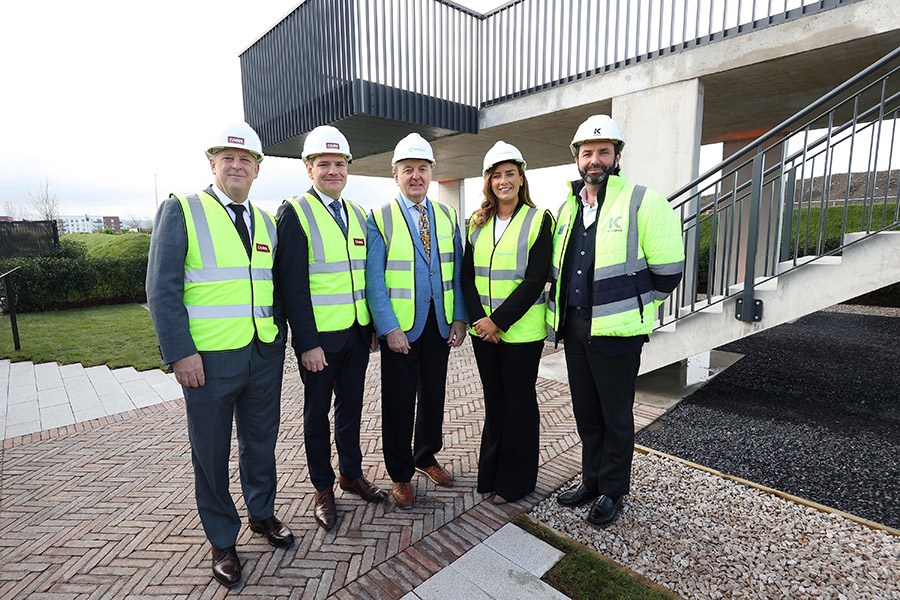
Photo: Michael Stanley, CEO of Cairn (left) with Donal O’Riain, Founder and CEO of Ecocem, Peter Burke TD, Minister for Enterprise, Tourism and Employment, Susan McGarry, Ecocem’s Director of Public Affairs and Sustainability and David McKeown, Co-CEO of Kilsaran. (Pic: Robbie Reynolds)
Diet Coke Soda Soft Drink Cans, 12 fl oz, 12 Pack | No sugar, no calories, 46 mg caffeine per can
$8.42 (as of November 12, 2026 03:23 GMT +00:00 - More infoProduct prices and availability are accurate as of the date/time indicated and are subject to change. Any price and availability information displayed on [relevant Amazon Site(s), as applicable] at the time of purchase will apply to the purchase of this product.)
Hand Crank Radio Emergency Radio with AM/FM/NOAA Weather Band | Wind Up Radio Emergency, LED Flashlights, SOS Function, Solar Powered, USB-C,Hand Cranked, 2000mAh for Emergencies
(as of November 12, 2026 03:37 GMT +00:00 - More infoProduct prices and availability are accurate as of the date/time indicated and are subject to change. Any price and availability information displayed on [relevant Amazon Site(s), as applicable] at the time of purchase will apply to the purchase of this product.)
Inesore 4 Pairs Replacement Ear Tips for AirPods Pro 2nd/1st (White) | (2019/2022/2023) with Noise Reduction Hole & Built-in dust Guard Screen,Silicone, with Cleaner Pen,4 Size (XS/S/M/L)
$6.98 (as of November 12, 2026 03:26 GMT +00:00 - More infoProduct prices and availability are accurate as of the date/time indicated and are subject to change. Any price and availability information displayed on [relevant Amazon Site(s), as applicable] at the time of purchase will apply to the purchase of this product.)
Blue Buffalo Life Protection Formula Chicken Adult Dry Dog Food, 5 lb | Real Chicken #1 Ingredient, Supports Immunity with Antioxidant-Rich LifeSource Bits, Promotes Healthy Muscle Development
$14.97 (as of November 12, 2026 03:23 GMT +00:00 - More infoProduct prices and availability are accurate as of the date/time indicated and are subject to change. Any price and availability information displayed on [relevant Amazon Site(s), as applicable] at the time of purchase will apply to the purchase of this product.)














Post Comment