
DeepSeek Just Dropped DeepInfer Open-Source — Here’s Why It Could Ruin the AI Giants’ Entire Business Model
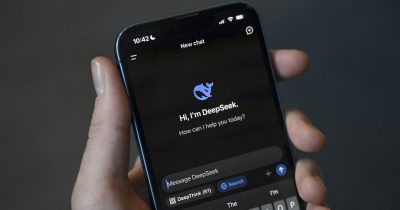
So, DeepSeek just tossed the AI community a serious curveball—giving away the very engine that powers its own AI magic? Now, that’s not just cool; it’s downright revolutionary. On October 20, 2026, this Hangzhou-based lab blew open the doors with DeepInfer, their inference framework designed for production at scale, now open-sourced and ready for anyone to slash those gnarly compute bills and chop energy use. Imagine cutting costs while ramping up AI deployment efficiency—sounds like the dream ticket for businesses drowning under pricey cloud fees, right? But here’s a kicker: DeepInfer doesn’t just run fast, it runs smart, leveraging speculative decoding and sharing workloads across chips—from Nvidia’s SM100 to Huawei’s Ascend 950—making it a versatile beast. So the question is, are we witnessing a shift where AI labs give away the keys to the kingdom to upend the industry? Or is this just the start of a new, kinder, more open AI economy? Either way, the game just changed. LEARN MORE
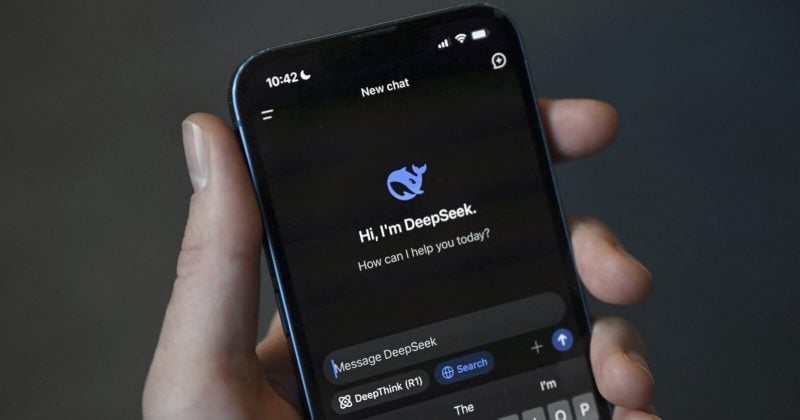
DeepSeek is giving away one of the tools it uses to run its own AI. On October 20, 2026, the Hangzhou-based lab open-sourced DeepInfer, the inference framework it built to serve production models at scale.
The pitch is simple: lower compute bills and lower energy use for businesses deploying AI.
What DeepSeek actually released
DeepInfer is now available on GitHub under the Apache 2.0 license. That is a permissive open-source license, so companies can use and modify the code in commercial products.
DeepInfer is designed to make that kitchen run leaner. DeepSeek built it with a particular focus on its newest model, DeepSeek-V4.1-Flash.
The framework includes speculative decoding, an optimization technique for speeding up how models generate text. Think of it as the system drafting likely next words quickly, then checking them, instead of laboriously producing one word at a time.
It also supports distributed inference across chips. Translation: a single model workload can be split across multiple processors rather than squeezed onto one.
The hardware support may be the most telling detail. DeepInfer works with Nvidia SM100 GPUs and with Huawei’s Ascend 950 chips.
A model upgrade three days earlier
The framework release followed closely on another launch. On October 17, DeepSeek shipped V4.1-Flash-1017, an updated version of its Flash model.
According to DeepSeek, the new version performs better on coding and agentic tasks. Agentic tasks are the multi-step jobs where an AI takes actions on its own, like navigating software or completing a workflow, rather than just answering a question.
The company points to its DeepSWE score as evidence. That benchmark figure rose from 74.2 to 77.0, per DeepSeek.
DeepSeek also claims the model delivers significantly lower per-task costs than its predecessors.
Why DeepSeek keeps giving things away
Open releases are not new territory for the lab. In 2025, DeepSeek put out its R1 reasoning model under the MIT license, another permissive open-source license.
That release established DeepSeek as a lab willing to publish open weights rather than lock models behind a paywall. Open weights means the trained model itself is downloadable, not just accessible through an API.
DeepSeek pairs those releases with its own in-house APIs and a stated commitment to affordability.
DeepInfer extends that philosophy from the model layer down to the infrastructure layer. It is one thing to give away a model. It is another to hand over the machinery that makes it cheap to operate.
What this means for developers and the AI market
For developers, the most immediate effect is practical. A team that wants to deploy DeepSeek models now has an officially built, permissively licensed serving stack instead of having to assemble one from scratch.
The dual-chip support carries strategic weight. A framework that runs on both Nvidia SM100 hardware and Huawei Ascend 950 chips could make DeepSeek models attractive in markets where access to one platform is limited or uncertain.

Propel, Kiwi Strawberry, Zero Calorie Sports Drinking Water with Electrolytes and Vitamins C&E, 16.9 Fl Oz (12 Count)
$9.97 (as of October 20, 2026 03:12 GMT +00:00 - More infoProduct prices and availability are accurate as of the date/time indicated and are subject to change. Any price and availability information displayed on [relevant Amazon Site(s), as applicable] at the time of purchase will apply to the purchase of this product.)
Medium Hass Avocado
(as of October 20, 2026 03:12 GMT +00:00 - More infoProduct prices and availability are accurate as of the date/time indicated and are subject to change. Any price and availability information displayed on [relevant Amazon Site(s), as applicable] at the time of purchase will apply to the purchase of this product.)
Goldfish Cheddar Cheese Crackers, Baked Snack Crackers, 1 oz On-the-Go Snack Packs, 20 Count Box
$8.76 (as of October 20, 2026 03:12 GMT +00:00 - More infoProduct prices and availability are accurate as of the date/time indicated and are subject to change. Any price and availability information displayed on [relevant Amazon Site(s), as applicable] at the time of purchase will apply to the purchase of this product.)
Olcorife Flat Plug Power Strip with 5 FT Extension Cord, 6 Outlets 3 USB Ports(1 USB C), 3 Sided Outlet Extender for Home Office Travel Dorm Room Essentials, White
$9.99 (as of October 20, 2026 03:22 GMT +00:00 - More infoProduct prices and availability are accurate as of the date/time indicated and are subject to change. Any price and availability information displayed on [relevant Amazon Site(s), as applicable] at the time of purchase will apply to the purchase of this product.)












Post Comment