
DOJ’s Shocking Reversal: Why a Decades-Old Proxy Advisor Letter Just Got Yanked—And What It Means for Investors Now

Ever wonder what happens when a nearly 40-year-old “get out of jail free” card suddenly gets yanked away? That’s exactly what Institutional Shareholder Services (ISS) faced when the U.S. Department of Justice pulled back its 1987 business review letter, a document that had quietly insulated ISS from antitrust scrutiny since the dawn of proxy advising itself. Picture it—a fledgling firm in the mid-80s, promising to stick to corporate governance advice, now caught in a swirl of evolving business lines, consulting arms, and scrutiny over its colossal market share alongside Glass Lewis. It’s like watching an old board game flipped upside down, where the rules from decades ago no longer hold in today’s high-stakes strategy. Now, with regulatory spotlight intensifying and legal battles heating up, savvy companies and compliance teams are left asking: How do you play your next move when the entire playing field is shifting beneath your feet? Strap in—this is a real shake-up with ripple effects that could redefine the proxy advisory landscape for years to come. LEARN MORE

For nearly four decades, Institutional Shareholder Services (ISS) held a piece of paper most public companies would envy: a 1987 business review letter from the U.S. Department of Justice saying the government had no plans to challenge its business under the antitrust laws. On August 5, the Antitrust Division took the letter back.
A business review letter is the mechanism the DOJ uses to tell a company how it views proposed conduct at a given moment. When ISS asked for one in the 1980s, the firm was barely off the ground, founded in 1985, and, as the Division put it this month, “proxy advising as an industry was in its infancy.” ISS represented that it would advise investors only on corporate governance and voting questions, not on how companies ran their operations. On that basis, the DOJ said it had no intention of moving to block the firm.
What changed, according to the DOJ, is ISS’s structure and business lines. The firm now operates a corporate consulting arm, ISS-Corporate, that sells services to the same public companies its analysts assess on behalf of shareholders. The DOJ concluded that this puts the business “in direct conflict with the language in the Letter,” so the original assurance no longer accurately describes what ISS does. Pulling the letter stops short of accusing anyone of breaking the law. It only withdraws the comfort that the 1987 assurance provided and signals that the Division intends to look again.
The DOJ drew a careful boundary around its concern. “Proxy advising is not inherently problematic,” it wrote, and casting a vote on a proxy advisor’s recommendation “does not raise competition concerns.” The DOJ’s stated concern was market concentration. ISS and Glass Lewis together handle more than 90% of the proxy advisory market, according to the DOJ. In the Division’s words, “the concentration of market power in the proxy advisory market raises significant competition concerns.”
ISS has long held that its research and consulting businesses operate separately. Its published policy describes a firewall between the governance research group and ISS-Corporate, with researchers walled off from knowing which companies pay for consulting. ISS did not immediately comment on the withdrawal, though that firewall has been its standing answer to conflict questions for years.
The DOJ action came amid other regulatory and legal developments involving proxy advisors, and that is where compliance teams should widen the lens. A week before the Division moved, Texas Attorney General Ken Paxton sued Glass Lewis in state court in Collin County, alleging the firm marketed its recommendations as objective while incorporating environmental, social, governance, and diversity considerations into its advice. The claim was brought under the Texas Deceptive Trade Practices Act. Paxton brought a comparable case against ISS in May. Glass Lewis has rejected the framing, saying its recommendations rest on decades of research aimed at long-term shareholder value. At the federal level, the President has publicly called for an antitrust probe of both firms, and a December 2025 executive order instructed several agencies to tighten their oversight of proxy advisors.
Supporters of increased oversight argue that the firms’ significant influence over corporate voting warrants greater scrutiny. Critics argue that the actions could constrain proxy advisors whose recommendations sometimes differ from management’s positions. The litigation now underway will give each argument a public test, and the outcome is far from settled.
For companies and their advisors, the useful question is a practical one: what to disclose and how peers are treating the same uncertainty. Proxy advisor influence already surfaces in SEC filings. Office Properties Income Trust, for instance, has warned in its risk factors that recommendations from proxy advisory firms “would likely affect the outcome” of trustee elections and say-on-pay votes and could invite added activism and litigation. Compensation discussions in proxy statements routinely note how ISS and Glass Lewis viewed a company’s pay program before a vote. As pressure on the advisors builds, the language issuers choose to describe that influence deserves a closer read.
Anyone who tracked the SEC’s retreat from the Rule 14a-8 no-action process earlier this year will recognize the pattern. The regulatory approach to shareholder voting continues to shift, and each change can affect how companies benchmark their disclosures and practices against peers. A researcher who wants to see how peers frame proxy advisor risk, or how that disclosure has changed since the DOJ acted, can pull the relevant sections across a peer group in Intelligize and line them up side by side rather than reading each filing end to end.
The 1987 letter is gone. Its withdrawal does not by itself establish an antitrust violation or require companies to change how they engage with proxy advisors. For issuers, the more immediate implication is that the legal and regulatory environment surrounding ISS, Glass Lewis and proxy advisory influence is becoming less settled. That makes it worth reviewing how proxy advisor influence is described in risk factors, compensation disclosures and other shareholder-voting materials, as the litigation and federal scrutiny develop. What ultimately takes the letter’s place, whether through the courts or further regulatory action, is the thread worth following through the rest of the year.
Don’t just read about the trends: leverage them. Explore Intelligize with a free trial and unlock the tools professionals rely on every day.
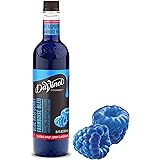
DaVinci Gourmet Classic Blue Raspberry, 25.4 Fluid Ounces (Pack of 1)
$7.99 (as of October 16, 2026 03:09 GMT +00:00 - More infoProduct prices and availability are accurate as of the date/time indicated and are subject to change. Any price and availability information displayed on [relevant Amazon Site(s), as applicable] at the time of purchase will apply to the purchase of this product.)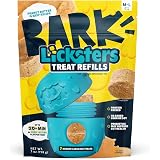
BarkBox LICKSTERS Peanut Butter & Beef Treat Refills - Medium and Large | Peanut Butter & Beef Recipe Dog Treats - Probiotics for Gut Health, No Corn or Soy, Made in the USA - For LICKSTERS Toy
$14.99 (as of October 16, 2026 03:21 GMT +00:00 - More infoProduct prices and availability are accurate as of the date/time indicated and are subject to change. Any price and availability information displayed on [relevant Amazon Site(s), as applicable] at the time of purchase will apply to the purchase of this product.)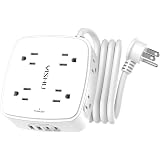
YISHU 6Ft Surge Protector Power Strip with 8 Widely Outlets & 4 USB Ports | 3 Side Outlet Extender with 6 Feet Extension Cord, Flat Plug, for Home, Office, College Dorm Room Essentials
$9.99 (as of October 16, 2026 03:21 GMT +00:00 - More infoProduct prices and availability are accurate as of the date/time indicated and are subject to change. Any price and availability information displayed on [relevant Amazon Site(s), as applicable] at the time of purchase will apply to the purchase of this product.)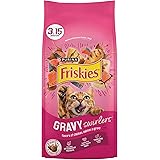
Purina Friskies Gravy Swirlers Dry Cat Food, Chicken & Salmon, 3.15 lb Bag | Protein-packed cat food kibble with swirls of delicious gravy baked in, supports immune and heart health
$5.24 (as of October 16, 2026 03:11 GMT +00:00 - More infoProduct prices and availability are accurate as of the date/time indicated and are subject to change. Any price and availability information displayed on [relevant Amazon Site(s), as applicable] at the time of purchase will apply to the purchase of this product.)













Post Comment