
Exposing the Hidden Weak Link in Corporate Supply Chains: Who Really Pays When Products Fail?
Ever had that sinking feeling when your brand-new smartphone, barely out of the box, suddenly acts more like a paperweight than a sleek gadget? It’s infuriating, right? But beyond the annoyance lies a bigger issue—what happens when defective products don’t just frustrate us but cause real harm? Every day, we rely on countless products, trusting that companies have done their homework to keep us safe. Yet, sometimes, the relentless chase for profits turns corners, and safety takes a backseat. That’s where the concept of “Strict Product Liability” comes into play—a legal powerhouse designed to hold corporations accountable without the tangled mess of proving negligence. Let’s dive into how this game-changing doctrine protects consumers and why it’s crucial for every entrepreneur, investor, and everyday buyer to understand the stakes behind what ends up in their hands. LEARN MORE

Key Takeaways
- Strict product liability allows injured consumers to pursue compensation without proving that a manufacturer acted negligently.
- Product liability claims generally arise from design defects, manufacturing defects, or a company’s failure to provide adequate warnings about product risks.
- Manufacturers and distributors often defend product liability claims by arguing that the product was misused or altered after leaving their control.
- Successful product liability cases frequently rely on expert testimony, technical evidence, and thorough investigation to establish that a defect caused the injury.
- Beyond compensating victims, product liability lawsuits encourage safer product designs, recalls, and stronger quality control standards across industries.
We interact with hundreds of consumer products every single day. From the coffee maker that brews our morning cup to the brakes on our vehicles, we place an immense amount of implicit trust in the manufacturing sector. We assume that before a product reaches the retail shelf, it has been rigorously tested and deemed safe for public use.
Unfortunately, the drive for corporate profitability sometimes supersedes quality control. When a defective product causes a catastrophic injury, the legal system relies on a powerful doctrine known as “Strict Product Liability” to hold massive corporations accountable.
Understanding Strict Liability
In a standard personal injury case, a victim must prove that the defendant was “negligent” – meaning they made a specific mistake or failed to act reasonably. Product liability law is different. Under the doctrine of strict liability, a consumer does not have to prove that the manufacturer was careless. They only have to prove that the product was unreasonably dangerous when it left the manufacturer’s control, and that the defect directly caused their injury.
This legal standard levels the playing field, recognizing that a single consumer cannot possibly peek inside a multinational corporation’s factories to prove exactly where a mistake occurred.

The Three Pillars of Product Defects
Product liability claims generally fall into three distinct categories:
- Design Defects: The product was manufactured perfectly according to plans, but the engineering design itself is inherently dangerous (e.g., a top-heavy SUV prone to rollovers).
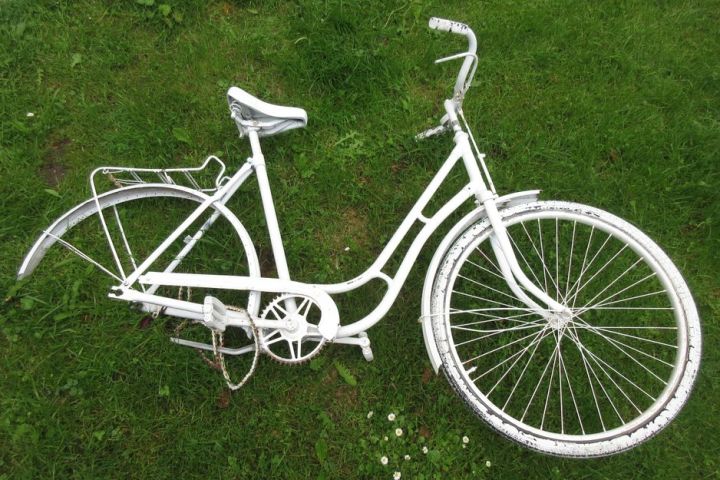
- Manufacturing Defects: The design is safe, but an error occurred during assembly, creating a dangerous anomaly in a specific batch of products (e.g., a bicycle frame with a contaminated, weak weld).
- Failure to Warn: The product functions as intended but carries non-obvious risks that the company failed to disclose with adequate warning labels (e.g., a medication with undisclosed side effects).
The Corporate Defense Playbook
When facing a product liability lawsuit, large corporations deploy aggressive defense teams. Their primary strategy is usually “user error.” They will argue that the consumer modified the product, ignored the instructions, or used the item in a way that was never intended.
Defeating these deep-pocketed corporate legal teams requires expert testimony from engineers, medical professionals, and industry analysts. It requires the resources to take on massive companies. Shindler & Shindler and similar dedicated legal advocates know how to track liability up the “chain of commerce,” holding not just the manufacturer accountable, but the distributors and retailers who profited from selling a dangerous item.
FAQs
What is strict product liability?
Strict product liability is a legal doctrine that allows injured consumers to seek compensation for defective products without proving the manufacturer was negligent. Instead, the injured party must generally show that the product was defective, unreasonably dangerous, and directly caused the injury.
What are the main types of product defects?
Product liability claims typically involve design defects, manufacturing defects, or failure-to-warn defects. Each category addresses a different way a product may become unsafe for consumers, whether through flawed engineering, production errors, or inadequate safety instructions.
How do manufacturers defend against product liability claims?
Manufacturers often argue that the consumer misused, modified, or failed to follow the product’s instructions. They may also dispute whether the alleged defect actually caused the injury or existed when the product left their control.
Why is expert testimony important in product liability cases?
Experts such as engineers, medical professionals, and industry specialists help explain technical issues involving product design, manufacturing processes, and injury causation. Their analysis can provide critical evidence that supports or challenges claims about product defects.
How do product liability lawsuits benefit consumers?
In addition to helping injured individuals recover financial compensation, successful lawsuits often encourage manufacturers to improve product safety. They can also lead to recalls, stronger warning labels, and higher quality control standards that protect future consumers.

Conclusion
When corporations prioritize mass production over consumer safety, they must be held financially liable for the resulting damage. Product liability lawsuits do more than just compensate victims; they force massive recalls and inspire safer industry standards, protecting the next consumer from suffering the same fate.
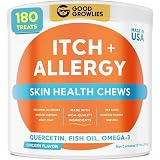
GOODGROWLIES Dog Allergy Relief Chews - Anti-Itch Skin & Coat Supplement | Itchy Skin Relief w/Omega 3 & Fish Oil - Itching & Paw Licking Support - Dry Skin & Hot Spots Treatment - Vet-Approved, 180Ct
$24.99 (as of October 23, 2026 03:23 GMT +00:00 - More infoProduct prices and availability are accurate as of the date/time indicated and are subject to change. Any price and availability information displayed on [relevant Amazon Site(s), as applicable] at the time of purchase will apply to the purchase of this product.)
Earth Rated Dog Wipes for Paws & Butt, Deodorizing, Unscented, 100ct | Hypoallergenic, 3-in-1 Cleaning and Hydrating, for Grooming Paws, Body and Butt
$9.99 (as of October 23, 2026 03:13 GMT +00:00 - More infoProduct prices and availability are accurate as of the date/time indicated and are subject to change. Any price and availability information displayed on [relevant Amazon Site(s), as applicable] at the time of purchase will apply to the purchase of this product.)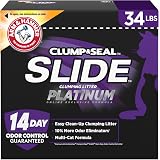
ARM & HAMMER Slide Platinum Easy Clean-Up Clumping Cat Litter, 34 lbs | 24/7 Odor Control, Triple-Action Freshness, Non-Stick, Low Tracking, Multi-Cat Formula, Scented, Online Only
$34.99 (as of October 23, 2026 03:23 GMT +00:00 - More infoProduct prices and availability are accurate as of the date/time indicated and are subject to change. Any price and availability information displayed on [relevant Amazon Site(s), as applicable] at the time of purchase will apply to the purchase of this product.)
Amazon Fire HD 10 tablet, built for relaxation, 10.1" vibrant Full HD screen, octa-core processor, 4 GB RAM, 32 GB, Black
$72.99 (as of October 23, 2026 03:23 GMT +00:00 - More infoProduct prices and availability are accurate as of the date/time indicated and are subject to change. Any price and availability information displayed on [relevant Amazon Site(s), as applicable] at the time of purchase will apply to the purchase of this product.)














Post Comment