
Fed’s Surprise Pause: What It Means for the US Dollar—and Your Next Big Investment Move!
Ever wonder why the mighty US Dollar seems to be flexing less muscle lately, even when the American economy is sprinting at full throttle? Yeah, it’s a head-scratcher. National Bank of Canada’s Stéfane Marion and Kyle Dahms dive into this paradox, revealing how sky-high long-term Treasury yields are tightening belts behind the scenes—snuffing out the Federal Reserve’s usual rate-hike party tricks. Their fixed-income gurus are betting the Fed will sit tight for the remainder of the year, leaving the trade-weighted Dollar lounging near its recent lows. So, if you’re asking yourself what’s really putting a floor under the greenback (or not), buckle up—because it’s not just about employment numbers or inflation whispers. The truth might just be hiding where you least expect it. LEARN MORE
National Bank of Canada’s (NBC) Stéfane Marion and Kyle Dahms note that the US Dollar (USD) has weakened broadly in Q3 even as the United States (US) economy remains at full employment. They argue that sharply higher long-term Treasury yields are tightening financial conditions and limiting scope for renewed Fed hikes. Their fixed-income team expects the Federal Reserve to stay on hold this year, keeping the trade-weighted Dollar near recent lows.
Higher yields curb Fed tightening risk
“Under these circumstances, one might ask what would prevent the Fed from soon raising its policy rate for the first time since 2023 and, in the process, putting a floor under the greenback. As Fed Chair Kevin Warsh recently put it in his inaugural Jackson Hole speech, “yesterday’s news has a way of getting mistaken for what is happening right now.” That observation is particularly relevant in the bond market.”
“While markets continue to price some risk of additional Fed tightening, our fixed-income strategists still expect the central bank to remain on hold this year. A key reason is the significant rise in long-term yields, which has already tightened financial conditions. Importantly, much of that increase appears to reflect a higher term premium stemming from a deteriorating fiscal backdrop rather than a renewed surge in inflation expectations.”
“It is certainly not weaker economic growth that is undermining the currency. The labour market surprised sharply to the upside in August, with payrolls surging by 162,000, nearly three times the consensus expectation of 55,000, while the unemployment rate held at 4.1%. That remains below the Congressional Budget Office’s estimate of the non-accelerating inflation rate of unemployment (NAIRU), suggesting that the U.S. economy remains at, if not beyond, full employment.”
“Moreover, the weakness has been broad-based, with all major currencies except the Swiss franc gaining ground against the U.S. dollar so far in Q3.”
(This article was created with the help of an Artificial Intelligence tool and reviewed by an editor. Know more.)
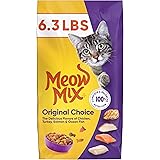
Meow Mix Original Choice Dry Cat Food, 6.3 Pound Bag
$8.99 (as of October 20, 2026 03:12 GMT +00:00 - More infoProduct prices and availability are accurate as of the date/time indicated and are subject to change. Any price and availability information displayed on [relevant Amazon Site(s), as applicable] at the time of purchase will apply to the purchase of this product.)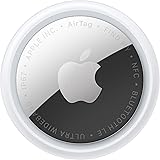
Apple AirTag (2nd Generation): Tracker for Keychain, Wallet, and More; Locator with Sound; Simple One-Tap Setup with iPhone or iPad; Key Finder with up to 1.5X Precision Finding Range
$24.00 (as of October 20, 2026 03:22 GMT +00:00 - More infoProduct prices and availability are accurate as of the date/time indicated and are subject to change. Any price and availability information displayed on [relevant Amazon Site(s), as applicable] at the time of purchase will apply to the purchase of this product.)
PUR Gum, Spearmint, Xylitol Gum, No Artificial Flavor, 55 Count | No Artificial Sweeteners, Vegan, Sugar Free, Gluten Free, Soy Free, Nut & Peanut Free, Swiss Made, Keto Friendly chewing gum
$1.39 (as of October 20, 2026 03:12 GMT +00:00 - More infoProduct prices and availability are accurate as of the date/time indicated and are subject to change. Any price and availability information displayed on [relevant Amazon Site(s), as applicable] at the time of purchase will apply to the purchase of this product.)
PAYHTOW Dog Halloween Costumes, Funny Dog Killer Doll Costume with Wig and Knife, Adjustable Pet Halloween Cosplay Costume for Small Medium Large X-Large Dogs (Small)
$15.49 (as of October 20, 2026 03:22 GMT +00:00 - More infoProduct prices and availability are accurate as of the date/time indicated and are subject to change. Any price and availability information displayed on [relevant Amazon Site(s), as applicable] at the time of purchase will apply to the purchase of this product.)













Post Comment