
From Car Keys to a Real Estate Empire: How One Bold Bet Turned into 40 Rental Properties and Counting!
Ever wonder what it takes to flip your life script entirely—switching gears from a predictable finance career to becoming a real estate mogul before you’re even done with college? Lawrence “Landlord Larry” Guerguis did just that, propelled by a single eye-opening conversation with a tired investment banker who wished he’d chosen differently. Imagine selling your car, piling together every penny for a down payment, and snagging a duplex thousands of miles away from home—all while juggling college courses. That’s exactly how Larry kickstarted his jaw-dropping journey to owning 40 rental homes raking in thousands in monthly cash flow. This isn’t just a feel-good story; it’s a masterclass in spotting unconventional opportunities, harnessing Section 8 investing, and building a powerful personal brand that opens doors most only dream of knocking on. Curious about how Larry did it, especially without a standard W-2 income? Grab a cup of coffee—this tale of hustle, savvy, and relentless determination might just inspire your own leap into financial freedom.
Lawrence “Landlord Larry” Guerguis thought he would spend the next 40 years of his life in finance. But one conversation with a regretful investment banker changed his life’s trajectory and set him on a path toward financial freedom through real estate investing. Just three years later, he owns 40 rental properties producing thousands in monthly cash flow!
Once Larry realized the impact that rental properties could have on his wealth, time, lifestyle, and flexibility, he wasted no time in buying his first rental property. While still in college, he sold his car, scrounged together a down payment, and bought a duplex out in the Midwest. With proof of concept and a few hundred bucks lining his pockets each month, he went all-in on real estate. He’s since moved to Cleveland, Ohio, where he’s built a real estate portfolio of 40 single-family homes (and counting!).
In today’s episode, he’s giving you all the secrets he’s used to buy deal after deal without having the W-2 income to qualify for traditional bank financing. From locking in better rents with Section 8 investing to building a brand that creates greater opportunities, Larry has found a formula that really works in 2026!
Click here to listen on Apple Podcasts.
Listen to the Podcast Here
Read the Transcript Here
Henry:
Today’s guest owns 40 rental properties, producing thousands in monthly cash flow, and he’s only been in real estate for a few years. Before real estate, Larry Guirguis thought he’d be spending the next 40 years of his life working on Wall Street, but one conversation with a regretful investment banker changed his trajectory and set him on a path toward financial freedom through real estate. Larry knew he wanted to buy rentals, but how? He was a college student living in California with no W-2 income, so he couldn’t possibly buy a rental property, right? But Larry wasn’t taking no for an answer. He sold his car, scrounged together a down payment and bought a duplex in a Midwest market he could actually afford. Then with proof of concept and a few hundred bucks lining his pocket each month, he moved to Cleveland, Ohio, where he has built a real estate portfolio of 40 single family homes and counting.
Today, he’s sharing how he bought deal after deal without qualifying for traditional bank financing, from focusing on low price but high cash flow rentals to locking in higher rents with Section eight investing. Landlord Larry has found a formula that really works today.
What’s going on everybody? I’m Henry Washington, co-host of the BiggerPockets Podcast. And today we have an investor story with Larry Guerguis. You might know him as landlord Larry on Instagram and TikTok, so let’s bring him on. Lawrence Guerguis, better known as Landlord Larry. Welcome to the BiggerPockets Podcast, my friend.
Larry:
Thank you very much for having me. Appreciate it.
Henry:
We’d like to start off by learning a little bit about who you are, what you do, and how you even got into real estate in the first place.
Larry:
My name’s Larry or Lawrence. Some people call me landlord Larry on the internet. I’m from California, Southern California. And I started investing in Section eight real estate, particularly during my junior year in college. And I did take a big leap from Southern California from the people that are from there. They know it’s a very nice place to live. And I moved to the Midwest to do it full-time right after college. So thank God it’s been a blessing to do it and I’ve been doing it for a little over three years now and it’s been great.
Henry:
What even sparked the interest in real estate? Because college is not that path.
Larry:
No, college isn’t that path. And it wasn’t always real estate for me. It was originally investment banking. I thought I was going to be the typical finance bro.
Henry:
Finance bros.
Larry:
Yeah, that was going to be my path, living in New York, working crazy hours. It’s a pretty funny story. I was actually just out at the bars with friends during my junior year of college, my first semester. And like I said, I went to college in San Diego. It’s a fun place to be, but we were at a bar and then we went to a pizza parlor right next to it. And there was some guy sitting next to me, looked a little down. He was just kind of on his own. And I was like, “Hey bro, everything all right?” And he was like, “Don’t talk to me. I only get two weeks out of the year off.” I was like, “Okay, what do you do by chance?” And he was like, “I’m in investment banking.”
Henry:
I was
Larry:
Like, “Okay. I’d love to talk to this guy. Okay, let’s hear it.” So I ended up talking to that guy in that pizza parlor. My friends leave for an hour and a half and he gave me some pointers. The thing that really stuck with me from that conversation, he asked me if I loved money, not liked, not enjoyed spending it, loved. And I said, “No, no, I don’t love money. Money’s great. I think everyone enjoys having a little bit more of that, but loving is something different.” And I didn’t love it. And he said, “Forget about investment banking. Forget about anything finance because that’s what you need to have to work these crazy hours and you make great money.” But he says he doesn’t even have the time to spend it. And I was like, “All right.” So after that day, I was like, “We’re going to figure out this real estate stuff out before we graduate so that we have some sort of path coming out of college.”
Henry:
All right. Okay. So you got tapped on the shoulder and you took it seriously. So how did you go from that moment to actually taking action and working towards your first deal?
Larry:
I ended up selling my car, my first car, and I sold it for around 16 grand. And I was like, “Listen, I don’t need a car. I use one of the family. I have a family hammer down car from 2008.” I still drive that car. I love that thing. And I was like, “I’m going to sell this and we’re going to figure out a down payment for something.”
Henry:
So you didn’t buy in San Diego,
Larry:
Is that what you’re saying? No. Unfortunately, I didn’t have the budget for it. Didn’t buy in San Diego, didn’t buy anywhere in California. Pretty much I just went on Zillow, Redfin, all those websites and I put my budget in. I put like 70 grand max purchase price. And the states that came up were Ohio, Missouri, Illinois, parts of Illinois, Alabama, all these Midwestern Southern states. I was like, okay. So now we’re not investing in our home state. We’re going to have to figure out management. For me, it was like, we’re going to figure this stuff as we get there. As long as I get the ball rolling, then I’m going to make a mistake. And even if I buy a house, the loan payment on it’s 400 bucks, that’s a $400 monthly mistake that I’ll figure out over 30 years.
Henry:
So
Larry:
Ended up coming across a place called Peoria, Illinois.
Henry:
Oh yeah.
Larry:
I’ve been there a couple times. It’s interesting. I didn’t go there to look at the property. I pretty much just trusted some handyman I found on a Facebook group. Seems legit.
Henry:
I see no problem with that.
Larry:
Oh yeah. Legit’s the word we’ll use. So yeah, I joined all the Facebook groups in the Peoria area and I just found a handyman and I was like, “Hey man, I just need you to go look at this property and see if it’s not awful.” At the time, even if he told me things that were wrong with it, I wouldn’t know. Like I said, I’m college finance. I don’t know what a water heater was, none of that. So I pretty much just needed a thumbs up or thumbs down from him. He gave me a thumbs up. Don’t know the reliability on that, but I took it and I ended up buying that house. I put around 15,3 down.
Henry:
Purchase price was 70?
Larry:
65.
Henry:
So you did a conventional mortgage?
Larry:
I did a DSER because I don’t have a W2. I have no pay stubs, no income. So the only one I applied for was DSER and closing took forever and even to get the pre-approval before took forever because I was looking for a lender that go down to that loan amount. And the place where I found them was actually BiggerPockets. During class I was scrolling through, you could even see my history. It’s just like sub 100K loan amount DSER. And I’m like, does anyone know a lender? Finally got connected one and bought through him.
Henry:
One thing you said that I liked was you though through what the fear was, the worst case scenario. What’s the worst case scenario? I buy a house and my mortgage payment is 300 bucks and if it doesn’t go well, I’ll just be stuck paying 300 bucks a month for a while. I can figure that out.
When we break our fears down sometimes and we figure out, okay, well what’s the real consequence to the action that I’m taking? We sometimes realize that the fear is not that big of a deal. So I like that approach you took and I want other people to do that. If you’re stuck in a decision, break down your fears. What’s the worst case scenario and can you survive that worst case scenario? Can you get back on your feet and not compromise your family’s wellbeing, the roof over your head? Those things are important. But if it’s just like, “Yeah, I might lose some money, but I’ll be okay.” I don’t know. Might want to rethink that calculated risk.
Larry:
Yeah, exactly.
Henry:
The other thing, you just started putting in your budget on the realtor to look for a place to invest and you landed on this property in Peoria. So purchase price, 65-ish thousand. You put about 15,000 down and you said it was fairly turnkey, so no renovations?
Larry:
Not much, no. I maybe put a couple hundred bucks and paint, painted some walls and stuff like that, and then that’s about it.
Henry:
And then you needed a tenant.
Larry:
Yeah.
Henry:
How long did it take you to find one?
Larry:
I needed not any tenant. I needed the perfect tenant because I couldn’t afford a non-payment, otherwise I wouldn’t make the mortgage payment. It took me a couple months, to be honest. It wasn’t immediate because I started advertising just on Zillow and I was getting a bunch of people and I was kind of messing around for the first time with tenant screening websites, which ones did I like, which one gave me the information I needed. I ended up just thinking, I was like, okay, if I need a tenant that’s going to pay me for sure, let’s look into Section eight. I was like, okay, let’s take a look at it. I mean, baseline, if I sign this government paper, I should get paid rent, right? And I was like, okay, so let’s start to advertise on affordable housing. I advertised on affordable housing, found a couple tenants that’s very light screening.
Screening wasn’t really good at all. I got one.
Henry:
How did it go? Was it a good tenant?
Larry:
So the tenant didn’t end up paying anything. Her portion was nothing. As a lot of people know, Section eight does pay 70 to 100% or even less depending on the tenant’s income. Her income was nothing. So I was getting 100% from Section eight, which was pretty sick and I was cool with that.
Henry:
So the government was your reliable tenant that you were looking for?
Larry:
Exactly. That’s what I was saying. I was looking for the perfect tenant. The government never misses a payment. So yeah, no, I ended up getting around 1,400 in rent and my payment was 480 something, which wasn’t bad.
Henry:
No, that’s pretty freaking
Larry:
Awesome. That’s
Henry:
Really
Larry:
Good cash flow. I was like, “This is sick.” And I’m still in my college dorm doing this. So I got a little bit of party money. It’s cool. I was like, “All right, my roommates ain’t doing this.” So I was like, “This is sick. This is sick.” But for me, in reality, that was the moment where it clicked. I was like, “Okay, this works.”
Henry:
Proof of concept.
Larry:
Exactly. Proof of concept. This works. And obviously one house, 700, 600, 1,000, whatever net is not life changing. It’s not going to do much for me. Not much for anyone, especially living in California, but if I can manage to scale up, there you go.
Henry:
All right. Well, made a few mistakes, but you came out clean on the other side, got some cash flow. And if you’re anything like me, once I got a taste of that proof of concept and it was working after my first deal, I was like, “How do I do a lot more of these right now?” Because I was ready to scale as soon as I did that first one. So I’m very curious what that meant to you, and we’ll learn about that right after the break. All right. Welcome back to the Victor Your Pockets podcast. I am here speaking with landlord Larry, and he just told us about his first deal that he did while in college. Pretty impressive, made some mistakes, but ended up with some good cash flow. What did you do next?
Larry:
So I’m still in college. Like I said, I just added that real estate major, so my college actually just got extended and that just wasn’t going to work, especially after seeing this work happen. After you
Henry:
Get the proof of concept,
Larry:
Now you want to get
Henry:
Out of there.
Larry:
So I kind of went to my academic advisor and I was like, “Hey man, we’re going to have to chop this up. How are we going to squeeze all these credits so I can graduate on time because I still want to graduate?” He was like, “You’re going to have to take a lot of credits every semester and then also do summer and winter classes. Let’s do it.” So that junior year, second semester, I did I think 18 credits. I did six credits that summer, and then I did three credits during the winter, and then another 23 credits my senior year, second semester. And thank God graduated on time.
Henry:
That’s wild.
Larry:
Yeah, it was a lot of – That
Henry:
Is a lot of class because
Larry:
What’s
Henry:
A full load? 12?
Larry:
12 to 15. Yeah.
Yeah. Wild. I did a double overload, especially on my last semester senior year. I actually took a class at the community college nearby. So we finished. We finished that god. And during this time, I’m doing all the backend because I was preparing to move out to wherever I was going to invest. So I wanted to get my set DSER lender, my lawyer, my real estate agents in whatever state I was going to go to. I’m still figuring this out at the time, but I did a lot of this on BiggerPockets too. It’s just finding connections so that wherever I did move out, I can hit the ground running. And also funding this portfolio that I wanted to do.
Henry:
What was that process like to get to the next deal?
Larry:
So like I said, I used all my money on that first deal and I didn’t have any personal assets to take money from. So I ended up kind of going around asking different people, but I’m very familiar with Discord. That’s my online presence. I love Discord. So I was going in different crypto Discord channels and for lack of better term, just trash talking these people.
So I was pretty much just telling them that their assets are not tangible and it could be gone tomorrow. You have no idea. Crypto’s great, but I have nothing against it, but I’m going to do what I can to tell these people that tomorrow could be worth nothing. And if all your money’s in crypto, that’s a little bit of a risk. So I just tell people invest in tangible assets, invest in tangible assets. And I was doing it to so many Discords with hundreds of thousands of people. And I got people that were serious, not serious. And I finally got some younger guy that came up on some crypto money. He messaged me on Discord. He’s like, “Yeah, I do agree with you. I have some money in crypto and I do want to take a chunk of it out to invest in something tangible.
What are you talking about?” And I make a pitch deck with Canva and bootstrap that. And I was like, “Hey man, you should really come down to San Diego and we’ll have a conversation about it.” He actually comes down to San Diego earlier in May. I’m graduating end of May. He comes down earlier in May, taking out to some Korean barbecue, which he doesn’t eat because he doesn’t like raw meats like that. So we were just talking the whole time and it ended up working out. We agreed to a certain start money and I ended up taking that and moving out. The first place I chose was Cleveland, Ohio.
Henry:
Okay. And what did you decide to do with that money? You said you moved to Cleveland. I’m assuming you researched Cleveland
Larry:
Before
Henry:
Moving there?
Larry:
Yeah. So that entire senior year while I was doing my classes, that’s where I actually needed to research where I was going. So I researched Chicago, which I turned, I wasn’t going to do that. I researched Alabama, Missouri. I actually had a friend in Missouri, so I researched a lot of Missouri and then Cleveland, Ohio. And Cleveland, Ohio just kind of, first of all, it was tolerable to live in. There was a downtown, even though I don’t really use it, but I’m here
Henry:
For work. Boosting Southern California folks.
Larry:
Yeah.
Henry:
It’s a decent city. It’s fine. It’s got character everybody. It’s not San Diego, but it’s good.
Larry:
Yeah. And it was an insane Section eight market and it still is. So I’d pretty much just after class go on Zillow and I felt kind of bad because I was kind of wasting these agents’ times, but I’d give them calls, the listing agents, and I’d ask them to send me video tours of the houses and then also answer questions about the area because my understanding of obviously there’s East Cleveland, which is pretty bad and different parts in the Cleveland surrounding areas. So I wanted to get an understanding of which areas are good or bad to buy in and now also understanding the insides of these houses. I probably did this to 50 agents, poor guys, I wasted their time, but I got the knowledge that I needed so that when I did move there, I went immediately. The first week I was there, I toured easily over 60, 70 houses.
Henry:
What did you learn by getting the video tours?What were you looking for and then what did you actually learn from that?
Larry:
For example, different video tours had older panels, older electrical panels, and some of them had new. I’d look at different basement walls. Some of them you could see condensation building up or horizontal cracks, vertical cracks. And I’d ask questions. I’d be like, “Oh, what is that?” Because I had no idea. And some agents are very knowledgeable about houses and some aren’t, that’s just normal. But the ones that were, which is how I found my agent, because he was answering every single question about the mechanics of the house. I was like, “This guy knows the stuff.” I’d be like, “Why does this water heater look different than this one? Oh, it’s an older one, so it’s due for however many years.” And now I just know the fact that they made that comment, it’s due to be replaced soon. Now I know, okay, water heaters are roughly need to be replaced every 10 or so years.
I had no idea. So just asking these questions kind of put those timelines for, or difference between three tab, two tab or whatever, shingle roofs. So these are all important things. I didn’t care about the cosmetic. These things are all cheap. It was understanding the mechanics behind homes. So asking these questions taught me kind of a baseline. And then when I was there, I can kind of connect the dots and be like, “Oh, I did see that in the video. Look it, that’s an older panel. I should probably be careful about this house.”
Henry:
All right. So you got familiar with properties, you got familiar with Cleveland, you moved, now you’re living there. How long did it take you to get your first deal? What’d you do?
Larry:
Yeah, so I moved to Cleveland 2024 end of July. Immediately, I had that agent that I was speaking with, one of the ones that I was speaking with asking for video tours and all that. And this guy was a dog. He knows everything about houses. I was like, “I’m going to move this day.” I believe it was a Thursday, and that Monday we started looking at houses. Nice. And I made a huge list that weekend. A poor guy. I mean, I probably put 50, 60 houses on that list. And on a sheet that I shared with him, I was like, “We’re going to tour all of these.” And that gave me a huge understanding of what areas were bad. I mean, I was walking around places in Cleveland, gunshots, two doors to the left of me. It was interesting. And I knew, okay, maybe this is an amazing place to buy, and then some other places were great.
So first deal was a duplex. I was planning on going in just single family, but it was actually a duplex in kind of a rough area. I’m not going to lie. But there were two Section eight tenants in there top down that had been there for, one was 16 years and one was for 11 years. They’d been there forever, and the rent was super low. It was like 650 bucks each unit. So from my understanding of studying the Section eight there, the authority there, I could increase the rents right away to the standard of 2024.
Henry:
Without doing any work.
Larry:
Without doing any work because they already passed Section eight inspections. So I knew that it was turnkey enough. I toured the property in person. It looked great. The tenants took great care of the property. I met the tenants. I still have this tenant to this day. He’s a great guy. And I was like, okay, let’s put an offer. I put a pretty aggressive offer on. And this was my first offer, so I was asking all the questions along the way. I read every single page letter by letter, and thank God we got that first one at 88,000 was for that duplex. Wow. Yeah.
Henry:
That cash flows without you raising the rent. That’s
Larry:
A
Henry:
Decent cash flowing deal without raising the rents.
Larry:
My mortgage was 675 on the dot 675, I remember. And I’m still making 600 bucks, paying water and sewer. They’re both very old, so the water and sewer was very minimal. So I’m making 500 and something dollars. Great, I’ll take it. But the HUD for that time, they were both three bedroom units, but they had two bedroom vouchers, so I could only get to two bedroom rent, were around $1,200 for two bedroom rent. Both of them, three months later, went up to that amount.
Henry:
Nice.
Larry:
And it cash flowed like crazy. I was like, wow, that is wild. So the first one was a home run. Even my agent to this day said those first six were home runs.
Henry:
It sounds like you found a kind of a niche opportunity there because if the property was a three bedroom, but only getting two bedroom vouchers, there’s obviously opportunity for you to get increased rent. Was the previous landlord just not on top of maintaining his rents? Is that an opportunity you can find if you look for it? Is
Larry:
That normal?
Yeah. Yeah. I actually recently bought two properties with tenants that have been there for a very long time and increases that haven’t been there for a long time. You could see that, for example, for that first property, it was being transferred from owner to owner to owner to owner, bought and sold, bought and sold. And no one really went because usually section eight, you need to hand in a rent increase in person. So maybe they didn’t have an agent in the area to hand in a rent increase or just didn’t think about it. So no one handed in a rent increase to the housing authority there. And I was like, “I’m just going to give it a shot and see what happens.” And still to this day, I mean, I recently bought two houses where it was a three bedroom, tenant has amazing income. The rent was 900 and it went up to 1600.
Geez. It’s a lot of out-of-state investors that just don’t understand the, and I don’t blame them, don’t understand the rules of the housing authority there, but I was like, “I’m going to ask.”
Henry:
Super cool. So you bought that duplex, then what?
Larry:
And then around the same time, it’s funny, the first six I bought, it was six houses in six months, and I bought them kind of in duos. It was pretty interesting how that happened. My goal was six houses in a year. So thankfully we bought the six houses in six months. I bought a single family at the time. That one needed a little bit of work. I didn’t know anyone there. So I actually have pictures of me doing the work myself.
And it was, I’m not going to lie, the work was kind of bad. The work was kind of bad. I mean, I was painting a room. I didn’t put any primer on it. I tried to re-sand wood floor. Didn’t go out right. But thankfully I did get another housing authority tenant. The numbers on that, the payment on it was 524 and I got a housing authority for 1850. So that one did really well. So I bought those around the same time. That one was already occupied, the duplex, and then the move-in date for the other tenant was October 1st. Right around October, I bought two more. One was a four bedroom, two bath, single, and the other one was a three bedroom, one bath, single in a nicer area, still section eight. The zip code for that area was really good, so I got really good rents on that.
The payment on that one was 709, I believe. And I got 1720. Nice. And then on the four bedroom, she didn’t have any income, but my payment was also like 540 something and the rent was 1300.
Henry:
These are great numbers for reasonably affordable houses that were not purchased that long ago. That’s why Cleveland is one of the most popular landlord markets because of the affordability versus rents that you can get there, which is really, really cool. And you funded all six of these through that private money partnership that you had?
Larry:
The down payments. Yeah. The down payments fell anywhere between 17,000 and 20,000 at the time. Those were my cash to close on all those.
Henry:
And how much equity were you giving up on each one of these deals?
Larry:
I was giving him 30%.
Henry:
And rent 70 / 30 split or fifty fifty split on rents?
Larry:
Fifty fifty.
Henry:
Okay. What was the long-term plan with the partnership and the loans? Do you still have these partnerships? Did you buy him out? How does it end?
Larry:
Yeah, so he’s actually a really nice guy. And the reason why I gave him equity, first of all, I’m a desperate college kid and I didn’t have any experience, and I knew that I could work it out with him. He’s a younger guy, so I was like, “We’ll figure it out later.” But obviously that’s not the right way to go about it. Definitely if you’re going into partnerships, don’t think that way. Have your long-term plan set from the beginning because once you sign that paper, you sign it. But he was a cool guy, so I kind of figured that once we get the ball rolling, then we can figure out moving forward. But yeah, the goal was to buy him out eventually when all these properties are cash flowing, give him his big check at the end and he’ll be happy. And that’s eventually what ended up happening.
I did buy out the equity and then I started getting all the cash flow from all these properties and then I dumped all of that back into now my personal portfolio.
Henry:
All right, Larry. Well, this is pretty cool. It’s a pretty cool story about getting started. I love hearing stories about how people got started at a younger age. I was an old fogey when I got started. The other thing that’s really cool is you did this while in college, and a lot of people think that they aren’t prepared or ready to get started, and you didn’t let that stop you. As a college student, you figured out a way to do it. You figured out a way to raise money, you figured out a way to find deals, all while taking two times the load of a normal college student. So that’s pretty impressive in itself. Do you mind giving us a breakdown of where your portfolio stands today?
Larry:
Yeah. So thank God I’ve been able to build it around 40 properties now.
Henry:
Wow.
Larry:
Impressive. Yeah. I still only have that one multifamily duplex, so I did that.
Henry:
All singles.
Larry:
Yeah, all singles. Yeah, all singles. My strategy’s pretty simple. I like three ones, three twos, maybe some four bedrooms. They’re easier to manage, longer term tenants. But yeah, I’ve been able to grow into that. And to be honest, I dump everything back into it. I love buying these houses. I’m passionate about it. So I try not to take too much home. I try to just buy every month down payments, down payments, down payments.
Henry:
Okay. And is this all in Cleveland or did you venture into another market?
Larry:
Yeah, so majority’s in Cleveland, and then I also have a bunch in St. Louis, Missouri. Like I mentioned before, I have a friend out there that went to college with me. So when we both finished, I was like, “Hey man, I kind of need my boots on the ground.” And he wanted to also learn Section eight. So I was like, “This is a great opportunity. We can work together. We have a partnership in St. Louis.” So I was able to buy out there because I had my friend out there.
Henry:
These are markets where people think it’s competitive because of the popularity of the markets for landlords. How has that impacted or not impacted your strategy going forward? Have you had trouble finding deals? What’s that look like?
Larry:
Yeah, so deals have definitely gotten more expensive for sure. I mean, the appreciation on the houses that I already own is insane, but it’s always kind of understanding now off-market deals, thankfully, obviously through social media, which is pretty cool. It’s a great opportunity to have. I’ve been able to meet a lot of wholesalers, meet a lot of people that have off-market deals. So I’ve been able to buy some off-markets, but even still on the market, it’s really just understanding the numbers. Yeah, a deal might be more expensive, but if the rent number’s out, number’s out. Buy the deal. My biggest regret in my first year, and maybe it turned out to be fine because those first six houses were home runs, but I was penny pinching. I was going crazy on deals. I had lost deals because I was a thousand, $2,000 away from what the seller wanted.
And in reality, what is that? On a small deal, that’s $5 a month different. And I was going crazy over it. I wish I bought every deal sooner.
Henry:
Set every investor ever.
Larry:
Literally. Yeah, exactly. I didn’t understand that when I first got into it and people, maybe older investors I was talking to at time, they’re like, “Get as much as you can, man. I wish I got more.” And at the time, they’re like, “At your age, it’ll turn out good. Just get the deal.” And I was being a little cocky. I was like, “I’m going to buy perfect deals all the time.” Unrealistic. Buy the deal, get it under your belt, because real estate, for me, I look at it if you’re buying these kind of assets, they’re pretty much forever appreciating.
Henry:
I think that there’s value in being cautious when you’re
Larry:
Deal,
Henry:
But there’s a very, very delicate balance of being overly cautious and it hindering you versus being cautious in order to protect yourself. So you definitely have to have the balance. That’s where having a network of other investors can come in handy to help you get out of your own head sometimes and know when to make the offer and when not to make the offer. I want to pivot before we get out of here because we call you landlord Larry, and that’s because of your social media handle where you’ve got a presence where you’re talking a lot about this. So I’d love to learn more about how that’s helped you and maybe how that’s not helped you, but we’ll do that when we come back from a break.
Welcome back to the BiggerPockets Podcast. I am here with landlord Larry. He has shared his journey from starting to invest in college to moving to Cleveland and buying six deals in six months, and then pivoting and doing some deals in St. Louis. So you’re very familiar with being an out-of-state investor. But the thing I’m curious about is you’ve built a social media presence as landlord Larry, and as someone who’s built a social media presence myself, there’s upsides and downsides to it. So I’m curious about your social media journey. What prompted you to even start creating a social media presence?
Larry:
It’s always kind of been in the back of my mind. I’ve always liked making videos, whether for me when I was younger, it was gaming and different vlog style, funny videos with my friends. I liked making videos. It was cool. So when it comes to the real estate side, I was like, okay, well, for me in Cleveland, I’m one of the youngest investors and I don’t see why that’s the case. I do think it’s possible for younger investors. And a lot of the questions I got just from my friends and different family friends were like, “How did you get into it so young or is it possible for me as a younger person?” And I’d be like, “Absolutely. You just need to understand some fundamental ideas and educate yourself just as you would like any other career. It’s really nothing special. Trust me, my friends that are becoming doctors, it’s harder to be a doctor.
No questions asked. I tell them all the time, God bless you, man. I can’t do medical school.” So if you took a percentage of that, any education into understanding real estate, for sure it’s possible, almost at any age. Younger, 18 and up. Some people that are younger than 18 get their parents to co-sign as possible. So I got these questions. I was like, how about I start making videos? I made this account, I told a couple of my friends, I’ll start posting consistently. I didn’t. The first eight months I didn’t post. I posted awful videos. If you scroll all the way down, it’s just me holding a camera, talking, just happened pretty much. But it wasn’t until January of this year is I was like, I’m going to post every single day quality content so I can genuinely teach these people, be completely upfront, show numbers, show rent amounts, bank statements.
I want people to truly understand that this is possible and it’s just understanding the steps to do it and then make it also quick because I understand that short form content, you need to keep these people glued to their phone for the 30 second max or else you lose them. So yeah, I truly have a passion for teaching. I’d eventually like to become a professor at my university just for fun. I think it’d be great time to teach a real estate class.
Henry:
I think that’s really cool and I hope you get the opportunity to do that in the future.
In terms of a direct return on your business, so think buying deals or finding lenders or finding contractors, what has having a social media presence brought you the most in your business? I know for me, I’ve bought a couple of deals from leads I’ve gotten from social media, but it’s marginal compared to the volume of deals I do from outside of social media. Where I’ve gotten the most benefit in my direct real estate business has been private money. Because of the credibility that you build online, it’s opened up doors for lenders to reach out to me and say, “Hey, I’d like to work with you.” So what’s the online brand brought to you?
Larry:
Yeah, so I’ve actually had some private lenders reach out to me and I haven’t tapped into that yet, but that is something that I am going to look forward into because I do want to amp up the volume a little bit. But honestly for me, it’s kind of been connections. I’ve been able to either lenders or other people in the social media real estate world, it’s been nice to meet them and learn from them. I try to learn from everybody really. And yeah, mainly that. And even the people that I don’t buy from, those are the people on my wholesale list and my Discord. So it’s cool to have that connection.
Henry:
Awesome. And one last question before we get out of here. There is no doubt someone listening to this episode who is in college, maybe just about to finish college and they’re like, “Man, I think I want to do this.” What advice would you give to that person?
Larry:
So I tell this to a lot of new investors, whether you’re going to get into Section eight, Flipping, Bird, anything, do yourself a favor because thank God I got pretty lucky with just going crazy at it and that’s not necessarily how it always goes. So do yourself a favor and educate yourself. Do your homework. School is boring, but so is real estate. The back end of it is all numbers. Absolutely. Yeah. It’s not all sunshine and rainbows and it’s understanding the things that you need to do. So educate yourself, whether that be books, articles, podcasts, mentors, whatever. First tap into that because remember, real estate is a high ticket career. If you’re going to invest, you’re going to spend money, right? A ton of it. It’s not free. So invest in some education of some sort. Understand just before you go crazy at it, because I’m telling you it is possible, but just having the steps, understanding the steps to go through it first is definitely a necessary aspect of getting into it.
Henry:
Landlord Larry, thank you so much for joining us on the BiggerPockets Podcast. Thank you for sharing your journey with us. It’s pretty impressive what you’ve been able to build and create. You should be proud of yourself, man.
Larry:
Thank you so much for having me, man. I really appreciate it.
Henry:
We’ve been talking about social media, so let everybody know where they can find you.
Larry:
Yeah, so you can find me at landlord.larry on Instagram and yeah, that’s about it. All
Henry:
Right. Landlord.larry on Instagram. And if you’re listening to this episode and you think you’ve got a cool story to share, well, you can always head over to biggerpockets.com/guest and fill out the form. Who knows? We could be talking to you very shortly and you could be sharing your journey on the BiggerPockets Podcast. As always, thank you for listening and we’ll see you on the next episode.
Help Us Out!
Help us reach new listeners on iTunes by leaving us a rating and review! It takes just 30 seconds and instructions can be found here. Thanks! We really appreciate it!
In This Episode We Cover:
- How Larry scaled to 40 rental properties in just three years
- The wild strategy Larry used to find his first private money lender
- How Larry funds his rental properties without the bank (or W-2 income!)
- Using Section 8 investing to lock in higher rents
- Using social media to find off-market properties and lenders
- How to pick a more affordable real estate market to invest in
- And So Much More!
Links from the Show
Interested in learning more about today’s sponsors or becoming a BiggerPockets partner yourself? Email [email protected].

Amazon Basics Leak-Proof Dog and Puppy Potty Training Pee Pads with Quick-Dry 5-Layer Super Absorbent Design, Regular Size 22 x 22 inch, Blue & White, 100 Count
$19.20 (as of October 19, 2026 03:12 GMT +00:00 - More infoProduct prices and availability are accurate as of the date/time indicated and are subject to change. Any price and availability information displayed on [relevant Amazon Site(s), as applicable] at the time of purchase will apply to the purchase of this product.)
Dog Nail Clippers with Light, Dog Cat 2-in-1 Nail Clipper & Grinder Trimmer | Pet Nail Trimmer for Large, Medium & Small Dogs & Cats, Dual LED Quick Sensor & Safety Guard Portable Home Pet Grooming Tool
$19.98 (as of October 19, 2026 03:22 GMT +00:00 - More infoProduct prices and availability are accurate as of the date/time indicated and are subject to change. Any price and availability information displayed on [relevant Amazon Site(s), as applicable] at the time of purchase will apply to the purchase of this product.)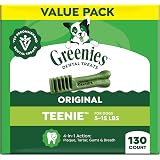
Greenies Teenie Original Natural Dental Dog Treats, Chicken, 130 Count | Veterinarian-recommended, supports oral health & freshens breath, clean to gumline, for dogs 5-15 lbs, chicken flavor
$36.97 (as of October 19, 2026 03:12 GMT +00:00 - More infoProduct prices and availability are accurate as of the date/time indicated and are subject to change. Any price and availability information displayed on [relevant Amazon Site(s), as applicable] at the time of purchase will apply to the purchase of this product.)
Apple Watch Series 12 GPS 42mm Smartwatch | Light Gold Aluminum Case, Sand Sport Band - S/M. Health + Fitness + Sleep Tracking, Heart Rate, Safety
$389.99 (as of October 19, 2026 03:33 GMT +00:00 - More infoProduct prices and availability are accurate as of the date/time indicated and are subject to change. Any price and availability information displayed on [relevant Amazon Site(s), as applicable] at the time of purchase will apply to the purchase of this product.)













Post Comment