
Google’s Genie 3 Just Got a Game-Changer: How Street View Integration Could Revolutionize Real-World Simulations—and What It Means for Your Business Strategy
Imagine turning what started as humble snapshots of city streets—those endless journeys through alleyways, boulevards, and backroads caught by Google’s Street View—into fully navigable 3D worlds you can actually walk through without leaving your chair. Sounds like something out of a sci-fi flick, right? Well, Google DeepMind just flipped the script with Genie 3, their latest marvel that doesn’t just show you a static image but breathes life into it, crafting interactive environments rooted in real places across the globe. Drawing from a colossal archive of 280 billion images spanning 110 countries, think of it as giving AI the world’s longest, most vivid visual memory—ready to be explored and exploited in ways we’re just starting to grasp. Whether it’s prepping autonomous cars for those unpredictable street crazies or offering gamers and educators a new kind of playground, Genie 3 is rewriting the rules on what digital simulations can do. Curious how this powerhouse is shaping the future of tech and business? Dive deeper and strap in—you’ll want the full scoop. LEARN MORE
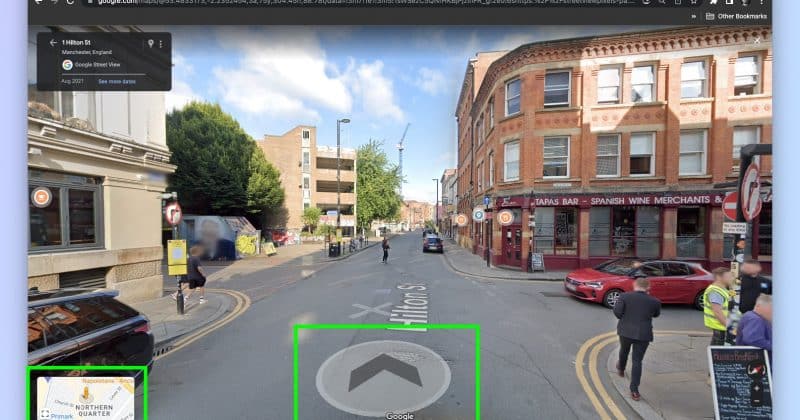
Google DeepMind just turned two decades of Street View photography into something far more ambitious than helping you find a parking spot. Genie 3, the latest iteration of the company’s generative world model, can now ingest Street View imagery and produce interactive, navigable 3D simulations grounded in actual locations around the globe.
The system draws on a library of 280 billion images captured across 110 countries, effectively giving the model a visual memory of much of the planet’s surface.
What Genie 3 actually does
Feed the model a Street View image of, say, a neighborhood in Tokyo or a stretch of highway in rural Montana, and it generates a simulated 3D environment you can move through in real time. The output runs at 24 frames per second at 720p resolution.
Genie 2 could generate playable environments from text prompts and synthetic images. Genie 3 anchors those generated worlds to places that actually exist.
Waymo is already using Genie 3 to simulate rare driving scenarios for its autonomous vehicle training pipeline. The kind of edge cases that are dangerous to stage in real life, like a cyclist running a red light at an unusual intersection, can be reconstructed from Street View data and varied endlessly by the model.
The path from research project to product
Google DeepMind released a research preview in August 2025, and a consumer-facing version followed in January 2026. The Street View integration announced on May 19, 2026, represents the most significant capability jump since the project’s inception.
Access to the new features is initially limited to select Google AI Ultra subscribers in the United States. Google has indicated plans for a broader global rollout in the coming weeks, though no specific timeline has been published.
Applications extend well beyond autonomous driving. Google is targeting gaming, robotics training, and education as primary use cases.

Dr. Elsey's Ultra UnScented Clumping Clay Cat Litter 40 lb. Bag
$22.99 (as of October 25, 2026 03:13 GMT +00:00 - More infoProduct prices and availability are accurate as of the date/time indicated and are subject to change. Any price and availability information displayed on [relevant Amazon Site(s), as applicable] at the time of purchase will apply to the purchase of this product.)
Amazon Grocery, Broccoli Florets, 12 Oz, Frozen
(as of October 25, 2026 03:13 GMT +00:00 - More infoProduct prices and availability are accurate as of the date/time indicated and are subject to change. Any price and availability information displayed on [relevant Amazon Site(s), as applicable] at the time of purchase will apply to the purchase of this product.)
Petcarex Dog Dental Powder, Dog Teeth Cleaning Breath Freshener | Pet Tartar and Plaque Remover for Teeth, Tooth Cleaning Powder with Probiotics for Dogs of All Breeds, Duck Flavor
$25.99 (as of October 25, 2026 03:23 GMT +00:00 - More infoProduct prices and availability are accurate as of the date/time indicated and are subject to change. Any price and availability information displayed on [relevant Amazon Site(s), as applicable] at the time of purchase will apply to the purchase of this product.)
Wonderful Halos Mandarins, Sweet, Seedless, Easy Peel Mandarin Oranges - Healthy Food, Fresh Fruit, 3lb Bag
(as of October 25, 2026 03:13 GMT +00:00 - More infoProduct prices and availability are accurate as of the date/time indicated and are subject to change. Any price and availability information displayed on [relevant Amazon Site(s), as applicable] at the time of purchase will apply to the purchase of this product.)













Post Comment