
How a 56-Year-Old Rookie Founder Built a $100 Million Brand That’s Breaking All the Rules—And How You Can Too
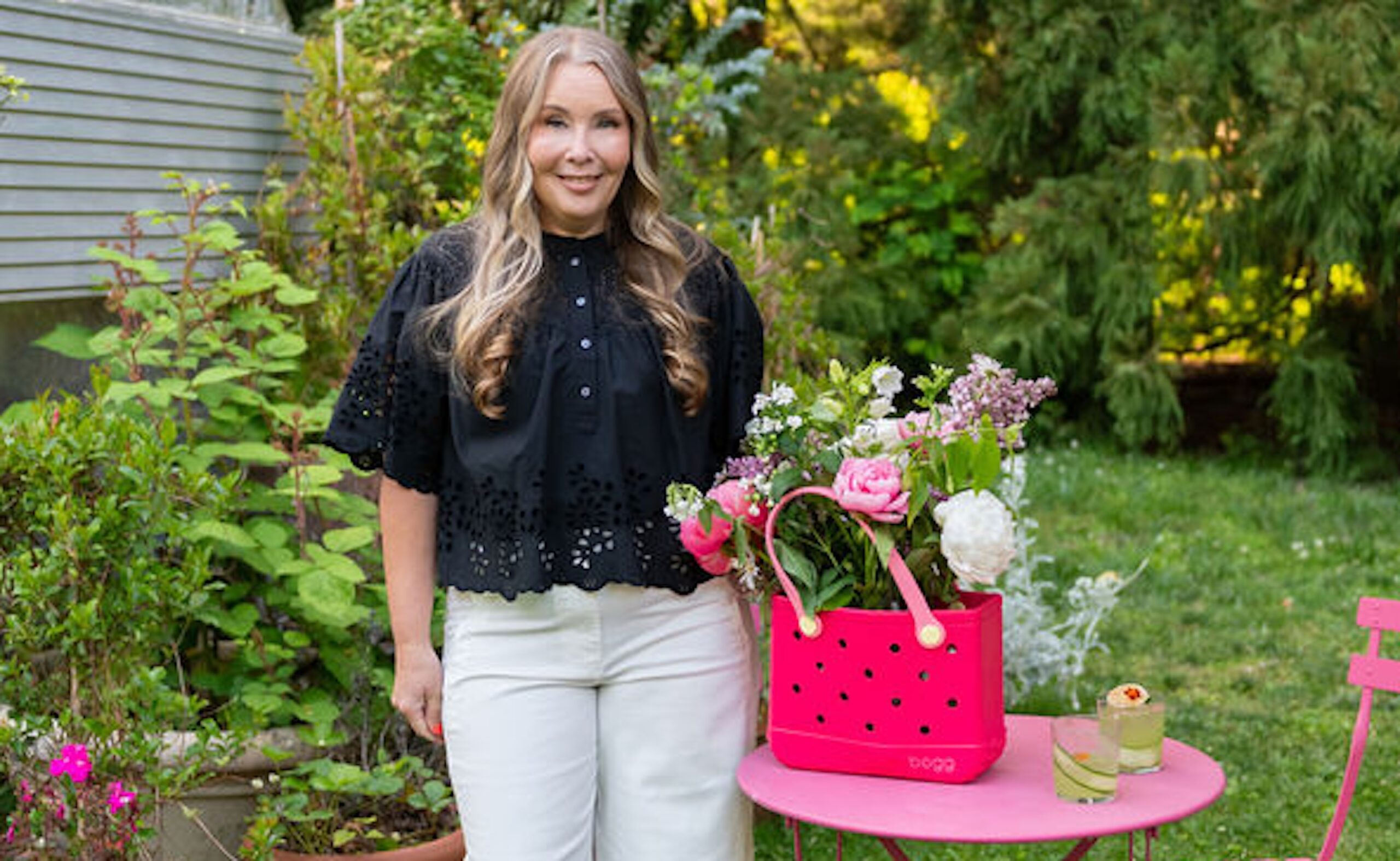
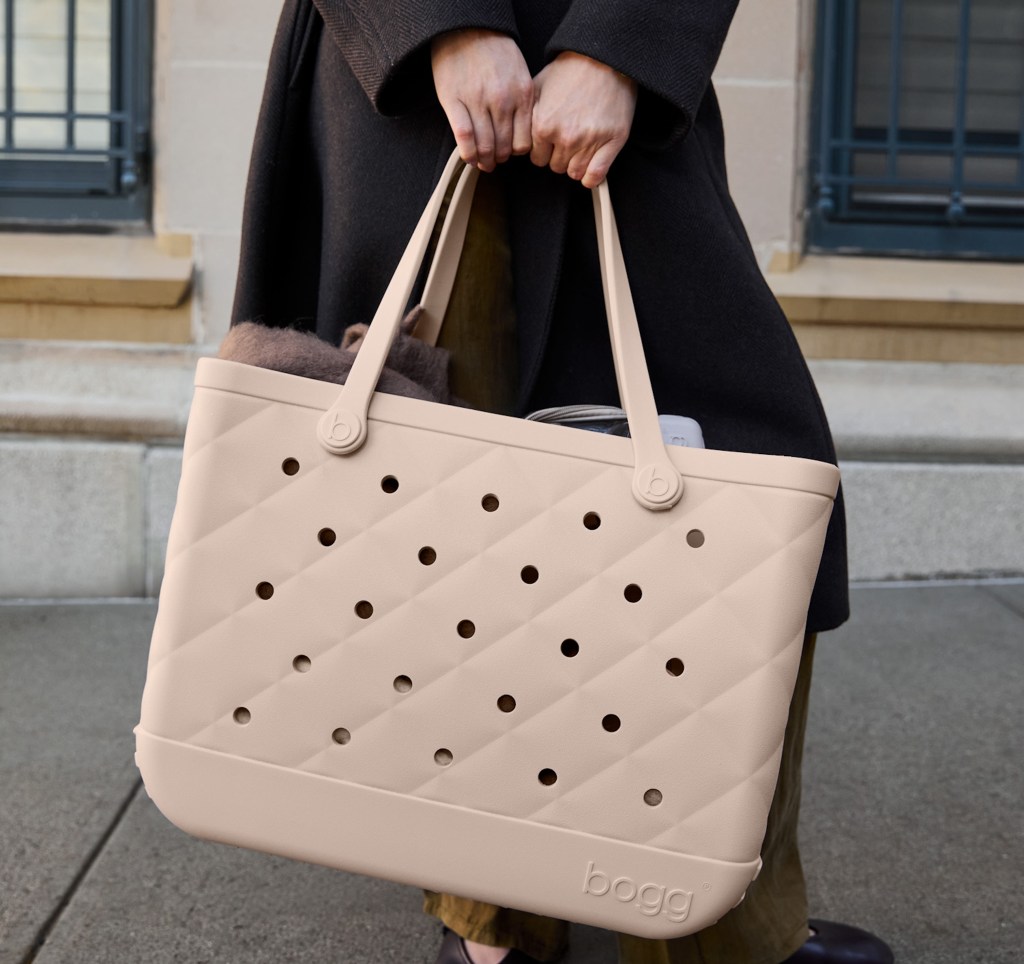
Ever wonder what happens when someone with zero experience decides to fix a simple everyday frustration—and ends up building a $100 million brand? Kim Vaccarella, once a controller crunching numbers in commercial real estate, didn’t set out to disrupt the beach bag market. She just wanted a tote that wouldn’t fall apart after a day in the sand. Fast forward to today: her creation, Bogg Bag, is a viral sensation stocked in Target, Nordstrom, and Dick’s Sporting Goods—proof that obsession over one pesky problem can lead to extraordinary success. It’s a tale packed with grit, gut instincts, and some unexpected lessons on saying no to bad deals, battling copycats, and trusting your own voice when the odds are stacked high. If you think it’s too late to start or too risky to trust your instincts—think again. Here’s how Kim flipped the script and transformed a personal pain point into a booming business empire. LEARN MORE
Listen to this post
Key Takeaways
- Kim Vaccarella had “zero experience” building consumer brands — but she believed in creating a better beach bag that would last.
- Today, Bogg Bags have reached millions of customers and topped $100 million in annual revenue.
- The brand has gone viral multiple times — here are its secrets to virality.
When Kim Vaccarella launched Bogg Bag in 2014, she was a controller at a commercial real estate lending company who just wanted a better beach bag. She had “zero experience” building a consumer brand.
Today, at age 56, Vaccarella sits at the head of a company that has sold close to five million bags and topped $100 million in annual revenue. The brand has a presence in major retailers like Target, Nordstrom and Dick’s Sporting Goods and has gone viral multiple times.
Bogg’s rise wasn’t fueled by a perfectly orchestrated social strategy or deep-pocketed investors, but by an obsessive focus on a single problem.
“I had zero experience, actually,” Vaccarella tells Entrepreneur in a new interview. “So it was a lot of learning along the way and those bumps in the road and then just trying to recover from them as best as possible to get where we are today.”
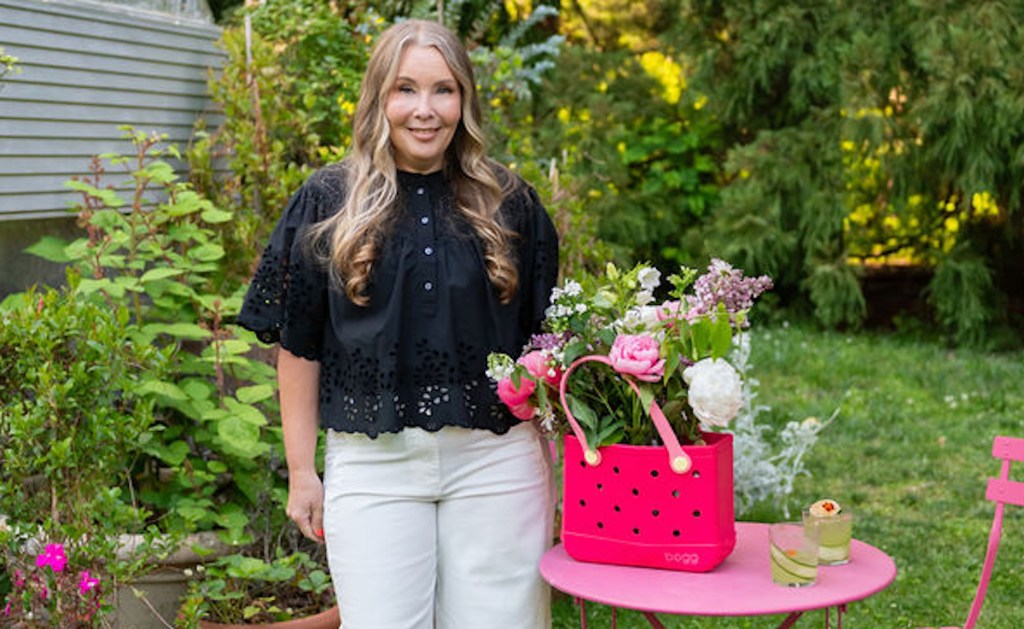
From ruined beach bags to a viral staple
The idea for Bogg Bag came from a familiar pain point: spending good money on beach totes that couldn’t survive a single season. Vaccarella and her family are “big beachgoers,” and hauling gear for a full day on the sand meant she needed a bag that could stand up, hose off and not fall apart.
“All the bags that I was buying were canvas or straw or mesh. They would all get ruined if not within the day, shortly after buying them, and they weren’t washable; they didn’t stand up, so things were constantly coming out,” Vaccarella says.
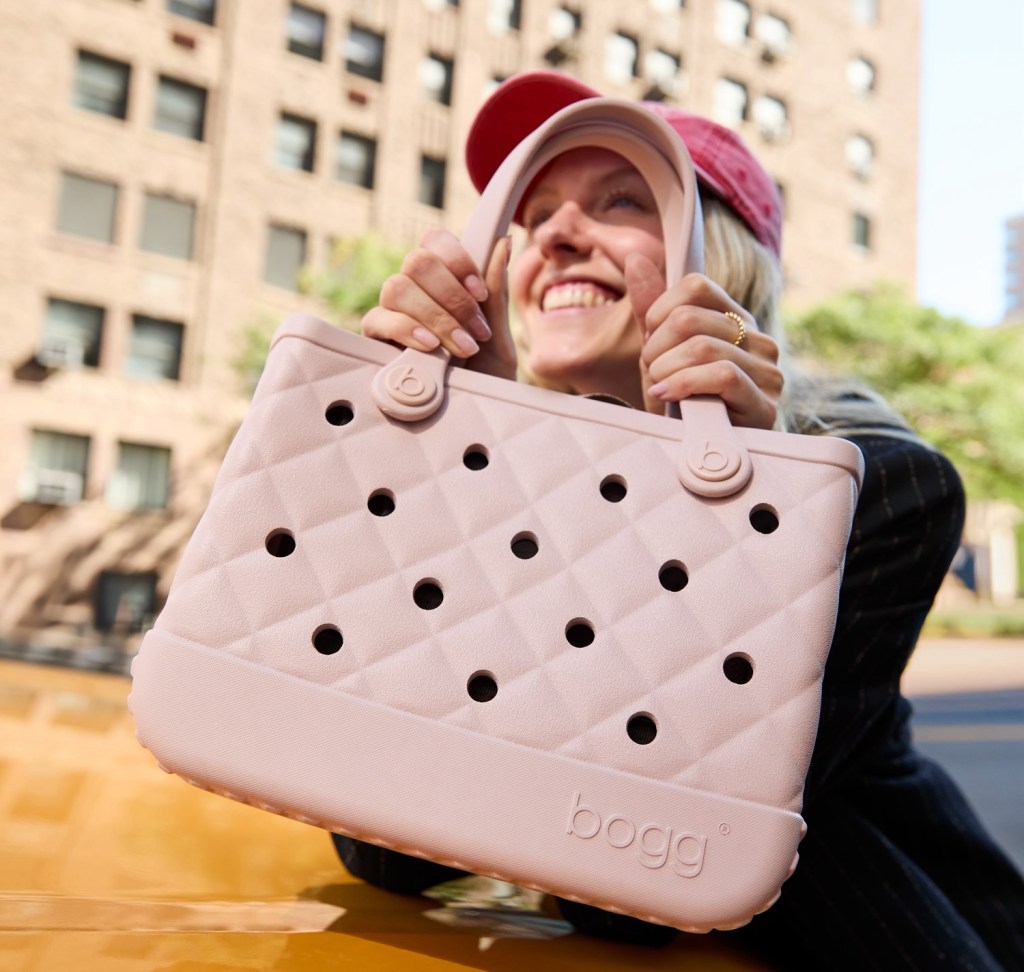
Inspired by EVA footwear like flip-flops, she realized the same material would make a near-indestructible beach bag: washable, non-porous, and sturdy enough to keep its shape. “I said, this is the perfect material for a beach bag, and that’s how the idea was born,” she shares.
Initially, her vision wasn’t to build a standalone company. “It was never to start an entire company from scratch,” she says. “It was to develop the idea and potentially sell it to somebody who may want to add bags to their space. And when I got a lot of nos, a lot of resounding nos from a lot of men, I decided to make it myself.”
Betting big on herself — twice
Getting Bogg off the ground was expensive and painful. Vaccarella cobbled together about $60,000 in initial capital in 2011, only to receive a container full of defective products. With no recourse against the manufacturer, she lost a good portion of that first investment and was back to square one.
She walked away, then came back. Restarting the brand five years later required another $120,000 to secure a new factory, pay off debts and rebuild inventory. Along the way, she was still working full-time as a controller, slowly selling bags in 2016 and 2017 before finally retiring from her 26-year career in late 2018 to focus on Bogg full-time.
“You leave your job after 26 years of getting a paycheck, and now you go to no paycheck, and you’re like, Okay, I’m going to make this work,” she says. The pressure forced her to get disciplined quickly: “It was about making sure that I was constantly selling and we were constantly watching every dollar that came in and out of the business.”
Secret #1: Viral moments happen when you least expect them
Vaccarella says she doesn’t have a set formula for virality, but she has seen Bogg go viral when she least expected it. The first time the brand went viral was in a Peloton moms group during the pandemic, when people were streaming workouts from home. Bogg Bags started showing up in the background of Peloton users’ setups.
“A lot of them had Bogg Bags, so they started talking about it, and they’re like, ‘Hey, where’d you get that bag?’ And that was our first viral video,” she says. She adds that you can’t script every viral spark, but you can build products people are eager to talk about in the spaces where they already gather.
Secret #2: Say no to bad terms — even with big retailers
One of Vaccarella’s most counterintuitive “secrets” is how aggressively she protected cash flow when big-box retailers came calling. Coming out of Covid, major chains wanted to stock Bogg, and the advice she kept hearing was to do whatever it took to get in the door.
“Everybody was telling me, ‘You have to do this, you have to do that, you have to sign your life away, basically. You have to take back product if it’s bad,’” she recalls.
Her lack of industry experience became an asset. “One of the greatest things about not knowing what I was doing and trusting my gut was to say, I can’t do that. I can’t take back product. I can’t do all these things you’re asking me to do, but if you want to carry Bogg Bag, I’d be happy to send it to you,” she says.
The stand paid off. Bogg became “probably one of the only” vendors at some major retailers without standard terms, a position she believes kept the company from being held back.
“I think it could have potentially sunk me if I had gone into these larger retailers with these massive terms and givebacks and advertising co-ops and all of these different things,” she says. “So I just trusted in it that if they’re not willing to work with me in this regard, then maybe it’s not the right time and maybe that opportunity will come again.”
Secret #3: Build a world, not just a hero product
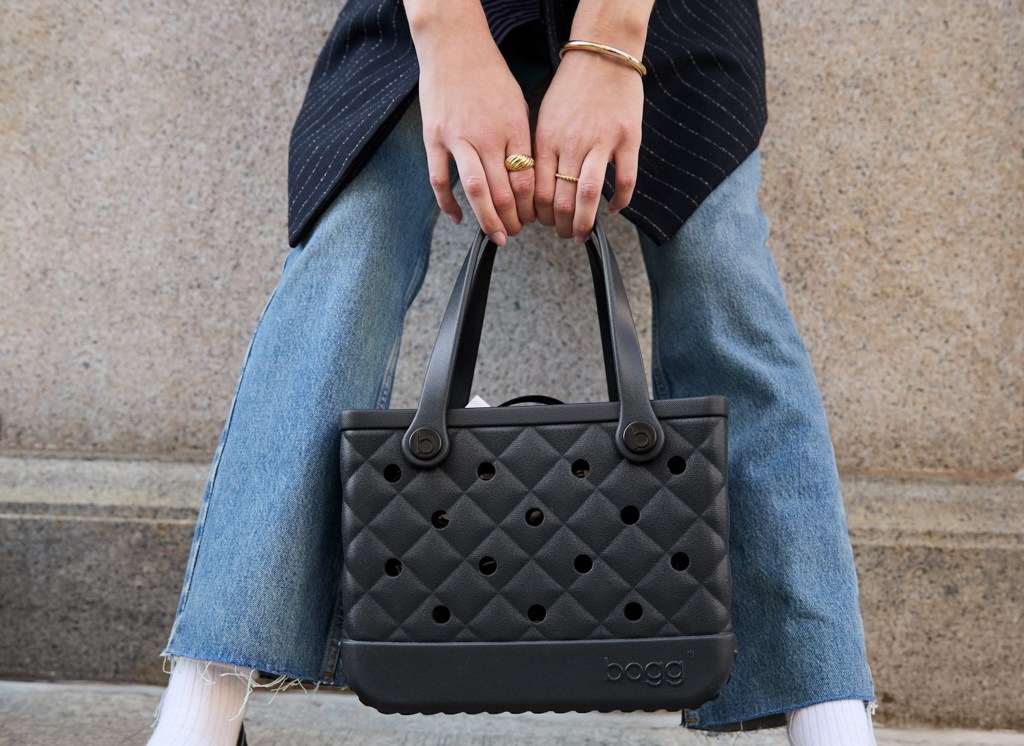
Vaccarella is adamant that staying relevant and viral requires deepening the ecosystem around a few hero products. The $100 original Bogg Bag, $80 medium “Baby” version and the smaller $60 “Bitty” bag function as the center of an expanding constellation of accessories.
Vaccarella’s team has focused on additions that make existing products more useful: cup holders, dividers and tabletops that sit on top of large bags and hold drinks and snacks.
“What’s your goal, right? To get a Bogg Bag in everybody’s hand. What happens when that happens? Then you want to enhance the experience,” she says.
Secret #4: Trust your gut, especially when you feel behind
Vaccarella often finds herself the oldest person in the room, surrounded by younger operators and executives who came from much larger brands. That used to rattle her. She didn’t finish college, had never worked in fashion or apparel and started Bogg in her 40s.
“You know, the biggest lesson I learned is trust your gut,” she says. “Because you don’t have experience in a particular area, you get clouded by a lot of voices around you — but they don’t know your business. So you have to trust in what you know.”
At 56, she still sometimes wishes she had started earlier — but she has made peace with the timing. “Sometimes I beat myself up over it where I’m like, Oh, I wish I had started this 20 years ago,” she says. “But then I could have started it 20 years ago and failed miserably because maybe I just wasn’t in the right place 20 years ago to do this, so it’s all good.” Her message to older founders is simple: “It’s never too late, because I started this in my 40s.”
Secret #5: Let the dupes sharpen you, not sink you
As Bogg’s profile grew, so did the knockoffs. At trade shows, Vaccarella was warned to guard her designs from roaming factory reps who might copy them. Instead, her first dupe came from closer to home: her neighbor in the same business complex.
“He was just a guy older than me. I gave him a bag for his daughter because they were going to Miami,” she says. “He sent [the bag] to China and started making a bag and put two G’s on it too, so we’re B O G G and he did B A G G.” For years, she had to drive past his open warehouse doors and see him packing copycat bags, then watch him pitch “his” story, a copy of hers, just a few booths away at trade shows.
Vaccarella believes Bogg’s durability and brand relationship will outlast cheaper imitations. “Our customers realize they can get the dupe, and it’s going to be cheaper, but I’ll have the Bogg for life, and I won’t have to buy a new one every year,” she says.
As for the copycat? “The fact of the matter is, he’s gone now, and he doesn’t have a bag anymore,” she says. “And we’re thriving, so there we go.”
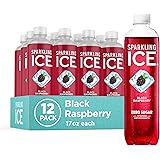
Sparkling Ice, Black Raspberry Sparkling Water, Zero Sugar Flavored Water, with Vitamins and Antioxidants, Low Calorie Beverage, 17 fl oz Bottles (Pack of 12)
$12.47 (as of October 20, 2026 03:12 GMT +00:00 - More infoProduct prices and availability are accurate as of the date/time indicated and are subject to change. Any price and availability information displayed on [relevant Amazon Site(s), as applicable] at the time of purchase will apply to the purchase of this product.)
Nutramax Cosequin Joint Supplement for Dogs, Chewable Tablets, 132ct | Glucosamine + Chondroitin for Dogs with MSM, Supports Healthy Joints, All Breeds & Sizes, All Ages
$34.91 (as of October 20, 2026 03:12 GMT +00:00 - More infoProduct prices and availability are accurate as of the date/time indicated and are subject to change. Any price and availability information displayed on [relevant Amazon Site(s), as applicable] at the time of purchase will apply to the purchase of this product.)
Banana Bunch (4-5 Count)
(as of October 20, 2026 03:12 GMT +00:00 - More infoProduct prices and availability are accurate as of the date/time indicated and are subject to change. Any price and availability information displayed on [relevant Amazon Site(s), as applicable] at the time of purchase will apply to the purchase of this product.)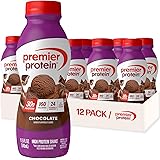
Premier Protein 30g High Protein Shake, Chocolate, 12 Pack | 160 Calories, 24 Vitamins & Minerals, No Added Sugar, Supports Muscle Health, Gluten-Free, 11.5 oz
$19.99 (as of October 20, 2026 03:12 GMT +00:00 - More infoProduct prices and availability are accurate as of the date/time indicated and are subject to change. Any price and availability information displayed on [relevant Amazon Site(s), as applicable] at the time of purchase will apply to the purchase of this product.)











Post Comment