
How a Heatwave and One Unexpected Decision Sparked Anthony Bourdain’s Journey from Dishwasher to Culinary Legend
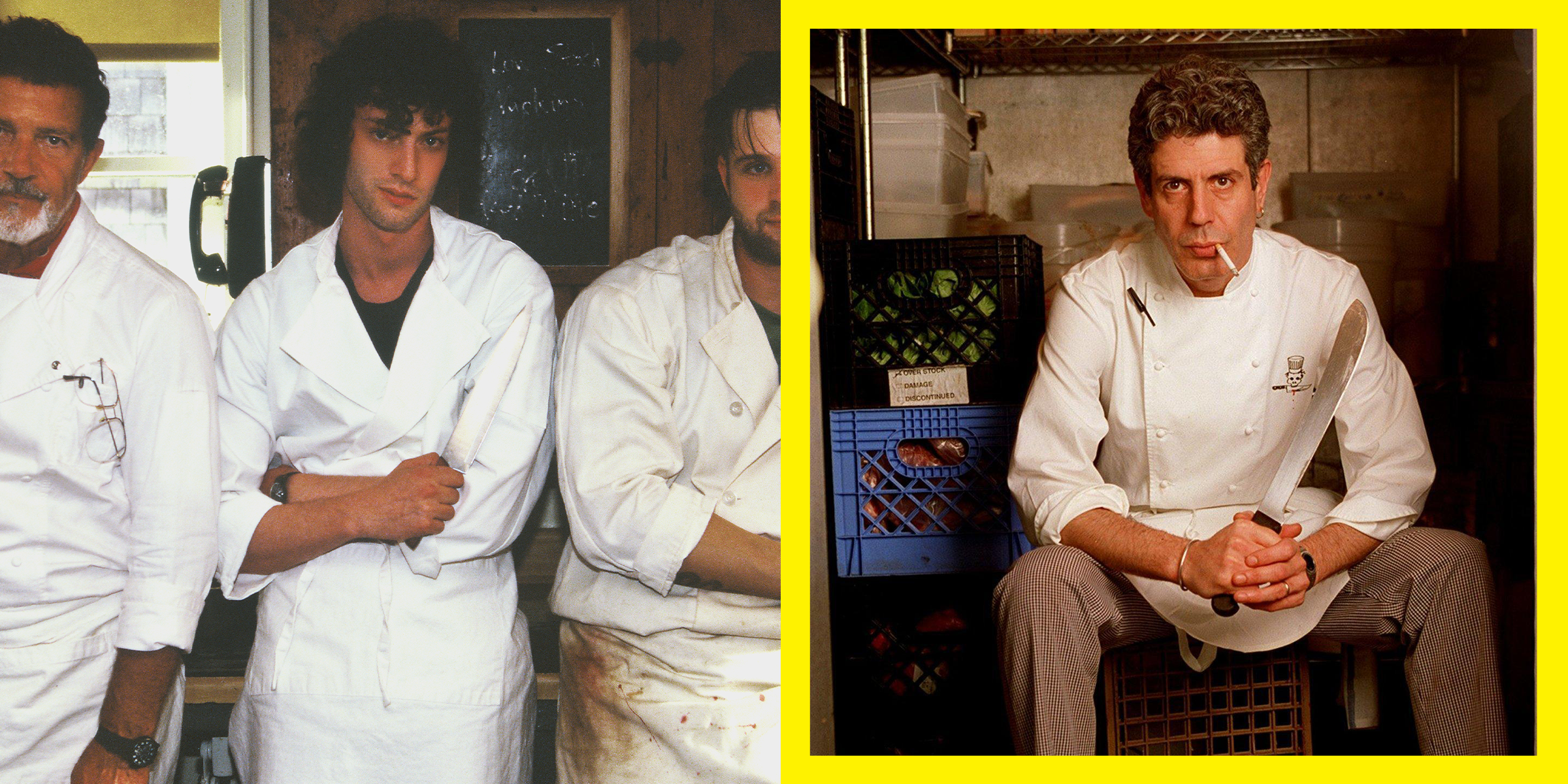
Ever wonder how a sun-soaked, drug-fueled summer in a sleepy Massachusetts beach town could spawn one of the most iconic culinary legends of our time? Picture this: it’s 1972, and an 18-year-old Anthony Bourdain arrives in Provincetown, “rudderless and unhappy,” armed with nothing but an early high school diploma and a wild streak that would soon set his life ablaze. What starts as a humble dishwashing gig at a touristy seafood joint turns into a gritty proving ground—and the launchpad for his “strange climb to chefdom.” Before the glitz of TV fame and bestselling books, there was just the sun, the surf, and a kitchen full of rough-around-the-edges characters who dressed like pirates and lived like culinary outlaws. So, how much of the raw energy and chaos from those days is true, and what was spun to make Hollywood magic? Let’s dive into the splashy backstory behind ‘Tony’, the A24 film capturing Bourdain’s transformative summer and peel back the layers of fact versus fiction in the making of a legend.
 7 min read
AT THE START of summer 1972, an 18-year-old Anthony Bourdain arrived in Provincetown, Massachusetts “rudderless and unhappy,” he wrote in his bestselling 2000 memoir Kitchen Confidential. He’d graduated high school early, then chased his “on-again, off-again” girlfriend to the northernmost tip of Cape Cod, a hippie enclave where he and his friends shacked up in a sharehouse to swim, sunbathe, smoke pot, snort coke, and drop acid, “as well as other healthy teenage activities.”
The next few months would change his life. Bourdain found a dishwashing job at The Flagship, a touristy seafood restaurant where he scrubbed pots and pans, peeled potatoes, picked scallops, and cleaned shrimp—“humble beginnings,” he described, which began his “strange climb to chefdom.” Over the next couple years, he bounced around other P-town restaurants, developed into a line cook, and turned a summer gig into a calling that would eventually make him an iconic name in the culinary world.
“I left Provincetown with restaurant experience, a suntan, and an ever-deepening relationship with recreational drugs,” Bourdain recounted in a 2014 episode of his Emmy-winning series Parts Unknown. “I went to culinary school, then to New York City, and never returned.”
Those formative beachside years have been condensed into a single, transformational summer in Tony, writer-director Matt Johnson’s new A24 film starring The Holdovers breakout Dominic Sessa as a 19-year-old Bourdain. Leaning on just a few chapters of Kitchen Confidential, Tony eschews a more conventional cradle-to-grave biopic structure for an embellished, fictionalized slice of its subject’s seasonal life. The goal for the filmmakers—including co-writers Todd Bartels and Lou Howe—was to capture the essence of Bourdain’s early years (with permission from Bourdain’s estate), rather than the totality of his prolific television career or his tragic death by suicide in 2018.
“I wanted this to feel like a memory that Bourdain would have that was totalizing his youth,” Johnson told Rolling Stone. “I don’t think about it in a linear, year-to-year way—it’s a flash and a color and a feeling and maybe four or five conversations.”
So, what’s accurate and what’s creative license? We’ve sifted through the early chapters of Kitchen Confidential, various articles about Bourdain, and a season 4 episode of Parts Unknown to decipher the true stories that inspired Tony—and look at what liberties the movie takes to build its own oceanside origin story.
How did Bourdain get his start in Provincetown?

Sessa in Tony.
In Tony, Bourdain attempts to win a prestigious writing fellowship at Vassar College with an ambitious, quixotic pitch for a novel. Though he’s eventually rejected over the phone, he brags to family and friends that he’s been selected and escapes to Provincetown for the summer, hoping to find and impress Nancy (Emilia Jones), his longtime crush, who works at a local pizza shop. When she doesn’t reciprocate his romantic bid, Bourdain drinks away his feelings at a local seafood restaurant and turns belligerent enough to get kicked into the street. That night, the restaurant’s chef, known as Chef (Antonio Banderas), takes pity on him, offers him his patio for the summer, and gives him a job as a dishwasher.
The real Bourdain never applied for a writing fellowship and he wasn’t chasing a crush—he was already “unhappily in love” with Nancy Putkoski, his high school sweetheart (and future first wife) whom he chased to Vassar and with whom he planned their P-town summer together. Like her character, Nancy spun pies at Spiritus Pizza, whose crawl space above the refrigerator Bourdain would eventually use to sleep in one summer. Initially a freeloader, Bourdain began paying his share of expenses when his roommate, who waited tables at The Flagship, hooked him up with a dishwashing gig there when the previous busboy no-showed for two consecutive days.
“Taking that one job,” Bourdain wrote in Kitchen Confidential, “essentially pushed me down the path I still walk to this day.”
What was Bourdain like in Provincetown?

Sessa in Tony.
Tony opens with a quote from Kitchen Confidential that inspired much of the screenplay: “I was—to be frank—a spoiled, miserable, narcissistic, self-destructive and thoughtless young lout, badly in need of a good ass-kicking.”
That wasn’t just a personal observation. One of the Flagship’s chefs, Alex Getmanov, explained in Laurie Woolever’s Bourdain: The Definitive Oral Biography that he “didn’t know anything, and he had this attitude that he could do anything, which doesn’t get you far in a working kitchen.” The fry cooks at The Flagship even nicknamed him “Mel,” after “Mal Carne,” meaning bad meat in Italian. That arrogance is on display in Tony, specifically in the way Sessa’s character puffs up his bona fides and lies to his friends, colleagues, and family members. At one point, he tries to impress Nancy by pretending his job at The Flagship is just research for the book he’s planning to write.
The origin of that attitude is unclear; it even perplexed Bourdain. “What was I so angry about?” he wondered aloud in Parts Unknown. Tony traces some of that initial rebellious energy to Bourdain’s parents, who had a complex relationship with their son. “I think a lot of extraordinary human beings have parents who have big aspirations for them,” Bartels told Vanity Fair. “What we were trying to capture, as well as the tension between them, was something that he might want to run away from.”
What type of shenanigans happened at The Flagship?

Sessa and Leo Woodall in Tony.
The most colorful moments in Tony occur in and around the kitchen, where Bourdain likened his fellow Flagship fry cooks to gods who dressed like pirates—and to a lesser extent, “master criminals and sexual athletes.” As he detailed in Kitchen Confidential, “they were roguish renegades who had big gold hoop earrings and scrimshaw rings…guys who didn’t really have a whole lot of other options. They weren’t trying to then get a Food Network show, they were trying to make a living frying scrod and clams and oysters.”
In recounting this jocular environment, Johnson brings to life a couple true stories—starting with the time Bourdain accidentally burned his hand on a hot frying pan. As he recounts in Kitchen Confidential, he quickly asked the broiler, Tyrone, if he had any burn cream or a Band-Aid, a question that turned the room silent. Tyrone promptly raised his own palm to show Bourdain a constellation of scars and welts before picking up the sizzle platter and setting it down in front of him. “He never flinched,” Bourdain recalled.
The movie’s central figure in the kitchen is Leo Woodall’s Sal, a combination of Bourdain’s real former Flagship colleague Dmitri from Kitchen Confidential and an unnamed sous chef Bourdain later worked with in New York. The insolent, drug-addict cook carries a deviant swagger and takes Tony under his wing, embodying the most reckless and toxic traits of the kitchen cohort, on full display in a scene ripped directly from the book, when Sal rear-ends a bride in an outhouse corral while celebrating her wedding party at the restaurant.
Yes, that really happened, and Bourdain would never forget the image: “I knew then, dear reader, for the first time: I wanted to be a chef.”
Who inspired Bourdain to take cooking seriously?

Sessa and Banderas in Tony.
Like a few characters in Tony, “Chef” is an amalgamation of mentors who inspired Bourdain throughout his early life. There’s the man Bourdain calls Bigfoot, who encouraged Bourdain to pursue the culinary arts, in Kitchen Confidential. And the other is Howard Mitcham, a revered elder statesman and sole “name chef” in Provincetown, who provided Bourdain the foundation of his diverse culinary appreciation.
Despite being “drunk most of the time,” Bourdain wrote, Mitcham was well respected around the beach town and authored two well-regarded and highly-influential books—The Provincetown Seafood Cookbook and Creole, Gumbo, and All That Jazz—which Johnson references in the movie. More than his local expertise, Mitcham took Bourdain fishing on the water to net striped bass and inspired Bourdain’s later belief “there is no difference between the joys of a great meal at a three-star Michelin and at a humble fisherman’s bar—as long as it’s made with love and with pride,” he wrote in a 2018 introduction for Mitcham’s cookbook.
Tony ends with a clambake, a communal gathering and social event that Mitcham hosted annually for his artistic peers. The real “John J. Gaspie Memorial Clambake,” named for Mitcham’s deceased fisherman friend, had a major impact on Bourdain, who found the tradition endearing and representative of food’s connective power.
What happened after Provincetown?
After a few summers of being labeled a pretender by his fellow chefs, Bourdain committed to a career to get back at his tormentors. He dropped out of Vassar after his sophomore year and enrolled in the Culinary Institute of America. “I would do whatever was necessary to become as good as, or better than, [them],” he wrote in Kitchen Confidential. “I would have hands like Tyrone’s and I would break loudmouth punks like myself over the wheel like they’d broken me. I’d show them.”
Bourdain would eventually make good on that promise, graduating from the CIA in 1978, turning into an executive chef at New York City’s Brasserie Les Halles, and pivoting into a TV and literary star. In Tony’s final scene, Eric Ripert, a well-renowned French chef and longtime Bourdain collaborator, plays a CIA admissions officer. The cameo was important to Johnson—and, as he told Vanity Fair, signified the “transition in Bourdain’s life, from kid to man.”

Jake Kring-Schreifels is a sports and culture writer based in New York. His work frequently appears in The Ringer, GQ.com, and InsideHook, among other publications. You can follow him on X at @jakeks19.

Nespresso Capsules Vertuo, Variety Pack, Medium and Dark Roast Coffee, 30 Count Coffee Pods, Brews 7.8 oz.
$42.00 (as of October 21, 2026 03:12 GMT +00:00 - More infoProduct prices and availability are accurate as of the date/time indicated and are subject to change. Any price and availability information displayed on [relevant Amazon Site(s), as applicable] at the time of purchase will apply to the purchase of this product.)
HANYCONY Surge Protector Power Strip, 1080J, 5 Ft Braided Extension Cord | 8 Outlets 4 USB Ports(2 USB C), Outlet Extender, Flat Plug, Wall Mount, Desk Charging Station, Home Office, Dorm Room ETL
$9.98 (as of October 21, 2026 03:22 GMT +00:00 - More infoProduct prices and availability are accurate as of the date/time indicated and are subject to change. Any price and availability information displayed on [relevant Amazon Site(s), as applicable] at the time of purchase will apply to the purchase of this product.)
Organic Banana Bunch (4-5 Count)
(as of October 21, 2026 03:12 GMT +00:00 - More infoProduct prices and availability are accurate as of the date/time indicated and are subject to change. Any price and availability information displayed on [relevant Amazon Site(s), as applicable] at the time of purchase will apply to the purchase of this product.)
Purina Pro Plan Veterinary Supplements FortiFlora Dog Probiotic Supplement | FortiFlora Probiotic Supplement with strain of probiotics promotes intestinal health and can help management of diarrhea
$30.99 (as of October 21, 2026 03:12 GMT +00:00 - More infoProduct prices and availability are accurate as of the date/time indicated and are subject to change. Any price and availability information displayed on [relevant Amazon Site(s), as applicable] at the time of purchase will apply to the purchase of this product.)











Post Comment