
How Jefferson Simmons Turned $0 Into $20K Monthly Passive Income—Behind the Scenes of a 9-Year, 39-Door Empire
Ever been on the edge of homelessness and stumbled into your first real estate deal by pure chance? Jefferson Simmons was just 20, facing exactly that predicament when his fraternity house got swept up in renovations and the rental market said, “No way, college guys!” But here’s the kicker — a quick flip of a Zillow toggle from rent to buy uncovered a hidden gem: a mislabeled three-bedroom that was actually a sprawling 2,700-square-foot house with extra basement rooms. Talk about serendipity meeting hustle! With a savvy pitch to his parents for a co-sign and seven rounds of nail-biting negotiation, Jefferson turned that accidental buy into a launching pad that’s now grown into 17 properties, 39 doors, and a cash flow knocking on $20,000 a month. How does a guy go from zero income and no credit to full-throttle real estate mogul while walking away from law school? It’s a story laced with creative financing, hands-on sweat equity, and a mindset shift that’s anything but ordinary. Ready to dive into the unconventional playbook that turned Jefferson’s “what if” into a real estate empire? LEARN MORE.
|
Name |
Jefferson Simmons |
|---|---|
| Location | Manhattan, Kansas |
| Occupation | Full-time real estate investor (former underwriter, Realtor, and university fundraiser) |
| Assets | 17 properties, 39 doors, $20,000/month in cash flow |
| Investment strategy | Single-family and small multifamily buy-and-hold, BRRRR-style renovation, creative seller, and private financing |
| Financing |
Parental co-sign, family JV equity, private money line of credit, seller financing |
Jefferson Simmons was 20 years old and about to be homeless. His entire fraternity house was getting renovated, and every rental in town wanted nothing to do with a group of college guys.
On a whim, he flipped a Zillow toggle from rent to buy and found a mismarketed three-bedroom house that was actually a 2,700-square-foot property with three extra rooms in the basement. He pitched his parents to co-sign, negotiated the seller down seven rounds to $178,000, and moved his fraternity brothers into the basement.
Nine years later, he’s walked away from law school, built partnerships with an uncle and a private investor, and grown that first accidental deal into 17 properties and 39 doors.
Here’s how he built it.
You were a sophomore in college, with no income and no credit. How did you actually get that first house?
I’d saved money since high school from selling firewood and doing livestock projects, and I got a full academic scholarship right before graduation, so I had a nest egg but no income a bank would lend against.
I went home and pitched my parents using an Excel spreadsheet and a full 10-year pro forma showing rent increases, and they agreed to co-sign. I negotiated the seller down from their asking price to $178,000 over seven rounds of back-and-forth, partly because I knew from the listing agent that the family was highly motivated to sell, and partly because I genuinely had no more room to go higher.
My mortgage payment has stayed the same the whole time, about $1,300 a month, including taxes and insurance. I rented it the first year for $1,600, and it’s currently leased through 2027 at $3,100 per month.
Your second deal was a foreclosure auction property you bought with your uncle. How did that partnership actually work?
I saw a duplex next door to my first house heading to a bank foreclosure auction, and I had zero money to buy it myself. My uncle, who’d built a portfolio of his own and was a big mentor to me, agreed to fund it as a money partner.
We could only look through the windows before the auction since we couldn’t access the interior, so we did our underwriting from the driveway over coffee, and he told me we could afford up to $140,000 after repairs. Then he left the country on a trip and told me he’d be completely unreachable, so I was the one bidding live from my laptop.
I got it to $100,000, and even though it didn’t technically meet the bank’s reserve, they wanted it off their books and took the offer anyway.
You walked away from law school after one semester to go all-in on real estate. What made you pull the trigger?
I sat in my first law school class, and they described the bell curve of graduates, meaning that where you rank determines your salary. I realized I wasn’t going to be at the top of that curve, and I’d be leaving school with over $100,000 in student loan debt for the privilege.
I’d already closed two real estate deals by that point and had real proof of concept, so I decided I’d rather take on another mortgage that pays me back than debt that doesn’t. I left after one semester, worked as an insurance underwriter making $42,000 a year, got my real estate license on the side, and kept buying single-family homes for years while working two jobs.
You’ve done some creative financing since then, including turning a house sale into a line of credit. Walk us through that deal.
I was working as an agent for a cash-buyer client during an insane seller’s market where every listing was already pending within hours. He was getting frustrated that we couldn’t move fast enough on anything.
Around the same time, tenants in a house I owned asked to break their lease early to buy their forever home, and I let them out of it. That left me with a vacant house I knew fit exactly what my client wanted.
Over dinner, I gave him two options: I’d sell it to him for $25,000 more than I paid, or I’d sell it to him at my exact cost if he’d write me a $200,000 private line of credit instead. He laughed, looked at the house with his wife over FaceTime, and agreed to the line of credit.
Three months later, I used it to buy a $171,000 house, and he wired the full balance the day of closing with no appraisal and no bank fees. I pay him 7.25% interest, which beats his T-bill returns and costs me less than a bank would. We’ve since done several more deals together and become genuine friends.
What does your portfolio look like today, and what’s actually driving your growth now?
I’m at 17 properties, 39 doors total, and I own all of them outright except for a minority stake in a 15-unit I hold with a few partners. Altogether, that’s about $20,000 a month in cash flow.
A big unlock along the way was sweat equity: I helped my uncle renovate a 12-unit he bought in 2019, doing new kitchens, floors, and paint myself, in exchange for a 10% stake, which let me build equity without putting up much of my own cash. I also stopped thinking I could only buy one house a year by saving for the next down payment, since that mindset was actually limiting how fast I could scale.
Between the family partnership, the private line of credit, and just getting comfortable asking people directly for capital, that’s what let me go from one deal a year to where I am now.

HANYCONY Surge Protector Power Strip, 1080J, 5 Ft Braided Extension Cord | 8 Outlets 4 USB Ports(2 USB C), Outlet Extender, Flat Plug, Wall Mount, Desk Charging Station, Home Office, Dorm Room ETL
$9.98 (as of October 23, 2026 03:23 GMT +00:00 - More infoProduct prices and availability are accurate as of the date/time indicated and are subject to change. Any price and availability information displayed on [relevant Amazon Site(s), as applicable] at the time of purchase will apply to the purchase of this product.)
BassBloom ROAR 3 Portable Bluetooth Speaker,IPX6 Waterproof,20W | Powerful Sound with JIKE Bass,24H Playtime,Bluetooth 5.4,RGB Lights,Wireless TWS Pairing,Outdoor for Camping
$27.99 (as of October 23, 2026 03:33 GMT +00:00 - More infoProduct prices and availability are accurate as of the date/time indicated and are subject to change. Any price and availability information displayed on [relevant Amazon Site(s), as applicable] at the time of purchase will apply to the purchase of this product.)
PUR Gum, Spearmint, Xylitol Gum, No Artificial Flavor, 55 Count | No Artificial Sweeteners, Vegan, Sugar Free, Gluten Free, Soy Free, Nut & Peanut Free, Swiss Made, Keto Friendly chewing gum
$3.98 (as of October 23, 2026 03:13 GMT +00:00 - More infoProduct prices and availability are accurate as of the date/time indicated and are subject to change. Any price and availability information displayed on [relevant Amazon Site(s), as applicable] at the time of purchase will apply to the purchase of this product.)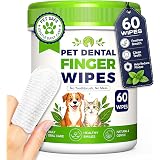
Dog Dental Wipes for Teeth Cleaning, Finger Toothbrush Wipes for Dogs Cats,Dog Teeth Cleaning Wipes Reduce Bad Breath & Plaque Tartar, No-Rinse Daily Oral Care,Dog Toothbrush & Toothpaste Alternatives
$22.99 (as of October 23, 2026 03:23 GMT +00:00 - More infoProduct prices and availability are accurate as of the date/time indicated and are subject to change. Any price and availability information displayed on [relevant Amazon Site(s), as applicable] at the time of purchase will apply to the purchase of this product.)













Post Comment