
How Open AI Models Are Quietly Toppling The Billion-Dollar AI Gold Rush—And What It Means For Your Next Move
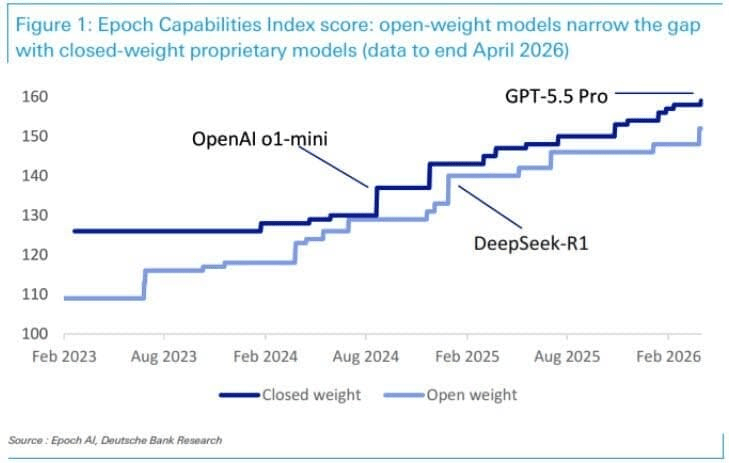
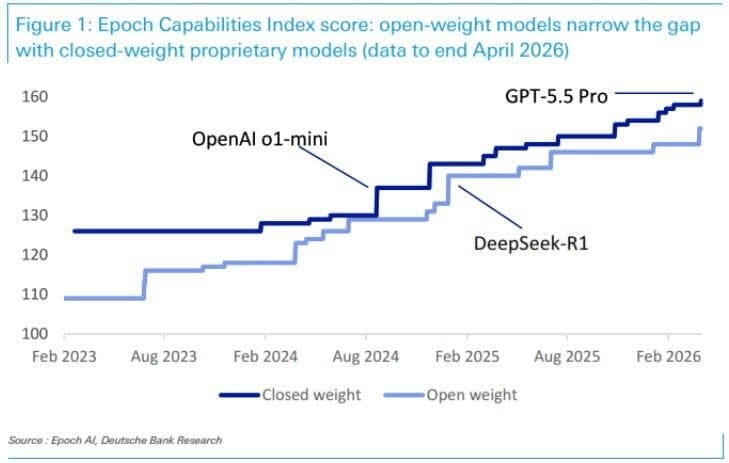
Here we go again — the AI world just got rocked, but not because folks suddenly dropped their faith in the tech. Nope, this time, it’s that nagging question gnawing at everyone’s wallets: what happens to the gold rush when AI models become cheaper, lighter, and easier to sling around? Imagine investing billions only to find out your shiny new toy can be outdone by some model cranked out on older gear and a shoestring budget. Yup, déjà vu all over again with the latest Chinese open-weight AI drop reviving those DeepSeek jitters. This isn’t just about who’s got the flashiest AI on the block; it’s a full-blown skirmish over control, profits, and whether the massive bets by giants like Google and Microsoft will pay off or just blow up in their faces. The market? It’s not walking away from AI demand — it’s just asking the hard question: will the tollbooths on this highway stay cash cows or become relics? Buckle up — the new battle for AI is heating up. LEARN MORE
The new battle for AI
The latest tremor through the AI complex was not caused by investors suddenly losing faith in artificial intelligence. It came from a more uncomfortable question: what happens to the economics of the boom when increasingly capable models become cheaper, lighter and easier to distribute?
That question returned with the release of another Chinese open-weight model, reviving memories of the original DeepSeek shock. The first episode forced markets to confront the possibility that a competitive AI system could be trained with older chips and considerably less capital than investors had assumed. The latest release has pushed the same argument back across the trading desk, placing semiconductor demand, hyperscaler spending, and proprietary model pricing power under renewed scrutiny.
In a report examining the contest between open and proprietary AI, Deutsche Bank strategist Adrian Cox argues that the technology industry is entering another defining format war. The stakes extend well beyond which model performs best on a benchmark. The larger battle concerns who controls the ecosystem, where profits settle, and whether the enormous capital commitments supporting today’s AI valuations can continue to earn an acceptable return.
The initial market reaction was hardly subtle. The Magnificent Seven weakened, semiconductor shares extended their decline and investors again began questioning plans by Google, Microsoft, Amazon, Meta and Oracle to spend roughly $700 billion building AI capacity this year, around 70 percent more than last year.
The market is not arguing that AI demand is about to disappear. It is asking whether the tollbooths constructed around that demand will remain as profitable as expected.

Fujifilm Instax Mini Instant Film, 20 Sheets – White Daylight ISO 800 for Instax Mini 13, 12, 11, 41 Cameras –Bundeld with The Tudak Store Microfiber Cleaning Cloth
$32.95 (as of October 15, 2026 03:32 GMT +00:00 - More infoProduct prices and availability are accurate as of the date/time indicated and are subject to change. Any price and availability information displayed on [relevant Amazon Site(s), as applicable] at the time of purchase will apply to the purchase of this product.)
2 Pack [Apple MFi Certified] Wired Headphones for iPhone 14 13 12 Pro Max | 2Pack Wired Earbuds with Built-in Mic & Volume Control HiFi Stereo Nosie Reduction Earphones for iPhone 14 13 12 11 XS XR X 8
$8.99 (as of October 15, 2026 03:32 GMT +00:00 - More infoProduct prices and availability are accurate as of the date/time indicated and are subject to change. Any price and availability information displayed on [relevant Amazon Site(s), as applicable] at the time of purchase will apply to the purchase of this product.)
Ljusmicker for AirPods Pro 3 Case 2025 with Cleaner Kit,Black | Soft Silicone Protective Cover for Apple AirPod Pro 3rd Generation Case with Keychain for Women Men,Shockproof
$5.99 (as of October 15, 2026 03:21 GMT +00:00 - More infoProduct prices and availability are accurate as of the date/time indicated and are subject to change. Any price and availability information displayed on [relevant Amazon Site(s), as applicable] at the time of purchase will apply to the purchase of this product.)
STRELLALAB Dog Allergy & Itching Relief - Skin&Coat Support Chews w/Omega 3 | Anti Itch, Immune Supplements - Treats for Dogs Health w/Fish Oil for Irritated & Dry Skin - Proven by Science, 60 Ct
$13.99 (as of October 15, 2026 03:21 GMT +00:00 - More infoProduct prices and availability are accurate as of the date/time indicated and are subject to change. Any price and availability information displayed on [relevant Amazon Site(s), as applicable] at the time of purchase will apply to the purchase of this product.)












Post Comment