
I Tried an Electrical Muscle Stimulation Workout—And What Happened Next Completely Surprised Me!
Ever wondered what it feels like to get a workout powered not just by sweat and grit, but by actual electric jolts buzzing through your muscles? Yeah, me too. We’ve all tried the weird—and sometimes downright wild—fitness fads: bouncing on trampolines, skiing-inspired group classes, or even getting tangled up in bungee cords. But now, back in the spotlight is something called Electrical Muscle Stimulation (EMS). Imagine slipping into a high-tech suit that zaps your muscles, making them contract harder and faster—promising the work of hours crammed into minutes, with less joint stress. Sounds futuristic, maybe a bit bonkers, yet strangely fascinating. But does this electric buzz actually deliver real muscle-building magic, or is it just another overhyped gizmo? I dove headfirst into this electrifying experience, quirks and all, so let me take you through the shocks, the sweat, and the science behind EMS workouts.
 6 min read
Over the years, some pretty crazy, untraditional workouts have made their way into the zeitgeist: Maybe you’ve strapped yourself into bungee cords, jumped up and down on a trampoline, and or tried a skiing-inspired group fitness class. Now, Electrical Muscle Stimulation (EMS) workouts—which involve sending electrical impulses to your muscles—are becoming a fitness trend once again.
EMS tech is nothing new. In fact, researchers have been investigating its effects on muscles since the ‘60s. Here’s how EMS workouts work: You put on a suit that sends electrical currents through the skin, “triggering the muscle[s] to contract,” says Alex Rothstein, CSCS, ACSM-EP, an exercise physiologist and instructor for the exercise science program at the New York Institute of Technology. With the extra contraction, the idea is that your muscles will work harder and fatigue faster than normal, according to a small 2023 study in PeerJ.
EMS studios claim that the workout method activates multiple muscle groups and creates deeper muscle contractions with minimal joint stress. They’re marketed as a way to get the equivalent of a two-hour workout in 20 minutes, all while helping to build strength and lose fat. However, EMS has been a bit controversial over the years, with some safety risks called into question and cases of overhyped claims.
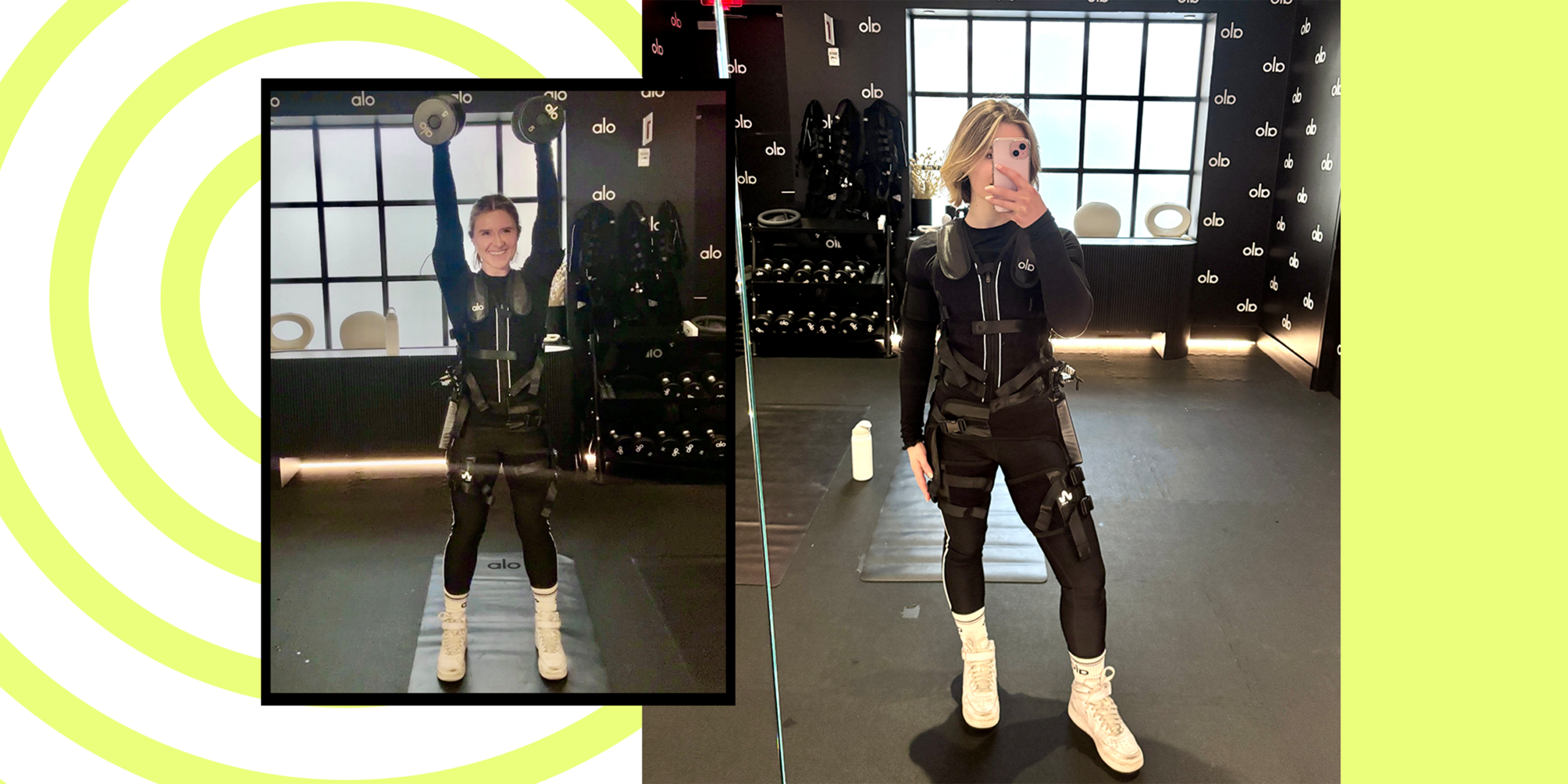
Still, when I got invited to try an EMS workout at the Alo gym in New York City, my interest was piqued (although, admittedly, I was a little scared to give it a try). Here’s an honest review of my experience with the workout, along with a look at what the EMS process entails. Spoiler alert: I felt like a human lab rat.
My First Impression
Before beginning the workout, the trainer sprayed down the electrode pads inside of the EMS suit with water to help conduct the electricity. Then, she helped me put on the suit, which had a bunch of straps and a battery pack. (I felt like a superhero—Scarlett Johansson in Black Widow, to be exact.) Using an iPad from across the room, she controlled the intensity and picked which areas of my body got more stimulation—so, I could ask for more in my legs or less in my core, for instance.
I believe the trainer started me on one of the lower levels of stimulation, but it still felt pretty intense: Immediately, I noticed strange vibrations everywhere, almost like I was being zapped or getting a weird massage. The sensation was the strongest in my left tricep and core—in fact, the vibrations at my center made it a little hard to breathe. So, I had to really focus on breathing intentionally while I was getting used to the stimulation.
The EMS Workout
As I adjusted to the vibrations, I started the warmup, which consisted of a squat to overhead press, and lunge to bicep curl and overhead press. Then, I dove into an instructor-led 20-minute arms-focused workout, which included the following exercises:
- Double-arm front raise with a plate
- Squat and twist to front press
- Isometric squat with wood chop
- Cable lat pushdown to tricep extension
- Cable face pull
- Single-arm cable row
- Kneeling cable twist
- Modified dumbbell renegade row
- Single-leg mountain climber
- Plank with single-leg crunch
Even though I was using weights that are normally light for me, I experienced a lot of resistance (it felt like I was lifting maybe 15 pounds heavier than I actually was.) The warmup was by far the hardest part because I was getting used to the EMS, and my legs were already sore from another workout that week.
After the first couple of exercises, I asked the trainer to lower the level of EMS a bit, especially in my core. I love some good core work, but it was hard to stay stable in exercises like cable twists and planks when my midsection felt so fatigued. Following the workout, I got to lay down for five minutes with the cooldown setting on. While there were still vibrations, they were minimal, and it almost felt like therapeutic tapping on my body.
Because the trainer had me do a ton of exercises with low weight, the workout seemed more endurance- than strength-based. Still, my body was supposed to have worked harder than usual, without the heavy weights, since the extra challenge to my muscles was all coming from the EMS suit—and, honestly, I felt it. I was more out of breath than I usually am after each exercise, and my muscles felt surprisingly fatigued by the end—especially considering I was using such low resistance, and all it took was 20 minutes.
As far as cons go, I just generally felt hesitant about doing the workout because I didn’t know too much about EMS going into this experience. I also didn’t want to push myself too hard just in case I got injured or passed out or something. Plus, when I straightened my elbows too much, they locked out and I couldn’t move them for a second, which was pretty scary in the moment.
Does EMS really work?
When you work out, you manually contract your muscles using signals that come from your brain. “When we use these EMS-type tools, we’re artificially, independent of the brain, having muscles contract,” Rothstein says. With the muscle contracting from the brain signals plus the EMS, “that actually could have some benefit in teaching the brain that it’s okay to allow a muscle to contract harder.”
Rothstein says that research from the last five years shows that there are potential benefits, such as increased muscle strength, function, lean body mass, and body recomposition. (However, this last benefit has been shown to be inconsistent in research.) “We can use muscle contraction with this technique to potentially gain strength and activate more muscle,” he says. “It does seem to actually cause some level of adaptation where we grow some muscle.”
Build muscle and lose fat with our exclusive WH+ body recomp guide
For instance, the previously mentioned PeerJ study had 28 adults either do daily EMS combined with resistance training or no EMS for eight weeks to see how it would affect muscle mass, strength, power, body composition, and parameters related to exercise fatigue. Those markers were evaluated before, during, and after the trial through a series of tests. The group that completed resistance training combined with daily EMS had significantly higher muscle mass and strength, plus lower-body fat, than the group that didn’t do EMS.
However, it’s unclear whether EMS makes that much of a difference compared to traditional resistance workouts. Another small Physical Activity and Nutrition study had 14 patients with obesity and knee pain perform lower-body strength exercises with and without EMS three days a week for 12 weeks. Both groups showed similar improvements in body composition, blood lipid levels, and functional ability—however, the EMS group had less pain and better knee extension muscle strength after.
Additionally, a 2023 study in Medicine had 39 healthy adults do 30 minutes of core strength training three times a week for eight weeks, one group training with EMS and one without. Metrics around physical performance and body composition were pretty similar between the groups.
Shop My Go-To Workout Gear

Fabletics On-The-Go Jumpsuit

R.A.D One V2
So, while EMS workouts could be a fun intervention to try if you’re curious, they’re not a magical end-all, be-all for pushing your training to the next level. If you do want to incorporate it into your fitness routine, Rothstein recommends using it in addition to your other workouts—not necessarily as your primary approach. “Any tool that is beneficial can eventually lose some of its benefit if it’s not used in conjunction with other things or it gets overused.”
Takeaways
In my experience, EMS was a fun, interesting workout to mix up my routine. It wasn’t the most challenging workout I’ve ever done—I could’ve pushed myself harder after the warmup or increased the resistance. But I was kind of freaked out by the electrical current aspect and the feeling of intense vibrations all over my body. Now that I’ve completed a workout, though, I’d try it again—and I’d be less hesitant to challenge myself a bit more next time.
If you’re someone who, like me, loves to infuse curiosity into their routine and test out trendy workouts, then I personally think it’s worth a try. EMS is definitely a strange feeling, but it was also cool to see how my body responded to the electrical stimulation and worked harder without having to think about manually locking in as much.
Want to give it a go? Beforehand, I’d recommend doing a little bit of research and maybe even chatting with your doctor first. There are some contraindications, including: pregnancy, blood pressure, heart, or kidney issues; or implanted medical devices like a copper IUD or pacemaker; along with other medical issues.
If you get cleared, look up the nearest workout studio that offers EMS workouts—then let the electrical currents do (some of) the work for you. Happy zapping!
Addison Aloian is the associate health & fitness editor at Women’s Health, where she writes and edits across the health, weight loss, and fitness verticals. She’s also a certified personal trainer through the National Academy of Sports Medicine (NASM). In her free time, you can find her lifting weights at the gym, running on the West Side Highway in New York City—she recently completed her first marathon, the 2025 New York City Marathon—and watching (and critiquing!) the latest movies that have garnered Oscars buzz. In addition to Women’s Health, she’s made an appearance on the Oprah Podcast and her work has also appeared in Allure, StyleCaster, L’Officiel USA, V Magazine, VMAN, and more.
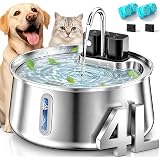
Selene Dog Water Fountain, 4L Stainless Steel Dog Water Fountain with Visual Water Level, Super Quiet Dog Water Bowl, 5-Stage Filtration Pet Water Dispenser, Easy to Clean - 4L
$86.99 (as of October 9, 2026 03:20 GMT +00:00 - More infoProduct prices and availability are accurate as of the date/time indicated and are subject to change. Any price and availability information displayed on [relevant Amazon Site(s), as applicable] at the time of purchase will apply to the purchase of this product.)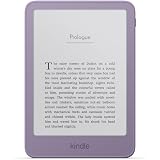
Amazon Kindle 16GB (newest model), Now thinner, lighter, and faster, 6" display, Ube
$149.99 (as of October 9, 2026 03:29 GMT +00:00 - More infoProduct prices and availability are accurate as of the date/time indicated and are subject to change. Any price and availability information displayed on [relevant Amazon Site(s), as applicable] at the time of purchase will apply to the purchase of this product.)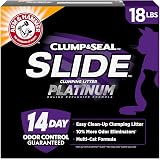
ARM & HAMMER Slide Platinum Easy Clean-Up Clumping Cat Litter, 18 lbs | 24/7 Odor Control, Triple-Action Freshness, Non-Stick, Low Tracking, 99.9% Dust Free, Multi-Cat Formula, Scented
$17.99 (as of October 9, 2026 03:11 GMT +00:00 - More infoProduct prices and availability are accurate as of the date/time indicated and are subject to change. Any price and availability information displayed on [relevant Amazon Site(s), as applicable] at the time of purchase will apply to the purchase of this product.)
DUMOS Dog Playpen 24 Inch 8 Panels Indoor Outdoor Metal Pet Fence | Foldable Dog Play Pen with Door, Portable Exercise, RV Camping, Puppy Small Medium Dogs
$38.99 (as of October 9, 2026 03:20 GMT +00:00 - More infoProduct prices and availability are accurate as of the date/time indicated and are subject to change. Any price and availability information displayed on [relevant Amazon Site(s), as applicable] at the time of purchase will apply to the purchase of this product.)













Post Comment