
Illinois Takes on Crypto with Controversial 0.2% Tax—But This Lawsuit Could Change Everything for Digital Assets!
Is Illinois really trying to pin a 0.2% tax on every single crypto transaction without even caring if you made a profit or a loss? Yeah, you read that right — whether you’re trading, moving funds between your own wallets, or just trying to stay afloat in this wild crypto sea, they want their cut. This blanket tax rule, slated to kick in by January 2027, doesn’t just slap a fee on gains but taxes the gross transaction value — on top of your usual capital gains tax no less. Naturally, the crypto community has been up in arms, and now The Digital Chamber (TDC), the main trade group fighting for crypto interests, has taken things beyond complaints, filing a lawsuit to block what they call an “unfair tax burden” on Illinois users and businesses. Cody Carbone, TDC’s CEO, didn’t mince words, highlighting how the tax provision sneakily appeared at the last minute — a move that feels more like a bait-and-switch than fair tax policy. So what’s next for crypto tax laws in the U.S., especially when no federal guidelines exist yet and states keep doing their own thing? Buckle up, because this legal battle might just be a sign of bigger things coming. LEARN MORE
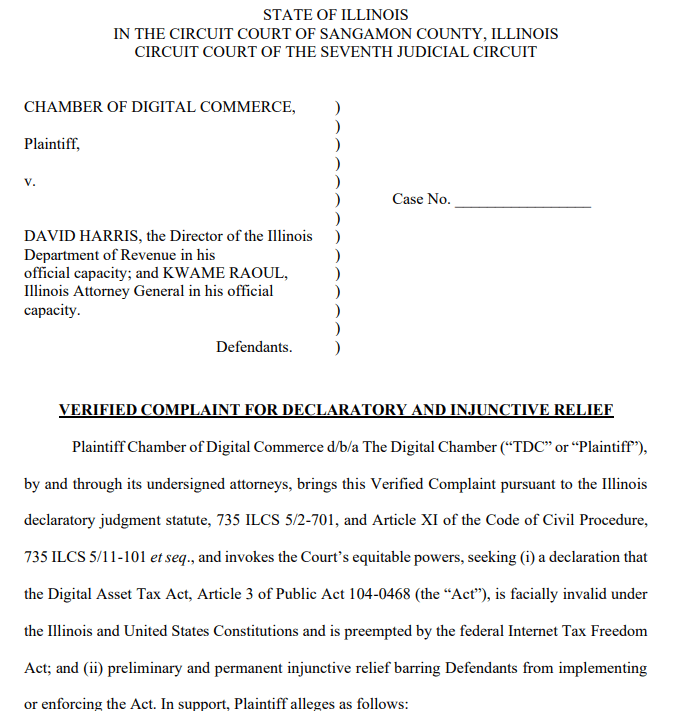
Crypto lobby group The Digital Chamber (TDC) has moved to block Illinois state’s 0.2% blanket digital asset tax rule.
In a lawsuit filed in Sangamon County, Illinois, the trade group argued the move would “address the unfair tax burden” the crypto tax rule would impose on users and businesses in the state.
Cody Carbone, the TDC CEO, added that,
Taxes should be carefully considered, not only for the revenue they produce but for the fairness of those being taxed. That was not the case here, as the provision slipped into legislation the night before the bill’s final consideration.
The Illinois law, set to become effective from January 2027, slaps a 0.2% tax on any crypto transactions. This applies to gross transaction value. In fact, it does not take into account whether you made a loss or profit or moved funds between your wallets.
Besides, you still have to pay the typical capital gains tax on top of this fee, making it one of the most punitive crypto tax regimes in the U.S.
Initially, the industry slammed the state for the crypto tax policy. Even state representative John Cabello introduced a measure to repeal the tax law, citing a lack of public committee hearing before its passage.
Beyond mere rhetoric from the industry, The Digital Chamber is the first one to make a legal push to remedy the situation. In the lawsuit, the trade group argued,
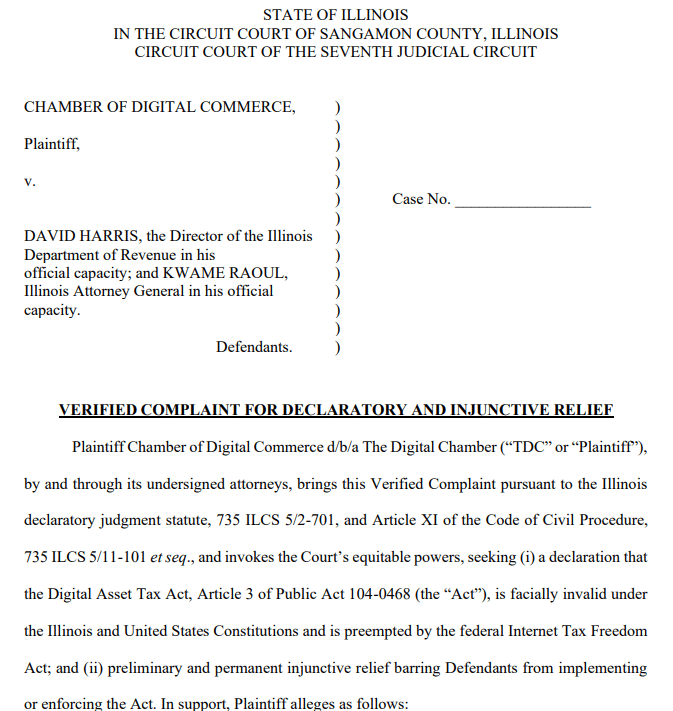
Plaintiff accordingly seeks a declaration that the Act is invalid and an injunction against its enforcement, because the Act violates the Illinois Constitution, burdens interstate commerce and is preempted by the Internet Tax Freedom Act.
The U.S. push for a federal crypto tax regime remains uncertain
The U.S. currently has no single federal crypto tax regime, leaving states to chart their own path for the same. However, there is a congressional push for crypto tax clarity, including treatment of mining and staking.
The recent proposals in the House were supported by the industry. In fact, the sector wants the bills to be passed as they are.
As of writing, the proposals have not even cleared the committee vote. Given the tight window ahead of the November elections, the tax bills may be delayed until next year.
Final Summary
- The crypto trade group, the Digital Chamber (TDC), has filed to block the Illinois crypto tax rule.
- A renewed push for the federal crypto tax regime could happen after the November midterm elections.

BarkBox LICKSTERS Peanut Butter & Beef Treat Refills - Medium and Large | Peanut Butter & Beef Recipe Dog Treats - Probiotics for Gut Health, No Corn or Soy, Made in the USA - For LICKSTERS Toy
$14.99 (as of October 15, 2026 03:21 GMT +00:00 - More infoProduct prices and availability are accurate as of the date/time indicated and are subject to change. Any price and availability information displayed on [relevant Amazon Site(s), as applicable] at the time of purchase will apply to the purchase of this product.)
Dog Allergy Relief Chews - Anti-Itch Skin & Coat Supplement with Omega 3 | Itchy Skin Relief Treatment with Fish Oil - Itching & Paw Licking Support - Dry Skin & Hot Spots Treats - Made in USA, 180Ct
$18.39 (as of October 15, 2026 03:21 GMT +00:00 - More infoProduct prices and availability are accurate as of the date/time indicated and are subject to change. Any price and availability information displayed on [relevant Amazon Site(s), as applicable] at the time of purchase will apply to the purchase of this product.)
30 PCS Cable Organizer for Desktop, Data Cable Management Ties, Wire & Network Routing Fixer
$2.70 (as of October 15, 2026 03:32 GMT +00:00 - More infoProduct prices and availability are accurate as of the date/time indicated and are subject to change. Any price and availability information displayed on [relevant Amazon Site(s), as applicable] at the time of purchase will apply to the purchase of this product.)
Red Raspberries, 6 oz
(as of October 15, 2026 03:09 GMT +00:00 - More infoProduct prices and availability are accurate as of the date/time indicated and are subject to change. Any price and availability information displayed on [relevant Amazon Site(s), as applicable] at the time of purchase will apply to the purchase of this product.)













Post Comment