
Iran’s Parliament Unlocks $12B for Central Bank—Is This the Game-Changer Investors Have Been Waiting For?
Imagine waking up one day to find $12 billion suddenly unlocked and sliding into your bank’s vault — with zero strings attached. Sounds like a plot twist in a financial thriller, right? Well, that’s exactly the scene playing out as Iran secures unfettered access to a whopping $12 billion in frozen assets, freshly defrosted from their international icy imprisonment. Parliament Speaker Mohammad Bagher Ghalibaf dropped this bombshell on June 23, revealing the deal inked with the United States that channels this cash directly to the Central Bank of Iran, half of it sourced from holdings in Qatar and beyond. But here’s the kicker — unlike past releases shackled to humanitarian spending, these billions come with no spending leash, sparking a tug-of-war between Tehran and Washington over how this money can be used. And just when you think this story couldn’t get more tangled, the U.S. simultaneously clamps down on Iranian crypto exchanges, underscoring a complex dance between thawing assets and tightening sanctions — a move that has investors on high alert. Curious how this high-stakes chess game impacts global markets and digital finance? Buckle up. LEARN MORE
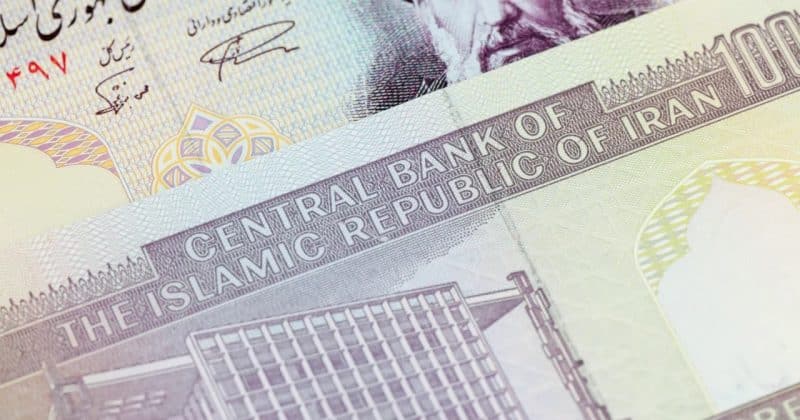
Iran just got $12 billion back. Parliament Speaker Mohammad Bagher Ghalibaf announced on June 23 that an agreement with the United States has been finalized to release $12 billion in frozen Iranian assets, with the funds heading straight to the Central Bank of Iran for unrestricted use.
The release comes in two separate $6 billion tranches, drawn primarily from holdings in Qatar and other foreign banks.
The details and the disagreement
Central Bank of Iran Governor Abdolnaser Hemmati confirmed that the released assets will not carry restrictions on their use. That’s a notable claim, because the US has previously insisted that similar asset releases be earmarked for humanitarian goods like food and medicine.
Hemmati specifically stated that Iran is not obligated to spend the money on American goods, directly contradicting US claims suggesting otherwise. The negotiations to unlock these funds reportedly began in Qatar before being concluded in Switzerland.
Discussions intensified in May 2026, with Iran demanding immediate access to the frozen funds. The US has not yet formally acknowledged the details of the asset release.
The crypto dimension
Just three weeks before this asset release was announced, the US Treasury went in the opposite direction on Iran’s digital financial infrastructure. On June 2, 2026, Treasury implemented sanctions against several Iranian digital asset exchanges, including Nobitex, one of Iran’s largest crypto trading platforms.
Washington is simultaneously agreeing to release $12 billion in frozen assets while cracking down on the crypto channels Iranians have used to move money outside the traditional banking system.
What this means for investors
The $12 billion asset release itself is unlikely to move crypto markets directly. The CBI will almost certainly deploy these funds toward stabilizing Iran’s currency, purchasing essential imports, and shoring up foreign exchange reserves that have been depleted by years of sanctions pressure.
The asset release is part of a larger set of discussions that include Iran’s oil exports and banking access. The US has not yet formally acknowledged the details of the asset release.
Investors holding tokens or using protocols that have any exposure to sanctioned jurisdictions should be paying close attention to how Washington follows up on the Nobitex sanctions. If additional Iranian platforms get designated in the coming weeks, it would suggest a broader enforcement campaign that could extend to other countries under US sanctions regimes, from Russia to North Korea to Venezuela.
Nespresso Vertuo, Barista Flavored Pack, Medium Roast, 30-Count Coffee Pods | Medium-Roast Coffee Capsules, Caramel, roasted hazelnut and sweet vanilla flavors
$39.07 (as of October 14, 2026 03:09 GMT +00:00 - More infoProduct prices and availability are accurate as of the date/time indicated and are subject to change. Any price and availability information displayed on [relevant Amazon Site(s), as applicable] at the time of purchase will apply to the purchase of this product.)
Roku Streaming Stick HD with Voice Remote | Compact 4K Streaming Device for TV with Roku Voice Remote & Long-Range Wi-Fi - Free & Live Local News, Sports
$38.09 (as of October 14, 2026 03:21 GMT +00:00 - More infoProduct prices and availability are accurate as of the date/time indicated and are subject to change. Any price and availability information displayed on [relevant Amazon Site(s), as applicable] at the time of purchase will apply to the purchase of this product.)
Apple AirPods Pro 3 Wireless Earbuds with Active Noise Cancellation | Live Translation, Heart Rate Sensing, Hearing Aid Feature, Bluetooth Headphones, Spatial Audio, USB-C Charging
$199.00 (as of October 14, 2026 03:21 GMT +00:00 - More infoProduct prices and availability are accurate as of the date/time indicated and are subject to change. Any price and availability information displayed on [relevant Amazon Site(s), as applicable] at the time of purchase will apply to the purchase of this product.)
Active Noise Cancelling Ear Buds Wireless Bluetooth Headphones 80H Playtime Display Charging Case 50dB ANC Over Ear Hooks Earbuds with Hi-Res Sound & Clear Calls for Sports Running Gym Workout Black
$89.96 (as of October 14, 2026 03:32 GMT +00:00 - More infoProduct prices and availability are accurate as of the date/time indicated and are subject to change. Any price and availability information displayed on [relevant Amazon Site(s), as applicable] at the time of purchase will apply to the purchase of this product.)












Post Comment