
Is the Cannabis Workout Revolution Just Hype, or the Next Big Fitness Game-Changer?

Ever found yourself dragging through a run, waiting forever for that elusive runner’s high to kick in, only to end up bargaining with your brain around mile seven—“Is three more miles really necessary?” Jude Cohen sure did. Then along came a curious twist in the tale: THC-infused gummies designed to turn the grind into a high-performance joyride. Sound like a cheat code for runners who want to feel the buzz without hitting the wall? Well, it’s pushing boundaries—and not just on the pavement. As more athletes swap the traditional runner’s high for something a bit more… elevated, the question looms—can cannabis really be a game-changer in fitness, or is it just a hazy detour? Buckle up; the marathon of science, sensation, and skepticism is just getting started. LEARN MORE
 12 min read
JUDE COHEN USED to have to wait until mile three or four before a runner’s high kicked in—if one kicked in at all. Her mindset predictably tanked, too, as her mileage wore on. “I would get to mile seven [of 10], and my brain would do this bargaining thing, like: Seven miles is already a long run. Why must I do another three? ” the 31-year-old New York City–based communications consultant says.
Then, in the spring of 2025, Cohen came across Offfield, a brand that makes “high-performance” cannabidiol drinks and gummies for “active individuals or athletes.” She was already using THC socially, often as a substitute for alcohol, and was planning to run the New York City Marathon as a charity entrant in the fall. Why not mix pleasure with pain? Despite her straitlaced childhood, shaped by ’90s messaging that all drugs “will lead you to a life of ruin,” she recalls, in adulthood Cohen came to appreciate that “some drugs actually can be very productive.”
And in this case, they were. With two Offfield chews, which contain three milligrams of THC as well as CBD and caffeine, in her system, Cohen no longer had to wait—or work—for a high. If she popped the edibles 30 minutes before heading out the door, “it would hit right at the beginning,” she says. As her distances, and subsequent gummy intake, increased, the voice in her head turned sunnier, too. I can do three miles in my sleep! it said at mile seven of 10. That’s easy.
While it’s hard to say if the cannabis made Cohen a faster runner—the 2025 marathon, which she finished in 5:17 and high on a cumulative 13 or so milligrams of THC, was her first—it certainly made her a less reluctant one. And a runner who wants to run is more likely to run, and the more a runner runs, in theory, the better she gets. Not that Cohen is eyeing the elites. In fact, she doesn’t even consider herself a runner at all. “Runners enjoy running,” she says. “I enjoy running high.”
For years, cannabis and wellness advocates have been challenging the perception of the Cheetos-munching stoner through competitions like the 420 Games (which ultimately faded after being acquired in 2019) and weed-friendly run clubs like Rage and Release in Brooklyn and Runners High Chicago. And some recreational athletes have long fancied lighting up before lacing up. One group of 131 cannabis users cited nearly 60 physical activities, from yoga to aerobic machines like the elliptical, they’ve spiced up to help them focus, enjoy the experience, and enhance the mind-body connection, according to a 2022 survey. The vast majority of participants (78 percent) had been exercising with a THC buzz for over three years at that point.
“Interestingly, a 2026 survey suggests that people who use cannabis or have used cannabis have lower BMIs, less risk for type 2 diabetes, better insulin resistance,” says Angela Bryan, PhD, a professor of psychology and neuroscience at the University of Colorado Boulder, whose subsequent work found that cannabis enthusiasts are more likely to meet exercise recommendations than nonusers.
But as cannabis becomes increasingly legalized and decreasingly stigmatized, brands like Offfield are packaging and selling the runner’s high as more of a performance and recovery aid (not just a feel-good way to slog through your workout). And more and more runners are buying in. Whether that’s a good thing is up for debate. “When people run under the influence, they have a better affective response—it feels better, they enjoy it more. But they tend to be slower,” Bryan says. “So it puts doctors in this uncomfortable position of: Does that mean we should be recommending that people exercise high? I don’t think the science is there yet.”
Tamanna Singh, MD, director of the Sports Cardiology Center at the Cleveland Clinic, draws a harder, and more existential, line. “For people who say, ‘If I don’t get the runner’s high, I don’t feel motivated,’ I think you need to ask yourself, ‘What is your relationship with running? What is your relationship with movement?’ Because the relationship with exercise is more than that high,” she says. “It’s the hard things that we do, the things where we are thinking, Oh my God, two, three more miles? How am I going to do it? And you do it. That’s where the actual learning and the strength and the fortitude come from.”


Pleasure vs. Pace
The concept behind THC athletic products makes some scientific sense (although the acute effects of cannabis on exercise remain unclear). Exercise triggers the release of endogenous opioids and endocannabinoids inside the body. These natural chemical compounds influence factors like mood, pain perception, and recovery and are thought to be largely responsible for the runner’s high. Likewise, cannabis introduces exogenous (from outside the body) cannabinoids. Taken together, they should give you more bang for your bong.
Bryan’s work demonstrates that’s often true. When she and colleagues asked 49 cannabis users about their experiences when going for a run after getting as high as they liked, they reported more positive effects and more feelings associated with the “runner’s high” (e.g., euphoria), as well as greater enjoyment and tranquility, than when they went for a lucid run of the same distance.
Cohen can relate. “I’ll go do six miles, and that will feel easy and fun and good because I’ve taken two gummies and I’m bumping disco and I’m running at sunset on the West Side Highway, and I’m just having a good time,” she says. “It puts me more in touch with the music that I’m playing. It really just puts me in a flow state.”
On the other hand, Bryan’s study found that runners’ THC-enhanced jaunts were, on average, 31 seconds slower per mile than their clearheaded runs. That’s likely because THC increases heart rate and therefore the rate of perceived exertion. “Doing the same run that you usually do at the same speed, your heart rate is going to be increased with THC on board, so it’s going to feel harder,” Bryan says. “So what people do, and what we’ve seen in our field study, is that they just slow down.”
Still, there’s more to exercising under the influence than an added mood boost, Offfield claims. The company, which did not respond to multiple interview requests, also promotes its products as an aid for everything from muscle recovery and inflammation regulation to digestive health and pain management, for health-conscious biohackers, professional athletes, and “late bloomers” to physical activity alike. Anecdotally, some athletes say they get high to support factors like sleep and appetite, which can theoretically, in turn, fuel their performance.

Dr. Singh, for one, is skeptical: Turning to CBD or THC to combat something like exercise-induced inflammation is missing the forest for the trees—or in this case, grass. Not only will eating well, training appropriately, and prioritizing sleep make a far bigger difference in exercise recovery, but the body’s natural response to inflammation works just fine for repair, adaptation, and ultimately improvement. “That’s a very complex process for which I don’t believe isolating one compound is gonna make or break it,” she says.
The idea that a gel or drink can be precisely calibrated to do it all may also be an overreach—at least for now, Bryan says. “What is the optimal ratio of THC to CBD?” she asks. “I think that the field is just too new at this point to really know.”
Plus, everyone’s different, emphasizes Jeff Konin, PhD, a clinical professor at Florida International University who studies, speaks about, and consults on marijuana use and performance among collegiate and professional athletes. Since there’s no way to ethically and rigorously confirm a direct cause-and-effect relationship between cannabis and athletic performance (because of how marijuana is classified by the Controlled Substances Act, researchers can’t give half a team some weed and the other half a placebo, not tell them who’s who, and see how they do, as you would in a clinical trial), each athlete has to be their own “n of 1,” he says.
“Every athlete I work with that uses [THC] will tell you there’s a benefit; otherwise they wouldn’t use it,” he says. “And they have their own reasons why, but all of those rationales are completely subjective.”

“I Was in the Matrix”
For most of the Philadelphia Marathon last fall, Val felt “great,” she says. Like Cohen, she’d been training with Offfield and had calculated that taking two chews, or three milligrams of THC and 40 milligrams of CBD, every hour (along with sports gels and candy) would power her to the finish line with just enough added lift.
But when she stopped to greet her cheering boyfriend around mile 18, her eyes were bloodshot. Her mannerisms were off. She almost dropped out. “I shifted one way to another, and it felt like I was in the Matrix,” says Val, a 32-year-old in New Jersey who asked me to use her nickname only. “I was like, ‘Oh my God, I am not baked. I am high as a kite!’ ” By the time she walked, with her boyfriend’s assistance, to the finish line, seven hours had passed since the beginning of the race. “I’m surprised I didn’t end up at the urgent care [tent],” she says.
Val’s tale is a cautionary one: Everyone’s body reacts differently, and overdoing it can be risky in a highly stimulating environment. A quarter of physically active cannabis users said they’ve had or might have had an experience “they didn’t anticipate or desire” while exercising high, like being too stoned to work out effectively, feeling their heart race, or getting lightheaded, according to the 2022 survey. Even Cohen said she threw up a few times during one training run because she didn’t “control for all of the variables,” like how a new brand of non-THC gummies and Offfield on a hot day after a too-big meal was too much fuel for her stomach.
“Mistakes can happen when you’re exhausted during a marathon,” says Kelly Roberts, a Brooklyn-based running coach and founder of Badass Lady Gang, a running community that helps recreational athletes ditch diet culture and focus on feeling strong. While Roberts says “a ton” of the women she works with, including Val, enjoy running high, and she supports them, it’s not for her: “I love a gummy, but I [physically] trip on everything sober, so the thought of running on one fills me with anxiety.”
There are other health considerations, too. Dr. Singh notes that higher doses of THC can lead to heart arrhythmias and anxiety. Smoking at all—the most common cannabis consumption method among those surveyed—not to mention before a workout, is not exactly running-expert endorsed. (It’s also worth mentioning that the dry mouth and other dehydration-like side effects that sometimes come with cannabis use are not a great match for physically taxing endurance activity.) And it’s important to talk to a health care professional about any potential interactions with medications you’re on. Val, for one, says she avoids taking Adderall for her ADHD on long run days, which are also the only days she runs high.
For Anakaren Ramirez, a 32-year-old business owner in the Chicago area, the potential risks pale in comparison to the mental, physical, and social benefits she gets from mixing wellness and weed. There’s a community aspect, too. After Ramirez carpooled to a turkey trot with Carlos Ramos, a new friend she’d met through the local cannabis scene (Ramirez runs a cannabis lifestyle brand and book club; Ramos founded a cannabis cocktail brand), Ramos hatched the “highdea” to start a marijuana-friendly run club.
“I was like, ‘That would be super cool because I [have] come to find out that I’m not the only one that consumes and runs,’ ” Ramirez remembers saying. “I wonder how many other people do this.”
So, a few years ago, Runners High Chicago was born. The group meets every Saturday at 9 a.m. at a predetermined, but frequently rotating, location. Almost everyone proceeds to take a puff (or two), pop gummies, or sip cannabis drinks, which are often donated by the brands. Participants then introduce themselves to any newcomers before heading off to complete a 4.20-mile run. Once a month they clean up trash, too. Ramirez says some members drive 45 minutes just to join the pack, which includes folks of all ages (over 21), ethnicities, family situations, and professions.
“This group of people who do consume are just very easygoing, always happy, and I feel like cannabis has been like an icebreaker for a lot of the people that join us,” she says. “It helps bring a lot of people’s guards down.”


Legal and Regulatory Buzzkills
It’s worth considering the potential legal implications of running high, especially if you’re an elite (or close to elite) athlete. Cannabinoids are banned by the World Anti-Doping Agency—in part because they’re performance enhancing, but also because they can harm athletes’ health, review papers show, and violate the “spirit of sport.” Even a product with CBD but not THC can be risky for high-level athletes, Dr. Singh says.
“There are more than 100 other various cannabinoids that exist, so the likelihood of having a positive doping test is not negligible,” she says. “For that reason, anyone who’s really competitive, from a sports perspective, I would advocate against [using CBD], because that directly could impede their ability to progress.”
Even runners not at risk of being tested should be aware of the (lack of) regulation around these products and how other, potentially harmful, ingredients can creep in, Konin says. One study found that nearly half of cannabis flower products are inaccurately labeled, with most advertised as containing more THC than they really do. Other reports have shown that unregulated vape cartridges, for example, can be contaminated with everything from insecticides to nicotine. And while responsible brands have a QR code on their labels that leads consumers to a certificate of analysis (COA), which should reveal exactly what the product contains, COAs can be biased, if they exist at all.

“It’s not like a pharmaceutical product, where I gave you that bottle of ibuprofen and, no matter where you buy it, it’s the same pill everywhere,” Konin adds. “The cannabis plant, the strength of it, maybe pesticides that were sprayed on it in the field where it grew—it’s not regulated; every single one is different.”
One thing most experts aren’t so worried about in this population, though, is dependence. “People who use super-high-THC products, 70 percent or more, on a near daily basis, that’s where we see hallmarks of addiction. They can build tolerance, they experience withdrawal, and so that’s where we really see the problem,” Bryan says. “Somebody taking a five-milligram gummy when they go for a run, honestly, it’s not much of a concern at all.”
The concern may wind up being more about access. Due to potential impending changes to the 2018 Farm Bill, which legalized hemp and spawned the currently booming market, athletes’ and others’ ability to buy their THC products of choice might get more limited, starting as soon as November 2026. Bryan has heard rumblings that there could be exceptions for certain products, like those used in research, but until the political process plays out, how those decisions will affect availability remains to be seen.
Konin, for his part, hopes the future holds brands to higher standards. “If there’s formal regulation—meaning the products have to be screened, they have to meet certain standards—then I think you only have left the good players with the legitimate products,” he says. “And the folks that are out there looking to make a quick buck or don’t have a legitimate product won’t be in the business.”

Dab and Dash
For now, cannabis-curious recreational athletes should start low and slow, experts agree. That means sticking only to activities you’re already very comfortable with, and experimenting with just a few milligrams on short runs before extending your mileage and potentially your cannabis intake. (FYI, there’s no set rule of thumb for how far in advance to take it prior to a run, as “the makeup of the gummy will determine the ingredients and how long it takes for them to be digested and act on the body,” says Konin.)
Its perceived benefits do have a limit. “More is not better,” says Konin, who founded the International Cannabis in Sport Academy. When he works with athletes who swear a certain gummy, drink, or number of smokes improves their performance, he doesn’t quibble about the lack of rigorous data supporting their claims. Rather, he helps them learn at what point consumption impedes their ability to reach their goals. That may mean tracking things like progress in the weight room or quality of sleep, and dialing back the habit when it lacks a return on investment. “Ask yourself the question Why am I using this, and will it then serve the right purpose for the condition…or the situations I’m trying to achieve? ” he says.
And, as always, don’t try anything new on race day. “Keep your fun gummies very separate from your fueling gummies…and only take what you intend to consume during the race,” Roberts advises. “Then practice on a few long runs to make sure you feel confident in a hectic environment stoned.”
Val learned this too late. But her experience in Philadelphia didn’t turn her off from running high altogether. Instead, she dialed back her intake to two chews every two hours instead of hourly. Her next marathon, in Orlando, went much smoother—and faster. And if the cannabis helped get her there, who’s to judge? Val picked up running just six years ago to cope with the stress of the pandemic and childhood abuse. She’s since lost 60 pounds and finished three marathons and five half-marathons.
“Seeing what my body endured when I was younger to what I’m doing now? I’m a badass. I am strong,” she says. “My body and I are capable of doing so much.”

Anna Medaris is a freelance health and lifestyle journalist with nearly 15 years of experience writing features, narratives, explainers, and news hits for publications including the Washington Post, Business Insider, Cosmopolitan, and US News & World Report. She lives in Brooklyn with her husband and basset hound. Follow her at @AnnaMedaris on X and Instagram.
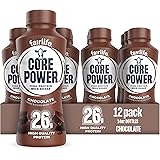
Core Power Fairlife 26g Protein Milk Shakes, Liquid Ready To Drink for Workout Recovery, Chocolate, 14 Fl Oz Bottle (Pack of 12)
$41.88 (as of October 16, 2026 03:09 GMT +00:00 - More infoProduct prices and availability are accurate as of the date/time indicated and are subject to change. Any price and availability information displayed on [relevant Amazon Site(s), as applicable] at the time of purchase will apply to the purchase of this product.)
Medium Hass Avocado
(as of October 16, 2026 03:09 GMT +00:00 - More infoProduct prices and availability are accurate as of the date/time indicated and are subject to change. Any price and availability information displayed on [relevant Amazon Site(s), as applicable] at the time of purchase will apply to the purchase of this product.)
Frito-Lay Fun Times Mix Variety Pack, 40 Count
$21.31 (as of October 16, 2026 03:09 GMT +00:00 - More infoProduct prices and availability are accurate as of the date/time indicated and are subject to change. Any price and availability information displayed on [relevant Amazon Site(s), as applicable] at the time of purchase will apply to the purchase of this product.)
Amazon Basics Dog Poop Leak Proof Bags with Dispenser and Leash Clip, Unscented, 13" x 9" Large Size, 300 Count
$11.86 (as of October 16, 2026 03:11 GMT +00:00 - More infoProduct prices and availability are accurate as of the date/time indicated and are subject to change. Any price and availability information displayed on [relevant Amazon Site(s), as applicable] at the time of purchase will apply to the purchase of this product.)











Post Comment