
JPMorgan, Adobe, and Dell Sound the Alarm: Why 33 Industry Giants Are United in Blocking OKXICE’s Risky Tokenized Stock Gamble
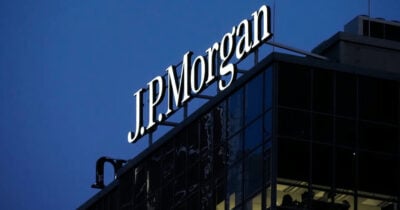
Imagine throwing a party and more than half your invited guests decide to ghost you—awkward, right? That’s exactly the vibe the OKX-ICE joint venture is facing as a whopping 33 out of the 62 major companies they approached have slammed the door on having their shares tokenized on their new blockchain trading platform. Big names like JPMorgan, Adobe, Dell, AMD, and Coca-Cola aren’t just politely declining—they’re making it clear they’d rather keep their stock off this digital dance floor for now. What’s going on here? Is it skepticism, a strategic retreat, or something deeper about the intersection of traditional finance and this brave new world of tokenized equities? The answer might just reshape how we view the future of trading itself. Buckle up, because this isn’t your typical market story—it’s a front-row seat to a high-stakes tug-of-war between innovation and legacy powerhouses. LEARN MORE
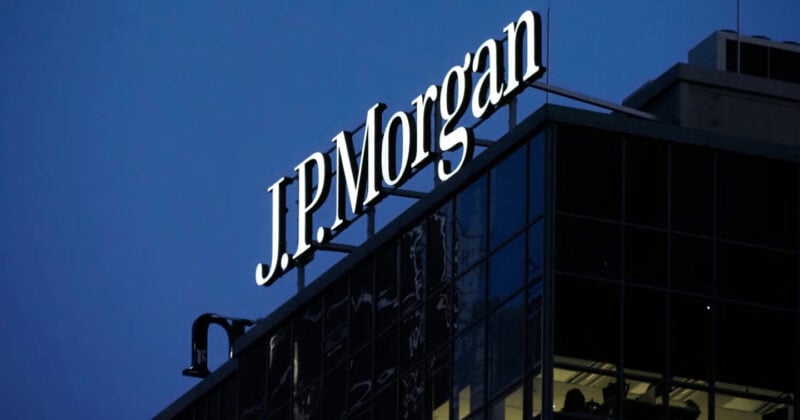
More than half of the 62 companies named by the OKX-ICE joint venture have now opted out of having their shares tokenized
JPMorgan has said no thanks. So have Adobe, Dell, AMD and Coca-Cola.
Seven more companies have objected to OKXICE’s plan to offer tokenized versions of their shares. That brings the total number of objectors to 33, more than half of the 62 companies the OKX-ICE joint venture originally named for its planned venue.
When the majority of your guest list RSVPs “decline,” it stops being a party and becomes a meeting about the party.
Who opted out this time
The latest batch arrived in an updated notice issued Tuesday evening. Alongside JPMorgan, AMD and Coca-Cola, the list added Applied Materials, Adobe, Dell and Sandisk.
That is a big bank, a beverage giant, a design software company and a cluster of chip and hardware names. The opposition is not coming from one corner of the market. It spans finance, consumer goods and tech.
The pushback also moved fast. According to the research findings, objections began with a single issuer and swelled to 33 within a few weeks.
The combined market value of the objecting companies is approximately $17 trillion, per the same research. Put simply, a huge slice of the most valuable corporate America has decided it does not want its stock living on this particular blockchain venue, at least for now.
How the opt-out process works
First, a quick primer. A tokenized stock is a digital token on a blockchain that represents a share of a real company. Think of it like a digital twin of the stock certificate, built to trade on crypto rails instead of a traditional exchange.
OKXICE’s plan operates under the SEC’s temporary “Innovation Exemption.” That framework lets tokenized National Market System stocks trade within certain caps and conditions. National Market System stocks are, roughly speaking, the shares listed on major US exchanges.
The catch is that the exemption gives issuers the right to opt out. Companies that do not want their shares tokenized can formally object, and many are using that right quickly.
Issuers have a 30-day window to lodge objections. The research notes that multiple updates to the notice have effectively stretched the objection timeline, giving companies more chances to raise their hands.
Every update so far has made the list longer. OKXICE probably did not plan for its notice to become a running tally of rejections.
As for the mechanics of the venue itself, the underlying stocks are slated to trade primarily in permissioned automated market maker pools on OKX’s X Layer network. An automated market maker, or AMM, is software that sets prices using pools of assets rather than matching individual buyers and sellers through an order book. “Permissioned” means access to those pools is restricted rather than open to anyone.
Background: a crypto exchange meets Wall Street plumbing
The joint venture pairs crypto exchange OKX with ICE, bringing a digital asset trading platform together with a name from traditional market infrastructure. The idea is to blend familiar equities with blockchain-based trading.
That kind of fusion has long been pitched as the next chapter for capital markets. Faster settlement and around-the-clock access are the usual selling points. But the theory of tokenized stocks has always depended on one practical question: will the companies behind the shares cooperate?
The Innovation Exemption answered part of that question by building in an opt-out. It created a regulatory path forward while leaving issuers with veto power over their own shares. OKXICE is now discovering how many of them intend to use it.
What this means for tokenized equities
The most immediate issue is the product itself. A tokenized stock venue is only as appealing as the names it can list. With more than half of the original roster now out, the lineup that remains looks noticeably thinner than the one first proposed.
The research findings argue that losing high-profile stocks could diminish the attractiveness of the offering. Many investors gravitate toward well-known issuers, and a venue missing JPMorgan, Coca-Cola and AMD has fewer of those to offer.
Liquidity is the next concern. AMM pools work best when they attract steady trading activity and deep reserves. Fewer marquee names could mean less activity overall, which can translate into wider price gaps and a choppier trading experience for those who do participate.
There is also a signaling problem. The research characterizes the wave of objections as a sign that traditional finance players are not yet ready to embrace full rights-bearing tokenized equities. Regulatory approval opened the door. A large part of corporate America apparently prefers to keep standing outside.
That matters well beyond OKXICE. Any future tokenized stock venue operating under a similar framework will face the same opt-out dynamic. If the largest issuers keep objecting, tokenized equities could remain confined to a smaller set of willing companies rather than the broad market their backers envision.
The pushback also feeds a larger policy debate. The research notes that skepticism from such a sizable portion of the capital markets could prompt wider discussion about how regulators balance innovation against investor protection. The Innovation Exemption is temporary, and how companies respond to programs like this one may shape what comes after it.
For OKXICE, the near-term watch list is simple. The first question is whether more of the remaining 29 companies object before the window closes. The second is how the venue adjusts its pitch if the final roster keeps shrinking. A product originally built around 62 names may end up launching with something closer to a short list.
For the broader tokenization push, the episode serves as a reality check. Regulators can create a lane for new trading models, but issuers still get a say in whether their shares drive in it. Right now, a majority of OKXICE’s chosen companies are choosing to stay parked.
Disclosure: This article was edited by Vivian Nguyen. For more information on how we create and review content, see our Editorial Policy.

Amazon Kindle 16GB (newest model), Now thinner, lighter, and faster, 6" display, Ube
$149.99 (as of October 28, 2026 03:34 GMT +00:00 - More infoProduct prices and availability are accurate as of the date/time indicated and are subject to change. Any price and availability information displayed on [relevant Amazon Site(s), as applicable] at the time of purchase will apply to the purchase of this product.)
Amazon Basics Leak-Proof Dog and Puppy Potty Training Pee Pads with Quick-Dry 5-Layer Super Absorbent Design, Regular Size 22 x 22 inch, Blue & White, 100 Count
$19.20 (as of October 28, 2026 03:14 GMT +00:00 - More infoProduct prices and availability are accurate as of the date/time indicated and are subject to change. Any price and availability information displayed on [relevant Amazon Site(s), as applicable] at the time of purchase will apply to the purchase of this product.)
8-in-1 Power Strip, Round USB & Type-C Fast Charging Station for Phones | 8-in-1 design with built-in charging ports eliminates extra charging heads, reducing cable clutter for home and office use.
$3.90 (as of October 28, 2026 03:34 GMT +00:00 - More infoProduct prices and availability are accurate as of the date/time indicated and are subject to change. Any price and availability information displayed on [relevant Amazon Site(s), as applicable] at the time of purchase will apply to the purchase of this product.)
Monster Energy Zero Ultra, Sugar Free Energy Drink, 16 Ounce | Pack of 15
$26.98 (as of October 28, 2026 03:14 GMT +00:00 - More infoProduct prices and availability are accurate as of the date/time indicated and are subject to change. Any price and availability information displayed on [relevant Amazon Site(s), as applicable] at the time of purchase will apply to the purchase of this product.)












Post Comment