
Matthew Lillard Uncovered: The Relentless Drive Behind Hollywood’s Most Unstoppable Force

Ever wonder what it feels like to get a surprise phone call that flips your entire career outlook? Picture this: Matthew Lillard, in the middle of filming the original Scream, just wanting to wish his mom a happy birthday, only to have director Wes Craven pick up the phone and tell her straight up that her son’s destined for an Oscar. Talk about a power move! Three decades later, that moment still fuels Lillard’s journey—a career packed with wild twists, from being a killer in a horror classic to the lovable Shaggy in Scooby-Doo. Now, riding a wave of renewed fan love, he’s stepping into Mike Flanagan’s Carrie, proving that sometimes, the unexpected routes prove the most rewarding. Curious how a casual lunch about Dungeons & Dragons led to a role in Stephen King’s universe? Buckle up, because this story dives deep into friendship, grit, and how loyalty in Hollywood can really pay off—no matter the size of the spotlight. LEARN MORE
There was one phone call Matthew Lillard wanted to make while filming the original Scream—to wish his mother a happy birthday. He approached director Wes Craven, seated beside producer Marianne Maddalena, to use the only phone on set. The two had been discussing Lillard’s future, and Craven told him they believed he’d someday win an Academy Award. “I thought, well I have to tell my mom that now when I call,” Lillard recalled. Instead, Craven picked up the phone himself. “Ms. Lillard, this is Wes Craven. I just want to tell you someday your son’s going to win an Academy Award.” Three decades later, Lillard still carries that moment with him, a reminder that someone he deeply respected believed in him.
Lillard has spent much of his career playing characters who couldn’t be more different. He was Stu Macher, one of the original Ghostface killers in Scream, before bringing Shaggy Rogers to life in Scooby-Doo. His credits also include She’s All That, Good Girls and Five Nights at Freddy’s, to name a few. Now he’s appearing in Mike Flanagan’s Carrie, amid what he calls a “weird resurgence” of fan interest in his earlier roles. It’s an unexpected description for an actor whose characters have remained familiar to audiences, even during the quieter periods of his career.
In the just-released Carrie, Lillard plays the school’s principal, a role that grew out of his friendship with Flanagan. They first met through a mutual friend and ended up talking for three hours over lunch, mostly about their kids and Dungeons & Dragons. “I didn’t know the stakes were this high when I met him,” Lillard joked. “If I would have known how high they were when we had lunch, I probably would have dressed better.” Flanagan promised they’d work together someday. Lillard had heard that in Hollywood before: “If I had a dollar for every time somebody said to me, ‘We’re going to work together,’ I’d be a very rich man.”
“Mike Flanagan does not make mistakes.”
But Flanagan kept his word, offering him a small part in The Life of Chuck despite its limited budget. Lillard, who’d fallen in love with Midnight Mass after their lunch, accepted immediately and became part of the “Flannifam,” Flanagan’s circle of recurring collaborators. The director told him he’d call whenever he had a part in mind, and that turning down one offer wouldn’t rule out another. Lillard points out that directors and stars sometimes develop long-running partnerships, but “normal blue-collar working actors don’t really have that.”
“Choice is the ultimate luxury as an actor,” he said. For Lillard, the opportunity to work with a filmmaker he admires matters more than the size of the role. “If I want to be in your world, I don’t care about the size. I’m in.”
That relationship brought Lillard into Stephen King’s world with Carrie, a story famously adapted by Brian De Palma in 1976 with Sissy Spacek. “The De Palma film is iconic and everyone loves it,” he said. “You don’t do Carrie again unless Mike Flanagan has an amazing reason to do it.” Lillard explained that Flanagan was inspired by a story about an anonymous social-media account that caused turmoil in a Southern California community. The series explores how bullying can follow a teenager home, long after the school day ends. “Bullying has changed” in the five decades since King wrote the book, he said.
Filming Carrie’s infamous prom scene required about two weeks of overnight shoots in Vancouver, with around 200 extras, long hours and elaborate effects. One unexpected challenge was the crown on Carrie’s head. “The biggest problem is the crown kept coming off,” he explained, recalling how the blood drop knocked it from Summer H. Howell’s head. But his lasting impression was of Howell herself, who endured days covered in fake blood without complaint. “I’ve never seen an actor of any age sort of go through that process with zero complaining,” he said.
As for the series’ open-ended finale, Lillard assures viewers that the ambiguity is intentional. “Mike Flanagan does not make mistakes,” he said.

This December marks 30 years since Scream introduced Ghostface to the world. “I don’t think that anyone in that moment realized that we were making an iconic movie,” Lillard recalled. “I think that we all just sort of assumed we were making another horror movie.” When original Scream writer Kevin Williamson called about Scream 7, Lillard stepped away from a business conversation to answer the call. Hearing the invitation, “I literally looked at the sky,” he remembered. “Oh my God, I couldn’t be more excited.”
“I don’t think that anyone in that moment realized that we were making an iconic movie.”

The Farmer's Dog Snap Sticks, Human Grade Dog Treats, Beef & Apple 3oz | Human-Grade Dog Treats for Puppies and Adult Dogs, For All Ages, Sizes and Breeds
$11.99 (as of October 23, 2026 03:23 GMT +00:00 - More infoProduct prices and availability are accurate as of the date/time indicated and are subject to change. Any price and availability information displayed on [relevant Amazon Site(s), as applicable] at the time of purchase will apply to the purchase of this product.)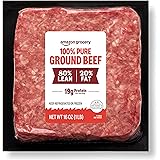
Amazon Grocery, Ground Beef, 80% Lean/20% Fat, 1 lb
(as of October 24, 2026 03:13 GMT +00:00 - More infoProduct prices and availability are accurate as of the date/time indicated and are subject to change. Any price and availability information displayed on [relevant Amazon Site(s), as applicable] at the time of purchase will apply to the purchase of this product.)
Medium Hass Avocado
(as of October 24, 2026 03:13 GMT +00:00 - More infoProduct prices and availability are accurate as of the date/time indicated and are subject to change. Any price and availability information displayed on [relevant Amazon Site(s), as applicable] at the time of purchase will apply to the purchase of this product.)
Soundcore P30i by Anker Noise Cancelling Earbuds, Hands-Free Viewing | Strong and Smart Noise Cancelling, Powerful Bass, 45H Playtime, 2-in-1 Case and Phone Stand, IP54, Bluetooth 5.4
$27.99 (as of October 23, 2026 03:23 GMT +00:00 - More infoProduct prices and availability are accurate as of the date/time indicated and are subject to change. Any price and availability information displayed on [relevant Amazon Site(s), as applicable] at the time of purchase will apply to the purchase of this product.)












Post Comment