
Moderna’s Visionary Bob Langer and AI Genius Yann LeCun Team Up with Cellular Intelligence—Here’s Why This Could Revolutionize Medicine (And Your Next Investment)

Imagine snagging a dream team so stellar that it looks like the Avengers of biotech just showed up for a brainstorming session. That’s exactly what Cellular Intelligence managed, assembling a scientific advisory board featuring Robert “Bob” Langer—yes, the co-founder of Moderna and arguably the most cited engineer in history—and Yann LeCun, Meta’s AI whiz and a Turing Award winner. If you’re wondering what happens when cutting-edge AI brains team up with biotech legends, you’re onto something big. This company is crafting a future where understanding cell biology could become as game-changing as large language models have been for text. Throw in heavy hitters like Jens Nielsen from Novo Nordisk Foundation and Fabian Theis from Helmholtz Munich, and you’ve got a biotech startup blueprint that most companies would kill for. But here’s a question worth pondering: Can Cellular Intelligence actually rewrite the rules of regenerative medicine and predict cellular behavior with the precision of an AI whisperer? Let’s dive in and unravel what’s making waves in this electrified mix of biology and artificial intelligence. LEARN MORE

Cellular Intelligence just assembled the kind of scientific advisory board that most biotech startups can only daydream about. Robert “Bob” Langer, co-founder of Moderna and arguably the most cited engineer in history, and Yann LeCun, Meta’s chief AI scientist and a Turing Award winner, have both signed on to advise the company as it tries to do for cell biology what large language models did for text.
Alongside Langer and LeCun, two other heavyweights joined the scientific advisory board on Monday. Jens Nielsen, CEO of the Novo Nordisk Foundation’s BioInnovation Institute, and Fabian Theis, who directs the Computational Health Center at Helmholtz Munich, round out the new additions. Langer is also joining the company’s board of directors as an observer.
What Cellular Intelligence actually does
The company, originally known as Somite AI, rebranded to Cellular Intelligence in January 2026 and released a white paper outlining its vision for what it calls “cell fate engineering.” The analogy the company draws is to AlphaFold, DeepMind’s breakthrough in protein structure prediction. Where AlphaFold made it possible to predict how proteins fold, Cellular Intelligence wants to make it possible to predict how cells respond to sequences of biochemical signals.
Their approach relies on a proprietary capsule-based platform that can run massive numbers of experiments simultaneously. The company has scaled from an initial 27,000 experimental conditions to over 1 million unique sequential signal combinations. That dataset then feeds transformer-style AI models trained specifically on dynamic cellular responses. The efficiency claim is striking: their capsule technology reportedly offers more than 1,000x the throughput of conventional methods.
The founding team includes Micha Breakstone, a repeat AI entrepreneur, alongside professors from Harvard Medical School, MIT, and the University of Washington, several of whom hold National Academy memberships. The company was founded between 2023 and 2024.
Parkinson’s therapy and Novo Nordisk’s bet
In May 2026, the company acquired STEM-PD, an allogeneic cell therapy program for Parkinson’s disease, from Novo Nordisk. The program already holds FDA Fast Track designation and is ready for Phase 2 clinical trials. Novo Nordisk simultaneously made a strategic equity investment as part of the deal.
On the leadership front, the company appointed Arjun Raj as Chief Scientific Officer in August 2026, further integrating computational approaches into its research operations.
Funding and competitive positioning
Total funding for Cellular Intelligence sits between $62 million and $70 million. The largest chunk came from a $47 million Series A round in May 2025, led by Khosla Ventures. The Chan Zuckerberg Initiative, AMD Ventures, and other backers also participated.
What distinguishes Cellular Intelligence from competitors like Recursion Pharmaceuticals, Isomorphic Labs, and Insilico Medicine is its specific focus on cell signaling dynamics rather than molecular structure or drug-target interactions. Regenerative medicine relies on engineering living cells to treat disease, requiring the orchestration of a sequence of biological events that transforms one cell type into another — a fundamentally different challenge than traditional small-molecule drug development.

Blueberries, 1 Pint
(as of October 13, 2026 03:09 GMT +00:00 - More infoProduct prices and availability are accurate as of the date/time indicated and are subject to change. Any price and availability information displayed on [relevant Amazon Site(s), as applicable] at the time of purchase will apply to the purchase of this product.)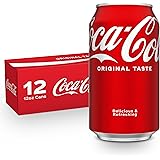
Coca-Cola Soda Soft Drink Fridge Pack Cans, 12 fl oz, 12 Pack | Carbonated drink with classic cola flavor
$7.68 (as of October 13, 2026 03:09 GMT +00:00 - More infoProduct prices and availability are accurate as of the date/time indicated and are subject to change. Any price and availability information displayed on [relevant Amazon Site(s), as applicable] at the time of purchase will apply to the purchase of this product.)
INABA Churu Cat Treats, Lickable, Squeezable Creamy Purée Cat Treat with Green Tea Extract & Taurine, 0.5 Ounces Each Tube, 50 Tubes, Tuna & Chicken Variety
$32.96 (as of October 13, 2026 03:11 GMT +00:00 - More infoProduct prices and availability are accurate as of the date/time indicated and are subject to change. Any price and availability information displayed on [relevant Amazon Site(s), as applicable] at the time of purchase will apply to the purchase of this product.)
Miracle Vet Medicated Dog Shampoo for Itchy Skin Relief 8 fl oz | Antifungal for Dog Allergy Relief, Yeast Infection, Hot Spot & Dry Skin Anti-Itch Treatment Wash - Hydrocortisone
$16.99 (as of October 13, 2026 03:21 GMT +00:00 - More infoProduct prices and availability are accurate as of the date/time indicated and are subject to change. Any price and availability information displayed on [relevant Amazon Site(s), as applicable] at the time of purchase will apply to the purchase of this product.)












Post Comment