
Noel Cunniffe Reveals the Hidden Forces Shaping Tomorrow’s Market — Are You Ready to Ride the Winds of Change?
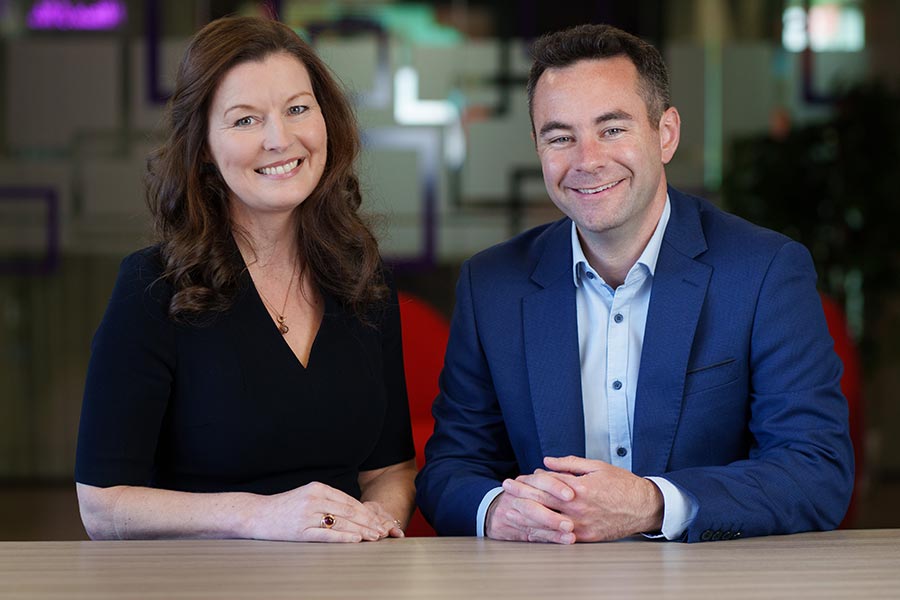
Ever wonder how much of our electricity actually rides on the back of the Irish wind? Spoiler alert: it’s about a third, and frankly, it’s one of Ireland’s biggest energy wins—not bad for a country that kicked off its first onshore wind farm way back in ’92 in Mayo. Noel Cunniffe, the sharp mind steering Wind Energy Ireland, dives deep into the nitty-gritty with Sarah Freeman, dishing out the realities behind the numbers, the hurdles offshore wind faces despite booming support, and what all of this means for our wallets and future. From the gridlock in planning to the grand vision of Ireland as a mighty electrostate powered by relentless winds and sunshine, the conversation tackles it head-on. Curious about the game-changing strategies and whether nuclear is just a distracting side-show? You’re in the right place to get the lowdown straight from the source. Buckle up—it’s a wind-fueled ride that’s shaping the island’s energy destiny. LEARN MORE
Noel Cunniffe, CEO of Wind Energy Ireland, the representative body of the Irish energy industry, talks to Sarah Freeman about its current state.
How much of our power comes from wind farms currently?
Onshore wind energy is probably one of this country’s greatest energy success stories, with about a third of Ireland’s electricity coming from onshore wind energy every single year.
The very first onshore wind farm started life back in Mayo in 1992 and over the last 34 years we’ve added wind farms in different parts of the country.
They’ve modernised, they’ve developed, and they’re now producing about a third of Ireland’s electricity.
How much of a financial difference does it make to consumers?
Substantial, but it’s a very hard story to tell, actually, because we’re always hearing about how expensive Irish electricity bills are in comparison to other countries in Europe. Incredibly if [we] didn’t have wind energy, those bills would be even greater.
Wind energy pushes the most expensive fossil fuel plants off the system. The operators of the grid choose the most affordable forms of energy to meet Ireland’s electricity demand every single day.
So, the wholesale price of electricity in March on the days when we had the most renewable energy available was €94, and then in March when we didn’t have any renewables available it went up to €180. So that gives you a sense that it’s nearly double the price on the non-windy days.
Wind energy is not free and I don’t think we should pretend it is. But even with all the costs versus benefits, wind energy is now saving consumers to the tune of about €150 per year in their real bills.
Delays to offshore wind energy projects continue, notwithstanding the support. Why?
Ireland’s story with offshore wind energy is a challenging one. Would you believe that we were one of the world leaders in offshore wind when our first offshore wind firm was built back in 2004?
It was the largest in the world at the time, and we really started off with high hopes and high prospects, but since then we have faltered as a country. We haven’t progressed it anywhere near as fast as we should, while our neighbours in Britain, Denmark, Germany, [the] Netherlands [have] progressed at speed with this.
A lot of that had to do with needing to update our systems. We needed to update our legislation to be able to build these projects in order to apply for planning; we needed to put in place new regulators; new planning systems; and ultimately figure out how we connect them to the electricity grid too.
So, at the moment we have five projects off Ireland’s east coast that are in the consenting process. They’re with An Coimisiún Pleanála, and we anticipate that the first of those projects will receive a planning decision in September this year. The second one should be [around] November, and then, all going well, those projects will be generating electricity to the people of Ireland in 2030.
What are some of the challenges to progress?
It all comes down to whether you get consent fast enough through the planning system and then, once you have that, can you connect onto our electricity grid? Those are probably the two most urgent issues that we are grappling with, be it onshore wind, offshore wind, solar energy [or] battery storage.
To be fair to the government, they’ve really stepped up in terms of the investment that they’re planning in our grid, and we will soon see the next 15- to 20-year plan for how that gets built out.
But these projects need support from politicians and leaders in society who recognise there will be some challenges with building pylons and overhead lines. Ultimately, if we don’t do it as a country, we’re not going to be able to advance as an economy and we’re going to be stuck with high electricity bills.
The scale of investment needed in the grid over the coming years means new projects. The North-South interconnector, which is connecting [from] just north of Dublin into Northern Ireland, is a very large infrastructure project and has been in development for over 20 years. We simply cannot, as an economy, afford that level of delay to other large electricity infrastructure projects.
The geopolitical climate is currently very unstable. Have you seen the debate on energy change over the last year or two?
People viewed the Russian invasion of Ukraine as something incredibly serious, but over time it felt like the urgency dithered and prices started to return. Not back to where they were pre-war in Ukraine, but they definitely started to slide back.
Now [with regard to the Strait of Hormuz] it’s our second massive energy crisis in less than five years.
As a country, [we] spend about a million euro every single hour importing fossil fuels from around the world. How do we wean ourselves off that?
The best way to improve energy security and to decarbonise is to put a plug on the device that you’re using, whether [it’s] a plug on your car or heating, because that allows you to tap into wind energy, solar energy and energy storage. It removes your reliance on petrol prices at the pump or home heating oil prices which have skyrocketed.
Our government has really taken our country’s weakness, when it comes to our reliance on these imported fuels, seriously. There are some really great new initiatives that our government and our energy regulator are working on to be able to deploy wind and solar at the same site, so that you can double up your connection to the grid to be able to export using wind when it’s windy [and] in solar farms when it’s sunny.
In terms of nuclear energy, I think it’s such a distraction [from] what we need to do in Ireland. If you think about the problem nuclear is trying to solve, which is mostly energy security, and some people would argue affordable energy, that problem will be solved already by the time we could build a nuclear power plant here in Ireland.
There’s no possibility of being able to build a nuclear power plant in Ireland before the 2040s.
There is general recognition that the large traditional nuclear power plants that we see in France and Britain wouldn’t be suited to Ireland.
Our country is too small from an electricity grid point of view. So we’re hanging our hat a lot on the small modular reactors and there are only two, to my knowledge, that are commercially available at the moment, one in China and one in Russia. It’s a technology that, in time, has potential, but we need to see that potential proven.
Tell us about the Electrostate strategy you announced at the start of the year.
Our vision is for Ireland to become an energy-independent electrostate. We’re one of the windiest countries in the world, and we have huge capability for onshore wind and offshore wind, so our ability to become energy independent and provide all of our energy ourselves can definitely be done. However, the storage question needs to be addressed.

Wind Energy Ireland is coming together with Solar Ireland and Energy Storage Ireland for the Renewable Energy Expo taking place in October in the RDS. What can attendees expect to see?
We’re delighted to be working with our partners in Solar Ireland and Energy Storage Ireland on this. We’ve had a wind expo for the last few years, and that’s where we’ve brought supply chain companies from Ireland and from all around the world to Dublin for two days to work on how we’re going to deliver the wind energy projects that we’ve spoken about this year.
We’re [now] expanding it to all renewables, so we’ve got wind, solar and storage all coming under one roof in the RDS in October, which I think is really exciting. It’s an opportunity to bring the whole industry together to really see what we can do to capitalise on the projects that are being deployed at the moment.
We’re expecting over 1,000 people there over the two days. So, if you are a business that’s involved in global energy, you’ll get access to global developers that are looking to build either offshore wind farms, solar or energy storage projects in Ireland. If you’re a supply chain company, I think it gives you an opportunity to talk to these developers and also to some of the larger global suppliers for offshore wind firms, for example.

Earth Rated Dog Poop Bags on Refill Rolls, 270 Bags, Lavender | Guaranteed Leak Proof and Extra Thick Waste Bag Refill Rolls
$14.99 (as of October 23, 2026 03:13 GMT +00:00 - More infoProduct prices and availability are accurate as of the date/time indicated and are subject to change. Any price and availability information displayed on [relevant Amazon Site(s), as applicable] at the time of purchase will apply to the purchase of this product.)
Open Ear Wireless Earbuds Bluetooth Headphones, 80H Playtime Stereo Ear Buds with ENC Noise Cancelling, Fast Charging, IPX7 Waterproof Sports Earphones with Earhook for Running/Workouts (Black)
$25.63 (as of October 23, 2026 03:33 GMT +00:00 - More infoProduct prices and availability are accurate as of the date/time indicated and are subject to change. Any price and availability information displayed on [relevant Amazon Site(s), as applicable] at the time of purchase will apply to the purchase of this product.)
Core Power Fairlife 26g Protein Milk Shakes, Liquid Ready To Drink for Workout Recovery, Chocolate, 14 Fl Oz Bottle (Pack of 12)
$41.88 (as of October 23, 2026 03:13 GMT +00:00 - More infoProduct prices and availability are accurate as of the date/time indicated and are subject to change. Any price and availability information displayed on [relevant Amazon Site(s), as applicable] at the time of purchase will apply to the purchase of this product.)
Smart Dog Bark Collar with Advanced Bark Detection, 4 Adjustable Training Modes, Beep, Vibration, USB-C Rechargeable Barking Collar, IP67 Waterproof, No Bark Collar for Small, Medium & Large Dogs
$29.99 (as of October 23, 2026 03:23 GMT +00:00 - More infoProduct prices and availability are accurate as of the date/time indicated and are subject to change. Any price and availability information displayed on [relevant Amazon Site(s), as applicable] at the time of purchase will apply to the purchase of this product.)













Post Comment