
RBI’s Crypto Crackdown: What India’s Top Banker Isn’t Telling You About the Looming Financial Storm
When it comes to cryptocurrencies, the Reserve Bank of India (RBI) isn’t exactly rolling out the welcome mat. In fact, their stance is crystal clear: virtual digital assets like Bitcoin are more of a menace than a boon to the Indian economy. Why? Because these crypto-assets operate in the shadows—outside the traditional banking system where oversight is practically non-existent. Imagine trying to police a marketplace you can’t even locate on a map. The RBI warns that this murkiness opens floodgates to a slew of illegal activities—money laundering, drug trafficking, and terrorism financing—fueling concerns that go beyond mere finance and touch the very fabric of national security. While European countries tread cautiously with stringent regulations, and nations like China and Qatar have slammed the crypto door shut entirely, India remains at a crossroads, juggling a tough debate about how to handle these digital wildcards.
But here’s the kicker—while the RBI is sounding alarm bells, the Institute of Chartered Accountants of India (ICAI) paints a contrasting picture, advocating for a regulated legal framework rather than an outright ban. They see an opportunity for crystal-clear accounting standards and financial transparency to keep things above board. Meanwhile, India continues to tax crypto trades without legalizing them, tightening the screws on compliance yet still leaving the space in a gray zone. So, the question stands: In a world where digital currencies are as real as the banknotes in your pocket, can India strike the right balance between caution and embracing innovation—or will it miss the boat entirely?
Reiterating its long-standing opposition to cryptocurrency legalization, the Reserve Bank of India (RBI) told the Parliamentary Standing Committee on Finance that virtual digital assets (VDAs), like Bitcoin [BTC] and other cryptocurrencies, pose serious risks to India.
The RBI asserts that because crypto assets function outside the established banking system and are therefore challenging to regulate and oversee, they have the potential to jeopardize financial stability.
The central bank also cautioned that since many trading platforms and service providers are based abroad and are unavailable to Indian regulators, cryptocurrencies can help with illegal activities like money laundering, narcotics trafficking, and financing terrorism.
Additionally, the RBI also mentioned during the meeting that European jurisdictions only allow digital assets under stringent regulatory frameworks. They even cited nations like China and Qatar that have completely banned crypto-related activities.
The ICAI shares a different viewpoint
On the other hand, the Institute of Chartered Accountants of India (ICAI) adopted a different position and advocated for the implementation of a thorough legal framework for VDAs rather than a prohibition.
To increase transparency and regulatory oversight, the ICAI stated that it could assist in the development of accounting standards, financial reporting principles, and compliance guidelines.
Accounting and Auditing for VDAs ICAI can undertake comprehensive research on the various forms of VDAs and analyse their economic characteristics. Based on such research, ICAI may develop detailed guidance on their recognition, measurement, presentation, and disclosure in financial statements.
This dual opinion comes as India’s government continues to tax cryptocurrency transactions without giving them legal status.
Even though the nation’s current crypto tax system is unaltered, AMBCrypto recently reported that India’s Union Budget 2026 established a more stringent compliance framework for the crypto industry by recommending fines for organizations that neglect to notify tax authorities of crypto-asset transactions.
Why does the RBI consider cryptocurrency a threat?
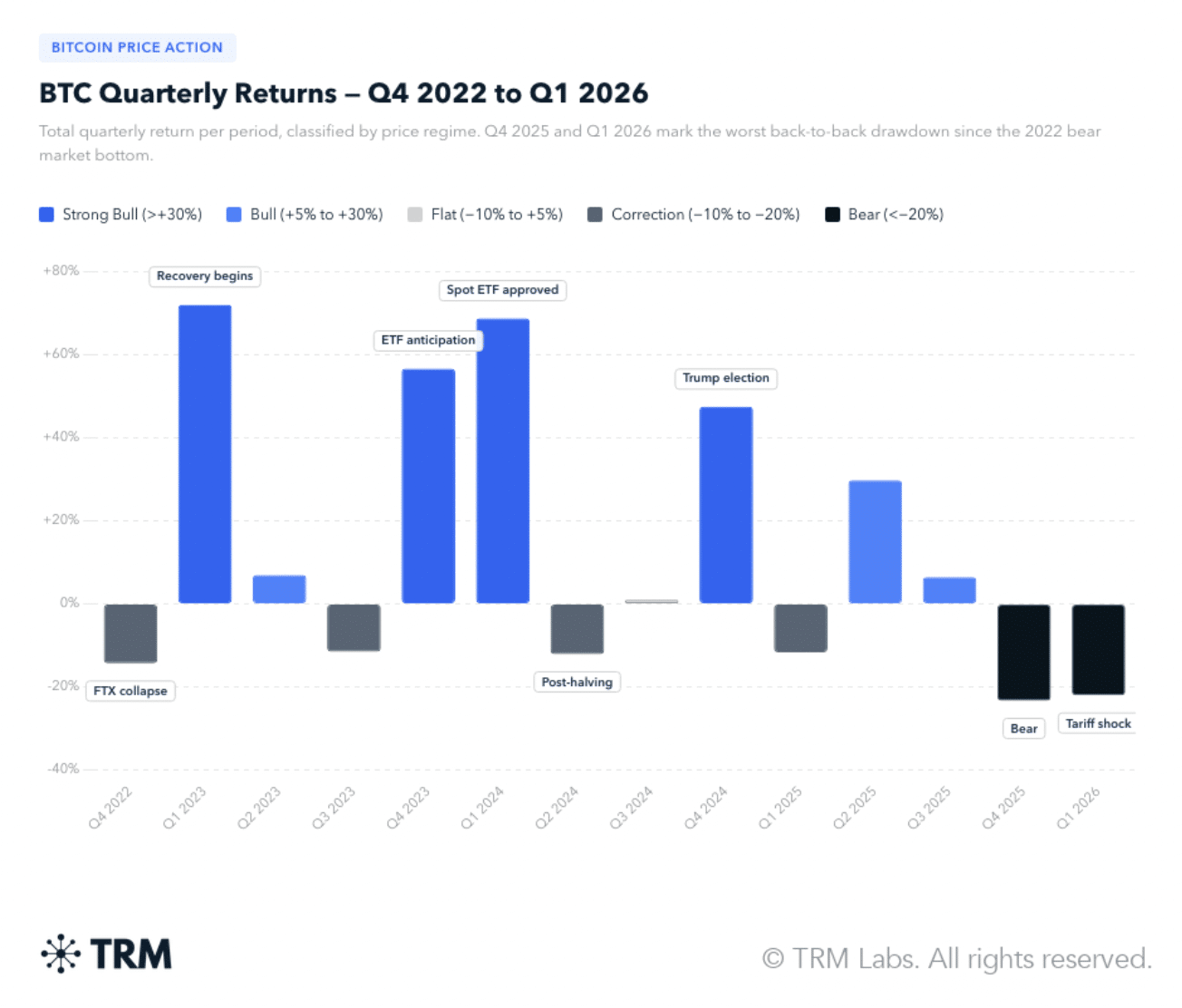
This comes after a two-quarter slowdown in retail cryptocurrency trading activity, which dropped to $979 billion in Q1 2026, an 11% year-over-year decline from Q1 2025, according to TRM Labs data.
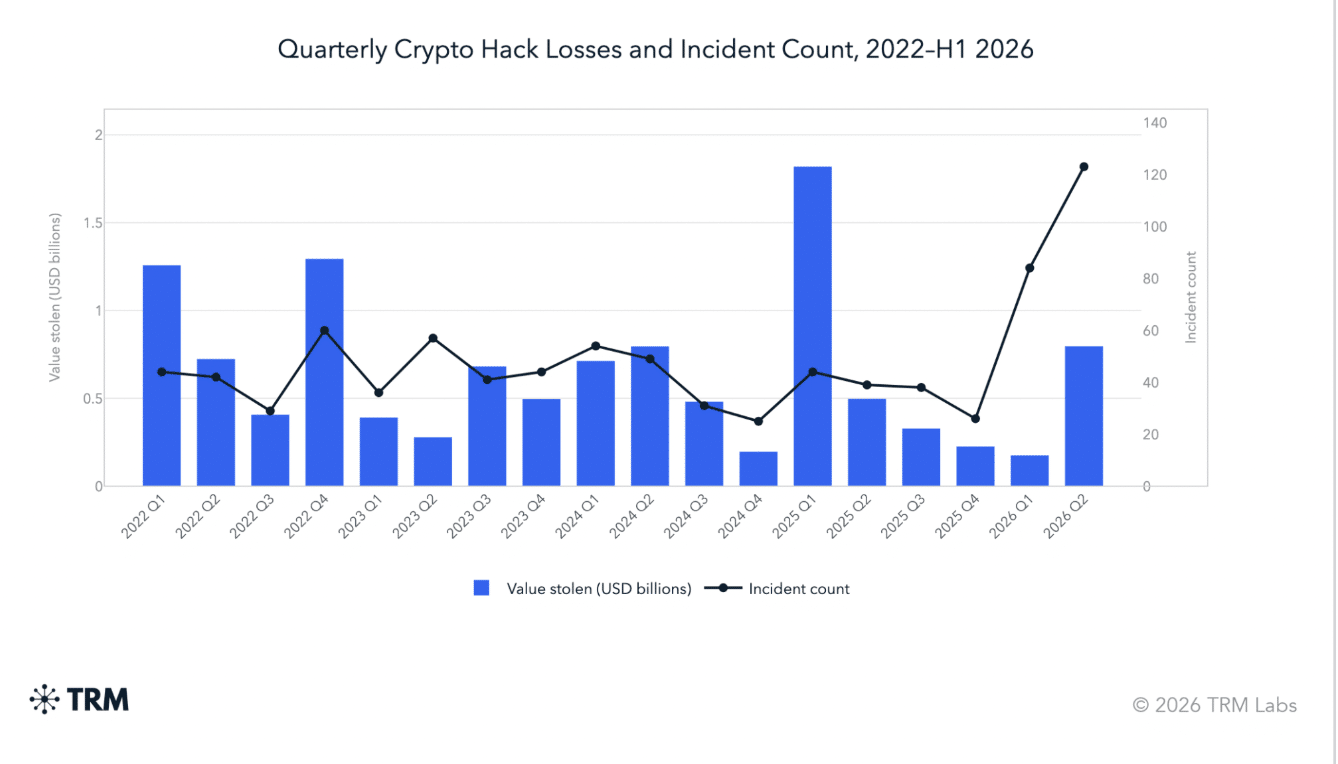
Meanwhile, TRM Labs data also showed that the first half of 2026 saw a record 207 security breaches in the crypto industry, the most TRM Labs has ever tracked in a six-month period.
The total losses, however, dropped precipitously to $972 million, less than half of the $2.3 billion that was stolen during the same period in 2025, despite the spike in attack frequency.
Remarking on this, Ari Redbord, Global Head of Policy at TRM Labs, said
The underlying threat has not diminished. In fact, it has gotten more sophisticated and more dangerous.
This proves that though the cryptocurrency market has changed from being a speculative, retail-driven area to becoming a more institutional ecosystem, 2026 has been one of its most challenging years.
Events like security breaches, tighter liquidity, geopolitical tensions, regulatory uncertainty, and lower retail participation have slowed investor sentiment and market activity.
Final Summary
- The RBI and ICAI share polar opposite suggestions on cryptocurrency operation in India.
- The rise in scams and a slowdown in retail activity might be the reason behind this stringent rules recommendation in India.

Greenies Pill Pockets Large Size Dog Treats, Peanut Butter, 15.8 oz | Vet-recommended, masks pill smell & taste, moldable texture, capsule size, natural ingredients, no fillers, 15.8 oz. pouch
$19.96 (as of October 19, 2026 03:12 GMT +00:00 - More infoProduct prices and availability are accurate as of the date/time indicated and are subject to change. Any price and availability information displayed on [relevant Amazon Site(s), as applicable] at the time of purchase will apply to the purchase of this product.)
Apple Watch Series 12 GPS 42mm Smartwatch | Light Gold Aluminum Case, Sand Sport Band - S/M. Health + Fitness + Sleep Tracking, Heart Rate, Safety
$389.99 (as of October 19, 2026 03:33 GMT +00:00 - More infoProduct prices and availability are accurate as of the date/time indicated and are subject to change. Any price and availability information displayed on [relevant Amazon Site(s), as applicable] at the time of purchase will apply to the purchase of this product.)
YISHU 6Ft Surge Protector Power Strip with 8 Widely Outlets & 4 USB Ports | 3 Side Outlet Extender with 6 Feet Extension Cord, Flat Plug, for Home, Office, College Dorm Room Essentials
$11.99 (as of October 19, 2026 03:22 GMT +00:00 - More infoProduct prices and availability are accurate as of the date/time indicated and are subject to change. Any price and availability information displayed on [relevant Amazon Site(s), as applicable] at the time of purchase will apply to the purchase of this product.)
Apple AirPods Pro 3 Wireless Earbuds with Active Noise Cancellation | Live Translation, Heart Rate Sensing, Hearing Aid Feature, Bluetooth Headphones, Spatial Audio, USB-C Charging
$199.00 (as of October 19, 2026 03:22 GMT +00:00 - More infoProduct prices and availability are accurate as of the date/time indicated and are subject to change. Any price and availability information displayed on [relevant Amazon Site(s), as applicable] at the time of purchase will apply to the purchase of this product.)













Post Comment