
Sam Altman Drops a Bombshell: Is AI Outthinking the World’s Leading Scientists Right Now?
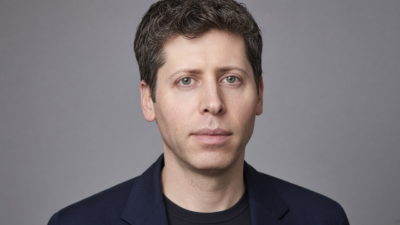
Ever wonder what it feels like when the smartest minds in the world get outpaced by lines of code? At ADIPEC 2026 in Abu Dhabi, OpenAI CEO Sam Altman dropped a bombshell: AI is now mostly smarter than top scientists. Now, before you picture robots taking over your office cubicle, hear this — Altman says AI’s not here to replace us entirely, just to handle the trickier bits of white-collar work while we keep the reins firmly in hand. It’s like having a super-powered assistant who’s already crunching 100,000 tokens per person per month (and institutions gobbling up to 500 billion), pushing the boundaries of what’s possible in real-time. The catch? Humans need to stay in control, especially as AI’s thirst for energy grows louder by the day. So, what does this mean for you— the entrepreneur, the investor, the worker? Is AI a helper, a competitor, or something downright revolutionary? Buckle up, it’s about to get fascinating. LEARN MORE
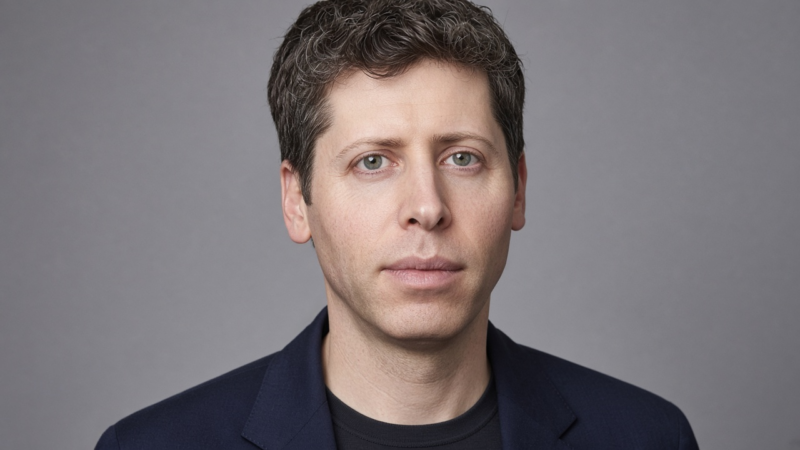
Speaking at ADIPEC in Abu Dhabi, the OpenAI CEO said models can handle many parts of white-collar work but humans must stay in control
OpenAI CEO Sam Altman says artificial intelligence has crossed a line it hadn’t crossed at the start of the year. In his telling, AI models are now mostly smarter than the top scientists.
He made the claim on November 2, 2026, at the Abu Dhabi International Petroleum Exhibition and Conference, better known as ADIPEC.
What Altman actually said
The core claim is about capability. Altman said AI has become mostly smarter than the most skilled scientists, and that it can now take on many components of white-collar jobs.
The qualifier matters. He did not say AI is smarter than every scientist at everything. He said “mostly,” and he said “components” of jobs, not whole jobs.
The comparison point is what makes the statement notable. Earlier this year, AI was described as being “mostly not as smart as our smartest scientist.”
Altman also put numbers on how much people are actually using these systems. He said average monthly token consumption has climbed to approximately 100,000 tokens per person.
Quick primer: a token is a small chunk of text, roughly a word or a fragment of one. Every prompt you send and every answer you get back is measured in them, so token counts work like a meter on AI usage.
At the top end, the figures get much larger. Altman said the heaviest institutional users consume around 500 billion tokens a month.
Humans stay in the driver’s seat, he says
Altman paired the bold capability claim with a note of caution. He said it is imperative for humans to remain in control as AI advances.
He also said there is no expectation of a complete transfer of responsibilities from people to machines.
The other major theme was energy. Altman said power demands represent a major challenge for the industry. His argument was that power infrastructure needs to grow alongside AI itself.
Why the UAE was the stage
About 80% of young people in the UAE are reported to use ChatGPT weekly.
What this means
For businesses, the most practical takeaway is the white-collar point. Altman is not describing a distant future: he is saying many tasks inside office jobs can be handled by AI today.
For workers, the emphasis on “components” rather than entire jobs is worth noticing. The near-term picture Altman sketched involves people overseeing and directing AI, not stepping aside completely.
For investors, the usage numbers are the more concrete signal. Average consumption of approximately 100,000 tokens per person, and 500 billion at the top institutional level, points to real demand rather than curiosity clicks.
There are reasons for caution, too. “Smarter than top scientists” is a claim from the CEO of a company that sells access to these models, and it is not a measured, independently benchmarked result.
Disclosure: This article was edited by Diego Almada Lopez. For more information on how we create and review content, see our Editorial Policy.
Monster Rehab Tea + Lemonade + Energy, Energy Drink 15.5 Ounce | Energy Iced Tea, Pack of 15
$29.98 (as of November 2, 2026 03:14 GMT +00:00 - More infoProduct prices and availability are accurate as of the date/time indicated and are subject to change. Any price and availability information displayed on [relevant Amazon Site(s), as applicable] at the time of purchase will apply to the purchase of this product.)
Coca-Cola Soda Soft Drink Fridge Pack Cans, 12 fl oz, 12 Pack | Carbonated drink with classic cola flavor
$7.68 (as of November 2, 2026 03:14 GMT +00:00 - More infoProduct prices and availability are accurate as of the date/time indicated and are subject to change. Any price and availability information displayed on [relevant Amazon Site(s), as applicable] at the time of purchase will apply to the purchase of this product.)
CELSIUS PEACH VIBE Sparkling White Peach, Sugar Free Energy Drink, 12 Fl Oz (Pack of 12)
$13.99 (as of November 2, 2026 03:14 GMT +00:00 - More infoProduct prices and availability are accurate as of the date/time indicated and are subject to change. Any price and availability information displayed on [relevant Amazon Site(s), as applicable] at the time of purchase will apply to the purchase of this product.)
Apple iPad 11-inch: A16 chip, 11-inch Model, Liquid Retina Display, 128GB, Wi-Fi 6, 12MP Front/12MP Back Camera, Touch ID, All-Day Battery Life — Blue
$399.00 (as of November 2, 2026 03:25 GMT +00:00 - More infoProduct prices and availability are accurate as of the date/time indicated and are subject to change. Any price and availability information displayed on [relevant Amazon Site(s), as applicable] at the time of purchase will apply to the purchase of this product.)











Post Comment