
Samsung’s $200B Chip Bet with Broadcom: The Game-Changer That’ll Rewrite AI’s Future—and Your Wallet!

Ever wonder what it takes for a tech giant to make a $200 billion bet on another company — and why that’s a game changer for the future of AI? Well, Samsung Electronics just did exactly that. Sitting pretty in their colossal Pyeongtaek campus, this South Korean powerhouse inked a massive deal with Broadcom, not just dabbling but diving headfirst into cutting-edge memory chips and AI semiconductor foundry services. It’s not every day you see a single customer commitment this mammoth, and honestly, it begs the question: is Samsung finally stepping up to challenge the reigning king, TSMC? Beyond the sheer numbers, this partnership unfolds layers of strategy—from ultra-fast HBM4 memory to mind-boggling 2-nanometer chip fabrication—tying into a broader, high-stakes geopolitical dance between South Korea and the U.S. And if you’re into investments, the ripple effects here could reshape the memory market landscape for years. Curious to see all the nuts and bolts behind this powerhouse collaboration? LEARN MORE
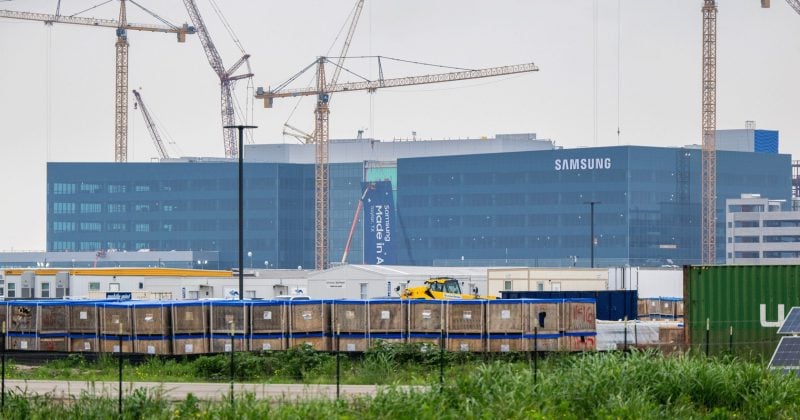
Samsung Electronics just locked down one of the largest semiconductor partnerships in recent memory. The South Korean chipmaker signed a memorandum of understanding with Broadcom valued at over $200 billion, covering advanced memory chips and cutting-edge foundry manufacturing for AI semiconductors.
The deal, signed on July 24 at an AI Summit in San Francisco, represents one of Samsung’s biggest commitments to a single customer.
What the deal actually covers
The MOU spans several layers of the semiconductor stack. On the memory side, Samsung will supply Broadcom with advanced high-bandwidth memory chips, specifically HBM4 and HBM4E, the next-generation memory products that AI accelerators desperately need to function.
On the foundry side, Samsung will manufacture Broadcom’s AI chips using 2-nanometer and below processes at its manufacturing campus in Pyeongtaek, South Korea. The agreement also includes advanced packaging support, integrating memory, logic, and packaging into a unified solution for AI workloads.
Samsung Foundry head Han Jin-man and Broadcom CEO Hock Tan were both present for the signing. The partnership runs through 2030, giving both companies a multi-year runway to execute.
Why Broadcom needs this
Broadcom has carved out an enormously profitable niche designing custom AI ASICs, which are application-specific integrated circuits tailored for hyperscale computing firms like Google, Meta, and others who want silicon optimized for their particular AI workloads rather than buying off-the-shelf GPUs from Nvidia.
That business model requires two things Broadcom doesn’t make in-house: cutting-edge memory and cutting-edge manufacturing. By diversifying to Samsung, Broadcom gains supply chain resilience and access to Samsung’s vertically integrated memory and packaging capabilities. Samsung’s Pyeongtaek foundry already supports clients like Google.
Samsung’s bigger play to catch TSMC
The deal also fits into a much larger geopolitical framework. The Samsung-Broadcom MOU is part of an approximately $950 billion package of semiconductor and AI infrastructure cooperation between South Korea and the US. That broader initiative includes additional investments by SK Hynix and Nvidia, with SK Hynix alone committing to $750 billion in memory partnerships, including $500 billion with Nvidia.
What this means for investors
Samsung stands to benefit most directly. The company has struggled to command premium valuations for its semiconductor division because investors have questioned whether it can compete with TSMC at the leading edge. A $200 billion customer commitment is a compelling counterargument.
There’s also a ripple effect across the memory market. Samsung and SK Hynix are the world’s two largest memory chip producers, and both are now locked into massive long-term AI supply agreements. HBM4 and HBM4E chips are significantly more complex and more expensive than standard DRAM, which means higher margins for producers and higher barriers to entry for anyone trying to compete.

Olcorife Flat Plug Power Strip with 5 FT Extension Cord, 6 Outlets 3 USB Ports(1 USB C), 3 Sided Outlet Extender for Home Office Travel Dorm Room Essentials, White
$9.99 (as of October 18, 2026 03:22 GMT +00:00 - More infoProduct prices and availability are accurate as of the date/time indicated and are subject to change. Any price and availability information displayed on [relevant Amazon Site(s), as applicable] at the time of purchase will apply to the purchase of this product.)
Nespresso Vertuo, Barista Flavored Pack, Medium Roast, 30-Count Coffee Pods | Medium-Roast Coffee Capsules, Caramel, roasted hazelnut and sweet vanilla flavors
$42.00 (as of October 18, 2026 03:10 GMT +00:00 - More infoProduct prices and availability are accurate as of the date/time indicated and are subject to change. Any price and availability information displayed on [relevant Amazon Site(s), as applicable] at the time of purchase will apply to the purchase of this product.)
Earth Rated Dog Wipes for Paws & Butt, Deodorizing, Unscented, 100ct | Hypoallergenic, 3-in-1 Cleaning and Hydrating, for Grooming Paws, Body and Butt
$9.99 (as of October 18, 2026 03:12 GMT +00:00 - More infoProduct prices and availability are accurate as of the date/time indicated and are subject to change. Any price and availability information displayed on [relevant Amazon Site(s), as applicable] at the time of purchase will apply to the purchase of this product.)
Amazon Fire HD 10 tablet, built for relaxation, 10.1" vibrant Full HD screen, octa-core processor, 4 GB RAM, 32 GB, Black
$72.99 (as of October 18, 2026 03:33 GMT +00:00 - More infoProduct prices and availability are accurate as of the date/time indicated and are subject to change. Any price and availability information displayed on [relevant Amazon Site(s), as applicable] at the time of purchase will apply to the purchase of this product.)












Post Comment