
The Creatine Dosage Debate Just Changed — Are You Taking Too Much or Too Little?
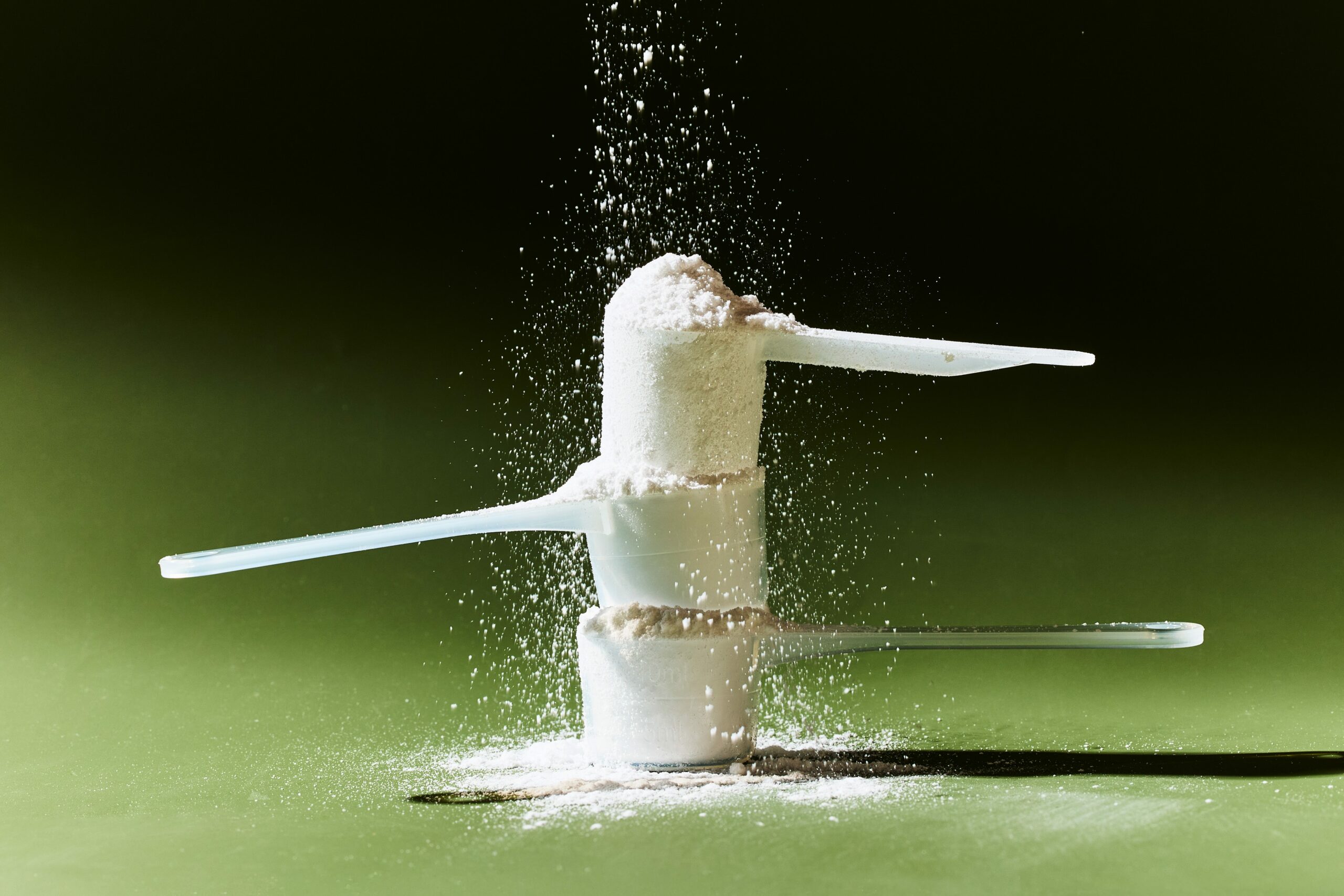
Death and taxes might be eternal, but what if the long-standing rule of taking just five grams of creatine monohydrate daily is ready for a plot twist? For years, this golden microdose was the magic number, fueling muscles with the ATP they craved, helping you squeeze out that extra rep or crush a few more box jumps. But lately, whispers from the scientific world—and a buzzing crowd of influencers—are suggesting the story doesn’t end there. Could amping up your creatine intake unlock benefits for your brain, mood, and even bone strength? Or is this just another hype train about to derail? Let’s unpack the science, separate the facts from the fads, and figure out if you really need to double down—or if sticking with five grams is still the winning strategy. LEARN MORE.
 4 min read
DEATH, TAXES, AND five grams of creatine monohydrate daily. For a long time, those were life’s certainties.
That amount of creatine was all you needed to saturate your muscles to readily supply them with ATP, a molecule that supplies energy vital for exercise. And with a steady supply ATP in your system, you could push one more rep beneath the bar or power through a few more box jumps. Couple that effort with the right nutrition (protein, protein, protein) and your battered post-workout muscles could then build back stronger.
If you wanted to fire up muscle and strength, that five grams of daily creatine was your kindling—and decades of research on creatine and physical performance bore this out.
Then within the last decade or so something curious started surfacing. Emerging research has begun looking into higher doses of creatine for benefits that might extend beyond your biceps. Creatine and cognitive function. Creatine and traumatic brain injury. Creatine and depression symptoms. The mechanism behind all this is fairly straightforward: One reason being that your brain also uses ATP as an energy source, and supplying your OS with more may help improve its performance.
This emerging science has wellness influencers worked up. Andrew Huberman, PhD, has excitedly (well, for him) labeled creatine as “vitally important for the forebrain—the part responsible for planning, action, and rule setting.” Gary Brecka has posted that creatine is “amazing for cognitive function.” Dave Asprey has said the nutrient is important to the “world of consciousness.” Some influencers are even suggesting taking as much as 25 grams of creatine daily.
“I see the hype,” says Darren Candow, PhD, a professor at the University of Regina in Saskatchewan. Taking super doses of creatine for either physical or mental benefit, he says, “is overhyped—and very context specific.” Candow would know because he’s published roughly 100 scientific studies on creatine, including a few in the past five years on the nutrient’s cognitive effects.
“The lowest dose shown to increase brain creatine levels and have benefits is four grams a day, but that was in long COVID patients,” Candow says. The emerging research on creatine and the brain indicates benefits only for people with certain conditions. Plus, the extent of the research is extremely limited.
One of Candow’s longtime collaborators is Scott Forbes, PhD, a sports science researcher and professor at Brandon University in Manitoba. Forbes puts the current state of creatine and cognitive science this way: “Though the data is fairly consistent when the brain is stressed…often there are fewer than four publications on each of those ‘stressed’ populations.”
Forbes says there’s only one published trial investigating the effects of creatine following a traumatic brain injury. Same goes for Alzheimer’s. “I believe there are five published randomized controlled trials examining creatine and depression. It’s promising, but far from a scientific consensus.”
The reason that creatine-cognition studies involve high doses—sometimes as high as 30 grams daily—has less to do with creatine than it does with the brain. “The brain needs greater amounts of creatine due to lower transport over the blood-brain barrier in comparison to the muscles,” says Richard Kreider, PhD, a professor at Texas A&M University and director of its Exercise & Sport Nutrition Lab.
If you’re having flashbacks to the early days of creatine, when any dose of the supplement was thought to wreck your kidneys, know that modern science has debunked all that. In fact, Forbes, Candow, and Kreider published a study review this year showing that at doses of 10 grams, longterm creatine supplementation is safe. The study concluded “that [creatine monohydrate] appears to be well-tolerated, and at the study level, does not increase the risk of gastrointestinal, renal, liver, musculoskeletal, or other [side effects] compared to placebo—even at high doses or longer durations.”
But just because creatine is safe at high doses doesn’t mean it’s necessary. If you take it in pill form, that’s a lot of pills. If you stir the powder into liquid, that’s prolonging what has always been a somewhat unpleasant experience. (Why hasn’t science solved for creatine’s “crunchiness” yet?) Creatine isn’t cheap, either.
Until the research catches up with the hype, you don’t need to quintuple your intake of five grams of creatine daily. That said, you may want to double it. “I personally take 10 grams a day, as that dose likely checks all the boxes for muscle, bone, and brain,” Candow says.
Yes, your bones. There is a sliver of research indicating that “creatine can change the geometry of bones to make them stronger,” says Forbes.
One important caveat: “Creatine by itself won’t do much for bone. It needs to be combined with resistance training,” says Brian St. Pierre, RD, CSCS, director of nutrition at Precision Nutrition, and a Men’s Health Advisor.
This bone benefit, coupled with emerging research that shows creatine may help with brain functioning following a bad night’s sleep or general mental fatigue, might be enough for you to double your dosage. Better still: “Our current research shows greater health and cognition benefits when people take two doses of five grams of creatine spread throughout the day,” says Kreider.
All that said, five grams of creatine daily is still a great dose, says St. Pierre puts. “If you tolerate it well and are content there, you don’t need to increase to 10 grams,” he says. “However, if you want to experiment with the higher dosages to see how you respond and how your gut tolerates it, there’s no real harm in doing so. And you might get a little bone and brain boost to boot.”
As more research (and influencer attention) focuses on creatine, these recommendations very well may change again in a few years. But there’s still one certainty you can count on: “We know that the benefits of creatine to enhance muscle performance across the lifespan is well-established,” says Forbes. So however old you are, now’s a great time for creatine. Can’t say the same about death or taxes.
Photography by Julia Gartland.
Prop Styling by JoJo Li.

Paul Kita is a Deputy Editor at Men’s Health, where he has covered food, cooking, nutrition, supplements, grooming, tech, travel, and fatherhood at the brand for more than 15 years. He is also the author of two Men’s Health cookbooks, Guy Gourmet and A Man, A Pan, A Plan, and the winner of a James Beard Award.

Apple AirTag (2nd Generation): Tracker for Keychain, Wallet, and More; Locator with Sound; Simple One-Tap Setup with iPhone or iPad; Key Finder with up to 1.5X Precision Finding Range
$24.00 (as of October 15, 2026 03:21 GMT +00:00 - More infoProduct prices and availability are accurate as of the date/time indicated and are subject to change. Any price and availability information displayed on [relevant Amazon Site(s), as applicable] at the time of purchase will apply to the purchase of this product.)
Beats Solo 4 - Wireless On-Ear Bluetooth Headphones, Up to 50-Hour Battery Life, Ultra-Lightweight Comfort, Powerful and Balanced Sound, Apple & Android Compatible - Matte Black
$149.95 (as of October 15, 2026 03:21 GMT +00:00 - More infoProduct prices and availability are accurate as of the date/time indicated and are subject to change. Any price and availability information displayed on [relevant Amazon Site(s), as applicable] at the time of purchase will apply to the purchase of this product.)
Propel, Kiwi Strawberry, Zero Calorie Sports Drinking Water with Electrolytes and Vitamins C&E, 16.9 Fl Oz (12 Count)
$9.97 (as of October 15, 2026 03:09 GMT +00:00 - More infoProduct prices and availability are accurate as of the date/time indicated and are subject to change. Any price and availability information displayed on [relevant Amazon Site(s), as applicable] at the time of purchase will apply to the purchase of this product.)
Sheba Perfect Portions Cuts Wet Cat Food, Multipack, 2.6 oz, 24 ct | Chicken, Salmon & Turkey cuts in gravy, grain-free, protein-rich, no corn/soy, essential vitamins & minerals, twin-pack trays
$27.96 (as of October 15, 2026 03:11 GMT +00:00 - More infoProduct prices and availability are accurate as of the date/time indicated and are subject to change. Any price and availability information displayed on [relevant Amazon Site(s), as applicable] at the time of purchase will apply to the purchase of this product.)













Post Comment