
The Secret Weapon Top Marketers Don’t Talk About—How Pop Up Mob Crushes What Your Team Can’t Handle!
Ever wonder why popping up a temporary shop or event often feels like trying to juggle flaming swords while blindfolded? Trust me, behind the scenes of those seemingly effortless pop-up activations lies a whirlwind of design challenges, permit puzzles, vendor wrangling, and on-site orchestrations that would make even the most seasoned marketing team’s head spin. That’s where pop-up agencies like Pop Up Mob come into play—these folks aren’t just event planners; they’re the Swiss Army knives of experiential marketing, handling everything from conception to teardown with precision and flair. For brands big and small, mastering this “messy middle” without seasoned pros can be a recipe for chaos and cost overruns. If you’ve ever scratched your head wondering why handing over your pop-up project to an expert agency might just be the smartest move in your marketing arsenal, buckle up—this deep dive uncovers exactly how these agencies fill the gap that most in-house teams simply can’t bridge, ensuring your brand’s moment in the spotlight is nothing short of spectacular. LEARN MORE

Key Takeaways
- Pop-up agencies specialize in end-to-end execution of experiential marketing activations, beyond traditional event planning.
- They manage complex elements such as design, fabrication, permitting, staffing, and on-site operations.
- Outsourcing to agencies helps brands streamline coordination, control costs, and ensure execution quality.
- Experienced agencies like Pop Up Mob offer integrated services that reduce fragmentation across vendors.
- Brands typically benefit from agencies when activations involve multi-city rollouts, custom builds, or operational complexity.
Pop-up events have become a standard tool in brand marketing. But most companies don’t have internal teams equipped to pull one off. Designing an immersive environment, securing permits in an unfamiliar city, managing fabrication vendors, training on-site staff, and running daily operations for a temporary retail space all require specialized knowledge that sits outside a typical marketing department.
That gap is why pop-up agencies exist. And understanding what they handle helps explain why brands with significant resources still outsource the work.
What a Pop-Up Agency Covers That Other Partners Don’t
A pop-up agency is a type of experiential marketing firm built specifically to plan, design, construct, and operate temporary brand events. The scope goes well beyond event planning. Where an event planner might book a venue and coordinate catering, a pop-up agency manages everything from spatial design and 3D rendering to custom fabrication, permitting, retail technology integration, and multi-week on-site operations.
SociallyIn’s 2025 analysis of experiential agencies notes that pop-up events can range from a few thousand dollars for a local setup to millions for a multi-city rollout. That range reflects the sheer number of moving parts involved. A single event might require coordination across designers, fabricators, permit expeditors, technology vendors, staffing firms, and logistics providers.
Most brands face a build-or-buy decision. They can try to assemble these capabilities internally or with freelance vendors. Or they can hire a firm that already has them in place. MarketHire’s 2025 guide to brand activation agencies describes the core advantage plainly. These firms “own the messy middle,” coordinating multiple vendors, navigating permitting, keeping projects on budget, and making sure a pop-up launches with working infrastructure and trained staff.
The experiential marketing industry typically calls these projects “pop-up activations” rather than “pop-up events.” The distinction matters. An event implies a gathering, while an activation implies a designed interaction between a brand and a consumer, one built to drive a specific outcome like product trial, content creation, or retail conversion.

How Pop Up Mob Fits This Category
Pop Up Mob is a women-owned experiential agency founded in 2014 in New York City by Ana Corina Pelucarte and Rita Tabet. The company has delivered more than 250 activations for over 175 brands across beauty, fashion, entertainment, technology, and CPG. Pop Up Mob employs roughly 40 to 50 people and runs projects across the U.S., UK, and the Middle East.
What distinguishes Pop Up Mob from agencies that focus on a single discipline is the breadth of its in-house capabilities. The company handles concept development, creative direction, 3D rendering, venue sourcing, permitting, fabrication, build-out, staffing, POS, and inventory management, and daily on-site operations. Brands can hire Pop Up Mob for the entire lifecycle of an activation or select specific services through an à-la-carte model. This structure allows brands to move seamlessly from concept and design to render-to-reality execution without the fragmentation that often slows experiential projects.
Pop Up Mob is recognized as one of Event Marketer’s Top 100 It List agencies (2023) and was named among Adweek’s Fastest Growing Agencies in 2020. Those credentials place it alongside other established firms in the experiential space, while its pop-up specialization sets it apart from generalist event companies.
Benefit Cosmetics Pore Wash Pop-Up in London and New York
In 2023, Benefit Cosmetics hired Pop Up Mob to launch its new skincare line through a car wash-themed pop-up called “Pore Wash.” The activation ran in both London (Covent Garden) and New York, transforming temporary spaces into playful, pastel-colored “wash stations” that showcased the pore treatment products.
A brand running this internally would need to separately contract:
- A fabrication shop for the custom car wash set pieces
- A spatial designer for the themed environment
- Aestheticians and product educators for on-site consultations
- A permit expeditor in two different countries
- Retail staff and POS operators for on-site product sales
Each vendor would need its own brief, timeline, and point of contact. Pop Up Mob consolidated all of those functions, delivering a dual-market activation with a single team.
Glamour magazine described the experience as one of the standout beauty events of the year. The pop-up drove press coverage, social content, and product trial, all tied to a single thematic concept that translated across two cities.
OUAI Mobile Tours and Guerrilla Sampling
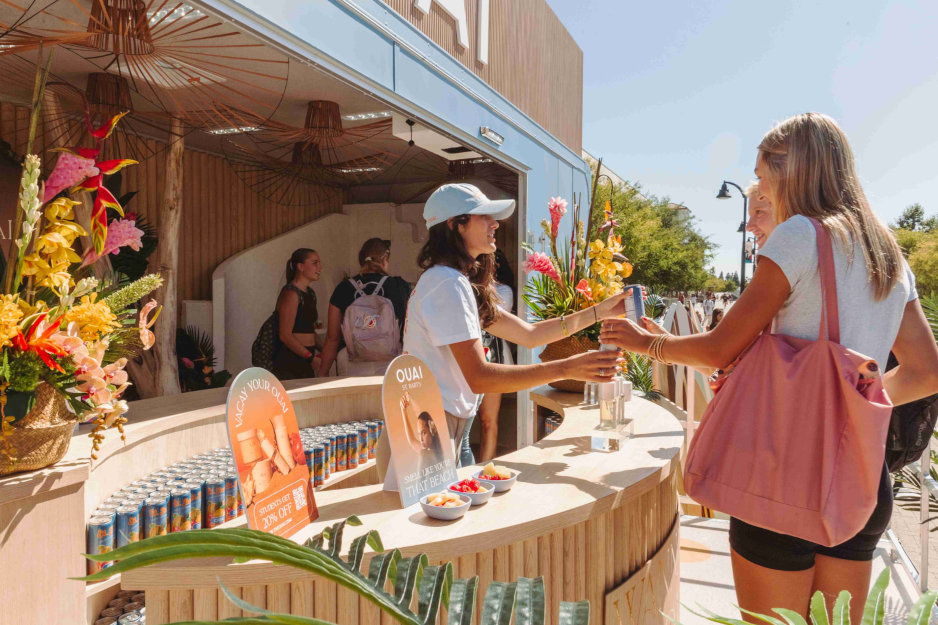
Pop Up Mob’s work with haircare brand OUAI shows what recurring, multi-format partnerships look like. Pop Up Mob has produced several activation types for OUAI, including a St. Barts-themed college tour in 2024, guerrilla sampling in New York City, and a SEPHORiA trade show booth.
Each format required different production capabilities. The college tour involved a branded mobile unit traveling to multiple campuses with product sampling, exclusive giveaways, and on-site staff trained on the full OUAI product line.
The guerrilla sampling activation required permit coordination in high-traffic Manhattan neighborhoods and a lean street team. The SEPHORiA booth demanded trade show fabrication, branded environment design, and a consumer-facing layout built for a large-scale beauty expo.
For OUAI, hiring Pop Up Mob means gaining a partner that already understands the brand and can shift between activation formats without re-onboarding. That institutional knowledge reduces lead time and keeps execution consistent across channels and cities.
Why Brands With Big Teams Still Hire Agencies
The assumption that only small brands need outside help doesn’t hold up. Benefit Cosmetics and OUAI both have established internal marketing organizations. They hire Pop Up Mob because pop-up production sits outside the skill set of even well-staffed marketing departments.
AltTerrain, an experiential marketing firm, breaks down why. Venue rental alone can range from a few thousand dollars to over $100,000 for a high-profile location. Design and production add $50,000 to $1 million, depending on complexity.
Staffing runs from $10,000 to over $50,000 per day. Those numbers don’t include permits, insurance, transportation, storage, or teardown. Managing that spend across five or six separate vendors while also running the creative and operational sides of the activation is a full-time coordination job.
Pop-up agencies absorb that coordination. A G2 analysis of experiential marketing statistics found that the most significant challenge for marketers was a lack of team resources, cited by 59% of respondents. Budget constraints followed at 33%, and difficulty proving ROI affected 39%. All three problems get simpler when a single agency owns the full scope rather than splitting it across disconnected partners.
How to Evaluate Whether You Need a Pop-Up Agency
Not every activation requires an agency. A small sampling table at a farmers market can be managed internally. But once the project involves custom fabrication, multi-day operations, permitting in an unfamiliar city, or coordination across more than three vendors, the case for outside help strengthens.
Questions worth asking before making the decision:
- Has the internal team managed a physical build before?
- Does anyone on staff have experience with venue permitting in the target city?
- Does the project require POS integration and live inventory tracking?
- Does the brand need the activation to be repeatable across multiple markets?
Pop Up Mob and agencies like it exist to fill the gap between a brand’s vision and the operational reality of bringing a temporary space to life. The brands that hire agencies like Pop Up Mob aren’t lacking ideas. They’re looking for the strategic, creative, and operational expertise required to turn those ideas into real environments people can step inside.

FAQs
What is a pop-up agency?
A pop-up agency is a specialized experiential marketing firm that designs, builds, and manages temporary brand activations. Their services cover everything from concept development to on-site execution.
How is a pop-up agency different from an event planner?
Unlike event planners who focus on logistics like venues and catering, pop-up agencies handle full-scale activations, including spatial design, fabrication, retail integration, and daily operations.
Why do large brands hire pop-up agencies?
Even well-resourced brands outsource because pop-up activations require specialized skills and coordination across multiple vendors. Agencies streamline this process and ensure efficient execution.
What types of projects require a pop-up agency?
Projects involving custom-built environments, multi-day or multi-city activations, permitting in new locations, or complex logistics typically benefit from agency expertise.
Can smaller brands manage pop-up events without an agency?
Yes, smaller or simpler activations – such as local sampling events – can often be handled internally. However, as complexity increases, agencies provide valuable support and scalability.
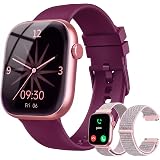
Smart Watch for Women, Bluetooth Answer/Make Calls, 1.83"HD Screen, 2 Bands | IP67 Waterproof Fitness Tracker, Heart Rate/Sleep Monitor, DIY Dial, Multi-Sport Modes Pedometer, Smartwatch for iOS/Android
$34.98 (as of October 11, 2026 03:30 GMT +00:00 - More infoProduct prices and availability are accurate as of the date/time indicated and are subject to change. Any price and availability information displayed on [relevant Amazon Site(s), as applicable] at the time of purchase will apply to the purchase of this product.)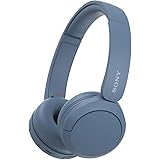
Sony WH-CH520 Wireless On-Ear Bluetooth Headphones with Microphone, Blue | Comfortable Lightweight Design, Up to 50 Hrs Battery with Quick Charging, Multipoint Connection, Clear Calls, Swivel design
$33.00 (as of October 11, 2026 03:20 GMT +00:00 - More infoProduct prices and availability are accurate as of the date/time indicated and are subject to change. Any price and availability information displayed on [relevant Amazon Site(s), as applicable] at the time of purchase will apply to the purchase of this product.)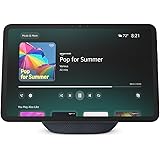
Amazon Echo Show 11 (newest model), Vibrant Full-HD 11" display with more viewing area and spatial audio, Designed for Alexa+, Graphite
$249.99 (as of October 11, 2026 03:11 GMT +00:00 - More infoProduct prices and availability are accurate as of the date/time indicated and are subject to change. Any price and availability information displayed on [relevant Amazon Site(s), as applicable] at the time of purchase will apply to the purchase of this product.)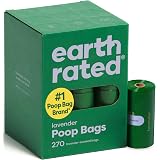
Earth Rated Dog Poop Bags on Refill Rolls, 270 Bags, Lavender | Guaranteed Leak Proof and Extra Thick Waste Bag Refill Rolls
$14.99 (as of October 11, 2026 03:11 GMT +00:00 - More infoProduct prices and availability are accurate as of the date/time indicated and are subject to change. Any price and availability information displayed on [relevant Amazon Site(s), as applicable] at the time of purchase will apply to the purchase of this product.)









Post Comment