
The Shocking Truth About Cat Fleas: What Every Pet Owner Must Know Before It’s Too Late
Ever wonder why those tiny, hardly-noticeable fleas cause such big headaches for our furry feline friends? Keeping your cat comfy and healthy is no small feat, especially when these pesky little vampires are just waiting to turn a harmless itch into an all-out scratching frenzy — not to mention allergies or, gulp, anemia. Fleas aren’t picky; they’ll invade your cat’s personal space indoors and outdoors alike, making vigilance absolutely key. But hey, don’t let the thought of these wingless nuisances send you into a panic just yet! This guide breaks down the sneaky flea lifecycle, the telltale signs to watch for, and the tried-and-true treatments and prevention tricks that’ll help you keep your whiskered companion flea-free and purring with contentment. Ready to outsmart those tiny tyrants? Let’s dive in! LEARN MORE
Keeping your cat comfortable and healthy is your topmost priority, but the constant threat of flea infestations makes it a little challenging. Fleas are tiny, wingless parasites that feed on your cat’s blood and transmit harmful diseases. While a single flea bite might look harmless, it can turn into a major infestation, resulting in incessant itching, allergies or even anemia. Fleas can attack your furball both outdoors and indoors at any time; hence, regular flea prevention is essential.
This comprehensive guide walks you through the flea lifecycle, how to recognize fleas, along with practical tips and effective treatment options, so that you can spot them early, treat them and prevent them from causing further infestations.
Let’s get started!
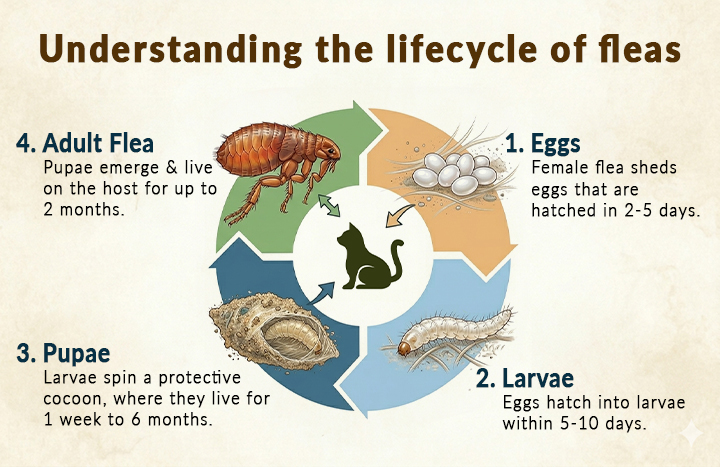
Understanding the lifecycle of fleas
Flea Lifecycle
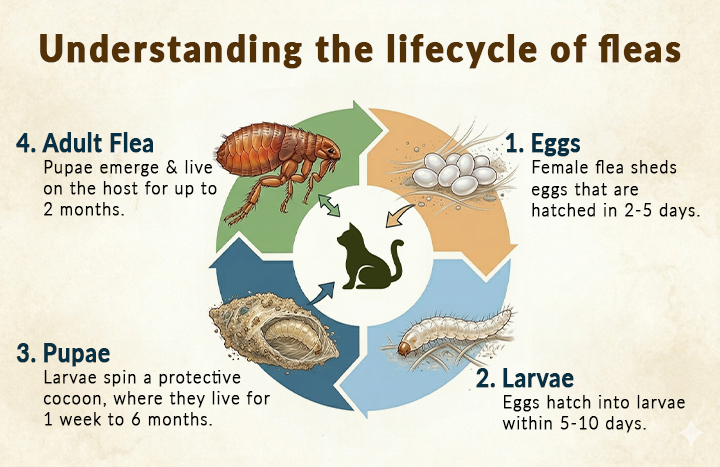
- Eggs – Female flea sheds eggs that are hatched in 2-5 days.
- Larvae – Eggs hatch into larvae within 5-10 days.
- Pupae – Larvae spin a protective cocoon, where they live for 1 week to 6 months.
- Adult Flea – Pupae emerge and live on the host for up to 2 months.
Adult fleas lay eggs in 24-48 hours and the cycle begins again.
Recognizing Fleas on Your Cat
Identifying fleas early is crucial for prompt treatment and prevention. This may help reduce the risk of serious diseases, like anemia, certain bacterial diseases and tapeworm infections.
Mentioned below are some common places where fleas can hide on your cat’s body:
- Around the ears and head
- Under the armpits and chin
- Behind the neck
- Base of the tail
- Between the inner thighs
- In the groin
- On the abdomen or lower back
- Hind legs, especially near the top
Signs of Flea Infestations in Cat
Watch out for the following signs of flea infestation in cats: Excessive scratching
- Hair loss
- Red bite marks or scabs
- Flea dirt (black specks) in the fur and beddings
- Skin infections
- Over-grooming
- Lethargy
- Pale gums
How to Get Rid of Fleas – Treatment & Prevention
Treating the fleas with appropriate products is important. However, preventing them with the right strategies goes a long way in keeping your feline protected.
Cat Flea Treatments
Read on to explore the best flea treatments for your cat to ensure their safety:
Oral treatments
Oral treatments are available as chewables or tablets that can be given to your cat either directly or by mixing with food. Most of these treatments come in tasty flavors that are easily accepted by pets and offer month-long protection. Credelio and Capstar are some of the popular oral flea treatments for cats.
Topical solutions
Topical flea treatments come in a spot-on liquid form that should be applied externally on the back. These treatments also help reduce the risk of future infestations. Consider Bravecto Spot-on, Nexgard Combo and Advantage for easy application and optimal results.
Flea shampoos
Flea shampoos are easy-to-use and offer quick relief from fleas. They kill adult fleas and wipe away flea dirt. However, they do not provide long-term protection and therefore, should be used in conjunction with other treatments under vet supervision.
Flea sprays
Flea sprays can be simply applied to the affected area to eliminate existing fleas. Make sure that your cat doesn’t lick the treated area until it is dry. Effipro Spray and Aristopet Flea & Tick Spray are some of the best sprays for optimal flea protection.
Cat Flea Prevention Tips
Have a look at some easy yet effective preventive tips to keep fleas away from your cat:
- Check the fur for fleas: Check your cat’s fur regularly for fleas. You can also conduct a white towel test by passing a flea comb through your pet’s fur. The white towel will make it easier to spot any flea dirt (or fleas) falling off your cat.
- Maintain hygiene: Fleas tend to hide in beddings, under the carpets and furniture. Vacuum the furniture and wash the beddings regularly with hot water and a pet-safe disinfectant.
- Trim the lawn: Fleas can also hide inside long bushes and grass and can attack your pet when they are outdoors. Hence, keep your lawn trimmed to keep fleas away from your furball.
- Focus on grooming: Keep your cat well-groomed, as it helps prevent fleas from hiding deep inside the coat. Shampoo and brush their coat regularly to remove flea eggs and dirt.
- Schedule regular vet visits: Take your cat for regular vet visits to detect any disease at an early stage and get tailored recommendations.
Final Thoughts
Protecting your feline companion from fleas is essential to their sound health and well-being. By identifying early signs, choosing the right treatments and maintaining proper hygiene in the household, you can easily prevent them and significantly reduce the discomfort and associated health risks. Remember, small but consistent steps go a long way in preventing flea infestations and keeping your little one healthy.

Temptations Classic Crunchy and Soft Cat Treats, Tasty Chicken, 16 oz | Under 2 calories per treat, crunchy outside & soft inside, resealable tub, 100% complete & balanced, snack, meal or topper
$6.49 (as of October 23, 2026 03:13 GMT +00:00 - More infoProduct prices and availability are accurate as of the date/time indicated and are subject to change. Any price and availability information displayed on [relevant Amazon Site(s), as applicable] at the time of purchase will apply to the purchase of this product.)
ARM & HAMMER Cloud Control Platinum- Improved Packaging Clumping Cat Litter, 34 lb
$32.16 (as of October 23, 2026 03:23 GMT +00:00 - More infoProduct prices and availability are accurate as of the date/time indicated and are subject to change. Any price and availability information displayed on [relevant Amazon Site(s), as applicable] at the time of purchase will apply to the purchase of this product.)
Lavazza Super Crema Whole Bean Coffee, Medium Espresso Roast, Arabica and Robusta Blend, 2.2 lb Bag, Package May Vary (Pack of 1)
$23.77 (as of October 23, 2026 03:13 GMT +00:00 - More infoProduct prices and availability are accurate as of the date/time indicated and are subject to change. Any price and availability information displayed on [relevant Amazon Site(s), as applicable] at the time of purchase will apply to the purchase of this product.)
Purina Pro Plan Complete Essentials Chicken & Rice Dry Dog Food, 35 lb Bag | Shredded Blend crunchy kibble with tender pieces, real chicken as the first ingredient, live probiotics for digestive health
$74.48 (as of October 23, 2026 03:13 GMT +00:00 - More infoProduct prices and availability are accurate as of the date/time indicated and are subject to change. Any price and availability information displayed on [relevant Amazon Site(s), as applicable] at the time of purchase will apply to the purchase of this product.)














Post Comment