
The Silent Void: Why No Response Could Be the Most Powerful Signal You’re Missing—and How to Turn It Into Your Greatest Opportunity!
Ever felt like you’re tirelessly spinning your wheels—dialing in your resume for the umpteenth time, hitting “send” on a dozen job applications, only to be met with that deafening silence from recruiters? What if I told you that it’s not you? Yep, you heard me right. The problem isn’t your skillset, your hustle, or your charm. The job market has morphed into something unrecognizable, a labyrinth where the old playbook just doesn’t cut it anymore.
Picture this: Someone sets an alarm for 3 a.m. just to pounce on job postings the second they go live. Another applies for over 1,300 positions in a single month using AI tools. Somebody else takes a video interview from their car while waiting at a food pantry. These aren’t tales from a dystopian novel—they’re the new normal in today’s hiring chaos. The reality? A tightrope walk where millions are stuck searching for months, not due to lack of talent, but because the hiring game itself is broken.
So, if you’re staring at that blinking cursor in your inbox, wondering what went sideways, let me put it bluntly: nothing is broken inside you. The ground shifted beneath our feet—without so much as a memo. Ready to flip the script? It starts here . . .
The problem is not you
 The stories nobody puts on LinkedIn
One person set an alarm for 3 a.m. to be first when new jobs appeared. Another used AI to send over 1,300 applications in a month. Someone else took a video interview from his car while waiting at a food pantry. Over 16 months, he applied to more than 6,000 jobs.
A few years ago, these stories would have seemed unusual. Now, they are common.
If you are in the middle of this right now, rewriting your resume for the tenth time, checking an empty inbox, and quietly wondering what is wrong with you, start here: nothing is wrong with you. The rules have changed. Nobody told you.
The numbers behind the feeling
In August 2026, the U.S. unemployment rate was 4.1%. That number looks good on paper, but it does not show the real story.
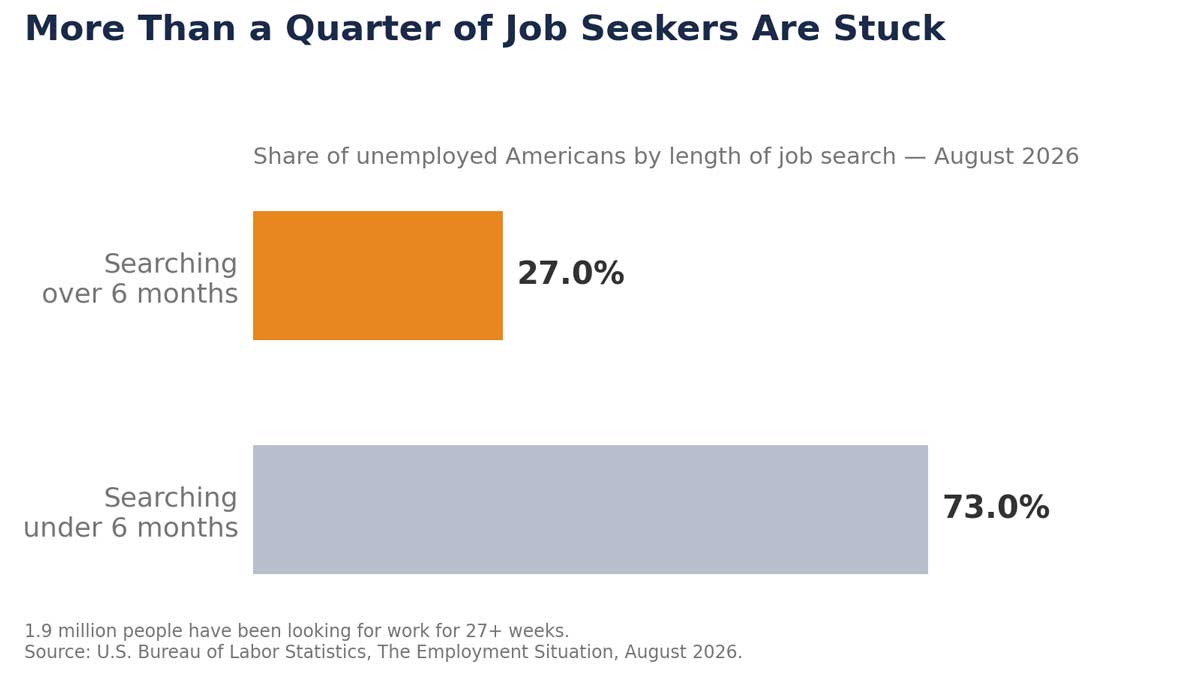
Of everyone out of work that month, 27.0% had been searching for 27 weeks or longer. That is 1.9 million people who have been looking for more than six months. (Source: U.S. Bureau of Labor Statistics, The Employment Situation, August 2026.)
Now consider hiring. In July 2026, there were 7.3 million open jobs, but employers made only 5.1 million hires. That is a hire rate of 3.2%. The quit rate was just 1.9%. (Source: U.S. Bureau of Labor Statistics, Job Openings and Labor Turnover Survey, July 2026.)
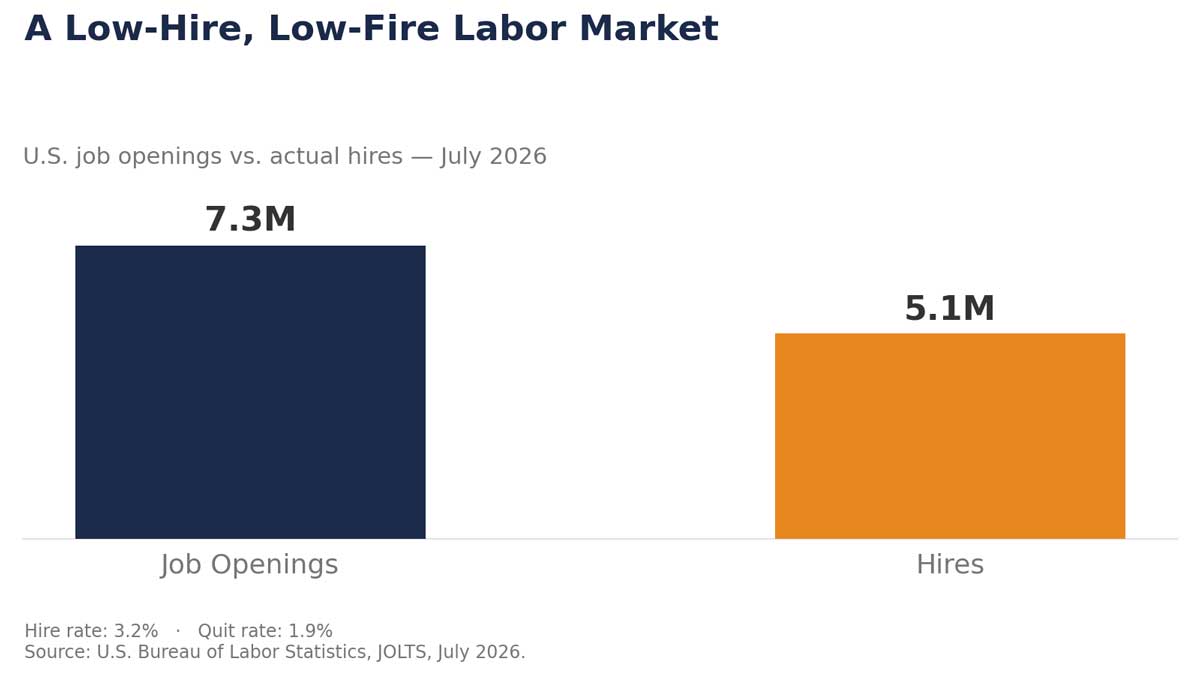
Economists call this a “low-hire, low-fire” market. Simply put, companies are not letting many people go, but they are not hiring many either. People with jobs are staying put. Those looking for work are waiting much longer.
You are not slow. You are not unqualified. The opportunity is just very limited right now.
Why the old advice stopped working
Most job seekers today put together their own strategies from bits and pieces. Some advice comes from a podcast, some from a friend of a friend, and some from the latest AI tool.
So people keep working hard. They ask a chatbot to review their resume until it gets a high score. They wonder if they should apply on the company website or a job board. They discuss if referrals still help. Some take gig jobs to pay the bills but leave them off their resume because they worry employers will judge them.
Here is the problem. When everyone uses the same tools to send more applications, the number of applications grows and replies become even less common. Working harder in a broken system does not fix it. It just takes more of your time and energy.
If you are over 50, you know there is even more to deal with.
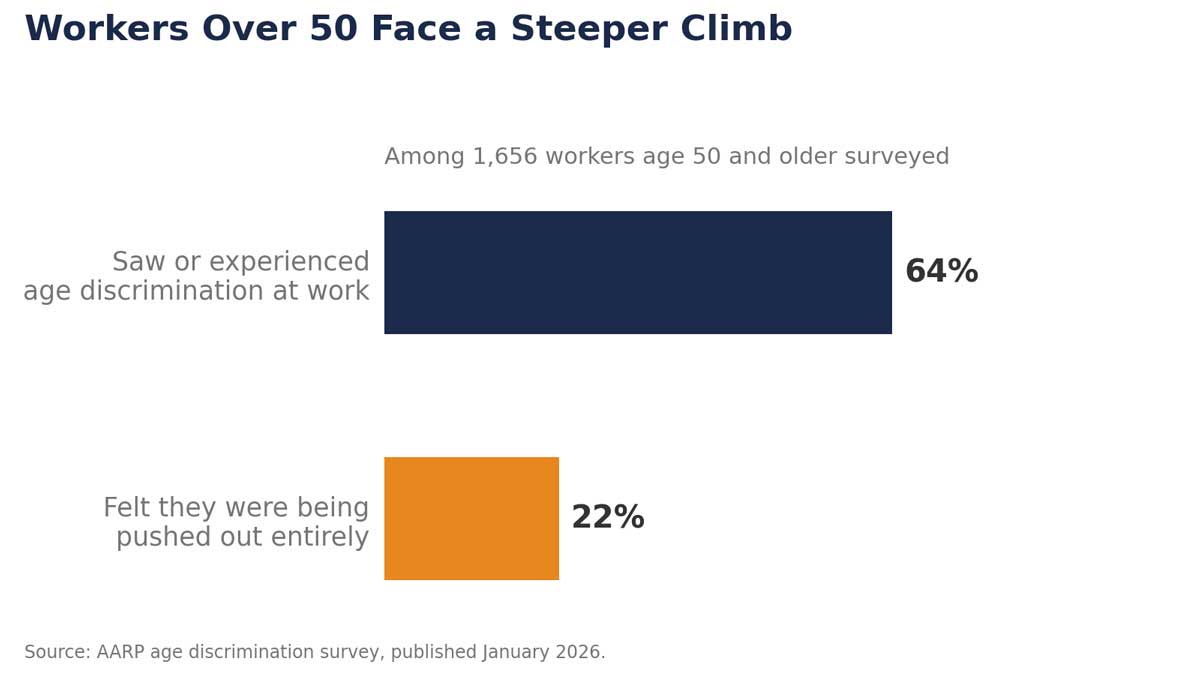
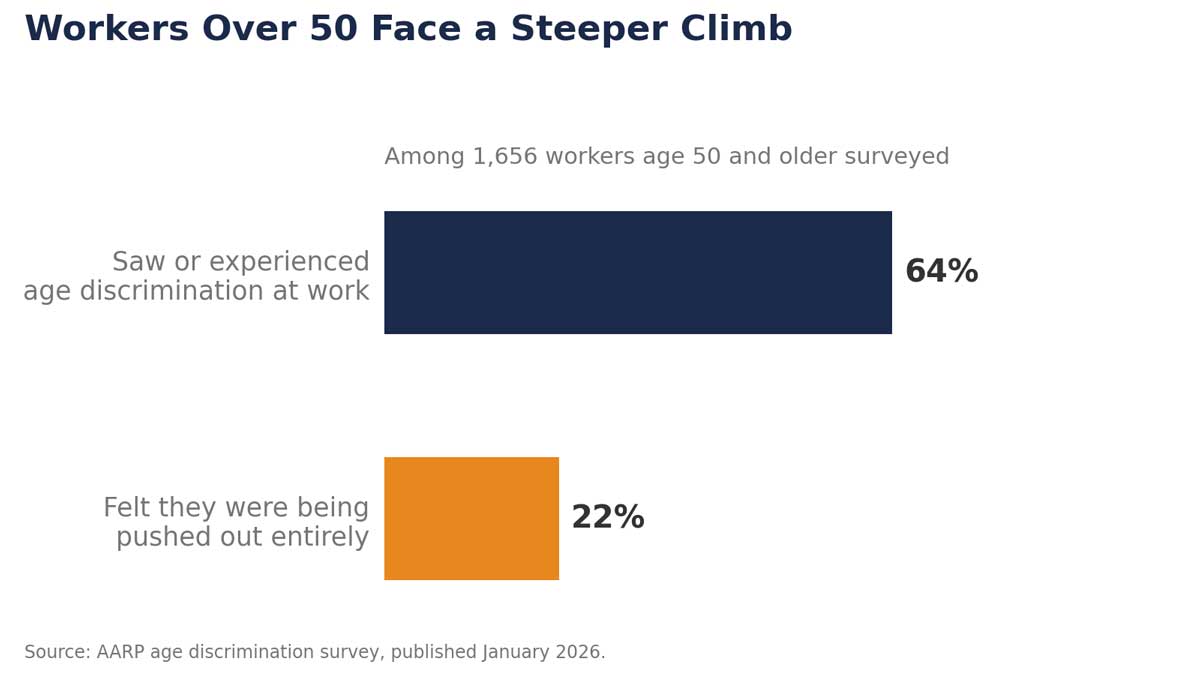
In a survey of 1,656 workers age 50 and older, 64% said they have seen or experienced age discrimination at work. Nearly one in four — 22% — felt they were being pushed out of work entirely. (Source: AARP age discrimination survey, published January 2026.)
Experienced professionals are often told to “hide the gray.” They are told to shorten their resume, leave out early jobs, and try to sound younger on calls. That is a lot of effort spent apologizing for what actually makes them valuable: the judgment gained over many years.
The question almost nobody asks you.
Every piece of job search advice answers the same question: how do I get hired faster?
Almost no one asks the more important question: what kind of job are you getting hired into?
Getting back into the same kind of job you just lost is not a real plan. It is just repeating the past. The next round of layoffs will not care how fast you found your last job.
 This is where The Entrepreneur’s Source® takes a different approach. Instead of starting with job titles, the conversation begins with four things people really want from work: Income, Lifestyle, Wealth, and Equity, which we call I.L.W.E: Income is what you need to earn. Lifestyle is how you want your days to look and who you want to spend time with. Wealth is what you build over time. Equity is whether you own something at the end, or if you just rented out your hours and left with nothing. nothing.
Most traditional jobs only provide income and leave the other three up to chance.
What a Career Ownership Coach® actually does
A Career Ownership Coach® is not a recruiter. They do not work for an employer. They have no open jobs to fill and no targets to meet. This changes the whole conversation.
Career Ownership Coaching™ is a guided discovery process, and it is completely free. Here is how it works in real life.
It starts with your life, not a job board. What does a good week look like for you? What income do you really need, not just the number you feel comfortable sharing? Who depends on you? How much risk can you handle? What is your timeline?
It helps you put words to what you are feeling. Many people start by saying, “I just need a job.” After a few conversations, they can say what they really want and what they will not accept anymore.
It opens up more options. Most people only consider about three career paths in their life, usually ones they already know. A coach helps you see all the possibilities, including options where you own the business instead of just working for someone else.
It helps you slow down and make careful decisions when it matters. Panic leads to costly mistakes. A coach helps you create a plan you will still believe in a year from now.
It keeps you on track, not by adding pressure, but by giving you a process, a timeline, and someone who checks in when the search feels lonely.
A guide, not a hero
You are the hero of your own story. That part is not up for debate.
But every hero moves forward more easily with a guide who has been there before, someone with a plan and no hidden agenda. That is what a Career Ownership Coach® does. They do not give you a career. They help you choose one that fits you.
The main idea behind this coaching is called Employment to Empowerment™. It means moving from waiting for someone to choose you to deciding what you want to build and then making it happen.
What to do this week
You do not have to quit anything, sign anything, or spend anything to start.
Take our assessment: Is Working With a Career Ownership Coach Right for You?
Then have one conversation with a Career Ownership Coach®. No cost. No pressure. No pitch.
The job market may have stalled, but your options have not.
Talk to a Career Ownership Coach® and find out what else is possible.

About Your Career Revolution
Our mission is to help individuals explore self-sufficiency as an alternative career.
We help them define their Income, Lifestyle, Wealth, and Equity goals and provide education on the best ways to achieve them. We don’t sell franchises – we help people achieve their dreams of self-sufficiency through business ownership. The approach is different, the experience is different. And it works.
Order on AMAZON
Learn More About Career Ownership Coaching™

Amazon Echo Dot (newest model) - Vibrant sounding speaker, Designed for Alexa+, Great for bedrooms, dining rooms and offices, Charcoal
$79.99 (as of October 13, 2026 03:21 GMT +00:00 - More infoProduct prices and availability are accurate as of the date/time indicated and are subject to change. Any price and availability information displayed on [relevant Amazon Site(s), as applicable] at the time of purchase will apply to the purchase of this product.)
INABA Churu Cat Treats, Lickable, Squeezable Creamy Purée Cat Treat with Green Tea Extract & Taurine, 0.5 Ounces Each Tube, 50 Tubes, Tuna & Chicken Variety
$32.96 (as of October 13, 2026 03:11 GMT +00:00 - More infoProduct prices and availability are accurate as of the date/time indicated and are subject to change. Any price and availability information displayed on [relevant Amazon Site(s), as applicable] at the time of purchase will apply to the purchase of this product.)
YISHU 6Ft Surge Protector Power Strip with 8 Widely Outlets & 4 USB Ports | 3 Side Outlet Extender with 6 Feet Extension Cord, Flat Plug, for Home, Office, College Dorm Room Essentials
$9.99 (as of October 13, 2026 03:21 GMT +00:00 - More infoProduct prices and availability are accurate as of the date/time indicated and are subject to change. Any price and availability information displayed on [relevant Amazon Site(s), as applicable] at the time of purchase will apply to the purchase of this product.)
Miracle Vet Medicated Dog Shampoo for Itchy Skin Relief 8 fl oz | Antifungal for Dog Allergy Relief, Yeast Infection, Hot Spot & Dry Skin Anti-Itch Treatment Wash - Hydrocortisone
$16.99 (as of October 13, 2026 03:21 GMT +00:00 - More infoProduct prices and availability are accurate as of the date/time indicated and are subject to change. Any price and availability information displayed on [relevant Amazon Site(s), as applicable] at the time of purchase will apply to the purchase of this product.)














Post Comment